

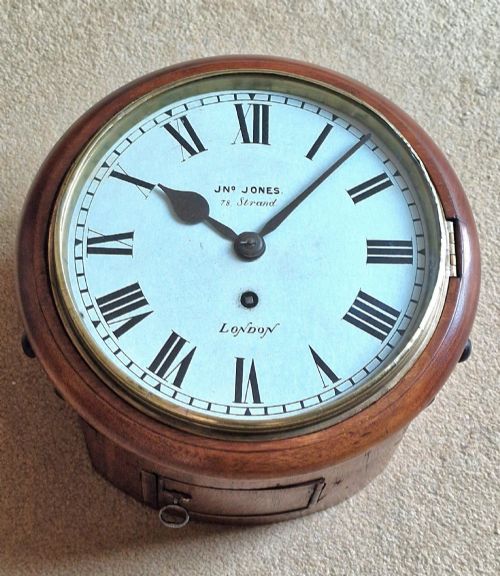
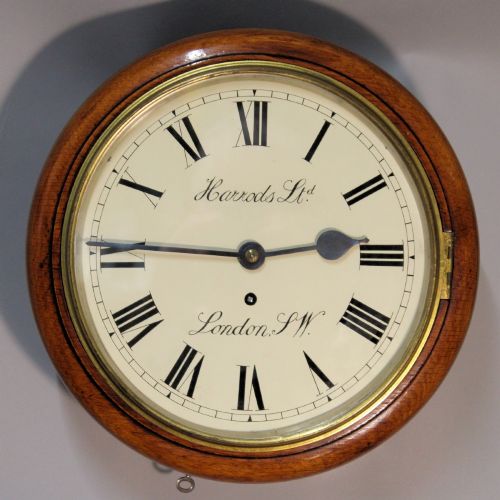
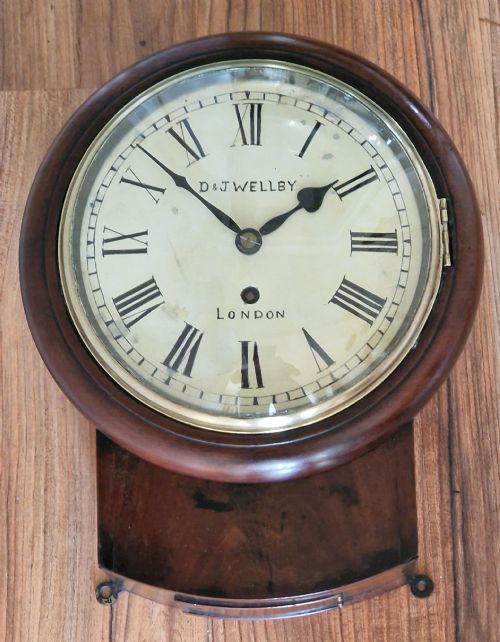
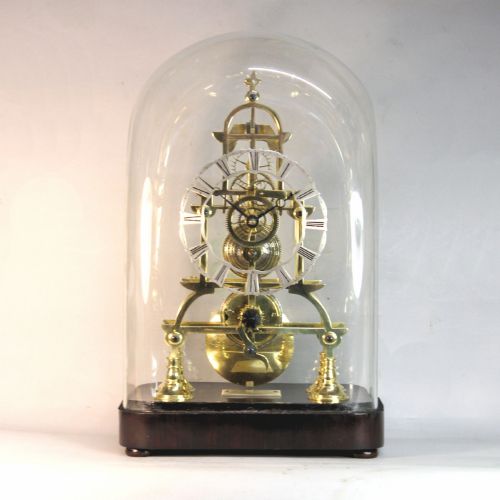


Small Fusee Dial Clock
A small fusee dial clock delivers precise timekeeping within a compact wall or table format, driven by a reliable fusee movement.
Small Fusee Dial Clock
A small fusee dial clock is primarily encountered as a wall-mounted timepiece, often featuring a circular or drop-dial configuration designed for domestic or commercial spaces. These pieces span multiple periods including Georgian, Regency, Victorian, and Edwardian eras, reflecting changing interior fashions.
The format encompasses standard wall clocks alongside drop-dial variants with wooden or chisel bottoms, plus occasional table and bracket formats. Mahogany and oak dominate the timber cases, housing dials ranging from eight to ten inches across.
How They Were Made
Clockmakers housed the mechanical movements inside timber enclosures constructed from mahogany, oak, walnut, or ebonised wood, pairing them with brass and glass components. Dials were formed from painted steel, painted iron, wood, or silvered metal, often protected behind hinged glass bezels.
The defining fusee mechanism utilises a conical pulley and cord or chain to equalise the declining power of the mainspring as it unwinds. This mechanical arrangement ensures steady force is delivered to the escapement for accurate timekeeping.
Small Fusee Dial Clock Retail Price Guide 2026
Typical asking prices for small fusee dial clock among the pieces listed under this phrase on Sellingantiques today, from the lower quarter to the upper quarter. They describe what is for sale here now, not the wider market.
Listings feature mahogany, oak, ebonised wood, and walnut cases paired with brass, glass, and painted steel or iron dials across various 19th-century and Edwardian periods.
What Varies In Quality
Quality rests upon the crispness of the case joinery and the selection of timber veneers, where finely figured mahogany or clean light oak elevates a piece. The legibility and execution of the dial, whether standard white painted iron, bowed, or coloured blue and gold, indicate the level of craftsmanship.
The standard of the movement finishing and the reputation of the maker or retailer inscribed on the dial distinguish standard production from superior examples. Signed dials by established watchmakers or notable retailers carry higher distinction.
D&J Wellby·Richard Winter·Payne & Co.·Harrods·George Pearce·Partington of London·Turner of Colchester·Kelsey of Barnet·Perigal of London·Gabriel·JW Benson
The Small Fusee Dial Clock Glossary
- Fusee
- A conical pulley connected to the mainspring by a cord or chain that equalises torque as the spring unwinds. This clever device ensures the clock maintains an even driving force throughout its running cycle.
- Drop-dial
- A wall clock case featuring an extended lower wooden trunk beneath the circular dial. This drop often accommodates a pendulum bob and is frequently finished with a chisel bottom.
- Bracket clock
- A portable timekeeper originally designed to sit on a bracket or shelf. Many examples feature striking mechanisms and break-arch ebonised cases.
- Convex dial
- A dial face that curves outward toward the viewer. This curved profile reduces glare from interior lighting and improves legibility from oblique angles.
- Ebonised wood
- Timber treated with a dark stain or finish to imitate ebony. This dark surface treatment gained popularity during the nineteenth century for formal mantel and bracket clock cases.
Small Fusee Dial Clock: Frequently Asked Questions
How do I wind a small fusee dial clock?
Most fusee timepieces require a key inserted into a winding hole on the dial face to tension the spring via the fusee chain or cord. Care must be taken not to overwind the mechanism when the spring reaches full tension.
Regular winding at consistent intervals maintains proper tension and ensures the timekeeping remains accurate throughout the running period.
Where were these clocks originally hung?
These timepieces were commonly positioned in hallways, offices, kitchens, and public rooms where reliable time checks were necessary. Their compact dial sizes suited spaces with limited wall area.
Drop-dial variations were frequently utilised in commercial offices and railway stations alongside domestic settings for clear visibility.
How do I date a fusee wall clock?
Dating relies on examining the case timber, dial materials, door locks, and movement construction characteristics. Regency and Georgian examples often feature different dial surrounds and wood grains compared to later Victorian or Edwardian pieces.
Signatures or retailer names painted on the dial surface can also help narrow down the active working period of the business involved.
Are wooden dials common on these clocks?
Wooden dials appear on specific regional and period pieces, such as certain Regency drop-dial wall clocks. Most examples utilise painted iron or steel dials instead.
When present, a wooden dial adds distinct character to the timber case and indicates particular regional English clockmaking traditions.