
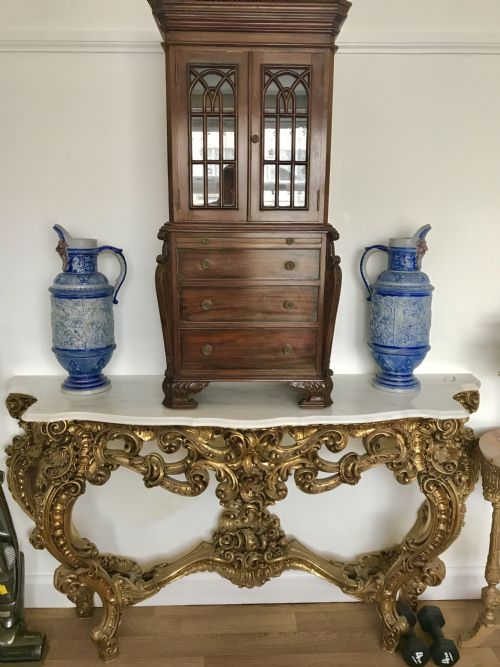


Small French Writing Bureau
A small French writing bureau brings refined continental elegance and neat proportions to a study or boudoir.
Small French Writing Bureau
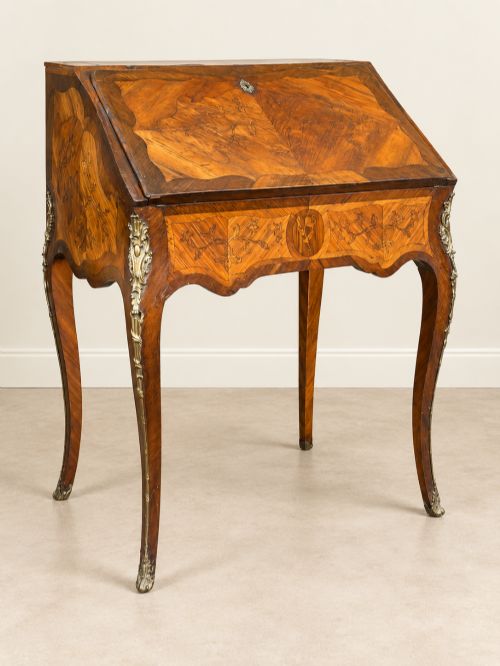
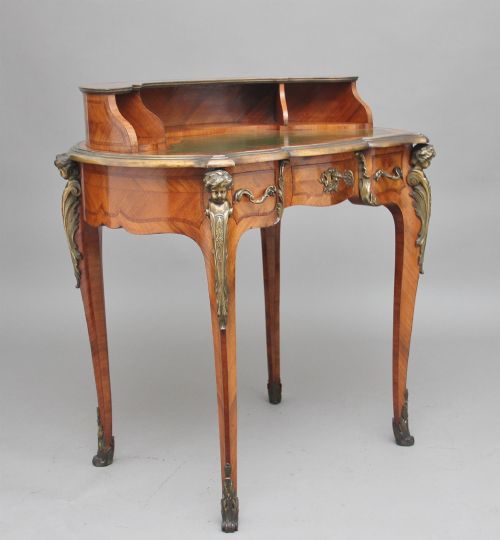
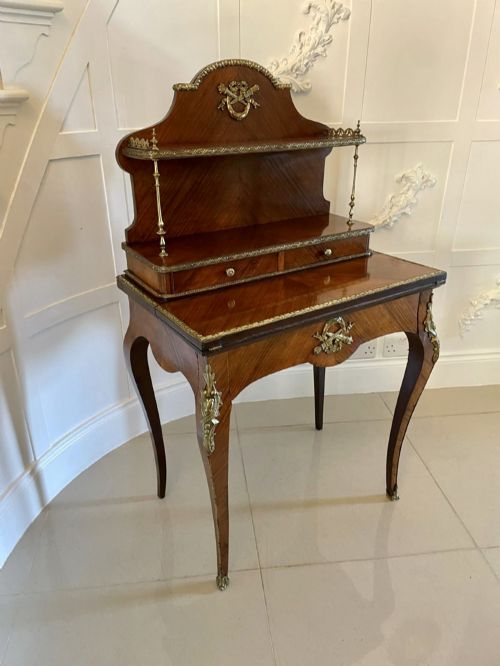
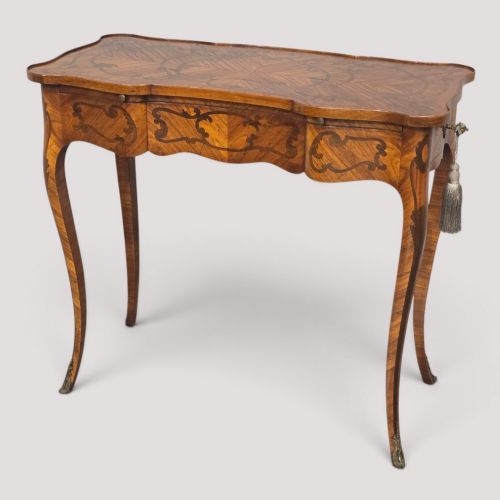
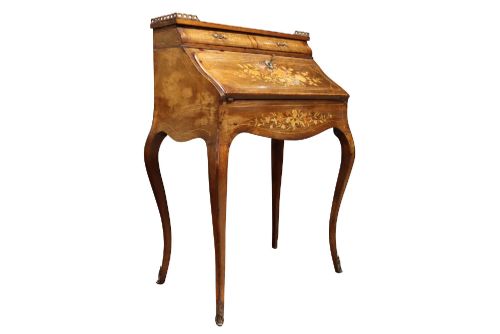
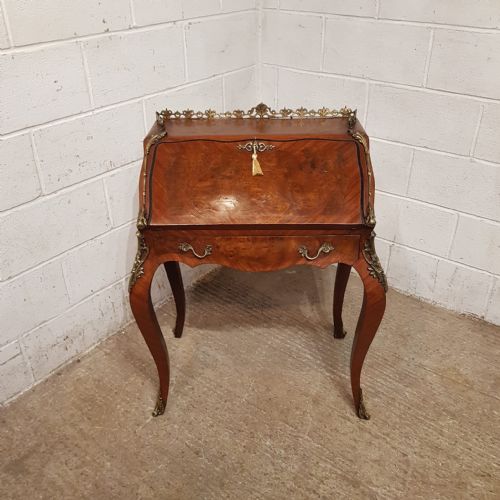
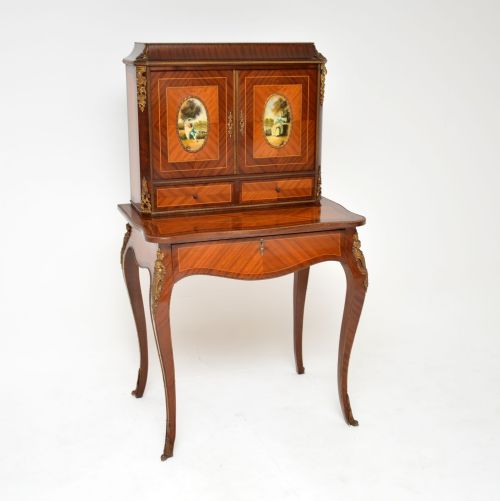
A small French writing bureau is a compact desk designed for personal correspondence, typically taking the form of a bonheur du jour, bureau de dame, or escritoire. These pieces combine a writing surface with small drawers, pigeonholes, or a raised superstructure, fulfilling the nineteenth-century need for a dedicated ladies writing desk.
You will most frequently meet nineteenth-century examples on this page, spanning the Victorian era and the revival periods. These range from walnut and kingwood writing tables to intricate marquetry pieces finished with brass mounts.
The form encompasses various miniature and neat-sized variations, including cylinder desks and bureau bookcases produced as apprentice pieces or petite boudoir furnishings.
How they were made
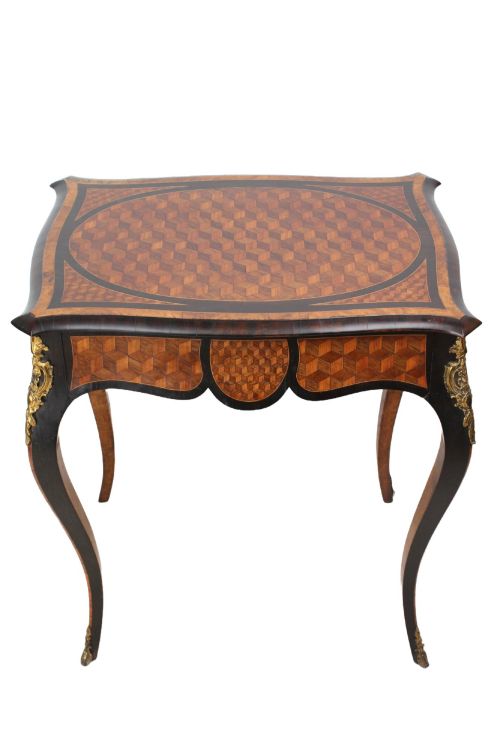
Cabinetmakers utilised dense exotic hardwoods such as kingwood, rosewood, and walnut as structural and decorative foundations, often laid over oak or fruitwood carcases. Veneers were selected for rich grain patterns, including burr walnut and parquetry geometric arrangements.
Ornate metalwork defined the aesthetic, with cast ormolu and brass mounts framing panels, corners, and legs. Surface enrichment also included marquetry inlay, porcelain plaques, and French polished finishes that highlighted the timber.
One miniature bureau includes a quarter-size apprentice piece finish, proving that even tiny desks required grand patience.
What varies in quality
Quality rests in the crispness of the cabinetmaking and the precision of the parquetry or marquetry. Superior examples exhibit seamless timber matching and crisp, finely chased ormolu mounts rather than mass-produced cast metal.
The interior fit-out dictates distinction, separating standard writing tables from exceptional bonheur du jour desks outfitted with leather-lined writing surfaces, hidden compartments, and hand-painted porcelain plaques.
JAS Shoolbred·John McLean
The Small French Writing Bureau Glossary
- Bonheur du jour
- A small ladies writing desk featuring a light superstructure with shelves, drawers, or a cabinet above the main writing surface. This form appeared during the mid-nineteenth century revival periods.
- Ormolu
- Gilded bronze mounts applied to furniture for decorative enrichment. The finish relies on mercury gilding or modern electroplating techniques.
- Marquetry
- Decorative patterns formed by fitting together thin veneers of different coloured woods. It differs from parquetry by creating pictorial or floral designs.
- Bureau de dame
- A lady's desk, typically of French origin, combining a compact writing slope or flat table with delicate proportions. These pieces often incorporate leather writing inserts and fine brass hardware.
- Parquetry
- Geometric wood inlay forming repeating patterns such as cubes or chequers. Cabinetmakers used contrasting timbers to create an optical sense of depth.
Small French Writing Bureau: Frequently Asked Questions
What is a bonheur du jour?
A bonheur du jour is a light, small writing desk featuring a raised tier of drawers or shelves above the writing surface. The term translates from French as day's good fortune.
These pieces were intended for a lady's boudoir for reading and letter writing during the nineteenth century.
How do I date a French writing desk?
Dating relies on timber choices, construction methods, and stylistic revivals. Nineteenth-century pieces frequently adopt Louis XV or Louis XVI revival motifs.
Examining secondary woods inside drawers and the composition of ormolu mounts helps narrow the production period.
Where were these desks used?
These compact writing desks served in private sitting rooms, bedrooms, and drawing rooms where full-sized partners desks proved too large. Their neat proportions suited domestic writing and correspondence.
They functioned as both decorative furniture and practical writing stations for personal letters and accounts.
What is the difference between marquetry and parquetry?
Marquetry involves creating pictorial, floral, or scrollwork designs using various veneer woods. It offers organic and curved artistic expression on desk lids and door panels.
Parquetry sticks to strict geometric shapes and repeating patterns, creating architectural grid or cube effects across the timber surface.