


Small Freestanding Bookcase
A small freestanding bookcase is a compact piece of furniture designed to hold books while standing independently against a wall or within a room.
Small Freestanding Bookcase
A small freestanding bookcase offers a practical solution for keeping volumes accessible in modest spaces without permanent installation. When exploring the available selection of a small freestanding bookcase, buyers encounter pieces originating from the nineteenth and early twentieth centuries.
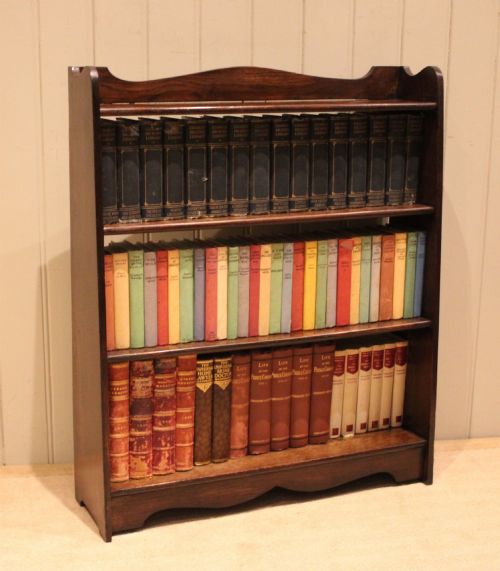
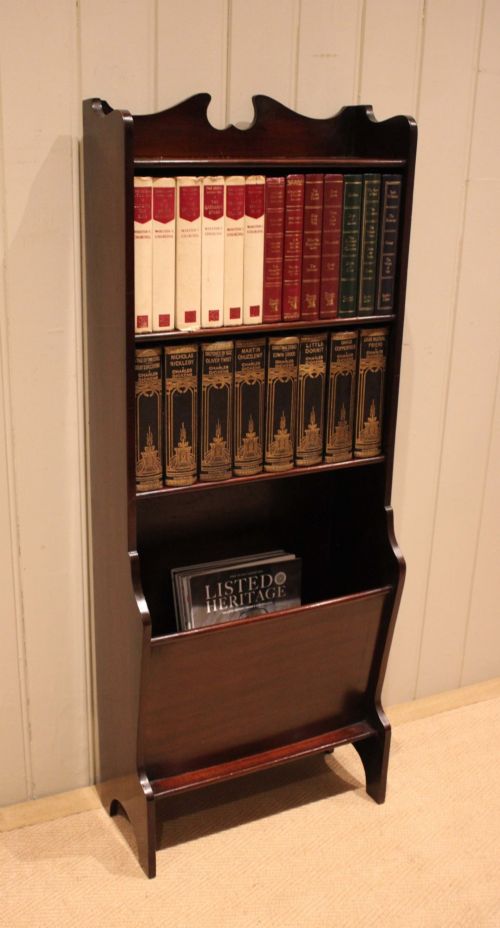
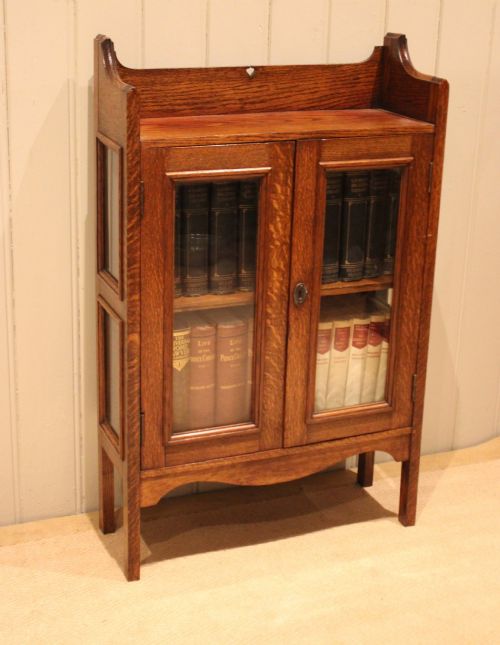
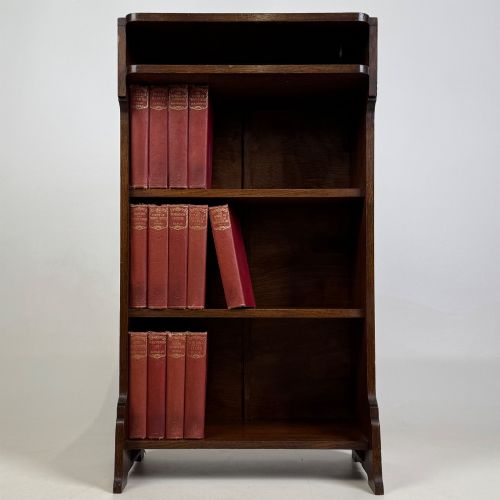
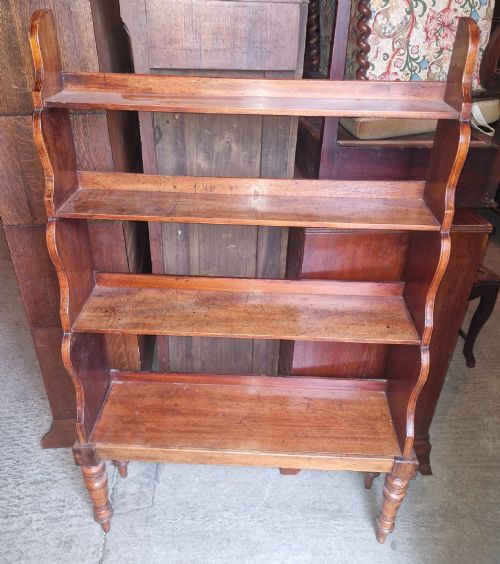
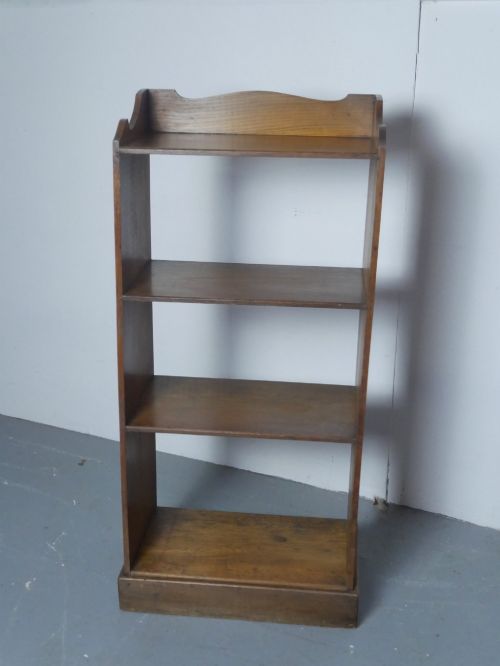
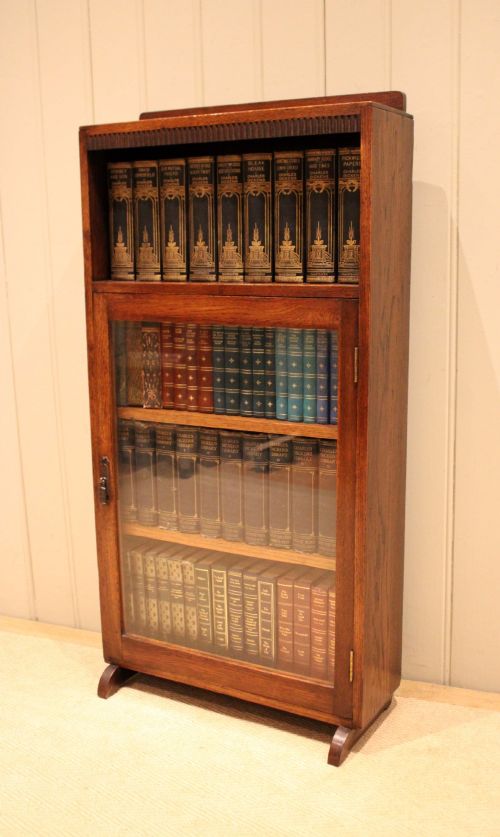
The inventory on this page ranges from simple open shelves in oak to glazed cabinets, revolving designs, and waterfall tiers in mahogany. Pieces span the Edwardian era, the Arts and Crafts movement, and the late Victorian period, reflecting domestic needs of those times.
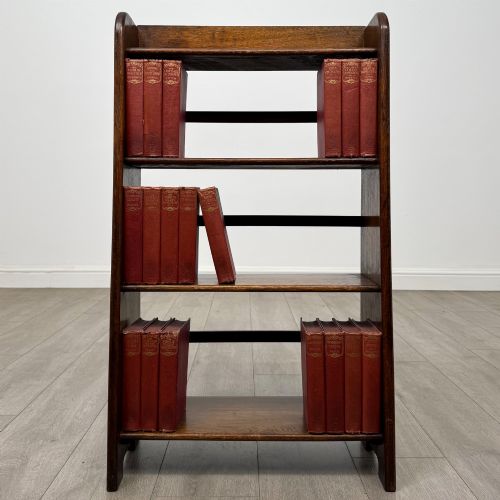
Forms include open angled models, book stands, and revolving structures in woods such as partridgewood alongside standard timbers. Each surviving item demonstrates the utility expected of domestic library furniture from past decades.
How they were made
Makers utilised solid timbers like oak and mahogany, often enhanced with wood veneer or brass and glass components. Construction methods relied on traditional joinery to support the weight of books across multiple tiers and shelves.
Surface treatments included beaded edges, carved details, and glazed doors to protect volumes while maintaining visibility. Some examples incorporate magazine racks or revolve on mechanical bases for ease of access.
Some revolving bookcases let you spin your entire library while sitting comfortably in your armchair.
What varies in quality
Quality appears in the choice of primary timber, such as figured mahogany or golden oak, and the crispness of any applied carving. Better examples show careful attention to structural stability, particularly in revolving mechanisms and multi-tiered open shelves.
The refinement of details, including brass hardware, glass panels, and beaded edges, distinguishes standard utility items from finer workshop productions of the period.
Muirhead Moffat Glasgow
The Small Freestanding Bookcase Glossary
- Waterfall bookcase
- A tiered shelving unit where each successive shelf steps back from the one below it. This form creates a cascade effect popular in nineteenth-century furniture design.
- Revolving bookcase
- A low shelving unit mounted on a rotating base that allows access to books from all sides. These pieces often feature slatted or open sides for visibility.
- Arts and Crafts
- A design movement favouring handcraftsmanship, simple construction, and visible material qualities. Pieces from this tradition often display honest joinery and golden oak surfaces.
- Partridgewood
- A decorative exotic timber valued for its distinctive speckled grain pattern. It appears on select nineteenth-century pieces to provide visual contrast.
Small Freestanding Bookcase: Frequently Asked Questions
Where should I place a small freestanding bookcase?
These compact pieces suit corners, alcoves, or beside seating areas where floor space is limited. Their finished backs often allow them to sit away from walls entirely.
Ensure the placement keeps the timber away from direct heat sources and strong sunlight to protect the polish and wood grain.
How do I date an oak bookcase?
Look to the construction methods, handle styles, and overall aesthetic to determine the period. Edwardian and later nineteenth-century pieces often display simpler lines than heavily carved Victorian examples.
Matching the timber finish and hardware style to known production eras helps narrow down the decade of manufacture.
Can these bookcases hold heavy books?
Solid oak and mahogany construction provides robust support for standard volumes and heavier reference books. The fixed or adjustable shelves are built to bear significant weight when the structure remains stable.
Distributing heavier books on the lower shelves maintains overall balance and prevents tipping.
What is the difference between open and glazed bookcases?
Open bookcases provide immediate access to volumes and display book spines clearly within a room. Glazed versions feature glass doors that protect delicate or older bindings from dust and ambient moisture.
Both styles were produced across the Victorian and Edwardian periods to serve different domestic library needs.