




Small Desktop Organiser
A small desktop organiser keeps papers, letters and tiny treasures tidy, bringing order and fine timber grain to any writing surface.
Small Desktop Organiser
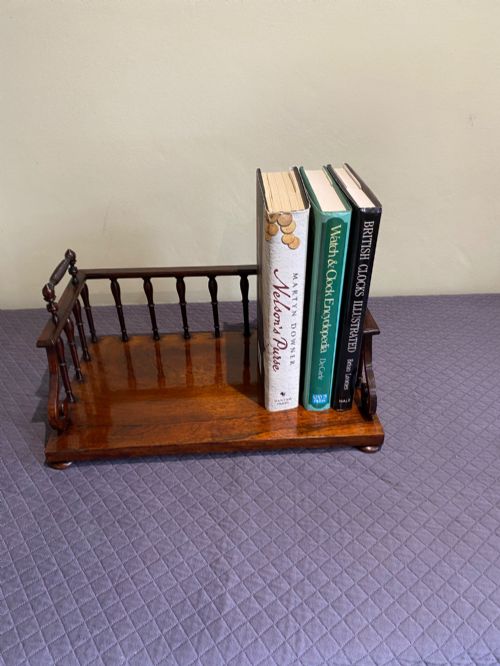
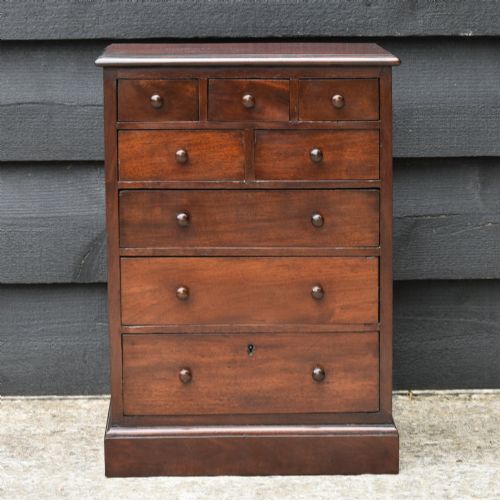
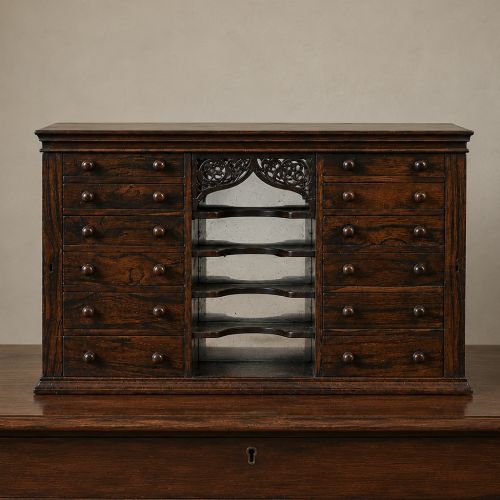
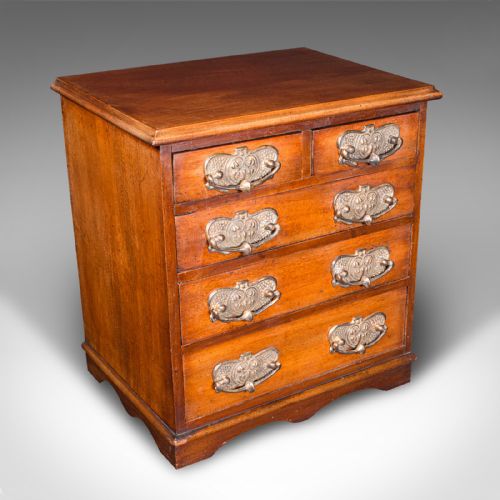
A small desktop organiser gathers miniature chests of drawers, sloping stationery boxes, revolving bookcases and desktop tidies into one practical category. These pieces span the eighteenth, nineteenth and early twentieth centuries, reflecting the changing clerical and domestic needs of their original owners.
Most examples found here appear in rich dark timbers like mahogany and rosewood, alongside sturdy oak and pine. Form follows function closely, ranging from multi-drawer collector cabinets to compact letter racks and revolving book shelves designed to sit within arm's reach.
Makers of the past produced these items as miniature furniture, apprentice pieces, or dedicated desktop accessories for country houses and offices. Buyers encounter Georgian and Regency elegance alongside Victorian utility and later Art Nouveau or Art Deco touches.
How they were made
Cabinet makers utilised durable hardwoods such as mahogany, rosewood and oak, often constructing carcases with tight dovetail joints to withstand daily desk use. Surfaces received careful polishing to enhance the natural grain, while smaller items relied on pine or beech for internal partitions.
Metal fittings played a crucial functional and decorative role, featuring brass drop handles, key escutcheons, hinges and occasional mirror glass inserts. Carved details appeared on select oak and walnut pieces, showing hand-chiselled ornamentation typical of the period.
Listings feature items spanning the Georgian, Regency, Victorian, Edwardian, Art Nouveau and Art Deco periods.
What varies in quality
Quality rests upon the crispness of the cabinet work, the selection of figured timber veneers, and the integrity of the original hardware. Superior examples display seamless drawer movement, hand-cut dovetailing and well-matched grain patterns across the front facade.
Proportion and restraint distinguish finer pieces from plain utilitarian boxes, with elegant bracket feet, cockbeaded drawer edges and working locks adding desirability. The depth of the natural patina accumulated over centuries also marks out a superior survivor.
The Small Desktop Organiser Glossary
- Apprentice piece
- A small-scale item demonstrating the advanced woodworking skills required for a craftsman to join a trade guild. These display the exact techniques used on full-sized furniture.
- Collector's cabinet
- A small multi-drawer chest intended for storing shells, coins, insects or geological specimens. They feature numerous shallow drawers within a secure cabinet housing.
- Wellington chest
- A tall narrow chest of drawers secured by a hinged locking stile on one side that fastens over the drawer edges. This clever mechanism allows all drawers to lock with a single key.
- Stationery box
- A desk accessory with a sloped or upright lid designed to hold writing paper, envelopes and inkwells. Many include internal dividers and compartments for organisation.
- Patina
- The deep surface sheen and mellow colour developed by wood and metal over decades of handling and waxing. It serves as a visual indicator of age and careful preservation.
Small Desktop Organiser: Frequently Asked Questions
What is a small desktop organiser used for?
These compact pieces serve to sort letters, store stationery, display small collections, or organise desk accessories in a study or hallway.
Their varied drawer configurations and compartments provide practical storage for modern items like pens, stamps and keys while maintaining a traditional aesthetic.
How do I date an antique desktop organiser?
Dating relies on examining the timber species, construction methods such as dovetails, and stylistic markers of periods like Regency, Victorian or Edwardian.
Secondary woods inside drawers, handle types and the style of brass escutcheons also offer reliable clues to the decade of manufacture.
Are these pieces original or modern reproductions?
The selection comprises genuine period items originating from the eighteenth century through to the early twentieth century, showing authentic signs of age and wear.
Hand-cut joints, period-appropriate timber shrinkage and genuine surface patination distinguish these historical pieces from recent copies.
How should I care for wooden desktop accessories?
Keep wooden pieces away from direct sunlight and severe temperature fluctuations to prevent timber splitting and veneer lifting.
Apply a microcrystalline wax occasionally to feed the wood and maintain the protective sheen without building up sticky residue.