
Small Desktop Chest
A small desktop chest offers compact storage for trinkets, jewellery, and specimens, spanning Victorian, Georgian, and Edwardian periods.
Small Desktop Chest
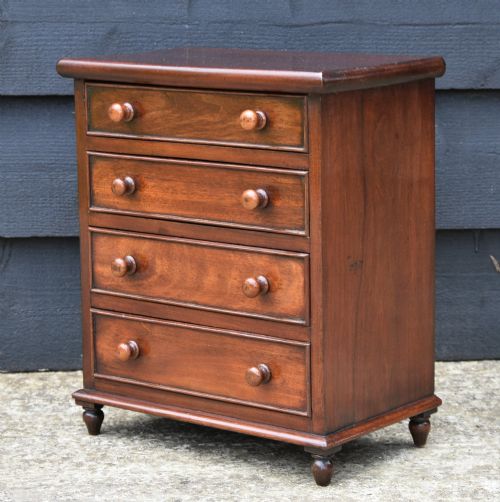
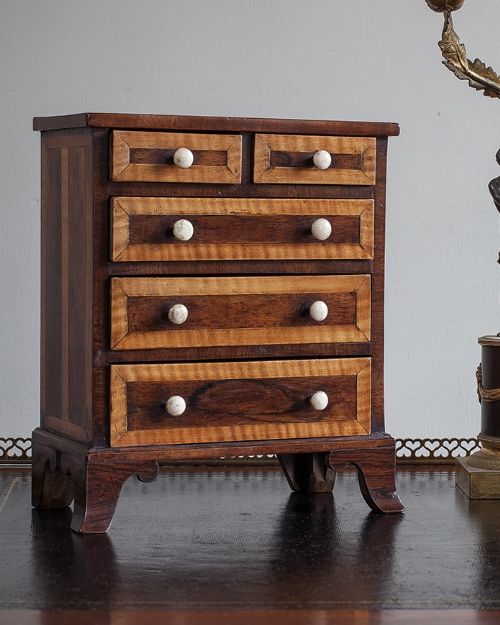
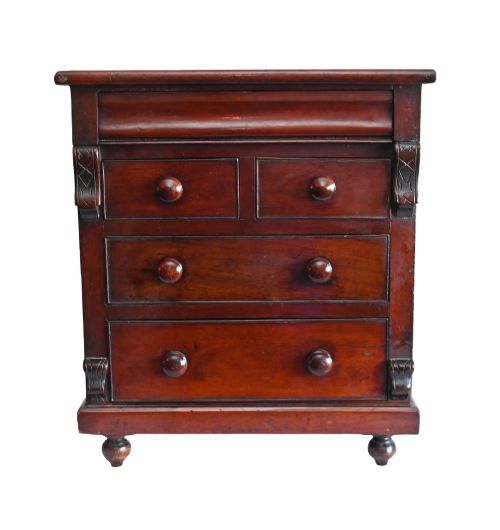
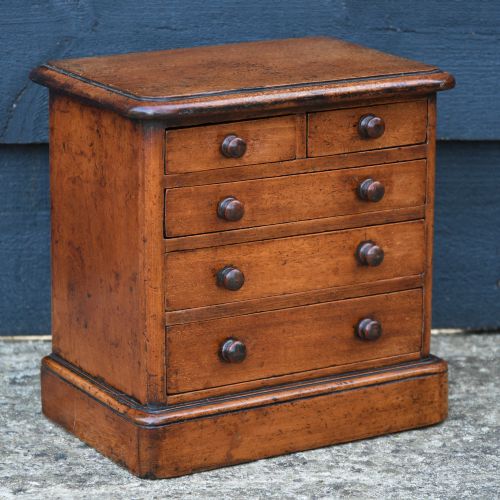
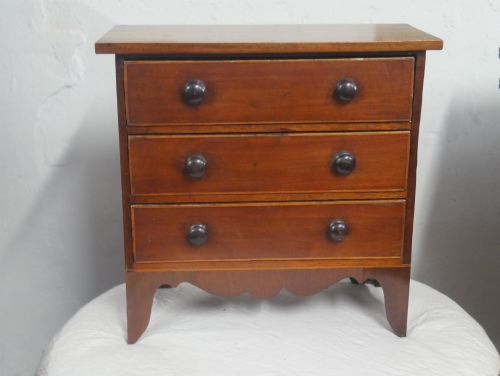
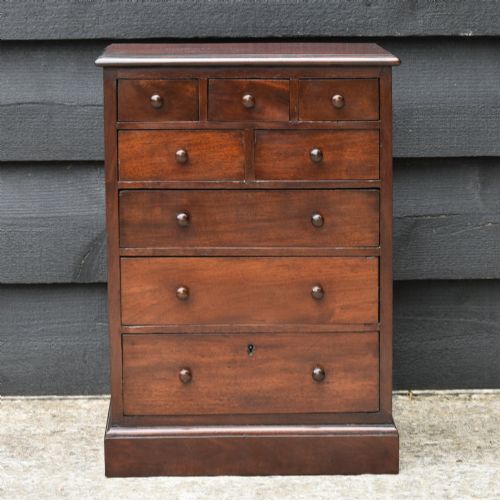
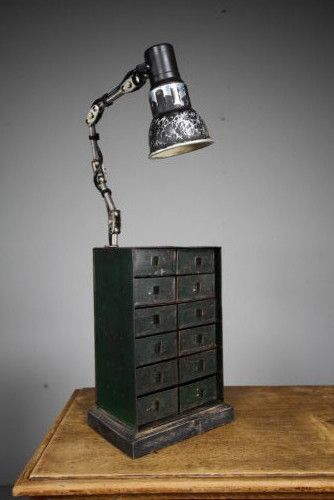
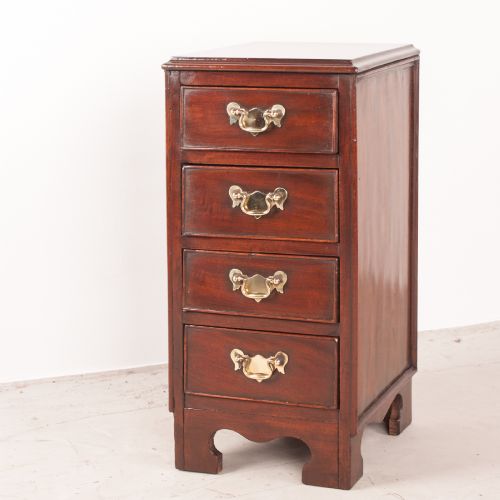
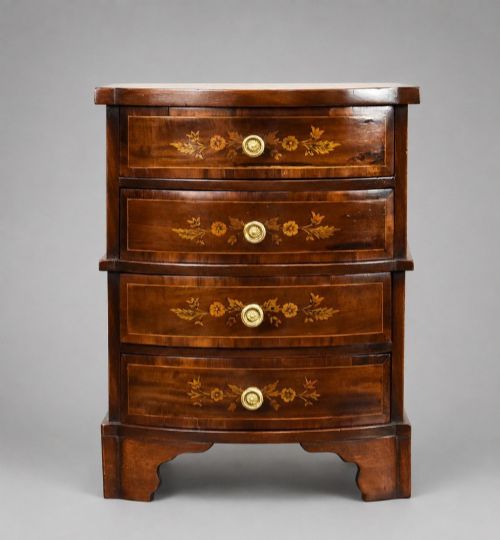
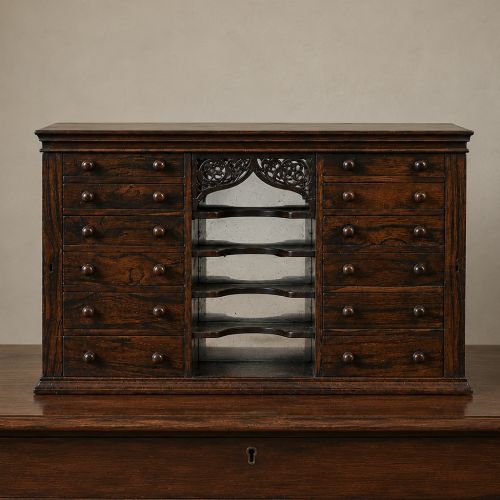
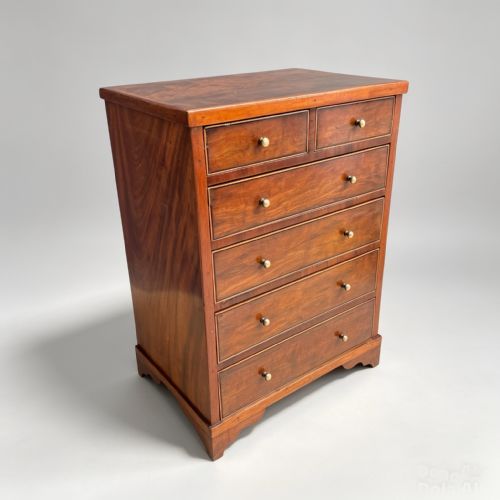
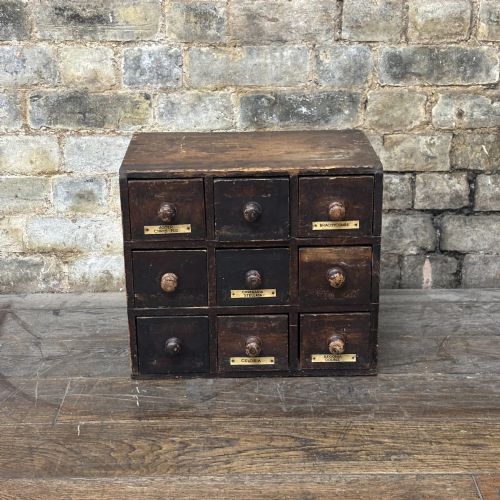
A small desktop chest takes the form of a miniature chest of drawers, a table-top collector cabinet, or a specimen case designed for desktop use. These pieces serve practical storage roles for jewellery, documents, and small curiosities.
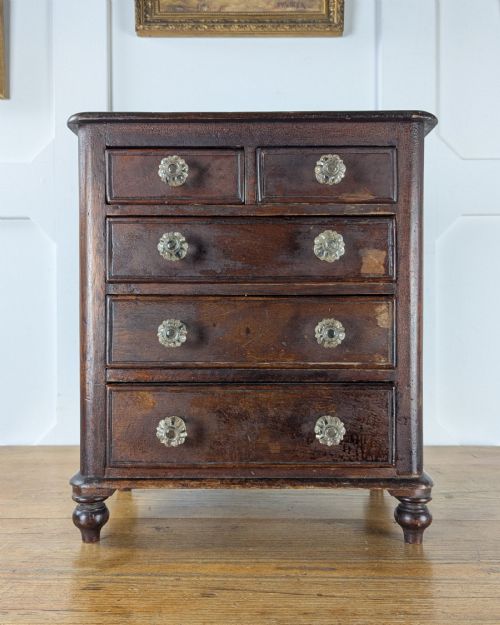
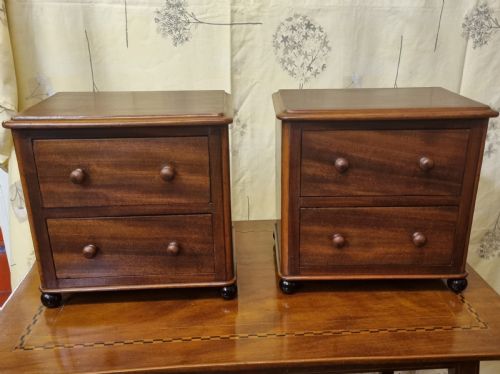
Victorian and nineteenth-century examples appear most frequently on this page, often constructed as apprentice pieces or tabletop chests of drawers. Mahogany and oak form the predominant materials across these traditional iterations.
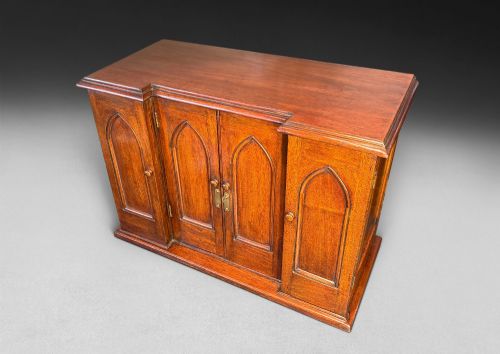
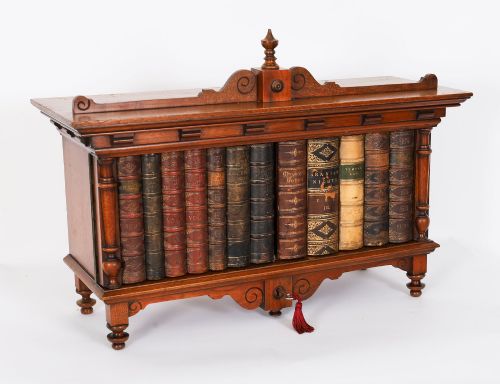
Makers produced diverse formats, including Gothic oak table-top cabinets, rosewood Wellington chests, and inlaid hardwood Anglo-Indian collector's chests. Specialty items like doctor smoking cabinets and florist seed chests also emerge within the selection.
Evaluating Quality
Quality rests upon the selection of timber veneers, the precision of the drawer dovetailing, and the retention of original brass fixtures or keys. Finer pieces demonstrate careful grain matching and crisp decorative carving.
Proportion and execution distinguish standard utilitarian boxes from superior apprentice pieces or specialty collector cabinets. Original patination and intact glass or internal fittings elevate the standing of a desk chest.
Listings feature mahogany, oak, walnut, rosewood, pine, and fruitwood across Victorian, Georgian, Edwardian, and Regency periods.
The Small Desktop Chest Glossary
- Apprentice piece
- A small-scale item demonstrating the advanced skill of a woodworker seeking master status. These miniature chests replicate full-size furniture designs in exact detail.
- Collector cabinet
- A specialised desk chest featuring multiple small drawers or trays designed to house natural history specimens, coins, or trinkets. These cabinets often include locking doors.
- Wellington chest
- A tall vertical cabinet featuring a side-locking stile bar that secures all drawers simultaneously. Regency and Victorian cabinet makers produced these in miniature desktop formats.
- Specimen cabinet
- A small storage case built to hold biological, geological, or botanical samples. They utilise shallow drawers to organise delicate items.
- Marquetry
- The decorative art of applying small pieces of wood veneer to a structure to form intricate patterns. This technique appears on Edwardian and Victorian tabletop chests.
Small Desktop Chest: Frequently Asked Questions
What is a small desktop chest?
A small desktop chest is a miniature furniture piece or tabletop cabinet built to hold jewellery, documents, or specimens. These items scale down full-size chest designs for use on desks and tables.
Cabinet makers produced them across the Georgian, Victorian, and Edwardian eras using hardwoods like mahogany, oak, and walnut.
How do I identify a Victorian desktop chest?
Victorian desktop chests typically feature mahogany, walnut, or pine construction with traditional drawer joinery. Common indicators include turned feet, brass handles, and proportions characteristic of the nineteenth century.
Specific styles from this era include bow-front fronts, Gothic revival details, and locking mechanisms with original keys.
What fits inside a collector cabinet?
Collector cabinets hold small valuable items such as coins, stamps, trinkets, and natural history specimens. The shallow drawers provide organised separation for delicate collections.
These desktop units secure contents behind fitted doors or lockable drawer arrangements.