

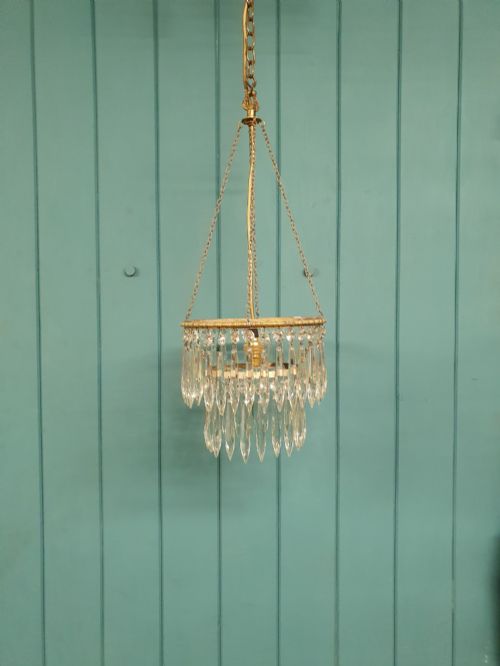
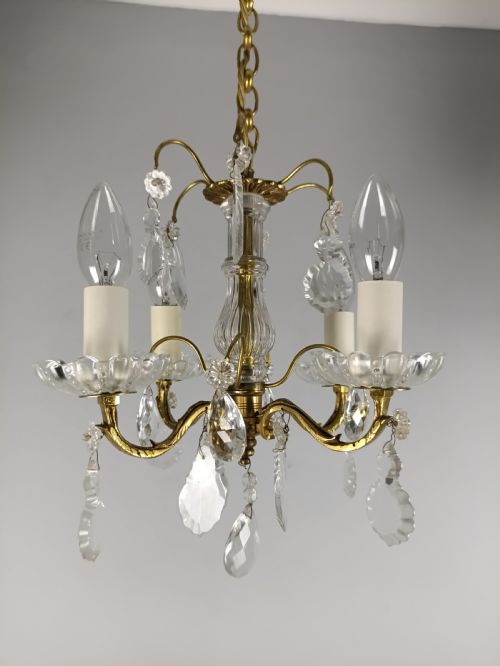
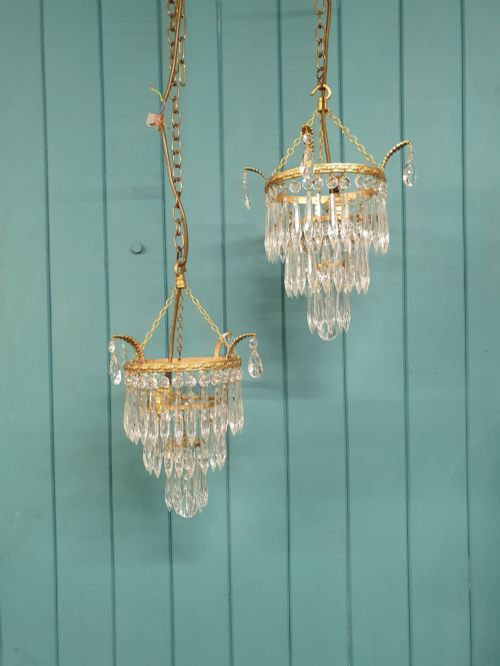
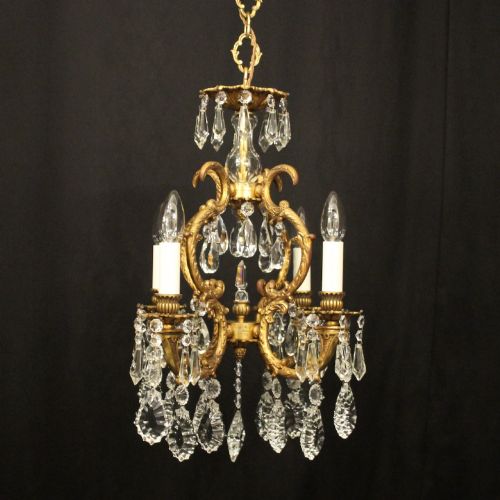
Small Crystal Ceiling Pendant
These small crystal ceiling pendant lights bring concentrated illumination and historic sparkle to compact spaces.
Small Crystal Ceiling Pendant
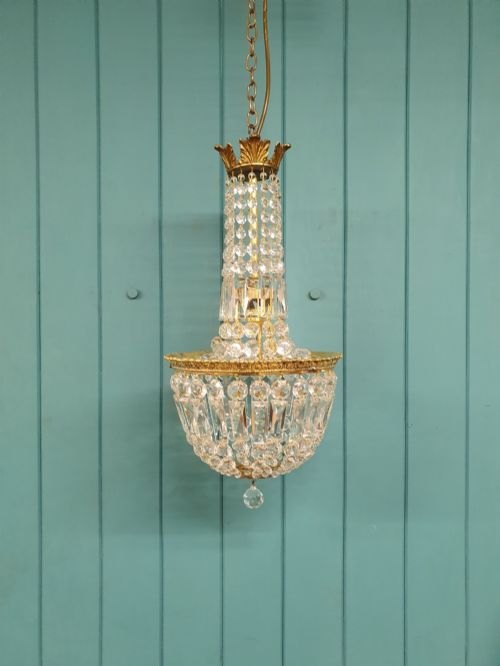
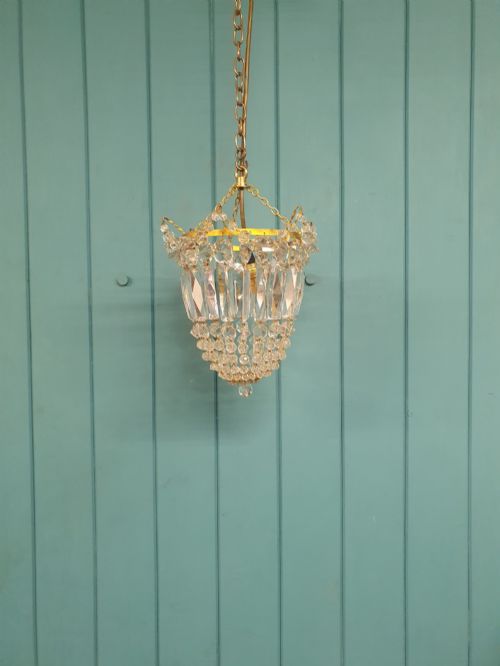
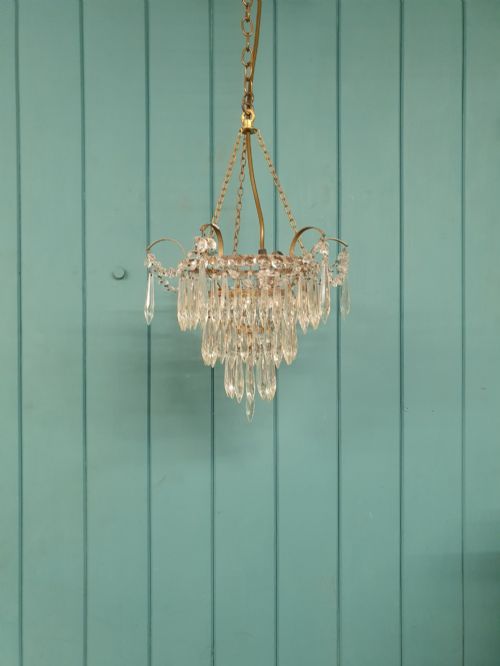
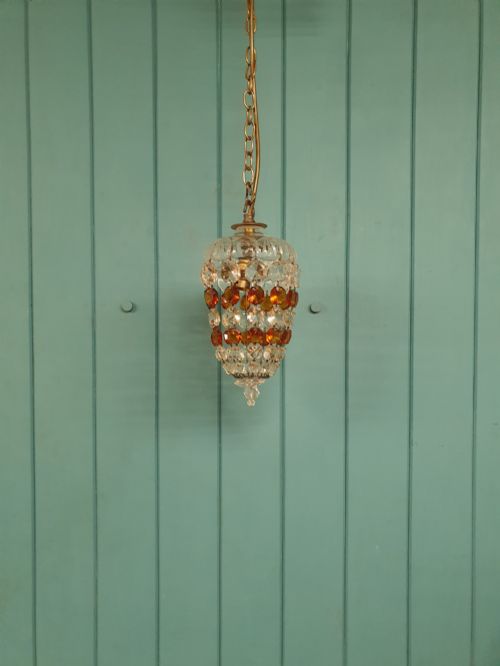
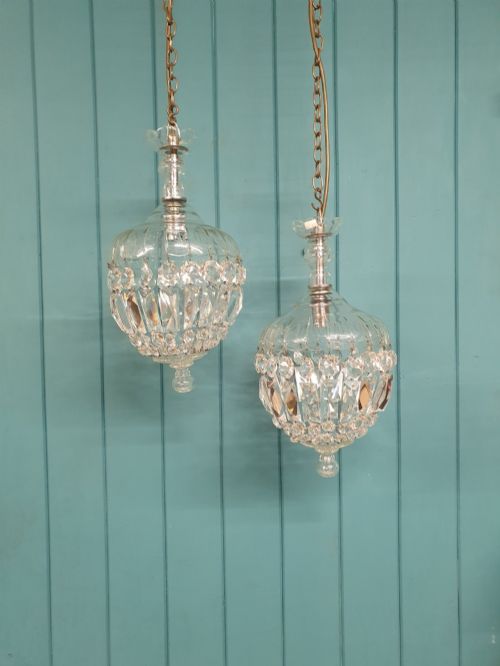
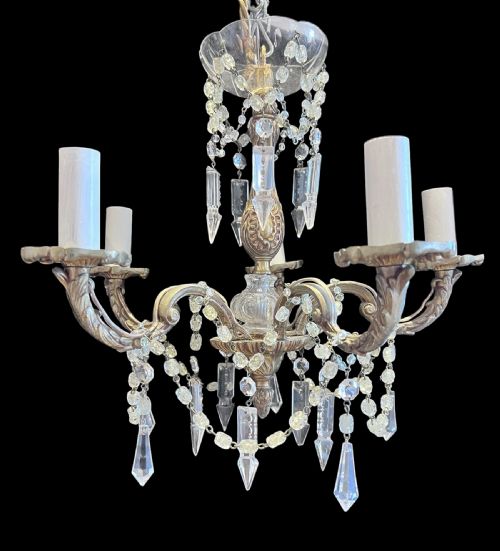
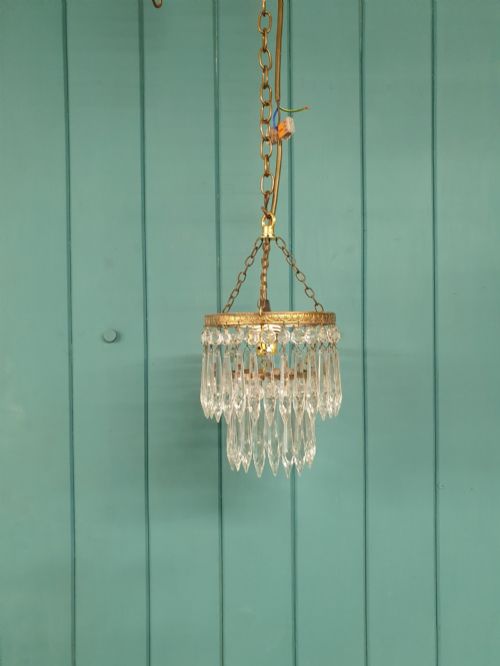
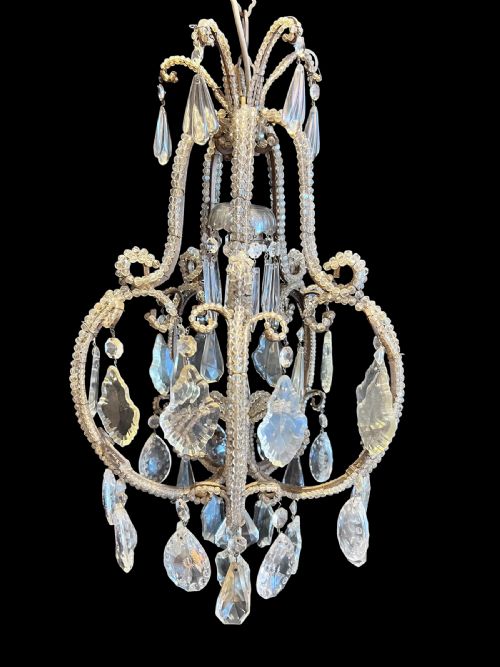
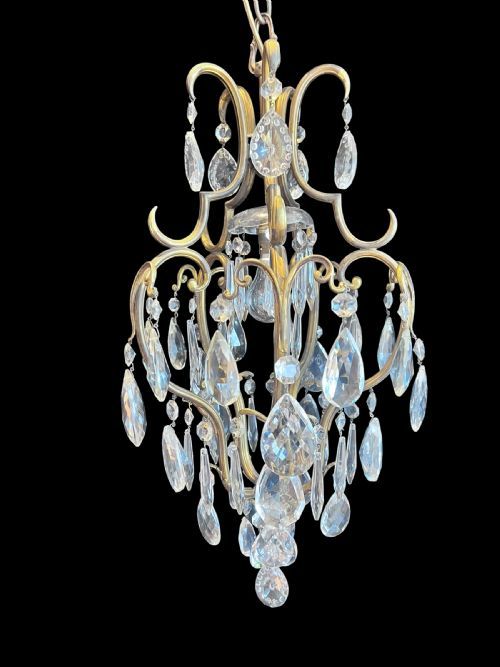
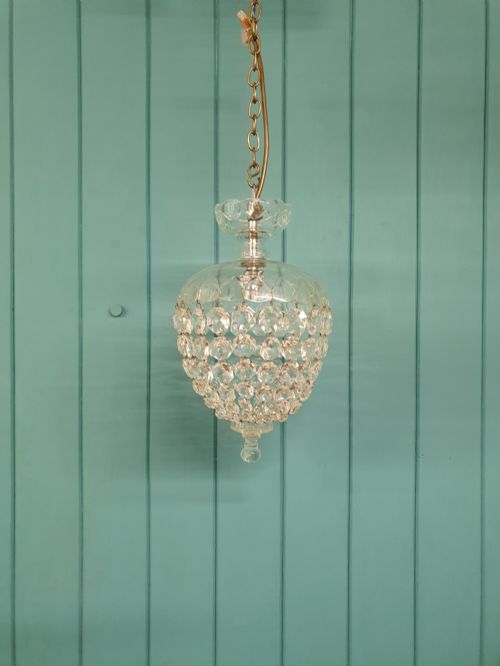
When searching for a small crystal ceiling pendant, buyers encounter compact lighting fixtures originating from the Edwardian era through the early twentieth century. These pieces combine metal frames with glass or crystal elements designed to hang from domestic ceilings.
Most examples measure under fifteen inches, making them suited for smaller rooms, hallways, or specific architectural niches where a full-sized chandelier would overwhelm the space.
How they were made
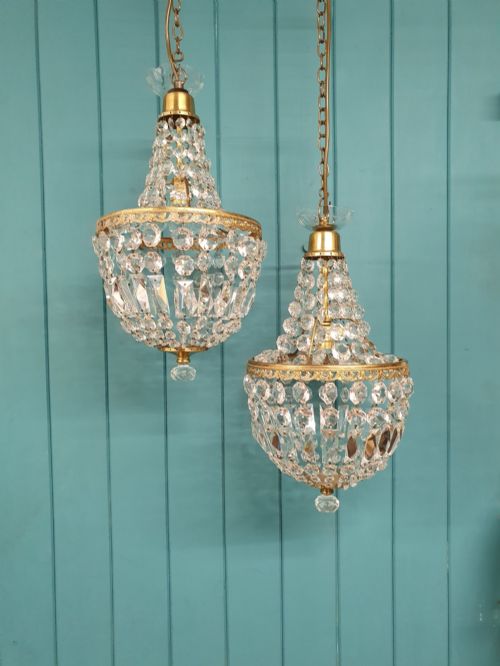
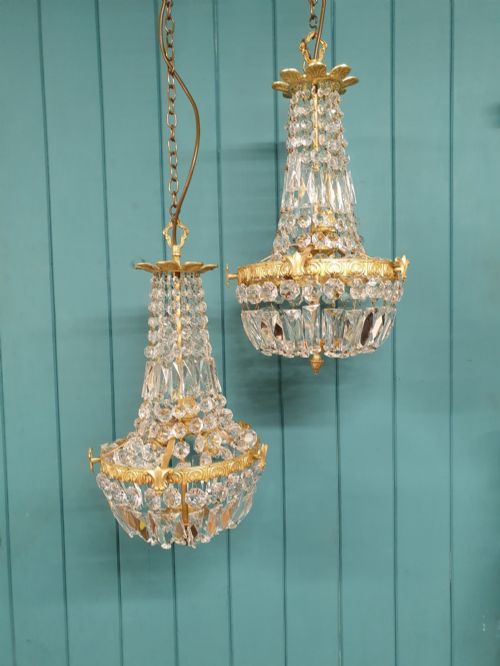
The structural framework relies on brass, gilt brass, gilt bronze, and general metal components to support the hanging elements. These metal mounts are shaped into rings, bands, and frames to hold the glass securely.
Transparency and refraction come from cut glass, crystal glass, and plain glass components formed into beads, prisms, spikes, and coffin drops. These pieces are wired or pinned together to create structured tiers, bags, and tents.
Small Crystal Ceiling Pendant Retail Price Guide 2026
Typical asking prices for small crystal ceiling pendant among the pieces listed under this phrase on Sellingantiques today, from the lower quarter to the upper quarter. They describe what is for sale here now, not the wider market.
Listings span the Edwardian period through 1930, utilising brass, gilt bronze, cut glass, and crystal glass in forms from spike chandeliers to bag pendants.
What varies in quality
Quality differences emerge in the clarity and cutting of the crystal components, where sharper facets produce superior light refraction. The density and purity of the glass distinguish simpler moulded pieces from finely hand-cut examples.
The construction of the metal frame and mounts also dictates overall grade. Heavier brass and gilt bronze fittings securely anchor the glass drops and maintain structural integrity better than lighter, thinner metalwork.
The Small Crystal Ceiling Pendant Glossary
- Spike chandelier
- A hanging light featuring outward-projecting crystal spikes arranged in tiers around a central frame. This form concentrates sparkle along distinct vertical lines.
- Bag chandelier
- A lighting fixture featuring a flattened lower section shaped like a small bag or basket filled with glass beads. The profile remains close to the ceiling while maintaining extensive prismatic surface area.
- Tent chandelier
- A design where strings of beads drape from an upper crown down to a wider metal ring, forming a tent-like canopy above the main lights. This configuration creates a layered silhouette.
- Coffin prism
- A long, flat-backed glass drop shaped similarly to a historic coffin, featuring bevelled edges. These specific drops catch light differently than standard round beads.
- Marie Theresa chandelier
- A flat-framed fixture style with glass arms and extensive crystal bead draping, named after the Austrian empress. It offers a wide profile relative to its drop length.
Small Crystal Ceiling Pendant: Frequently Asked Questions
Where should I hang a small crystal pendant?
These compact fixtures suit hallways, small bedrooms, cloakrooms, and low-ceilinged parlours where standard chandeliers hang too low.
Their reduced scale allows them to provide focused downward illumination without dominating the surrounding spatial dimensions.
How do I clean an antique crystal chandelier?
Maintenance involves wiping individual glass drops with a mild cleaning solution while the fixture remains supported from above.
Careful handling prevents stress on the original brass wiring frames and fragile connecting pins.
Are these lights compatible with modern wiring?
Most antique ceiling fittings require professional inspection and potential rewiring to meet contemporary electrical safety standards before installation in a home.
An electrician can adapt the internal lamp holders while preserving the external historic metal and glass components.
How do I identify an Edwardian crystal pendant?
Edwardian examples typically date from the early twentieth century, exhibiting specific brass mount styles and cut glass spike configurations common to the period.
Comparing the drop shapes and frame construction against dated examples helps confirm the era of manufacture.