


Vintage Icicle Chandelier
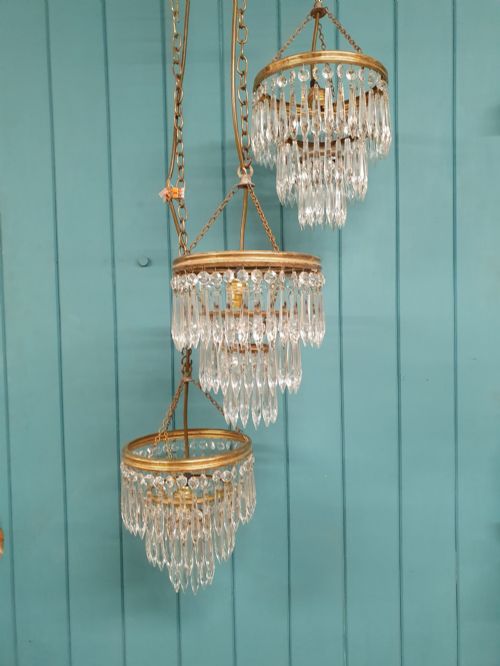
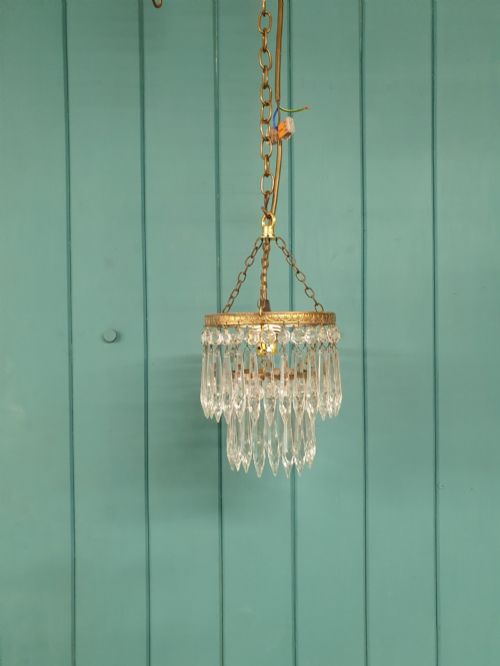
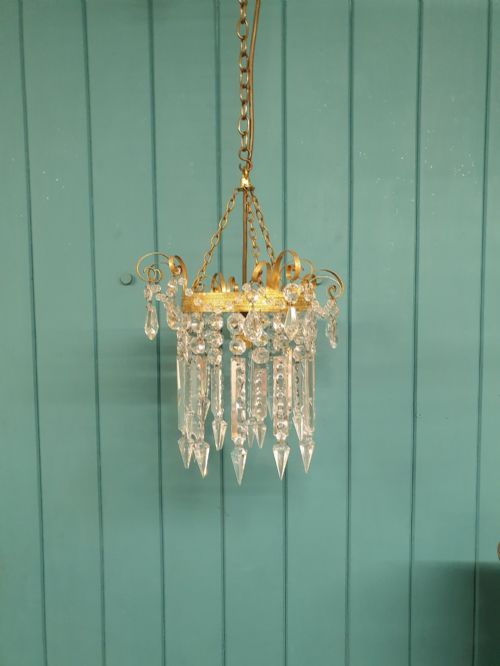
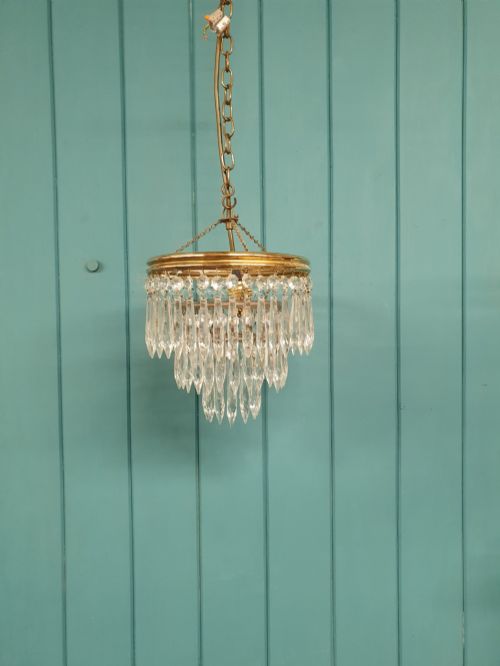
These vintage icicle chandelier fixtures bring brilliant sparkle and period character to a room through cascading glass drops.
Vintage Icicle Chandelier
When you search for a vintage icicle chandelier, you are looking at ceiling lights defined by hanging glass drops that resemble icicles, often referred to in the trade as spike chandeliers. These pieces appear primarily from the Edwardian era, the 1920s, and 1930s, offering distinct lighting solutions for period and eclectic interiors.
The pieces on this page span several recognisable styles including French Chateau, Art Deco, and Early 20th Century designs. You will encounter single pendant lights alongside pairs, ranging from small fixtures measuring six inches up to larger thirteen-inch statement pieces.
How they were made
These light fixtures are constructed using metal frames of brass, gilt brass, or copper to support the weight of the glass components. The metalwork often includes decorative finials and detailed fittings designed to secure the hanging elements safely.
The distinctive drops are formed from clear glass, crystal, cut glass, crystal glass, or frosted glass. Skilled workers shaped and cut these glass elements to catch and refract light effectively from the central light source.
Listings feature items from the Edwardian period, 1920, and 1930, utilising brass, copper, and various forms of cut and frosted glass.
What varies in quality
The standard of a vintage icicle chandelier rests on the clarity and cut of the glass components. Finer pieces utilise cut glass and crystal glass that produce sharper light refraction compared to simpler moulded alternatives.
Construction quality also shows in the metal framework, where solid brass, gilt brass, or copper assemblies demonstrate superior durability and finish over basic base metals. Matching sets, such as pairs of spike chandeliers, indicate a higher level of original production.
Jean Gauthier
The Vintage Icicle Chandelier Glossary
- Spike chandelier
- A ceiling light featuring elongated hanging glass drops shaped like spikes or icicles. These fixtures create a distinctive glittering effect when illuminated.
- Cut glass
- Glass that has been decoratively shaped and faceted by grinding and polishing. This process enhances the brilliance and sparkle of the hanging drops.
- Gilt brass
- Brass metal coated with a thin layer of gold leaf or gilt finish. This treatment provides a warmer and more decorative appearance than bare brass.
- Frosted glass
- Glass treated to have a textured, opaque surface that diffuses light softly. It appears in specific period designs to reduce glare from the bulb.
Vintage Icicle Chandelier: Frequently Asked Questions
How do I hang a vintage icicle chandelier safely?
These fixtures require secure ceiling anchor points capable of supporting the combined weight of the metal frame and glass drops. Professional installation by a qualified electrician ensures the wiring meets modern standards.
Take care to suspend the light at a height where the hanging drops remain safely out of accidental reach. This prevents damage to the delicate glass spikes.
What rooms suit a vintage icicle chandelier best?
Smaller spike chandeliers work well in hallways, cloakrooms, or intimate bedrooms where ceiling height is limited. Their concentrated sparkle adds character without overwhelming the floor space.
Larger examples and pairs suit living rooms or dining areas where they function as a focal point. The hanging glass elements diffuse light warmly across the space.
How should I clean a glass spike chandelier?
Remove dust gently using a soft, dry cloth or a feather duster before attempting any detailed cleaning. Regular maintenance prevents grime buildup on the intricate glass drops.
For thorough cleaning, remove the glass drops individually and wash them in warm soapy water. Dry each piece completely before reattaching it to the metal frame.
How can I tell an Edwardian chandelier from a 1930s piece?
Edwardian fixtures often feature traditional brass frames paired with cut glass and crystal drops in ornate arrangements. These designs lean towards classic decorative motifs.
Pieces from the 1930s frequently incorporate Art Deco influences, utilising copper and frosted glass alongside cleaner geometric lines. Examining the metal finishes and glass types helps identify the specific period.