
Crystal Drop Light Fixture
A crystal drop light fixture brings direct illumination and refractive brilliance to a room, drawing the eye upwards through cut glass and metal framework.
Crystal Drop Light Fixture
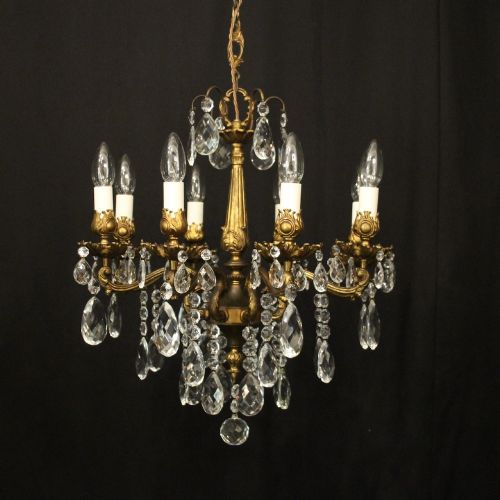
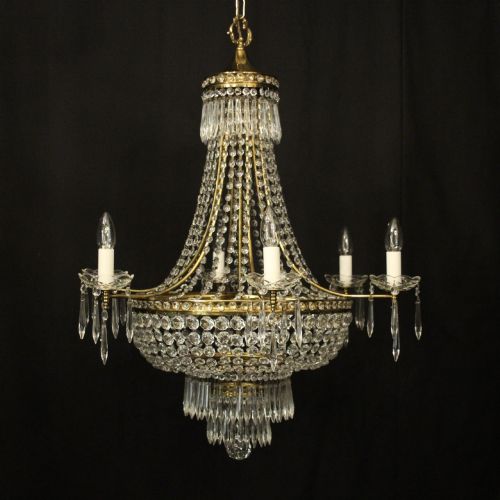
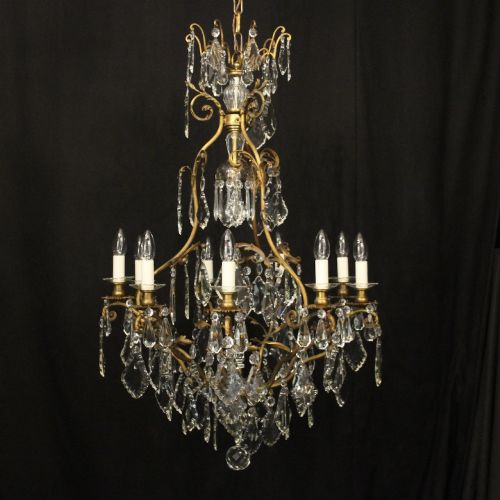
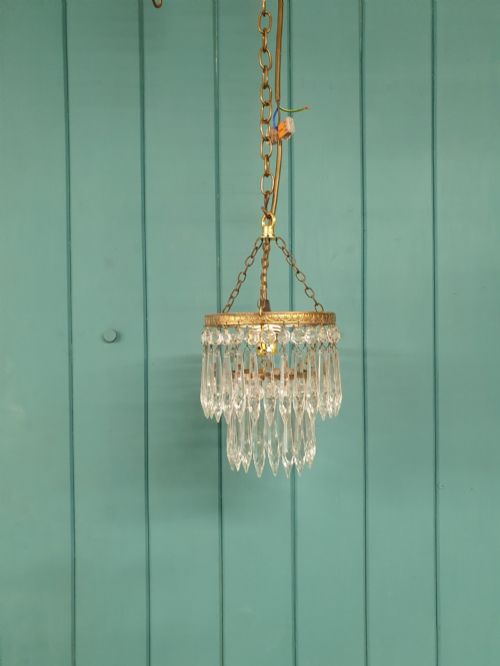
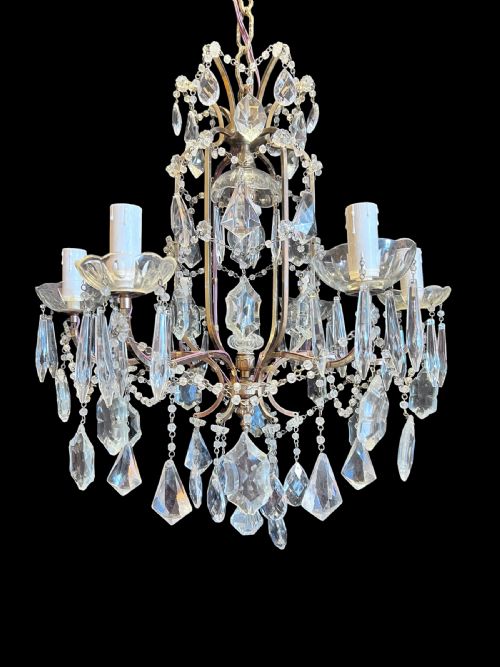
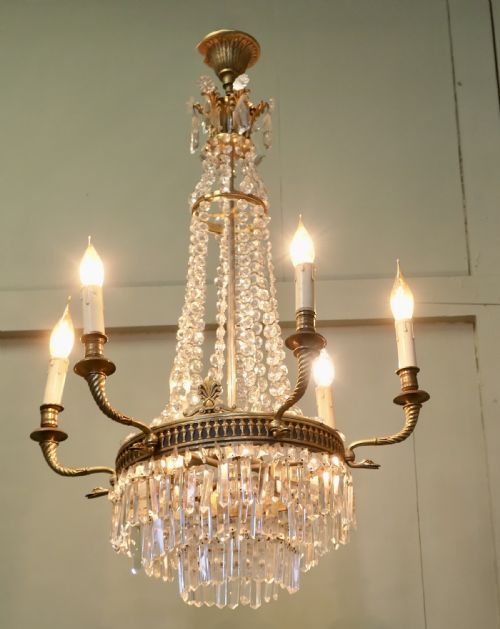
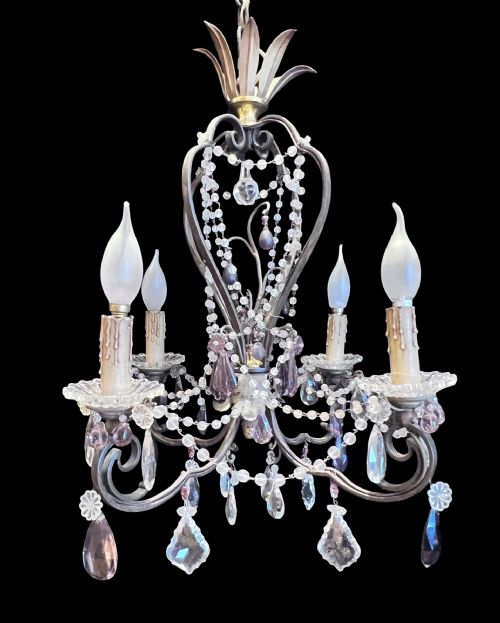
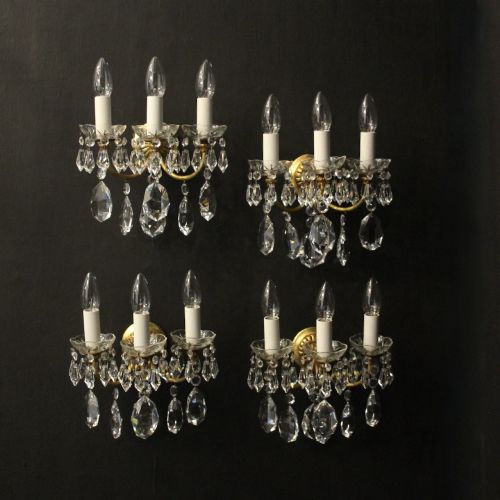
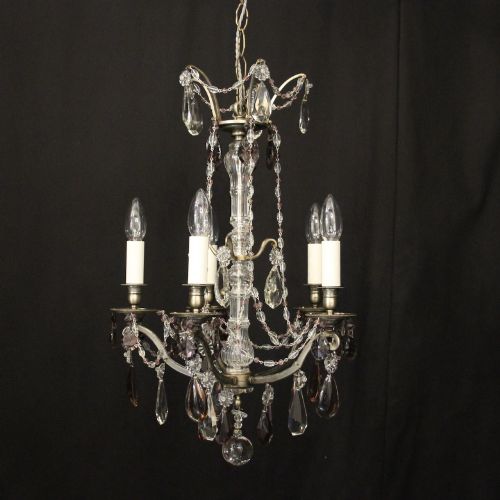
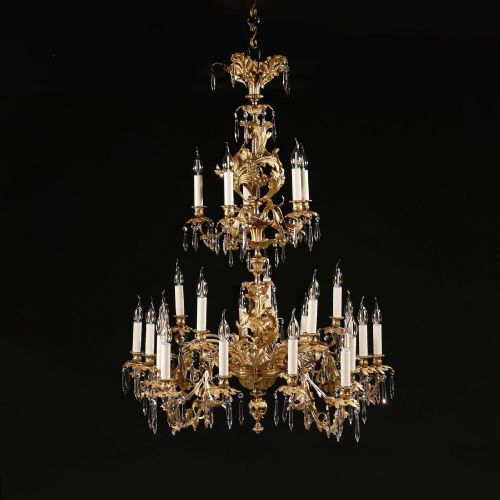
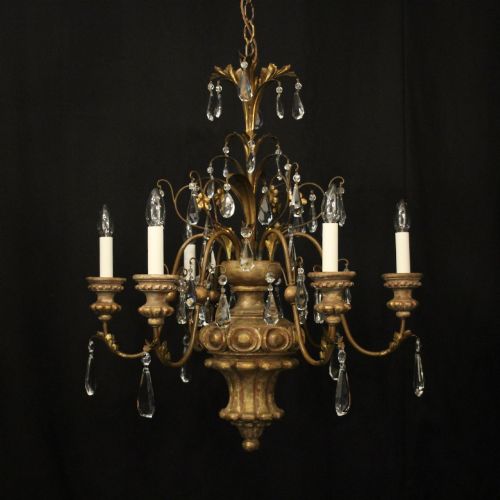
The configurations vary widely from single-light wall lights to multi-armed chandeliers holding up to twenty-five lights. Common structural formats include tent and waterfall arrangements, cage chandeliers, and smaller bag chandeliers or spike chandeliers. Many examples incorporate coloured crystals, amethyst hues, turquoise glass, or toleware elements alongside traditional clear glass and crystal drops.
Materials and Construction
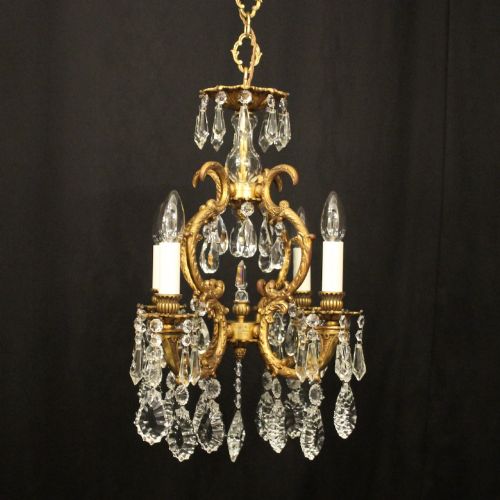
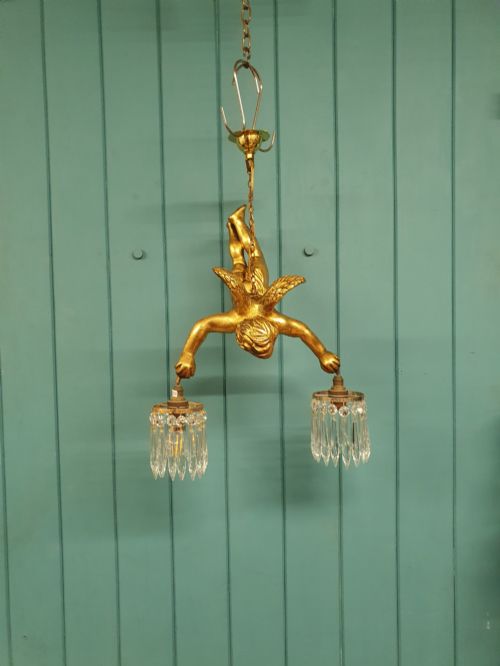
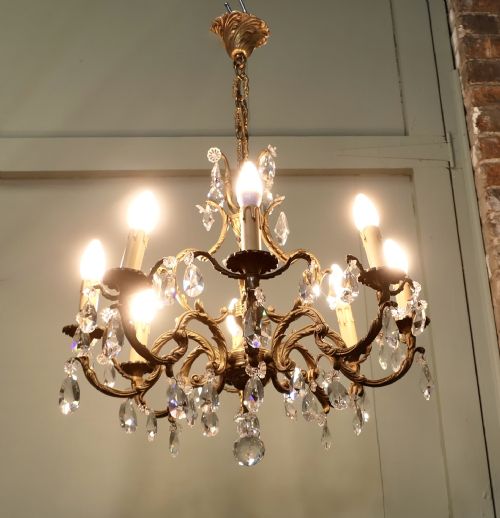
The framework relies primarily on metals such as brass, gilt brass, gilt bronze, gilt metal, silver gilt, spelter, and wrought iron to support the heavy glass components. Artisans shaped these metal frames into elaborate branches, leafy decorations, and structural cages to hold the weight of the lighting assembly.
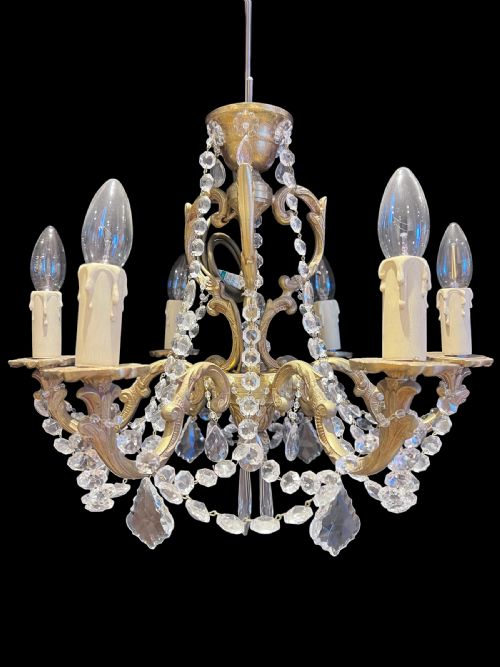
Hanging elements are formed from crystal, glass, and cut glass, shaped into lustres, coffin prisms, spikes, and drops. These components are wired or pinned to the metal structure, allowing the glass to catch and refract light from the internal candle-holders or electric bulbs.
Listings feature pieces spanning the 19th Century, Edwardian era, 1910, 1920, and 1930, utilising brass, gilt bronze, crystal glass, and toleware.
Assessing Excellence
The standard of a piece rests largely on the complexity of its metalwork and the precision of the glass cutting. Cast gilt bronze and detailed hand-wrought or gilded brass frames represent higher levels of artisan effort than simpler cast metal structures.
The optical clarity and depth of the cut glass drops also determine the calibre of the fixture. Pieces utilising rich amethyst or turquoise crystals, alongside intricate tent and waterfall arrangements with abundant lustres and prisms, demonstrate superior design ambition.
The Crystal Drop Light Fixture Glossary
- Tent and waterfall
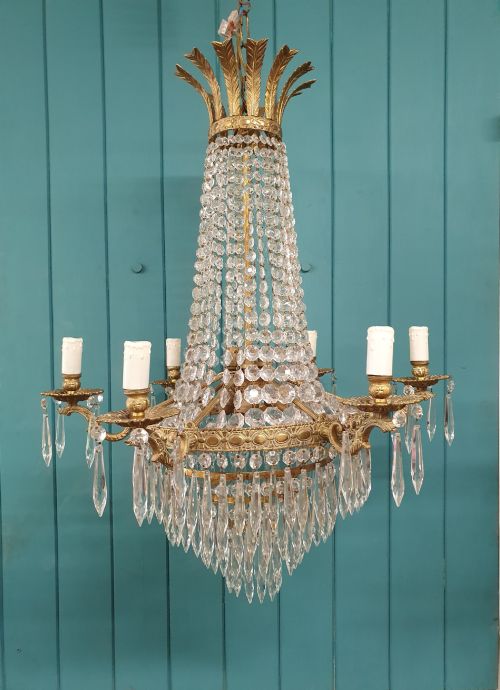
- A lighting configuration where strings of crystal beads form an upper tent shape that flows down into a wider waterfall of hanging lustres. This style creates a dense cascade of refractive glass.
- Lustre
- A cut glass pendant or hanging droplet suspended from the arms or frame of a light fixture. These elements move slightly to catch and disperse light across the room.
- Coffin prism
- A long, flat-backed crystal drop with a faceted front, resembling the tapered shape of a traditional coffin. They are frequently hung around the perimeter of Edwardian and later fixtures.
- Marie Theresa
- A specific style of chandelier characterised by a flat metal frame completely covered by overlapping glass plates and crystal garlands. Originating in Central Europe, these fixtures present a lush, glass-heavy appearance.
- Spelter
- A zinc-based alloy used as an economical alternative to bronze for casting decorative figures and structural mounts. It is commonly found gilded or painted on early twentieth-century pieces.
Crystal Drop Light Fixture: Frequently Asked Questions
What is a tent and waterfall chandelier?
A tent and waterfall chandelier uses strings of small crystal beads gathered at the top in a tent shape, dropping down into loose hanging crystals that resemble a cascade of water. This arrangement maximises the number of refractive surfaces visible from below.
Such designs became particularly popular in French Empire and subsequent revival styles during the nineteenth and early twentieth centuries.
How do I identify an Edwardian crystal light?
Edwardian crystal lights often appear in smaller formats, such as compact bag chandeliers, spike chandeliers, or fixtures featuring coffin prisms. They tend to reflect a lighter, more delicate scale compared to massive mid-nineteenth-century alternatives.
These pieces frequently utilise brass or gilt metal frames combined with simple cut glass elements suited to smaller ceiling heights.
Where were Marie Theresa chandeliers made?
Marie Theresa chandeliers trace their origins to Austrian and Italian traditions, named in honour of Empress Maria Theresa. The style is defined by flat metal frameworks entirely concealed by glass plates, rosettes, and crystal drops.
Italian examples in this selection often pair this configuration with multiple lights and delicate metal scrolling.
What are crystal spikes on a chandelier?
Crystal spikes are narrow, pointed glass drops that project outward from the central body or arms of a light fixture. They add a sharp, geometric texture to the silhouette of the piece.
They appear frequently on smaller early twentieth-century and Edwardian ceiling fixtures alongside traditional circular lustres.