

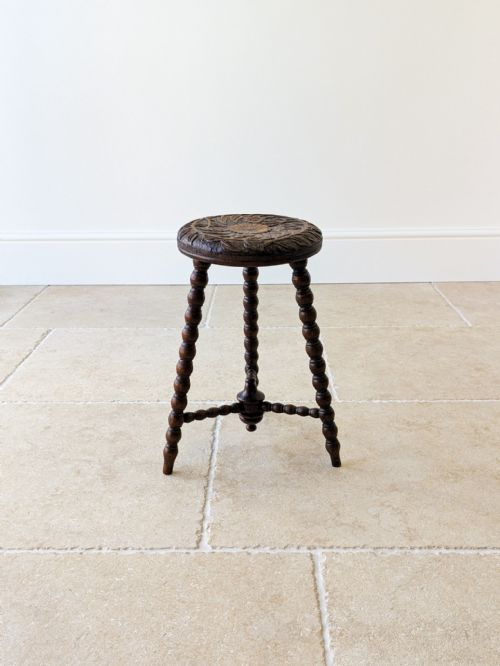
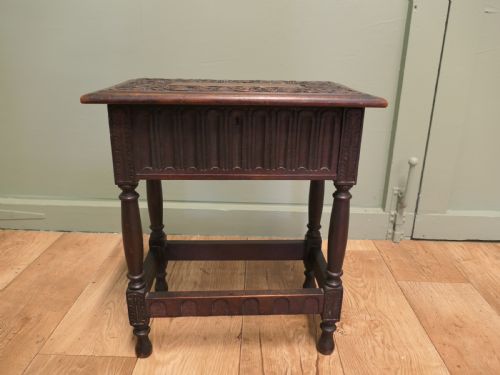
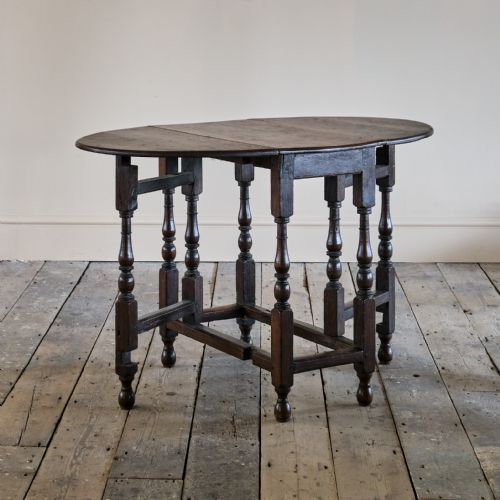
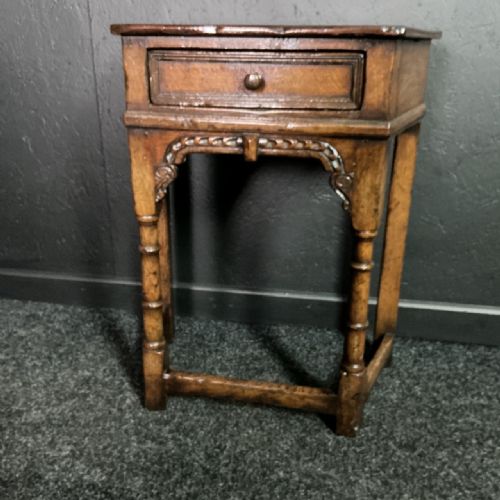


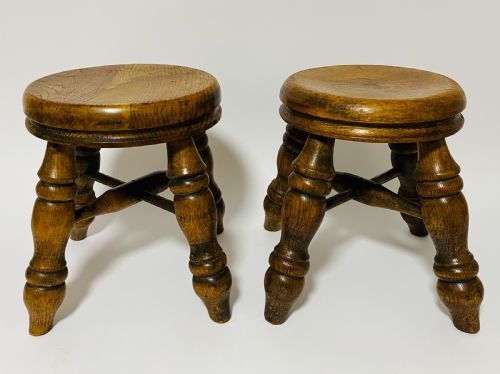
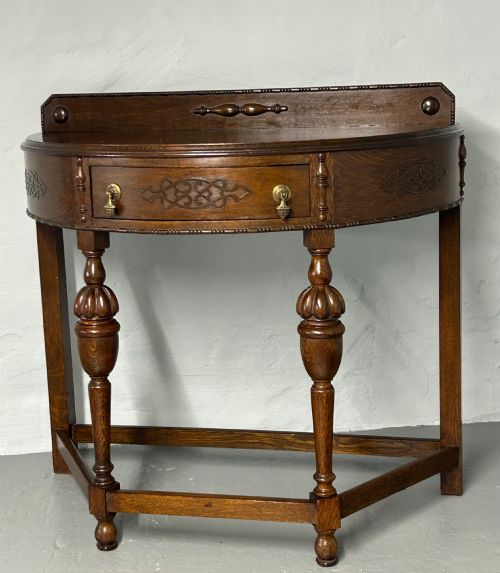


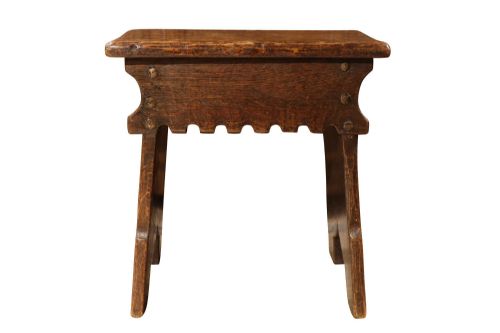


Small Carved Oak Stool
These small carved oak stools offer genuine period utility, bringing compact timber character and centuries of craftsmanship straight to your room.
Small Carved Oak Stool
A small carved oak stool provides compact seating or display space rooted in historic domestic utility. When you search for this phrase, you encounter forms ranging from traditional joint stools to rustic box stools and vernacular seats.
The pieces on this page span several centuries and revival movements, including genuine seventeenth-century examples alongside Victorian, Edwardian, and twentieth-century interpretations. You are most likely to meet revival pieces from the late nineteenth and early twentieth centuries, particularly those built in the Jacobean or Arts and Crafts styles.
Makers produced these versatile items in various utilitarian formats, occasionally functioning as foot stools, plant stands, or diminutive side tables. Their modest proportions make them adaptable additions to modern interiors requiring historic timber accents.
What varies in quality
The distinction between ordinary and superior pieces rests on timber selection and the crispness of the hand-carved detail. Dense English oak with tight grain patination commands greater appreciation than plain stained softwood or loose secondary timbers.
Structural integrity also dictates value, where tightly pegged joints and substantial timber thickness demonstrate superior workshop execution. Finer examples display deliberate proportions and harmonious decorative carving rather than mechanical factory stamping.
Small Carved Oak Stool Retail Price Guide 2026
Typical asking prices for small carved oak stool among the pieces listed under this phrase on Sellingantiques today, from the lower quarter to the upper quarter. They describe what is for sale here now, not the wider market.
Listings feature periods spanning from the seventeenth century through the Edwardian era, predominantly constructed from solid oak.
Liberty and Co
The Small Carved Oak Stool Glossary
- Joint stool
- A sturdy wooden seat constructed with mortise and tenon joints, pegged together for maximum structural rigidity. These pieces typically feature rectangular tops and straight turned legs.
- Chip carving
- A primitive decorative technique where small chips are removed from the surface of the timber to create geometric patterns. Craftsmen utilised simple gouges and knives to achieve these textured designs.
- Box stool
- A multi-functional seating form incorporating a hinged or removable lid above a concealed storage compartment. This dual purpose made them practical additions to early domestic interiors.
- Pegged construction
- A traditional method of securing joinery by driving wooden pins through overlapping timber joints. This technique eliminates the need for modern metal fasteners.
Small Carved Oak Stool: Frequently Asked Questions
How were small carved oak stools used historically?
These low seats served practical everyday purposes around the hearth, functioning primarily as portable seating or elevated platforms for domestic tasks. Their sturdy construction allowed them to withstand heavy daily use in modest households.
Over time, owners also utilised them to display household items or support heavier objects like small chests and textile bundles. Their compact footprint made them easily movable wherever extra utility was required.
How can I tell a seventeenth-century stool from a Victorian revival piece?
Examination of the timber surfaces and tool marks often reveals the age of the piece, as genuine seventeenth-century examples display distinct hand-tool signatures and deep patination from centuries of handling. Revival pieces from the Victorian and Edwardian eras typically exhibit more uniform machining and lighter secondary woods.
Construction methods also provide clues, as older pieces rely entirely on hand-cut joints and hand-rived oak planks. Nineteenth-century interpretations frequently incorporate standardised dimensions and revival styling cues like Jacobean carving motifs applied to later frames.
Where should I place a small oak stool in my home?
Their modest scale allows them to function effectively as side tables next to low seating or as standalone display stands for plants and decorative objects. Placing them in hallways or tight corners introduces historic texture without cluttering the floor space.
They also serve well as occasional foot stools or casual seats in living areas where solid timber accents are desired. The durable nature of oak ensures they handle everyday placement comfortably.
What maintenance do antique oak stools require?
Regular dusting with a dry, soft cloth prevents the accumulation of particulate matter in the carved recesses and grain. Applying a neutral beeswax periodically helps nourish the timber and maintain a healthy surface sheen.
Avoiding direct sunlight and rapid humidity fluctuations protects the historic oak from drying out or splitting. Gentle care preserves both the structural integrity and the patination accumulated over generations.