
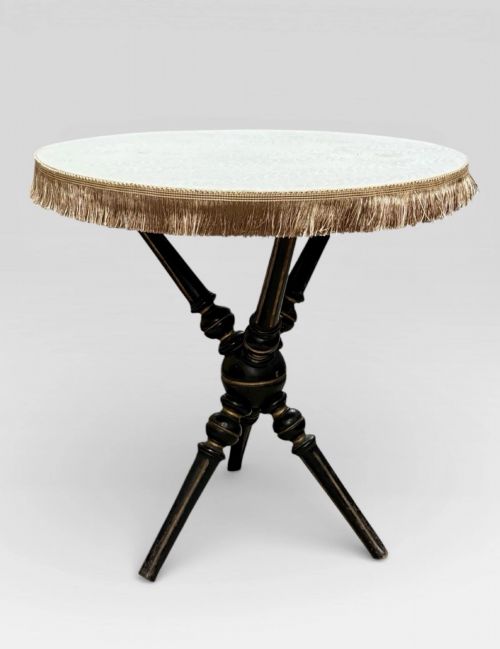


Small Black Occasional Table
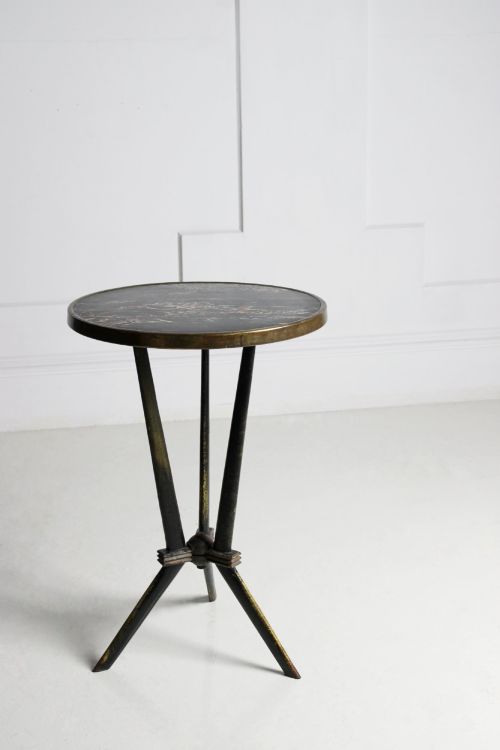
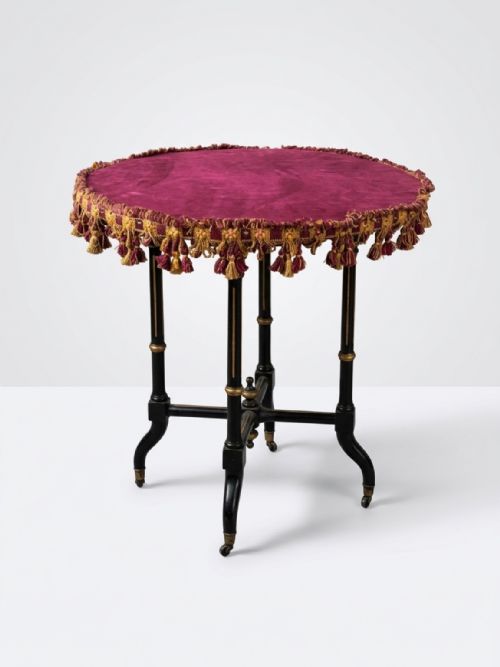
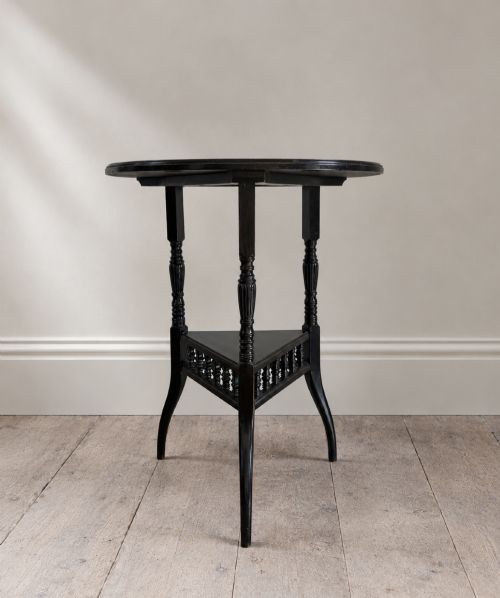
A small black occasional table brings dark, striking form to a corner, most often seen in ebonised wood and Victorian aesthetic styles.
Small Black Occasional Table
When you search for a small black occasional table, you are looking at compact side pieces designed for mobility and display across various historical periods. The most frequent examples met on this page are ebonised wood tables dating from the Victorian and nineteenth century eras.
The forms span side tables, lamp tables, wine tables, and work tables, alongside occasional dropleaf and Sutherland formats. These versatile tables served various parlour and drawing room functions where extra surface space was required without dominating the room.
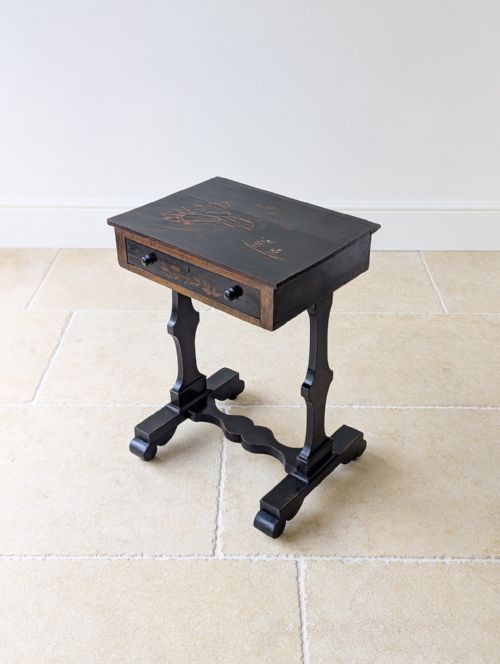
Stylistic influences range from Regency and Georgian through to Arts and Crafts, Chinoiserie, and Aesthetic Movement designs. This variety means a small black occasional table can sit comfortably in both traditional and more eclectic modern interiors.
How they were made
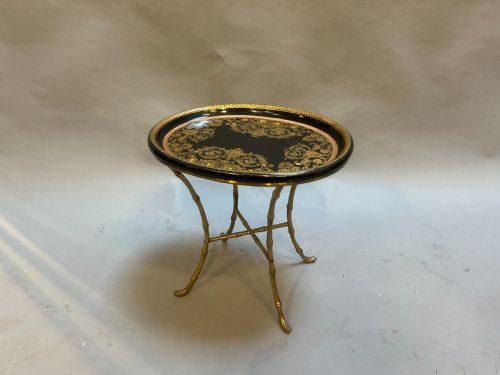
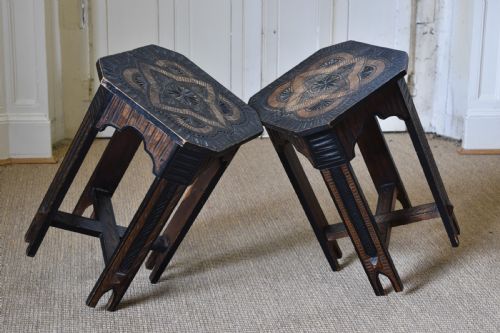
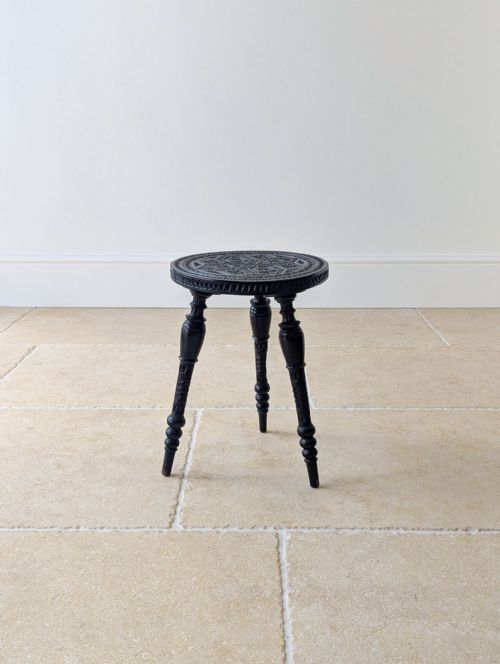
Makers achieved the characteristic dark finish using ebonised hardwood, painted surfaces, and lacquered wood, often accented with gilt, gold leaf, or brass details. Chip carving, penwork decoration, and papier mache techniques further enriched the surfaces of these compact tables.
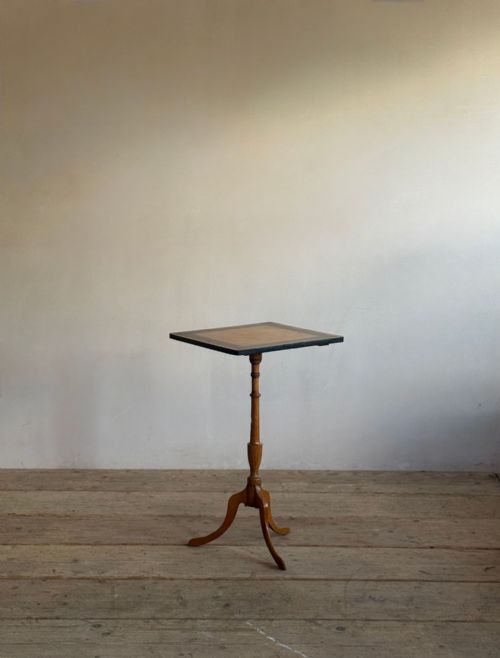
Underpinning these decorative skins are timbers such as mahogany, elm, walnut, and satinwood, shaped into circular tops, tripartite bases, and tripod supports. The physical construction relies on traditional joinery suited to smaller scale furniture that needed to remain light and portable.
Object forms span side tables, wine tables, centre tables, and occasional tables with drop leaves or tripod bases.
What varies in quality
Quality rests in the crispness of the ebonisation and the execution of surface decoration, whether hand-painted Chinoiserie motifs or intricate chip carving. Finer examples display meticulous attention to detail on turnings, legs, and edge mouldings.
The integrity of the underlying timber and the sophistication of the design attribution elevate certain pieces. Tables bearing maker signatures or distinct stylistic provenance from movements like the Aesthetic Movement stand apart from simpler utilitarian production.
EW Godwin·Jenks & Woods
The Small Black Occasional Table Glossary
- Ebonised
- Wood treated to resemble ebony, typically by staining and polishing fruitwood or hardwood to a deep black finish. This technique gained immense popularity during the Victorian and Aesthetic periods.
- Chinoiserie
- European decorative style reflecting Chinese artistic influences, frequently featuring gilt figures, landscapes, and motifs on black lacquered surfaces. It appears prominently on tables from the eighteenth and nineteenth centuries.
- Sutherland table
- A narrow drop-leaf table with exceptionally slender folding leaves supported by swing legs. When closed, it occupies minimal floor space.
- Tripod table
- A small freestanding table supported by a central pillar above three feet. This form allows the table to stand steadily on uneven historical floorboards.
- Papier mache
- A composite material made from paper pulp or reinforced sheets mixed with glue, moulded and heavily lacquered. It provided a smooth, durable surface for decorative painting.
Small Black Occasional Table: Frequently Asked Questions
Where should I place a small black occasional table?
These compact tables fit readily beside a sofa or armchair to hold a lamp, book, or cup. Their dark finishes allow them to anchor brighter corners or contrast against patterned walls.
Because they originate in varied forms like wine tables and Sutherland tables, consider the physical footprint before placement to ensure clearance for drop leaves or tripod legs.
How do I care for ebonised wood?
Dust regularly with a soft, dry cloth to prevent particulate buildup on the dark polished surface. Avoid harsh chemical cleaners or excessive moisture, which can degrade the ebonisation.
Occasional application of appropriate wax maintains the lustre of the finish without dulling the deep black tone.
How can I distinguish Victorian from Regency examples?
Regency pieces often display classical proportions, satinwood inlay, and cleaner lines reflecting early nineteenth century neoclassical taste. Victorian and Aesthetic Movement tables tend to embrace bolder surface ornamentation, chip carving, or Japanese-inspired motifs.
Examining the construction methods, secondary timbers, and characteristic decorative vocabulary helps separate these overlapping eras.
What is an Aesthetic Movement table?
Aesthetic Movement furniture prioritises artistic visual qualities, often incorporating ebonised finishes, gilt highlights, and Japanese design elements. These pieces reject heavy industrial ornamentation in favour of refined, decorative simplicity.
They frequently feature slender framing and thoughtful integration of painted or carved details suited to late nineteenth century artistic interiors.