
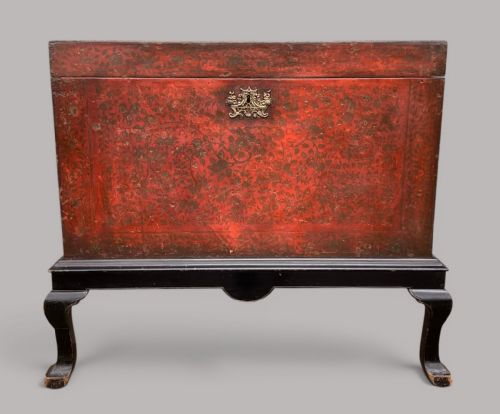


Oriental Ebonised Wood Stand
These oriental ebonised wood stand pieces bring rich Far Eastern craftsmanship and dark polished surfaces into a room to elevate a vase or lamp.
Oriental Ebonised Wood Stand
An oriental ebonised wood stand encompasses carved hardwood, ebonised elm, and lacquered surfaces designed to elevate objects or furnish corners with compact utility. The selection spans plant stands, vase stands, lantern stands, and side tables, alongside more complex forms like chest on stand pieces and display cabinets.
The pieces appearing on this page originate from diverse cultural traditions and periods, ranging from Victorian Anglo-Japanese creations and Meiji era works to Chinese export items and Anglo-Indian productions. A buyer is likely to encounter carved hardwood vase stands, ebonised jardinieres, and rosewood dragon side tables as the core of the offerings.
Dated examples stretch from the late nineteenth century through to the early twentieth century, taking in the Victorian era, the Taisho period, and nineteen-ten productions. These items function as focal points for displaying decorative objects while introducing distinct regional carving and finishing techniques to an interior.
Materials and construction
Makers utilised dense timbers such as hardwood, rosewood, and elm as the primary structural materials for these items. Surfaces were frequently ebonised to imitate exotic black woods, or finished with red lacquer to achieve a smooth, glossy exterior.
Construction techniques involve detailed hand carving, evident in dragon motifs, floral reliefs, and architectural portico structures. Certain pieces incorporate inset marble tops or contrasting brass details to provide durability and textural variety.
Some nineteenth-century makers spent hours carving fierce dragons into rosewood side tables just so a quiet teacup could sit safely on top.
Distinctions in quality
Quality rests in the crispness of the hand carving and the depth of the ebonised or lacquered finish across the timber. Superior pieces exhibit intricate floral or dragon details that remain sharp and well-defined rather than soft or shallow.
The selection of materials also dictates standard, with solid hardwoods and dense rosewood elevating the piece above simpler domestic timbers. Integrated elements such as fitted marble tops or inlaid decoration demonstrate higher execution levels within the maker's workshop.
Liberty of London
The Oriental Ebonised Wood Stand Glossary
- Ebonised
- Wood treated with a dark stain or finish to resemble ebony. This dark surface creates a formal backdrop for decorative objects.
- Jardiniere
- A large ornamental pot or planter for flowers. These stands provide a sturdy platform to display such vessels.
- Shodana
- A traditional Japanese display cabinet featuring asymmetrical shelving. These pieces showcase small treasures and ornaments.
- Portico
- An architectural framework featuring columns or pillars. This style influences the structural design of certain display tables.
Oriental Ebonised Wood Stand: Frequently Asked Questions
What is an oriental ebonised wood stand used for?
These pieces were built primarily to elevate objects such as ceramic vases, jardiniere planters, lamps, and decorative ornaments within a room. Their compact footprints also allowed them to function as small side tables for lamps or wine.
Over time, their roles expanded to include display cabinets and chest on stand furniture, serving both practical support and decorative exhibition purposes.
How do I identify a Victorian piece?
Victorian examples often merge European furniture forms with Japanese or Chinese decorative motifs, reflecting the nineteenth-century Anglo-Japanese taste. Look for ebonised elm or hardwood structures combined with elaborate hand carving.
These pieces frequently align with the production methods and design aesthetics recorded during the latter half of the nineteenth century.
What is a shodana stand?
A shodana is a Japanese display cabinet featuring multiple levels of shelves designed for presenting small decorative objects. These items combine practical storage with intricate woodwork typical of the Meiji and Taisho periods.
They represent a more complex form of stand that integrates cabinetry with display platforms.
How do I care for ebonised wood?
Ebonised surfaces require gentle dusting with a soft, dry cloth to prevent the accumulation of grit on the dark finish. Avoid harsh chemical cleaners and direct sunlight, which can fade or damage the treated timber over time.
Maintaining a stable indoor humidity helps protect the underlying hardwood from movement or splitting.