

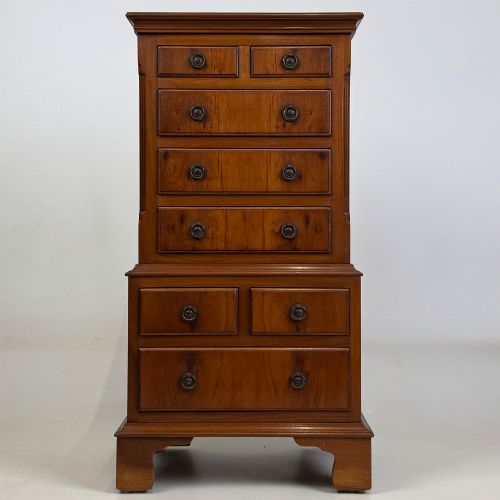
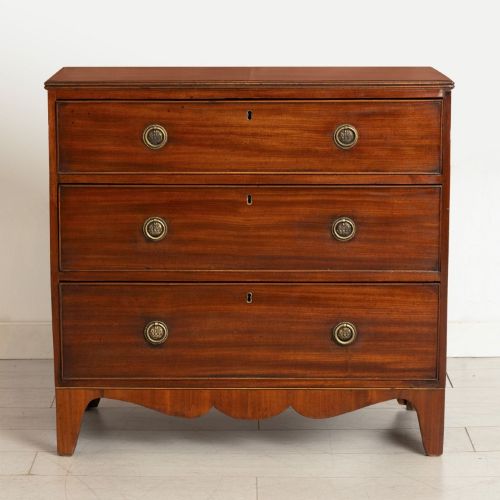
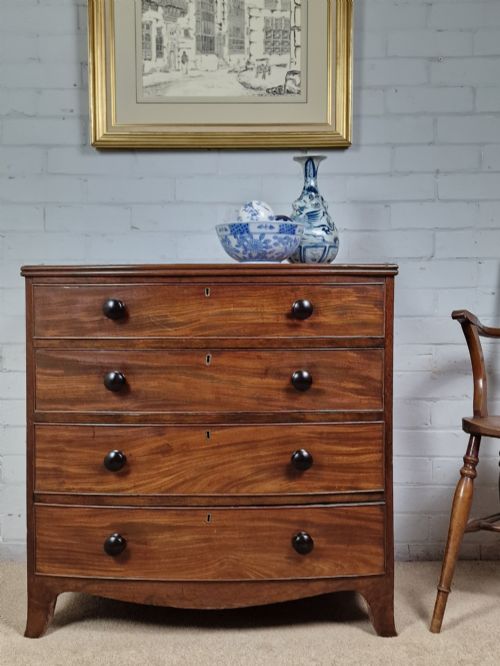
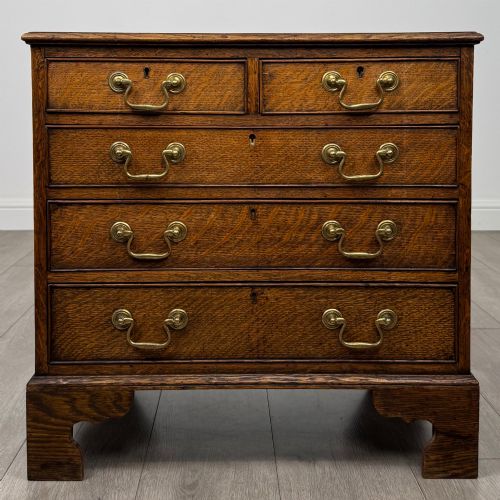
Small Bedroom Chest Drawers
These small bedroom chest drawers are compact storage pieces shaped by centuries of cabinet-making, prized for fitting tight spaces while holding everyday essentials.
Small Bedroom Chest Drawers
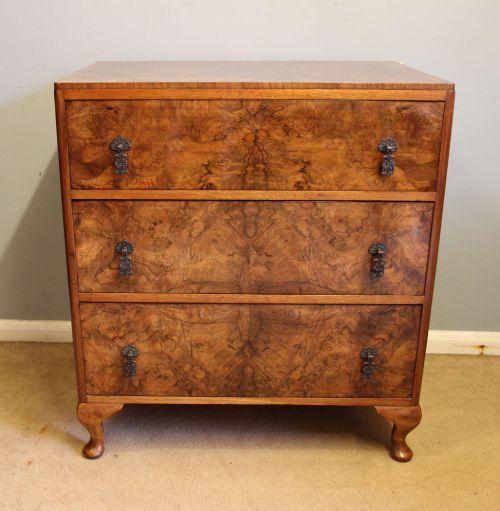
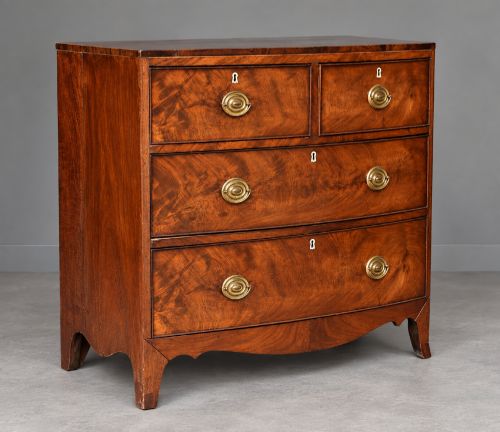
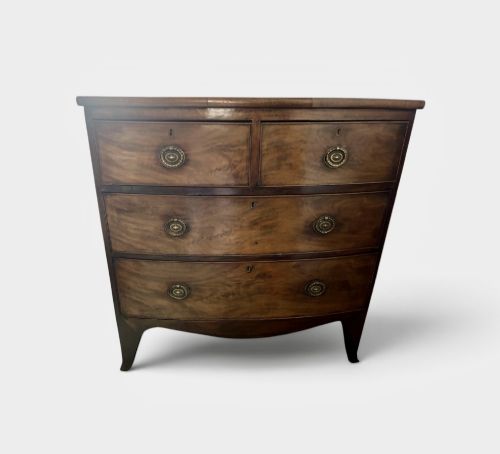
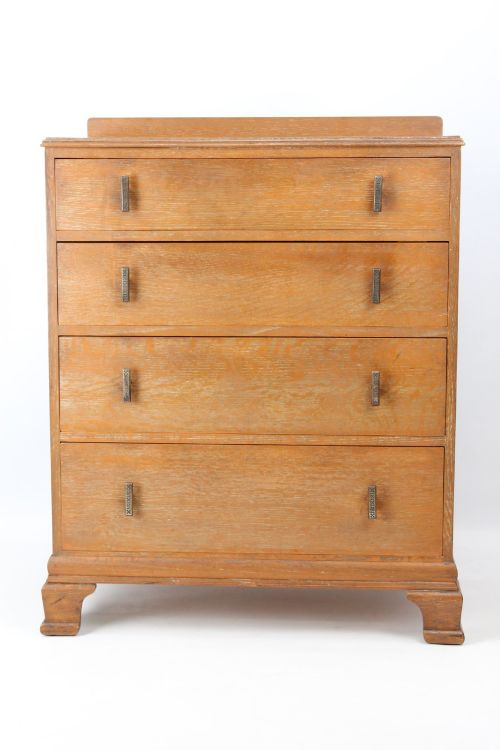
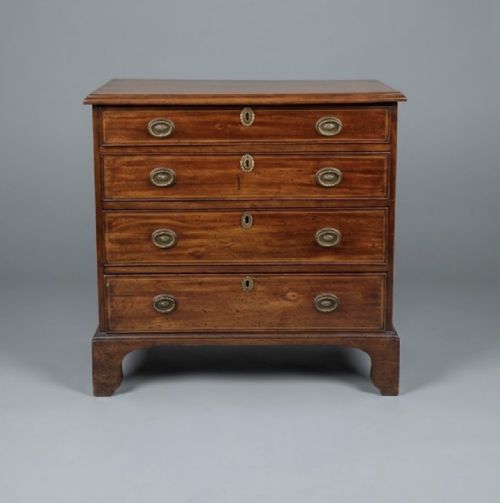
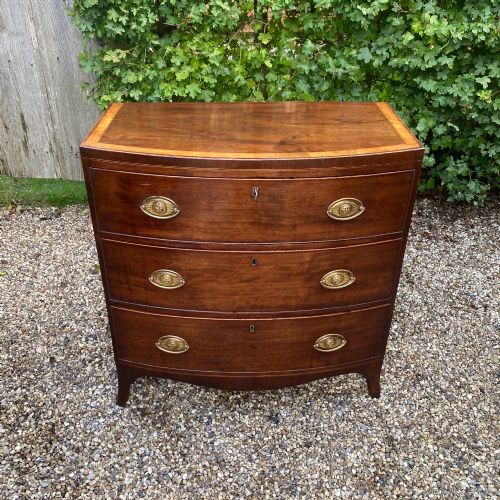
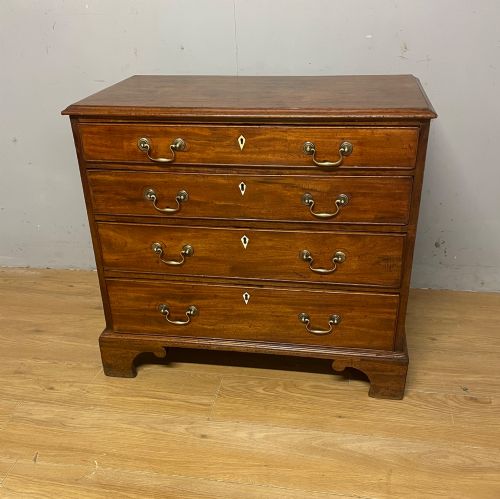
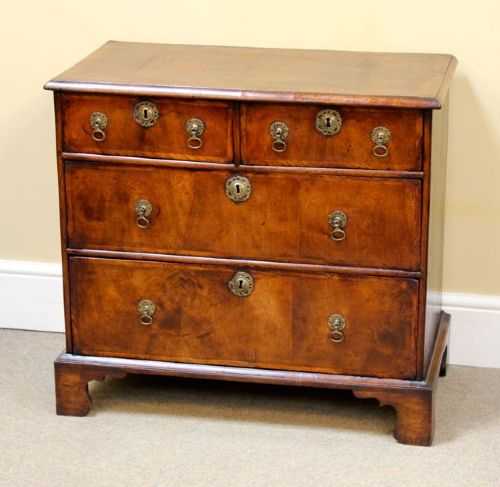
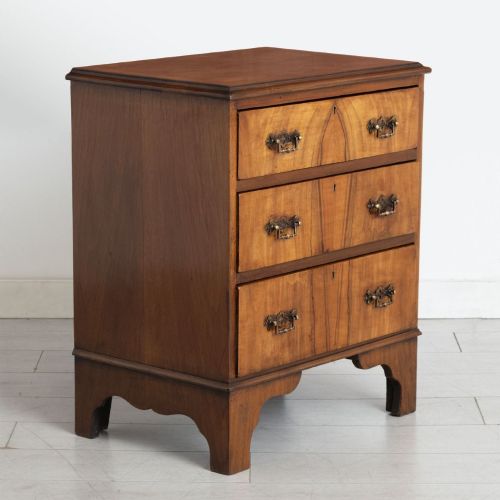
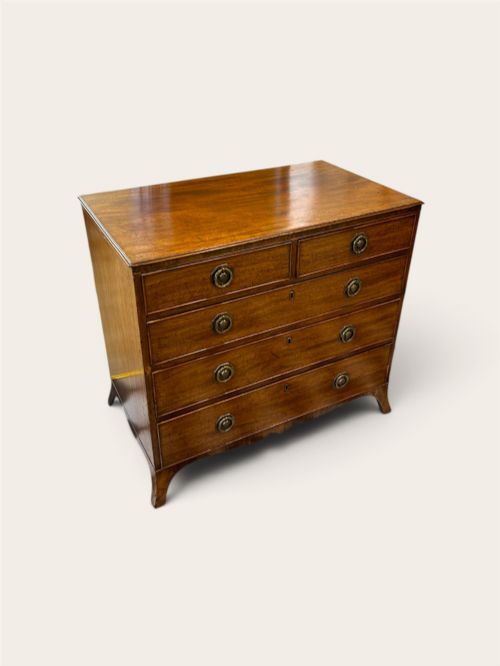
Small bedroom chest drawers span the eighteenth, nineteenth and twentieth centuries, taking the form of compact chests, tallboys, bedside chests and commodes. You meet mahogany bow fronts from the Georgian and Regency periods most frequently on this page, alongside walnut, oak and later twentieth-century interpretations.
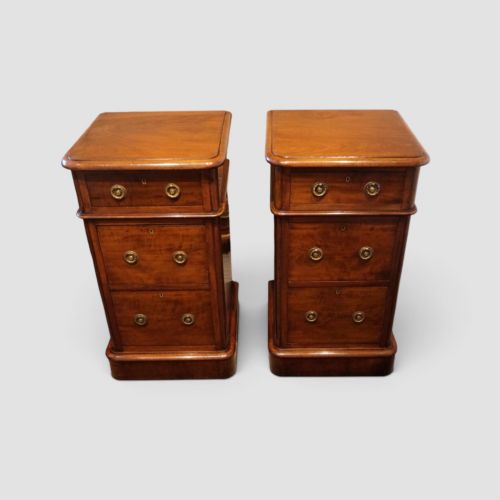
The objects serve as functional bedside tables and bedroom storage where floor space is limited. Pieces range from four-drawer heights down to low bedside nightstands, reflecting changing domestic needs across the Georgian, Victorian and Edwardian eras.
How they were made
Cabinet-makers constructed these chests using solid timbers and decorative veneers such as mahogany, walnut, burr walnut and oak. Secondary woods were utilised for drawer linings and carcases, while brass provided handles, keyplates and escutcheons.
Surfaces often display crossbanding, satinwood stringing and flame mahogany veneer to highlight the grain. Joinery techniques include hand-cut dovetails on drawer construction and bracket feet or plinth bases supporting the lower sections.
Listings feature eighteenth-century pieces with brushing slides alongside twentieth-century oak and walnut chests.
What varies in quality
The crispness of timber selection dictates visual success, where figured mahogany and burr walnut display depth and movement across the front drawers. Finer examples maintain original brass hardware, working locks with keys and clean proportions that respect their period design.
Construction methods separate standard production from superior workshops, seen in tight dovetailing, matching grain patterns across drawer tiers and undisturbed patination on the timber. Secondary additions or alterations, such as adapted heights, change the standing of a piece within the range.
The Small Bedroom Chest Drawers Glossary
- Bow front
- A convex curved front facade popular in Georgian and Regency cabinet-making. This shape softens the corners of the furniture while increasing central storage capacity.
- Brushing slide
- A pull-out shelf positioned above the top drawer used for folding clothes or writing. It slides flush into the carcase when not in use.
- Caddy top
- A raised, moulded tabletop profile resembling the lids of tea caddies. It adds a distinct geometric edge to early chests.
- Serpentine
- A horizontally undulating front design featuring a convex centre flanked by concave curves. It requires advanced woodworking skill to shape accurately.
- Wellington chest
- A tall, narrow chest secured by a vertical locking side-flap that fastens over the drawer edges. This form originated in the nineteenth century for efficient security.
Small Bedroom Chest Drawers: Frequently Asked Questions
Where do I put a small chest?
These compact chests suit tight alcoves, narrow hallways and bedside positions where standard furniture overwhelms the floor plan. Their reduced depth allows placement in bedrooms without restricting movement.
Pairing a low chest beside a bed creates practical surface space for lighting while providing enclosed drawer storage underneath.
How do I identify a Georgian chest?
Georgian pieces generally show hand-cut dovetailing, solid oak or deal drawer linings and timber with a deep, warm patination. Proportions tend to feel balanced, often resting on bracket feet or short ogee feet.
Details like crossbanded veneers and original brass drop handles further point toward eighteenth-century manufacture.
What is a bachelor's chest?
A bachelor's chest is a small storage unit equipped with a pull-out brushing slide above the primary drawers. It combines surface workspace with compact drawer capacity in a single piece.
Cabinet-makers designed these versatile pieces for smaller rooms where separate desks and chests were impractical.
Are bedside chests antique?
Bedside chests on this page span both original nineteenth-century nightstands and later adaptations of larger chests. Victorian examples often appear as matched pairs designed specifically for flanking a bed.
Checking the interior construction and timber age helps distinguish purpose-built antique nightstands from altered pieces.