
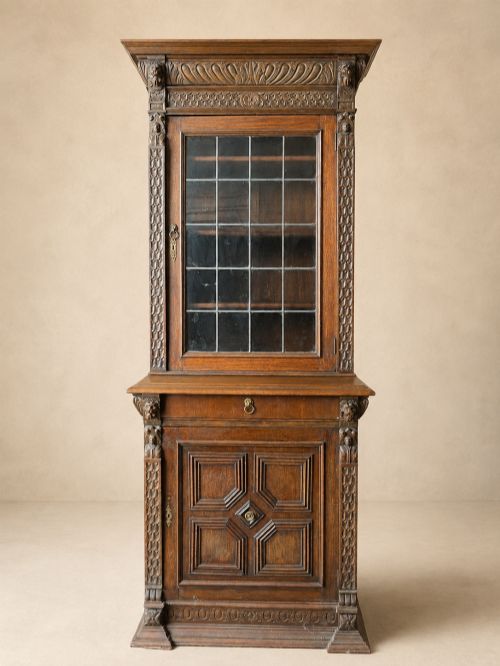
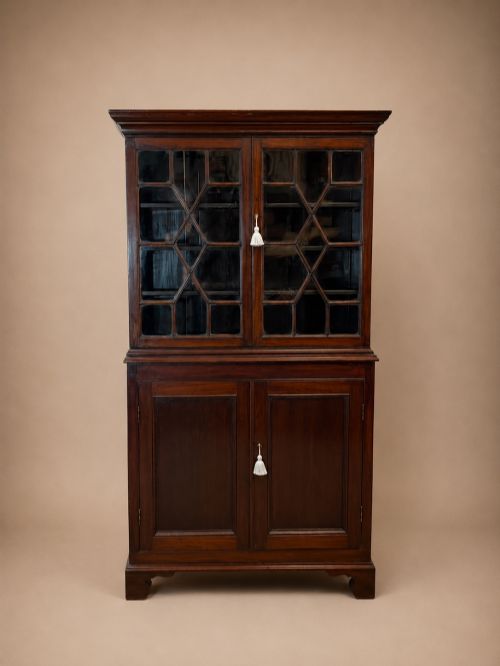
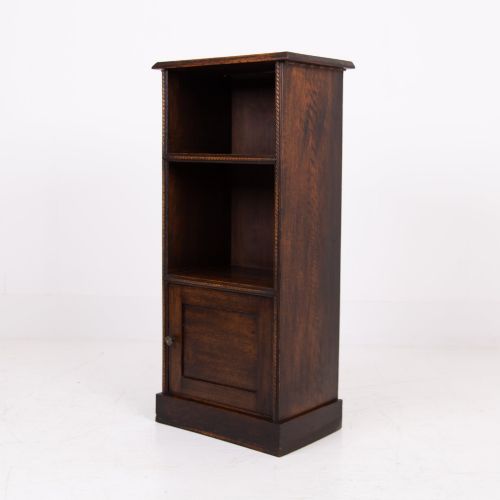
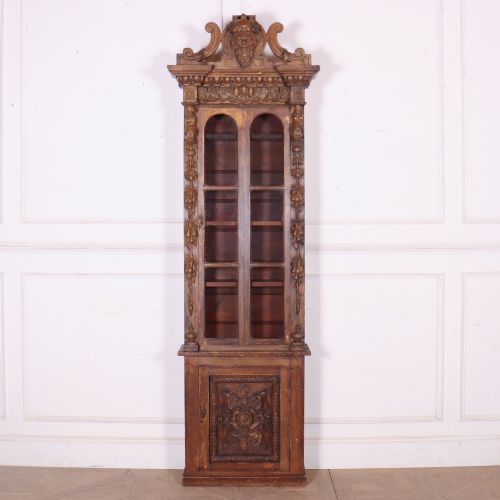
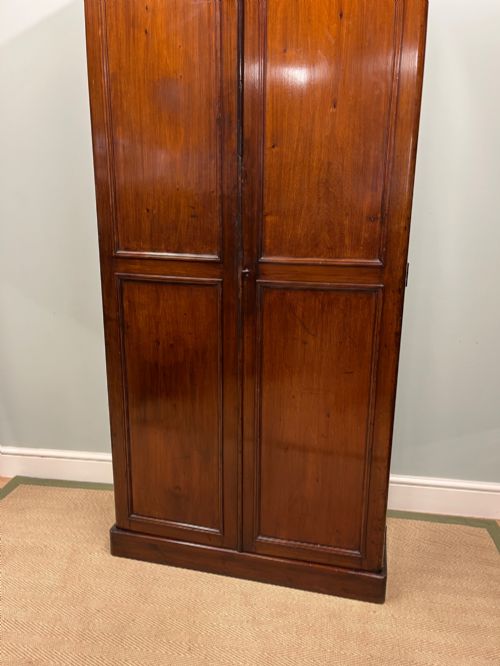


Slim Cupboard
A slim antique cupboard solves the perennial problem of storage in narrow rooms by offering vertical timber height without dominating the floor space.
Slim Cupboard
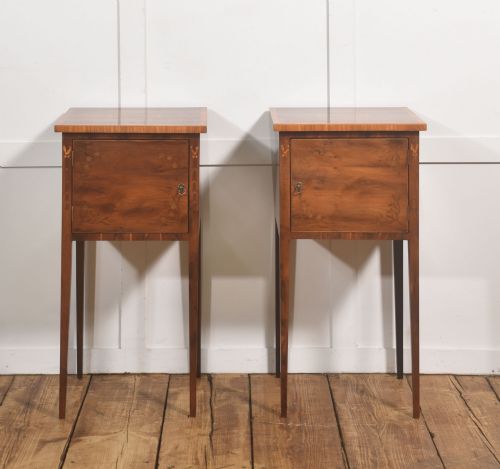
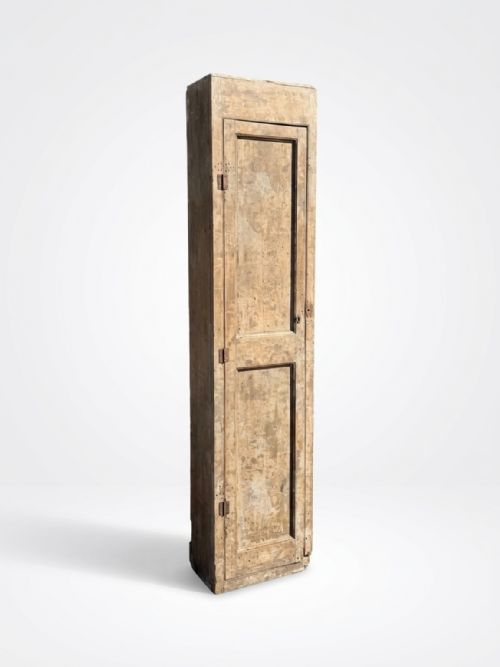
A slim antique cupboard provides practical storage inside tight footprints, drawing on forms made across the nineteenth and early twentieth centuries. These pieces appear as tall pine larders, narrow mahogany bookcases combined with lower cupboards, oak hall wardrobes, and walnut bedside cabinets.
The materials span native and imported timbers, primarily oak, mahogany, walnut, and pine, often complemented by brass handles or glass door panels. Makers built these vertical storage pieces to fit domestic spaces where depth was restricted but height was available.
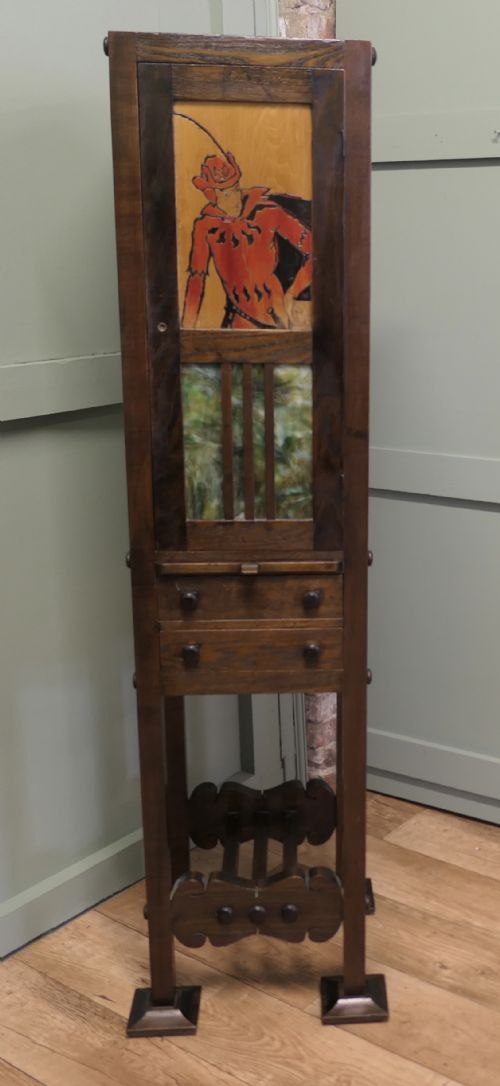
The selection here encompasses regional English works alongside continental examples from Sweden, Denmark, and France, reflecting diverse stylistic influences from Victorian and Edwardian periods down to the Arts and Crafts movement and Jacobean revivals.
How they were made
Cabinet makers built these narrow carcasses using solid timbers such as oak, mahogany, and pine, frequently applying veneers of burr walnut or flame mahogany to principal surfaces. Construction methods relied on traditional joinery, dovetailing drawer boxes and housing shelves securely within vertical frames.
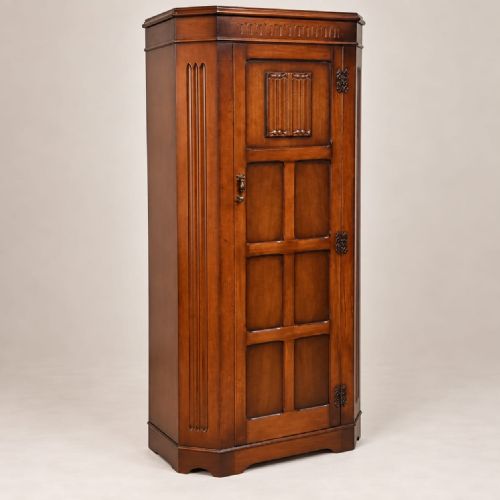
Glazed doors utilised wooden astragal bars to hold individual glass panes, while panelled doors often incorporated linenfold carvings or simple recessed mouldings. Iron hinges and brass hardware secured the doors, and lead came occasionally appeared in decorative window sections.
The listings combine British and continental European origins, featuring oak, mahogany, walnut, and pine across Victorian, Edwardian, and Arts and Crafts periods.
What varies in quality
The grade of timber selection and the precision of the cabinet maker's joinery distinguish standard utilitarian storage from finer domestic pieces. Uniform grain patterns in mahogany or burr walnut indicate careful material sourcing, whereas simple pine constructions prioritise utility over decorative display.
Proportion and architectural balance dictate the success of narrow furniture, where height must remain stable without feeling top-heavy. Refined items integrate carved details, astragal glazing, or matched drawer linings that demonstrate deliberate design rather than mass production.
Simpson Halifax·Heals
The Slim Cupboard Glossary
- Astragal
- A small wooden moulding used to divide glass panes within a door. These strips form a grid pattern across glazed bookcase sections.
- Linenfold
- A carved wooden panel motif resembling folded cloth. This decorative technique appears frequently on oak cupboard doors from revival periods.
- Chiffonier
- A low sideboard or cabinet equipped with drawers and enclosed shelving below. Victorian examples often combine display space with a compact footprint.
- Pot cupboard
- A small bedside cabinet designed originally to house a chamber pot. These compact units provide enclosed shelving in tight bedroom spaces.
- Corner cupboard
- A triangular storage unit built to fit room angles. These pieces maximise dead space in small interiors.
Slim Cupboard: Frequently Asked Questions
Where were slim cupboards used?
These narrow pieces served multiple domestic functions in hallways, bedrooms, and parlours where floor space was at a premium. Tall variants stored linens, larder supplies, or books, while smaller versions acted as bedside cabinets or corner units.
Their restricted depth allowed them to inhabit awkward alcoves and narrow passages without obstructing movement through the room.
Are glazed doors original?
Original glazing usually exhibits slight surface ripples, minor air bubbles, and hand-drawn characteristics within the glass panes. The putty or wooden glazing beads securing the glass should match the age and wear of the surrounding framework.
Replacement glass often appears perfectly flat and lacks the historical imperfections found in antique window panes.
How do I date these pieces?
Stylistic markers such as Victorian Gothic mouldings, Edwardian inlaid stringing, or Arts and Crafts ironwork provide clear chronological indicators. Construction details like hand-cut dovetails, timber choices, and backboard fixings further help narrow down the decade of manufacture.
Comparing the hardware and overall proportions against known historical periods confirms the likely era.