



Sliding Top Desk
A sliding top desk offers a clever mechanism for workspace management, combining hidden writing surfaces with compact storage in fine mahogany, rosewood and walnut.
Sliding Top Desk
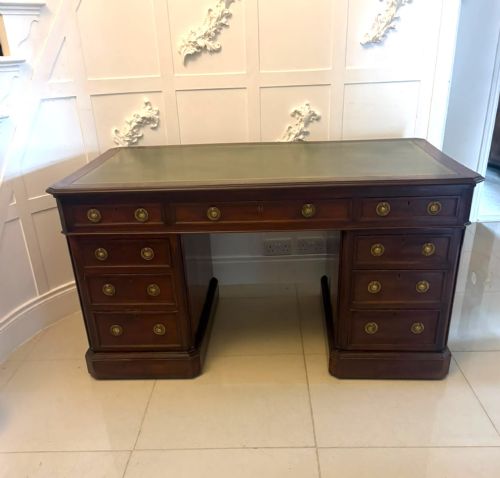
A sliding top desk brings together various historical forms, primarily focusing on compact Davenport desks alongside larger pedestal kneehole desks and bureau bookcases. These pieces originate across the eighteenth, nineteenth and early twentieth centuries, spanning Georgian, Regency, Victorian and Edwardian periods.
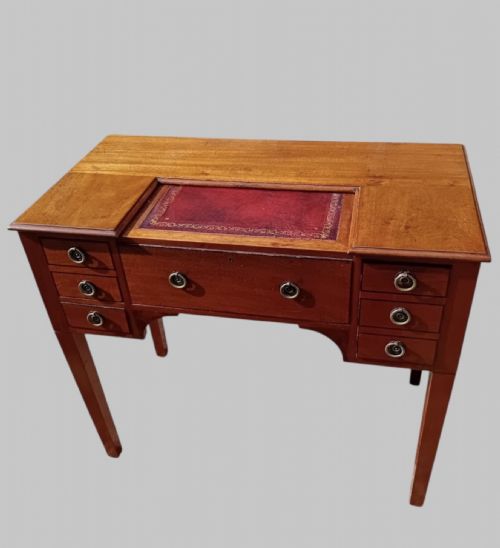
The sliding top mechanism serves to conceal or extend the writing surface, often paired with auxiliary components like candle slides, stationery drawers or leather-lined writing slopes. Buyers encounter diverse timbers such as rich mahogany, figured rosewood and warm walnut, reflecting the aesthetic preferences of their respective eras.
Materials and construction
Cabinet makers utilised dense hardwoods like mahogany, rosewood and walnut as the primary structural foundations, often selecting striking veneers for visible surfaces. Secondary timbers provided internal framing for drawers and sliding compartments.
Hardware elements such as brass castors, handles and fitted mechanisms integrated smoothly into the timber framework. Leather inserts provided durable writing surfaces, while specialised joinery allowed the sliding sections to operate without friction.
Sliding Top Desk Retail Price Guide 2026
Typical asking prices for sliding top desk among the pieces listed under this phrase on Sellingantiques today, from the lower quarter to the upper quarter. They describe what is for sale here now, not the wider market.
Some nineteenth century desk designs even incorporated tartanware and stamp storage boxes alongside standard writing slides.
Variations in quality
Quality rests upon the precision of the sliding mechanism and the integrity of the surrounding cabinetry, ensuring smooth movement without sagging or binding. Superior examples display thoughtful integration of secondary compartments, stationery drawers and internal fittings.
The choice of timber grain, veneer matching and secondary wood selection distinguishes workshop standards. Finer pieces maintain original hardware, well-fitted leather panels and stable structural joints across the entire carcase.
The Sliding Top Desk Glossary
- Davenport desk
- A compact writing desk featuring a sloping lid and drawers accessed from the side. This form gained popularity during the Georgian and Regency periods.
- Slide
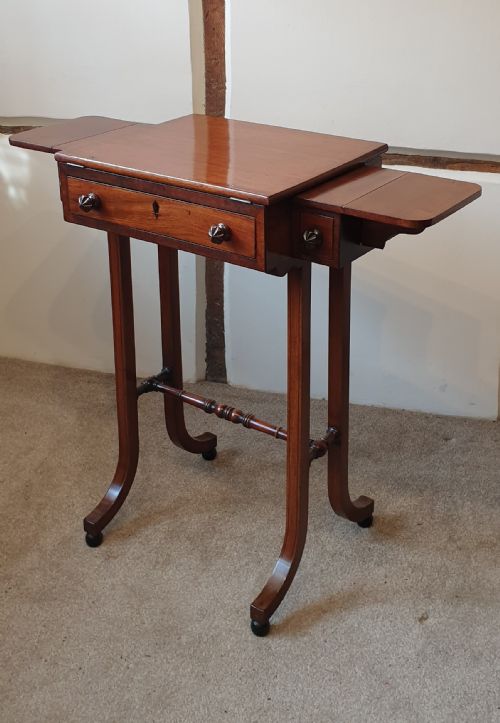
- A secondary pull-out board that extends the usable surface area for writing or holding accessories. These emerge from the sides or main body of the desk.
- Pedestal desk
- A heavy freestanding desk supported by two banks of drawers flanking a central kneehole. They often incorporate pull-out writing slides above the pedestals.
- Bureau bookcase
- A tall cabinet combining a sloping fall-front desk section with upper shelving enclosed by doors. They frequently include candle slides for illumination.
- Tambour top
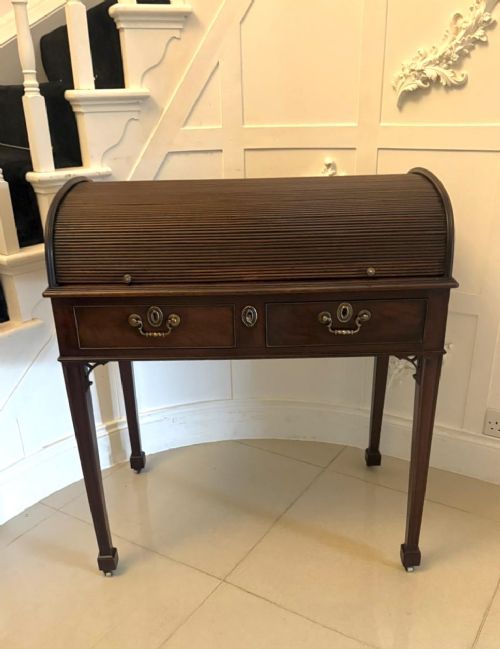
- A flexible covering made of narrow strips of wood glued to canvas, allowing it to slide in a track to enclose the desk interior.
Sliding Top Desk: Frequently Asked Questions
How does a sliding top desk work?
The upper section of the desk moves forward on tracks or runners to reveal a hidden writing surface or storage compartments underneath. This mechanism allows the user to expand their workspace or conceal paperwork quickly.
Many examples feature secondary brass fittings or wooden guides that ensure the sliding action remains smooth over decades of daily use.
What periods do these desks cover?
The available selection spans from the early eighteenth century through to the early twentieth century. Key periods represented include Georgian, Regency, William IV, Victorian and Edwardian eras.
Each period brings distinct stylistic characteristics, ranging from simple walnut bureau bookcases to highly decorative rosewood Davenport desks.
Which timbers are most common?
Mahogany and rosewood appear most frequently across these pieces, favoured by makers for their durability and rich grain patterns. Walnut and pollard oak also feature in specific regional or period examples.
Secondary woods like pine or oak are typically used for internal drawer construction and unseen structural framing.
Are these desks suitable for daily use?
Their compact dimensions make them practical for modern living spaces as writing tables or laptop stations. The sliding mechanisms and internal drawers provide functional organisation for modern stationery.
Care should be taken to protect antique leather writing surfaces and maintain consistent room humidity to preserve the solid wood and veneer.
What is the difference between a Davenport and a pedestal desk?
A Davenport is a smaller, distinctively compact form with a sloping top and side-opening drawers, designed primarily for single-person use in tighter spaces. A pedestal desk is a larger freestanding table with two full columns of drawers flanking a central opening.
Both forms utilise sliding components, but pedestal desks offer significantly more surface area and knee clearance.