
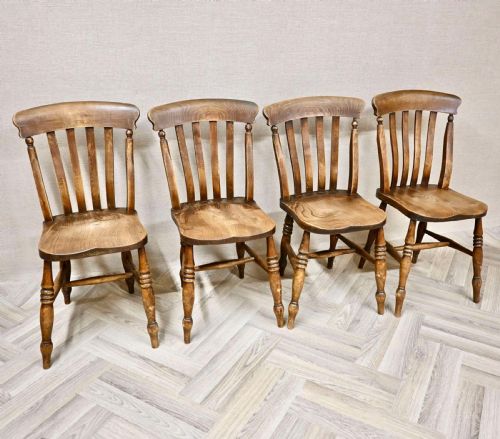

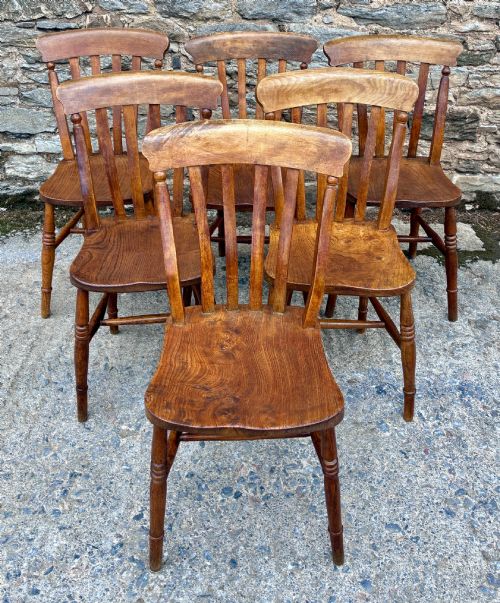
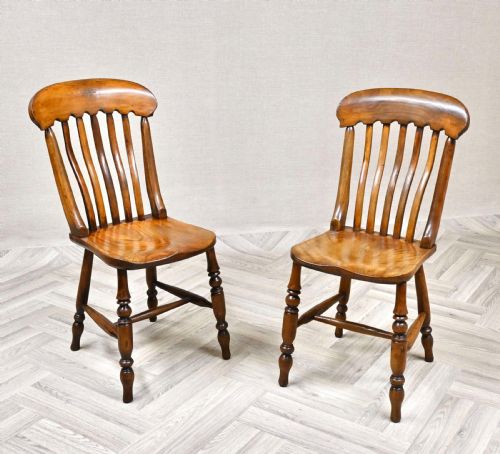
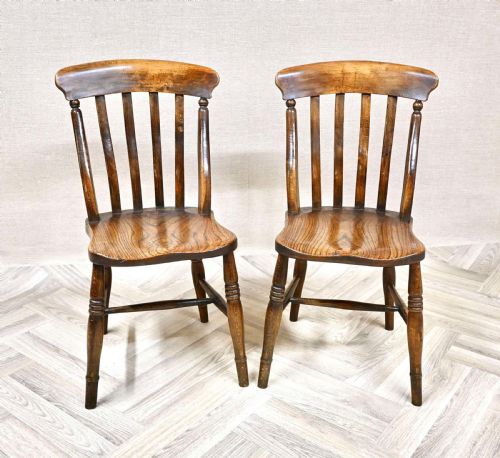
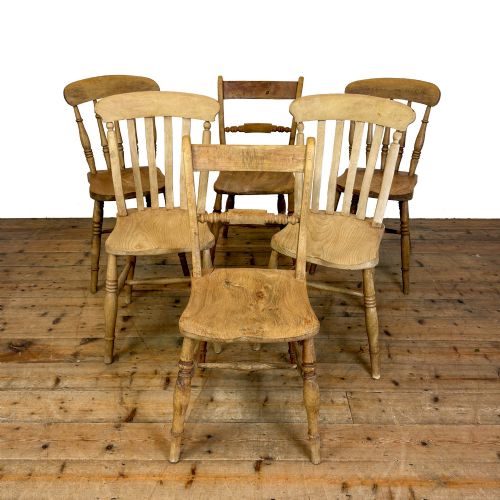
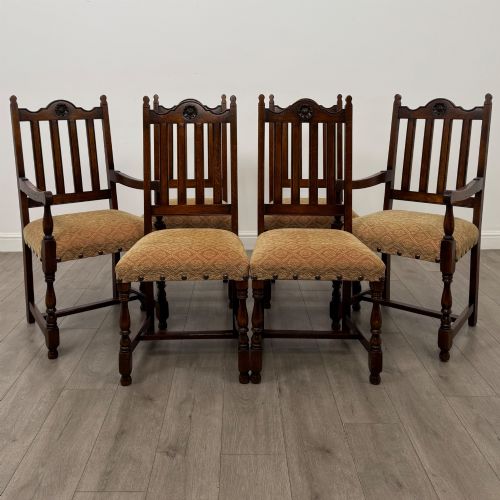
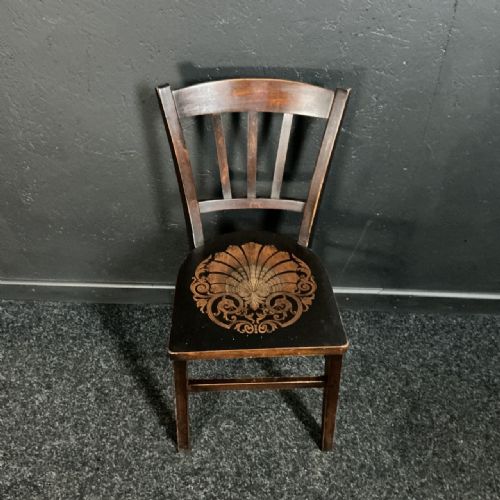
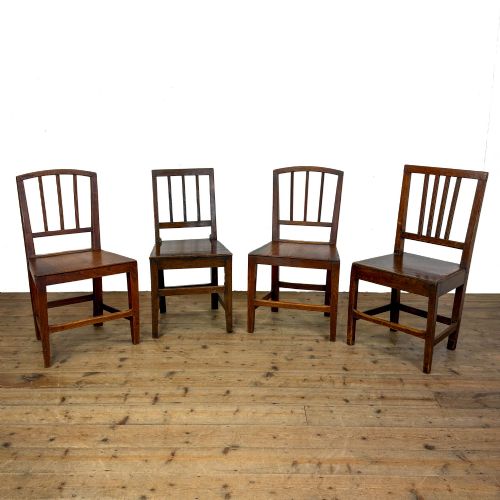
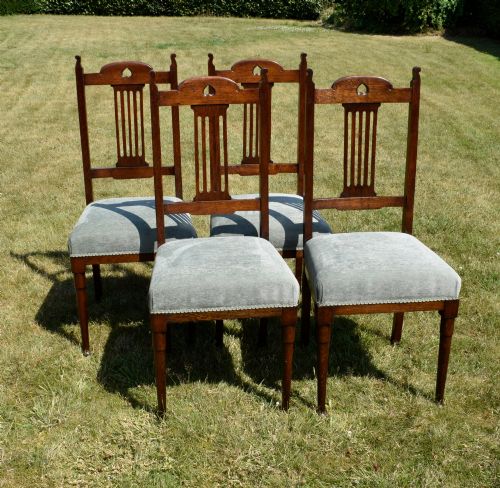


Slat Back Side Chair
A slat back side chair brings honest country timber and sturdy upright construction into daily use.
Slat Back Side Chair
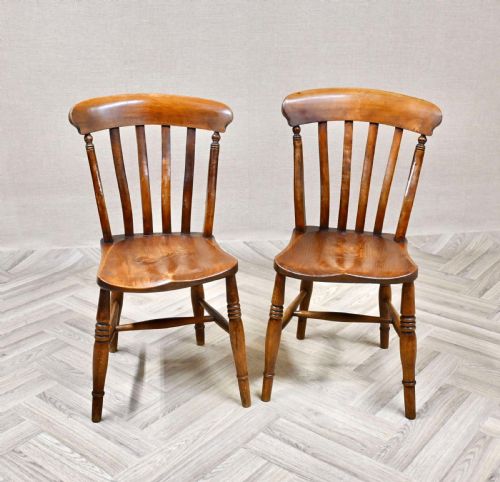
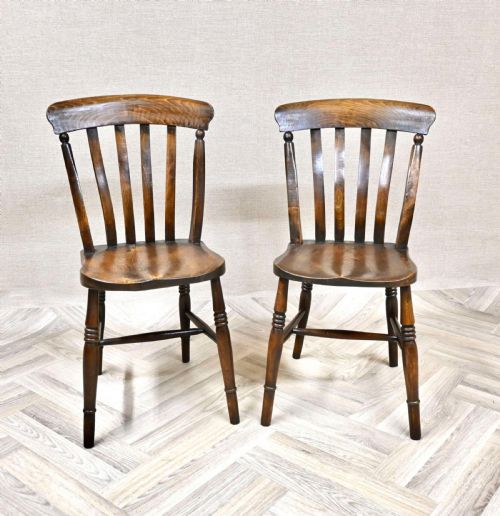
A slat back side chair is a practical wooden seat designed for dining rooms, kitchens, and informal living spaces. These pieces appear most frequently in 19th-century and Edwardian formats, drawing upon Georgian vernacular traditions and robust farmhouse craftsmanship.
Makers shaped these chairs for daily utility, combining simple upright frames with supportive horizontal or vertical slats. Buyers encounter numerous variations ranging from rustic elm kitchen seating to polished oak dining sets and Arts and Crafts designs.
How They Were Made
Cabinetmakers and country joiners utilised native hardwoods such as oak, beech, elm, and birch to construct sturdy frames. Seats were frequently fashioned from solid timber planks or woven from rush and cane.
Construction methods relied on traditional joinery, including turned spindles, pegged mortise and tenon joints, and steam-bent components. Certain examples incorporated twist legs and carved crest rails to add decorative refinement to the utilitarian form.
Listings span multiple eras from the 17th century through the 1930s, featuring oak, elm, beech, and rush.
What Varies in Quality
The distinction between standard kitchen seating and superior examples rests upon the selection of timber and the crispness of the turning. Dense, well-figured oak or deeply patinated elm indicates a higher grade of material choice.
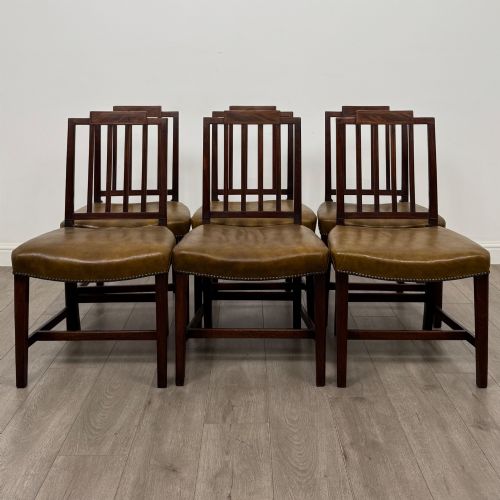
Structural integrity and the retention of original components determine the standing of each piece. Chairs that retain their early rush or leather seats without extensive replacement parts command greater appreciation.
Shapland and Petter
The Slat Back Side Chair Glossary
- Lathe back
- A chair back featuring turned vertical wooden spindles. This construction provides robust support while maintaining a light profile.
- Vernacular
- Objects made by regional craftspeople using local traditions rather than metropolitan pattern books. These pieces reflect the specific materials and habits of their district.
- Harlequin set
- A collection of chairs that match in general style and period but differ slightly in minor details. Such sets were often assembled over time rather than purchased together.
- Rush seat
- A seating surface woven from dried marsh grass twisted into cords. It offers a resilient and traditional alternative to solid wood.
Slat Back Side Chair: Frequently Asked Questions
Are these chairs suitable for daily dining use?
These timber chairs were originally built for heavy domestic service in farmhouse kitchens and dining rooms. Their sturdy construction makes them well suited to daily seating around a modern table.
Buyers should check that joints remain tight and that seat heights match contemporary table requirements before regular placement.
What is the difference between side chairs and armchairs?
Side chairs are constructed without armrests, allowing them to tuck neatly beneath a dining table and save floor space. Armchairs feature supportive elbow rests and typically served as head-of-table seating or fireside chairs.
Many period listings offer mixed sets combining a pair of armchairs with several matching side chairs.
How can I tell a Georgian chair from a Victorian one?
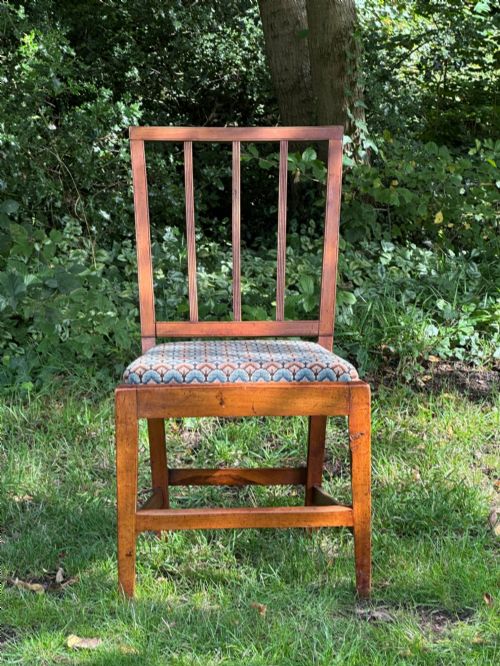
Georgian examples often display finer proportions, lighter mahogany timbers, and classical carved details reflecting 18th-century design. Victorian and Edwardian pieces tend to utilise heavier oak or elm, frequently adopting rustic farmhouse or Arts and Crafts aesthetics.
Examining the tool marks and construction methods underneath the seat often reveals clues to the manufacturing date.