
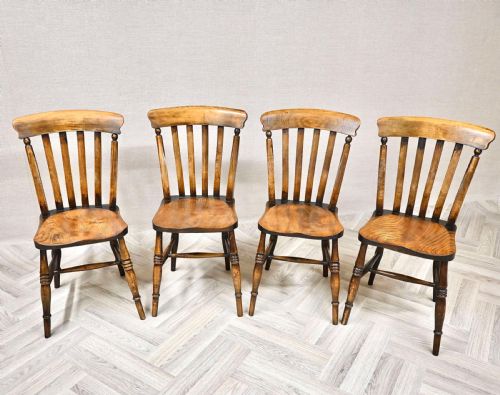
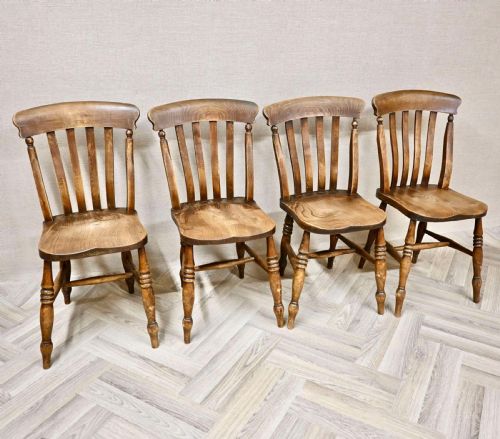
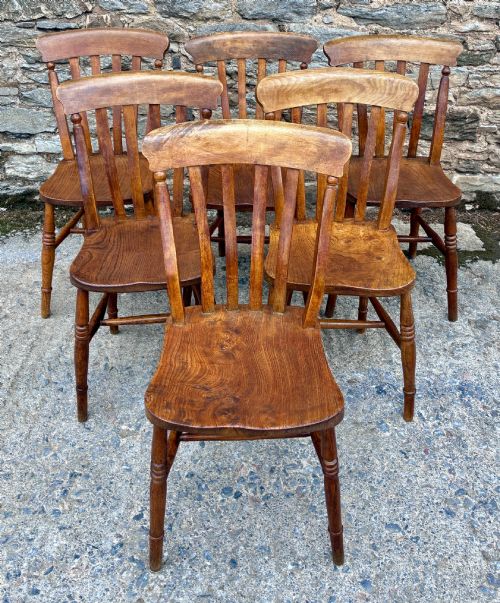
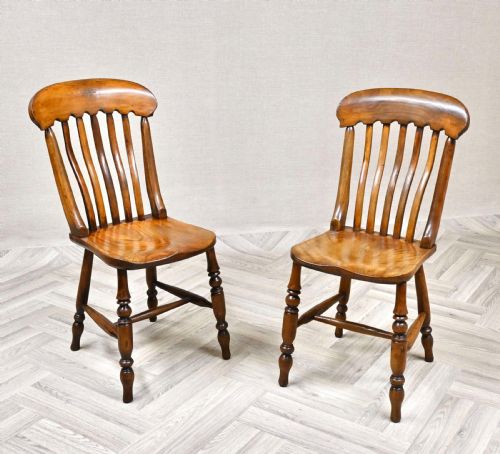
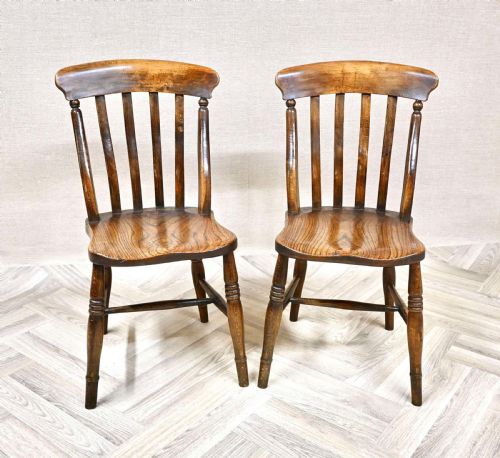
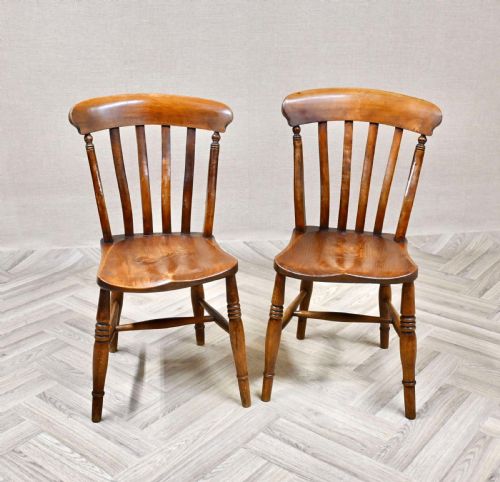
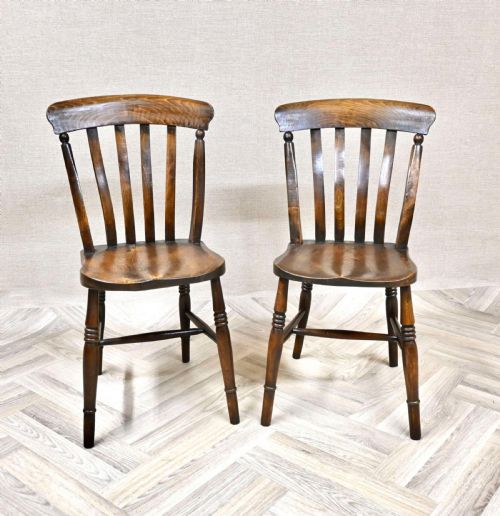
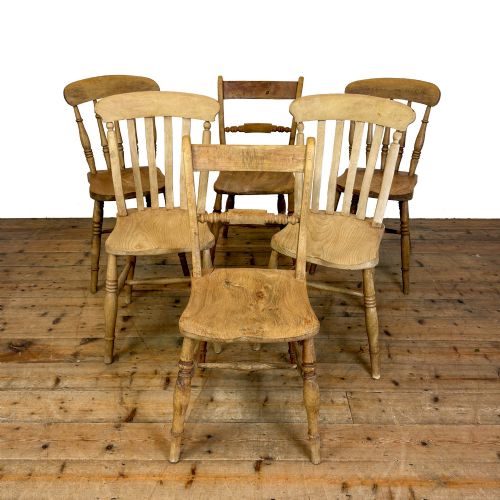


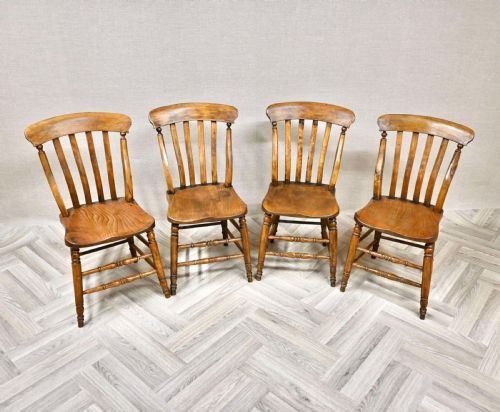
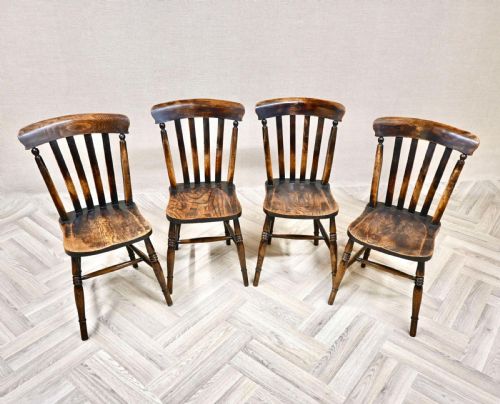
Slat Back Kitchen Chairs
Slat back kitchen chairs bring honest vernacular character to a room, offering sturdy timber framing and traditional back slats for everyday seating.
Slat Back Kitchen Chairs
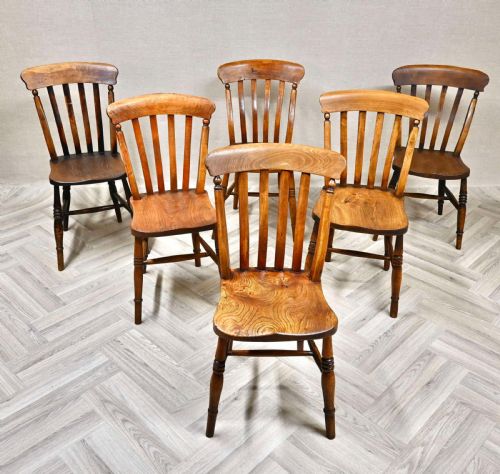
Slat back kitchen chairs encompass sturdy wooden seating built for practical domestic use, appearing primarily in nineteenth century and Victorian formats. You will frequently encounter forms described as Windsor lath backs or farmhouse dining chairs within these groupings.
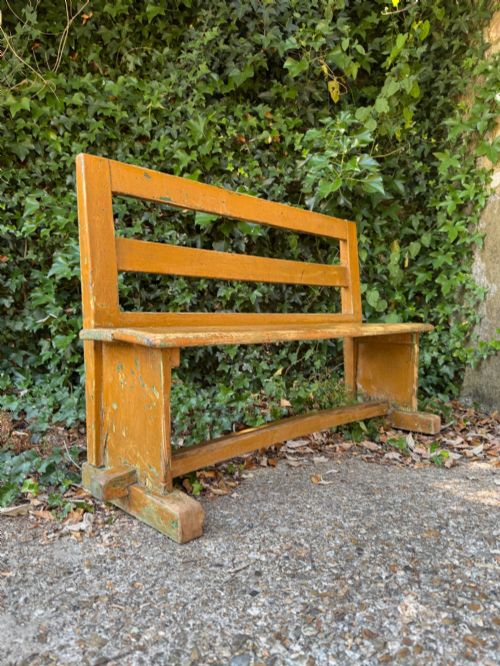
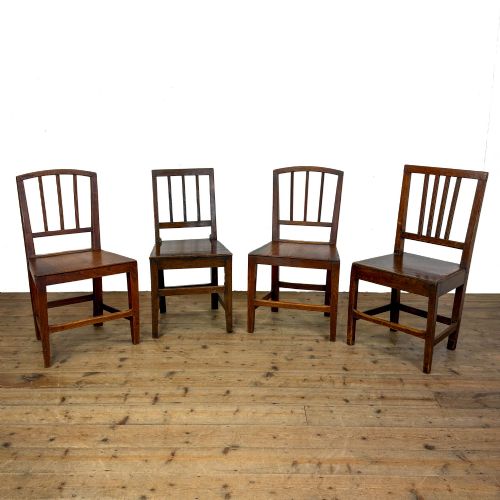
The regional styles range from English country vernacular and rustic farmhouse interpretations to American country variations. Workshops produced these seats in sets as well as pairs, alongside occasional benches and children's variants.
Makers utilised robust timbers to construct dining chairs and armchairs that endured heavy household service. Harlequin groupings assembled from similar individual pieces also surface regularly across the inventory.
Materials and construction methods
Traditional turners and joiners combined elm seats with beech, ash, or oak to build resilient frames. Elm provided a tough, anti-splitting surface for solid seats while ash and beech offered flexible strength for turned spindles and back slats.
Makers also employed pine, walnut, and rush for specific seating surfaces and frames. Joinery techniques relied on pegged joints and turned components integrated directly into carved wooden bases.
Periods represented span the Victorian era, the nineteenth century, and the early twentieth century up to nineteen thirty.
Quality variations in domestic seating
Superior examples display balanced proportions, robust timber selection, and minimal replacement parts across the spindles and legs. Lower tiers often show heavy timber fatigue, clumsy repairs, or mismatched components within larger sets.
The integrity of the original joints and the preservation of natural surface patination dictate the standing of individual pieces. Well-matched sets maintain greater harmony than harlequin groupings assembled from disparate origins.
The Slat Back Kitchen Chairs Glossary
- Lath back
- A variant of the Windsor chair featuring flat, vertical wooden slats in the backrest rather than turned spindles. This term frequently overlaps with slat back descriptions.
- Harlequin set
- A collection of chairs that share a general style and period but were not originally manufactured together as a single matched group. These sets rely on matching height and silhouette for visual cohesion.
- Vernacular furniture
- Domestic items built by local craftsmen following regional traditions rather than strict academic design patterns. These pieces prioritise functional utility over stylistic ornament.
- Windsor
- A chair style characterised by a solid wooden seat into which the legs and back spindles are directly socketed. They appear with various back designs including hoops, combs, and flat laths.
- Rush seating
- Woven organic material used to form supportive chair bases. It requires skilled hand weaving around a wooden frame.
Slat Back Kitchen Chairs: Frequently Asked Questions
What defines a slat back kitchen chair?
These chairs feature vertical wooden slats set into a sturdy frame designed for daily domestic use. They combine traditional joinery with practical timber construction.
Most examples originate from the nineteenth century and reflect rural vernacular design traditions. Their simple lines distinguish them from formal parlour seating.
How do I care for antique wooden kitchen chairs?
Maintain the timber by applying appropriate natural waxes rather than modern synthetic polishes. Keep the chairs away from direct heat sources to prevent wood splitting.
Regular dusting preserves the surface patination built up over generations of use. Check leg joints periodically to ensure stability remains intact.
Are harlequin sets authentic?
Harlequin sets consist of individual chairs gathered together because they share similar periods and forms. Dealers assembled these groups to provide matching seating numbers for dining tables.
While not originally manufactured as a single batch, they offer genuine period character and practical utility. Careful attention to height and slat design ensures visual harmony.
What is the difference between elm and beech parts?
Elm was traditionally chosen for solid chair seats because its interlocking grain resists splitting under heavy use. Beech and ash provided flexible strength for turned legs and steam-bent back components.
This combination of timbers capitalised on the specific mechanical properties of each wood type. Craftsmen utilised these materials to ensure durability in working kitchens.