




Skeleton Clock Under Glass
These skeleton clock under glass pieces offer a captivating view into intricate nineteenth-century mechanics, housed securely beneath protective domes for any mantel.
Skeleton Clock Under Glass
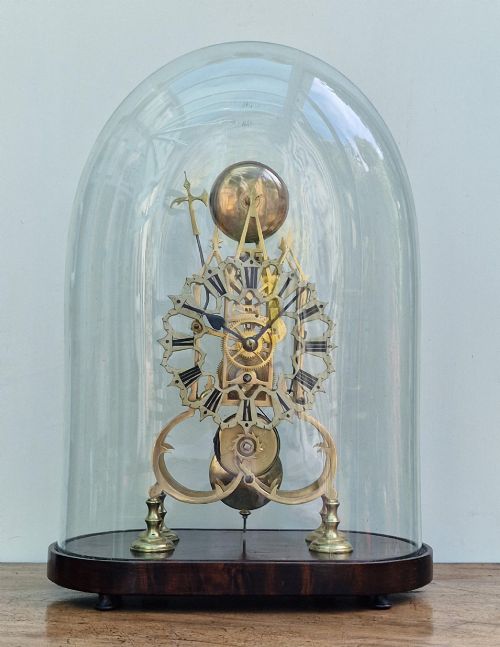
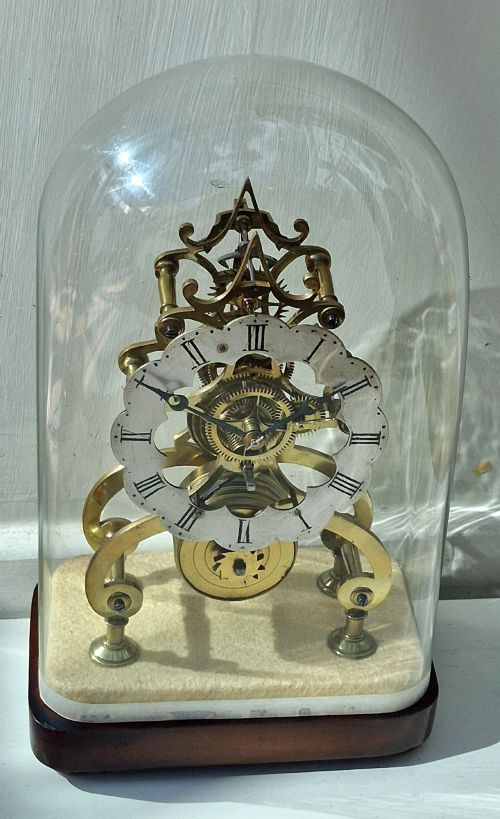
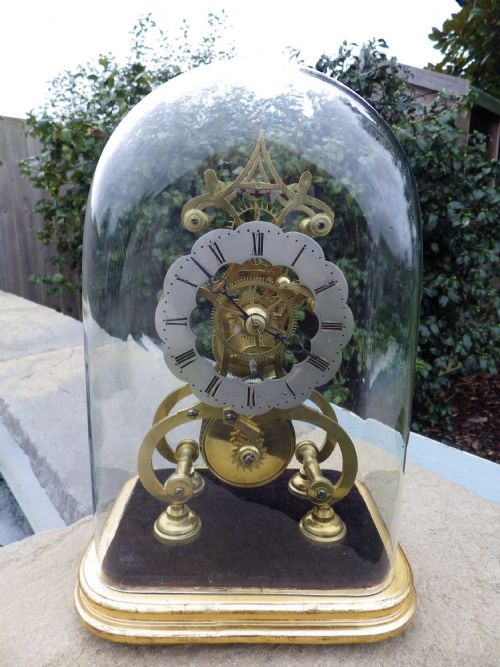
A skeleton clock under glass exposes its brass and steel wheel work and gear trains to the room, divested of a traditional wooden case. These mantel clocks display the passing of time through open plates and skeletal brass frames.
Most examples found here date from the Victorian era, spanning English fusee movements to French designs and Gothic Revival architecture. Many retain their original glass domes and wooden or marble bases.
Smaller miniature specimens sit alongside larger exhibition pieces and cathedral clock garnitures. The form ranges from simple timepieces to those featuring passing strikes.
Materials and construction
Maker workshops built these movements primarily in brass and steel, shaping wheel work into six-spoke designs and intricate plates. Fusee movements regulated the pull of the mainspring for steady timekeeping.
Listings feature Victorian and nineteenth-century examples utilising brass, glass, mahogany, and marble in mantel clock formats.
Distinctions in quality
The refinement of the skeletonised brass frame and the complexity of the wheel work set finer pieces apart from standard timepieces. Intricate Gothic arches and precise six-spoke wheel geometry indicate superior clockmaking skill.
Survival of the original glass dome adds considerable integrity to a piece. The quality of the underlying base, whether polished mahogany, rich velvet, or heavy marble, matches the ambition of the movement above.
The Skeleton Clock Under Glass Glossary
- Fusee
- A conical pulley used with a cord or chain to maintain even force on the gear train as the mainspring unwinds. This mechanism improves the timekeeping accuracy of the clock.
- Dome
- A blown glass cover designed to protect the delicate exposed mechanism from dust and disturbance. It rests upon a fitted base beneath the clock.
- Garniture
- A set comprising a central clock and matching ornamental pieces designed to sit together on a mantelpiece. These often share architectural styles like Gothic Revival.
- Passing strike
- A mechanism that strikes a single blow on a bell or gong at each half-hour or hour without chiming the full count of time.
Skeleton Clock Under Glass: Frequently Asked Questions
How do I wind a skeleton clock?
Winding requires a dedicated key inserted into the winding square on the dial or movement plate. Turn the key gently until resistance signals the mainspring is fully tensioned.
Take care not to overwind the mechanism, as this can damage the delicate brass gear train. Regular, gentle winding keeps the six-spoke wheel work moving accurately.
Why are these clocks kept under glass?
The glass dome protects the exposed brass and steel components from airborne dust and accidental knocks. Because the movement lacks a traditional closed case, the dome is essential for preservation.
Keeping the dome in place also protects the delicate velvet or wooden base from wear. Original domes are particularly valued by collectors for maintaining historical completeness.
What is a fusee movement?
A fusee is a conical drum connected to the mainspring via a chain or cord. As the spring loses tension, the chain moves to a wider part of the cone to maintain constant torque.
This clever mechanical device ensures consistent power delivery to the wheel work. It represents a hallmark of high-quality English clockmaking from the nineteenth century.
How do I date a skeleton clock?
Dating relies on stylistic clues such as Gothic Revival architectural motifs or specific wheel work configurations. Victorian examples often display maker hallmarks or characteristic brass framing.
Comparing the escapement type and base materials against known period pieces helps narrow down the decade of manufacture. Original domes and period documentation further assist with accurate dating.