


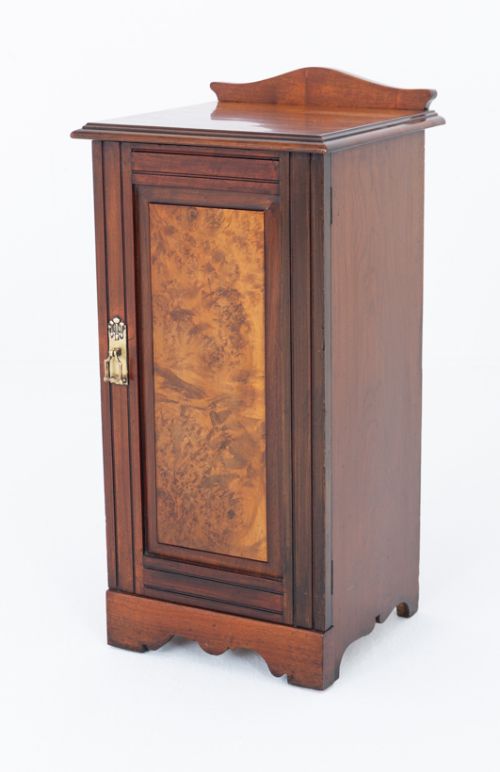


Single Walnut Bedside Cabinet
A single walnut bedside cabinet brings useful timber tone and enclosed bedside storage to a room.
Single Walnut Bedside Cabinet
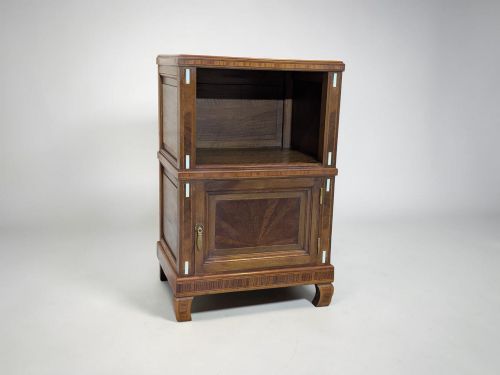
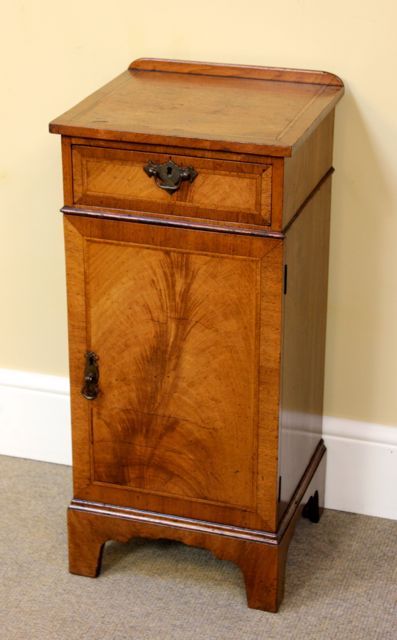
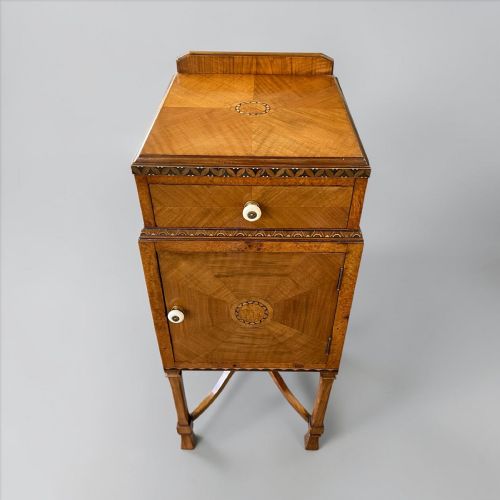
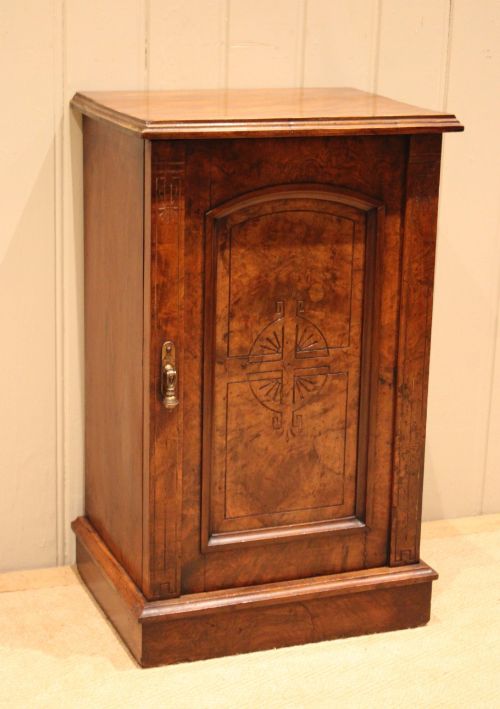
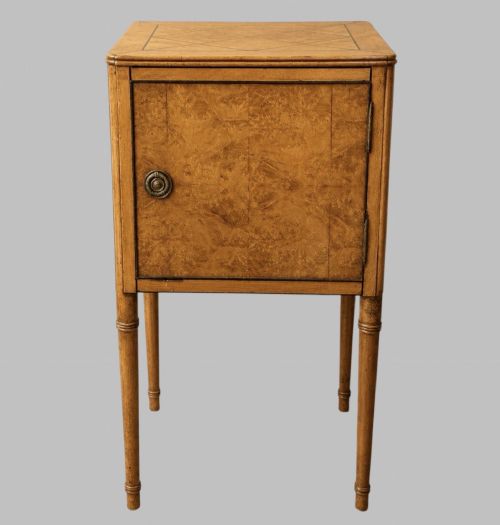
A single walnut bedside cabinet is a compact bedside storage piece designed for one side of a bed, constructed primarily from walnut or walnut veneer. You will see examples spanning from the eighteenth century through to the art deco period of nineteen thirty.
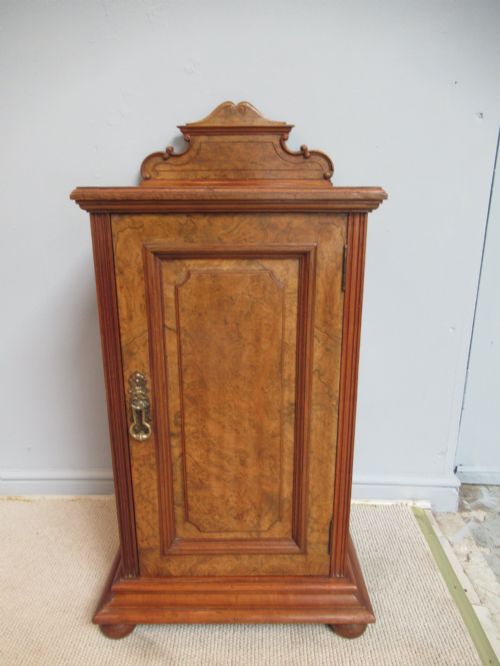
The nineteenth century yields many Victorian and late Victorian iterations in burr walnut, alongside Edwardian interpretations. Earlier Tuscan pedestal cupboards and later art deco designs also appear across the selection.
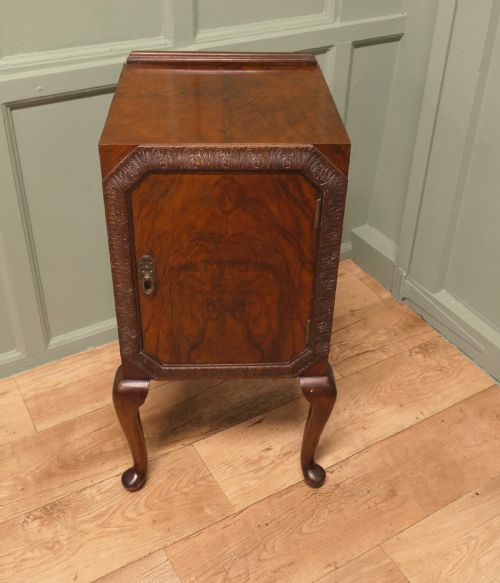
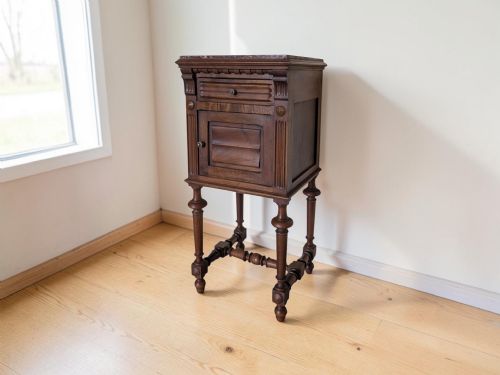
Most pieces function as enclosed cabinets or pot cupboards, while others take the form of bedside tables or lamp tables. These furniture items range from simple Edwardian models to elaborate Italian baroque or Queen Anne style pieces.
Materials and construction
Makers utilised solid walnut and decorative walnut veneer, often selecting burr walnut for its rich, swirling grain patterns. Marble tops and brass fittings appear on specific regional or period examples.
Construction techniques involve traditional cabinet making methods to shape single doors, pedestal cupboards, and fitted interiors. Skilled artisans applied thin veneers over stable wood carcases to achieve striking visual patterns.
Single Walnut Bedside Cabinet Retail Price Guide 2026
Typical asking prices for single walnut bedside cabinet among the pieces listed under this phrase on Sellingantiques today, from the lower quarter to the upper quarter. They describe what is for sale here now, not the wider market.
Listings span from eighteenth century Italian Tuscan cupboards to nineteen thirty art deco designs in burr walnut and marble.
Assessing quality
Quality rests on the selection of the timber grain, particularly the depth and figuration in burr walnut veneers. Master cabinet makers achieved superior balance in proportion and precision in the joinery of doors and internal compartments.
The integration of secondary materials like marble tops or cast brass hardware distinguishes finer workshops from standard production. Execution of period styling, from Queen Anne curves to art deco geometry, determines the distinction of each piece.
Walter Carter Harrods·Maple & Co
The Single Walnut Bedside Cabinet Glossary
- Burr walnut
- A specialised wood cut from walnut tree growths that produces highly figured, swirling grain patterns. It was frequently utilised on decorative nineteenth and twentieth century cabinet doors.
- Pot cupboard
- A traditional nineteenth century name for a small bedside cabinet featuring an enclosed interior. These units originally housed a chamber pot before modern plumbing.
- Veneer
- A thin layer of superior walnut wood applied over a stable secondary timber carcase. This technique allowed makers to display dramatic grain figures across flat panel surfaces.
- Pedestal cupboard
- A tall, narrow freestanding cabinet supported by a single base structure. Early examples often originate from Italian workshops.
- Queen Anne style
- A revival furniture design aesthetic characterised by graceful curved lines and polished walnut surfaces. It draws inspiration from early eighteenth century British design.
Single Walnut Bedside Cabinet: Frequently Asked Questions
What is a walnut bedside cabinet used for?
These compact pieces provide enclosed storage beside a bed for night time essentials and personal items.
They also serve as small lamp tables or decorative stands in living spaces and hallways.
How do I tell Victorian from Edwardian pieces?
Victorian models often feature deep, dark burr walnut grain and heavier proportions, sometimes paired with elaborate carving.
Edwardian cabinets typically present lighter tones, simpler lines, and occasional marble tops.
Are these cabinets all single door?
The majority of pieces listed are single door bedside cabinets or pedestal cupboards designed for compact spaces.
Some variants function primarily as open tables without doors or internal shelving.
What makes art deco versions different?
Art deco models from nineteen thirty favour geometric symmetry and figured walnut veneers without traditional period carvings.
They reflect a streamlined modern design philosophy distinct from nineteenth century revival styles.