
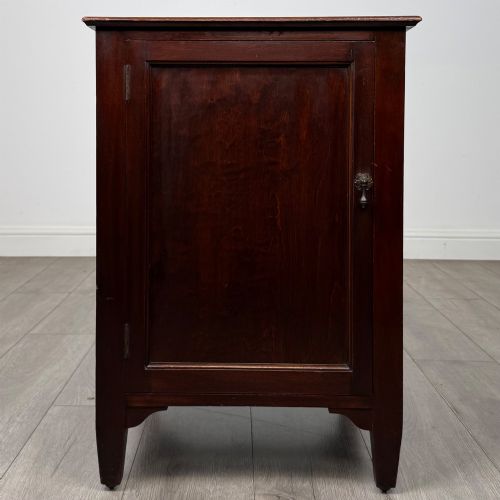
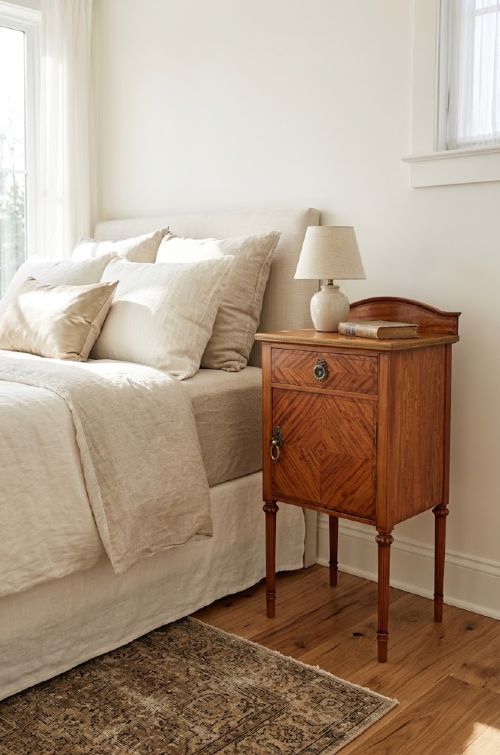
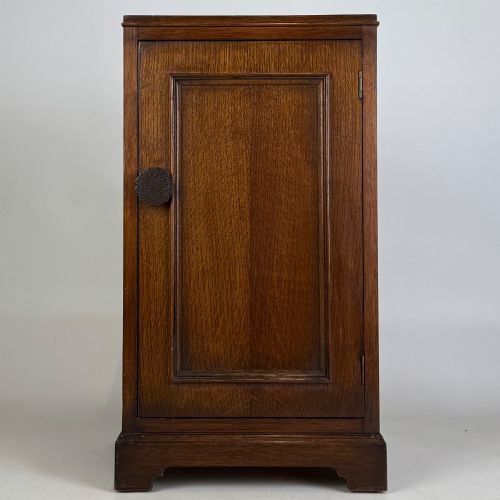
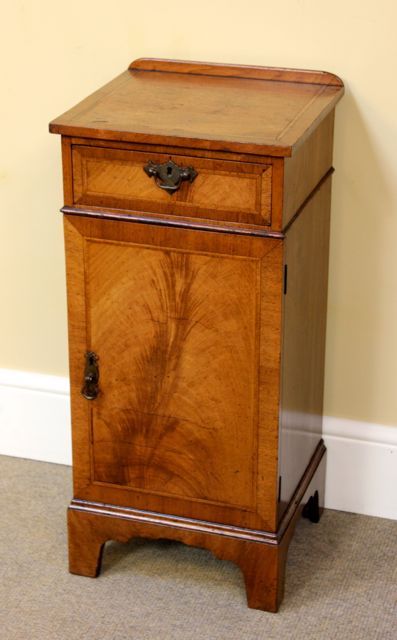
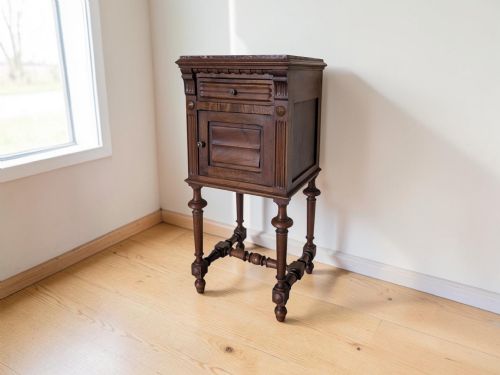
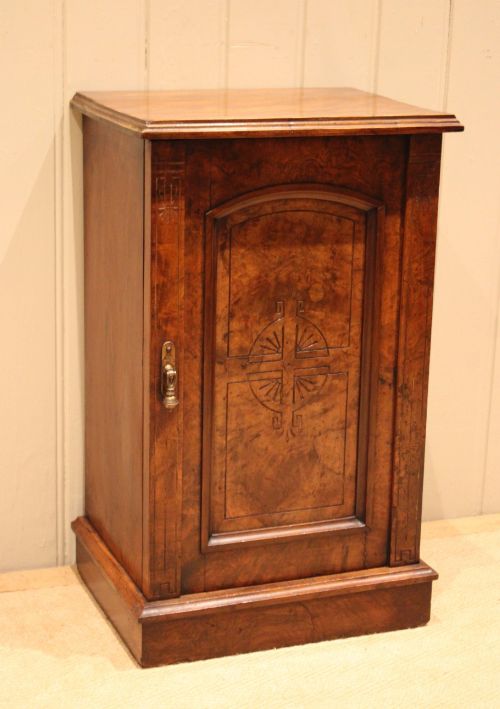
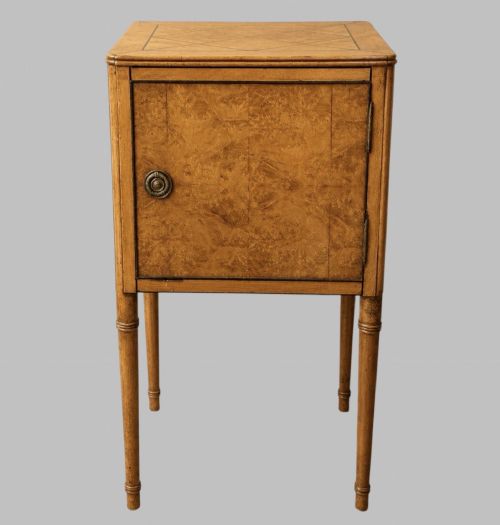
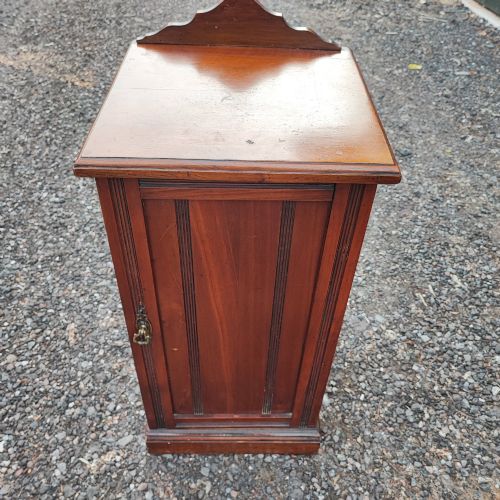
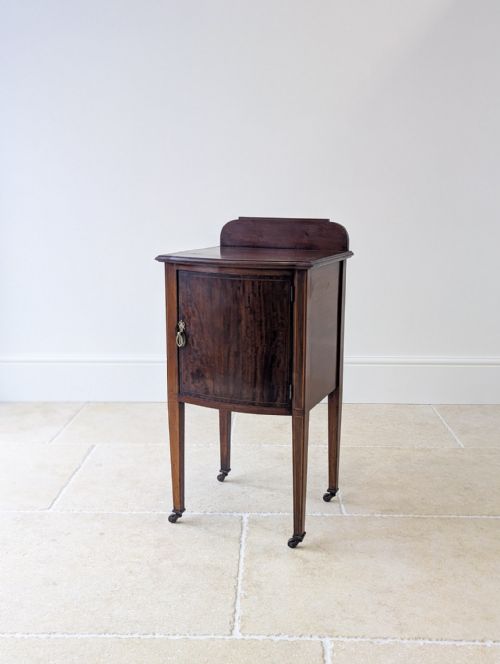
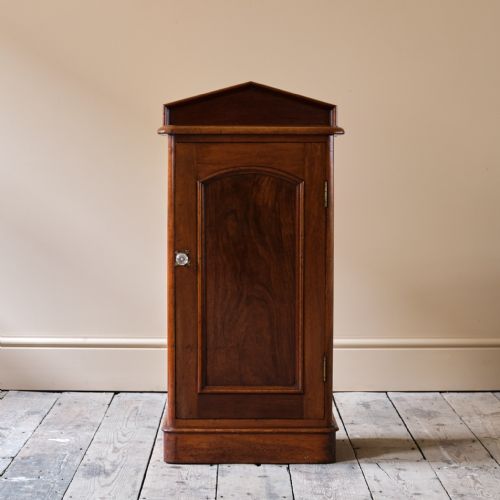
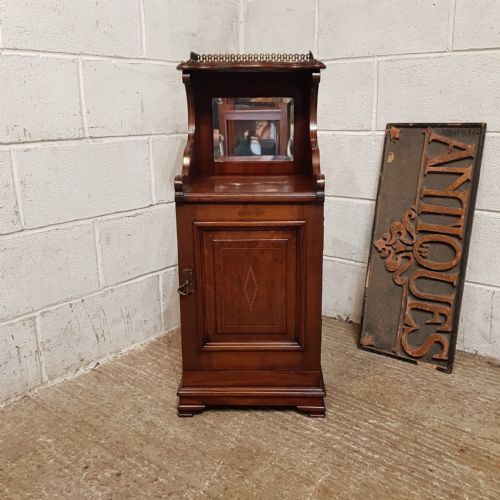
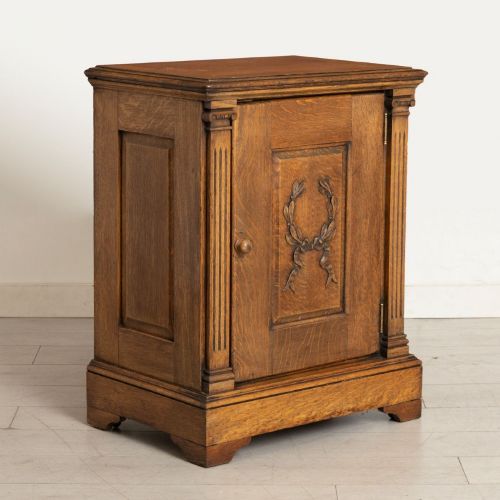
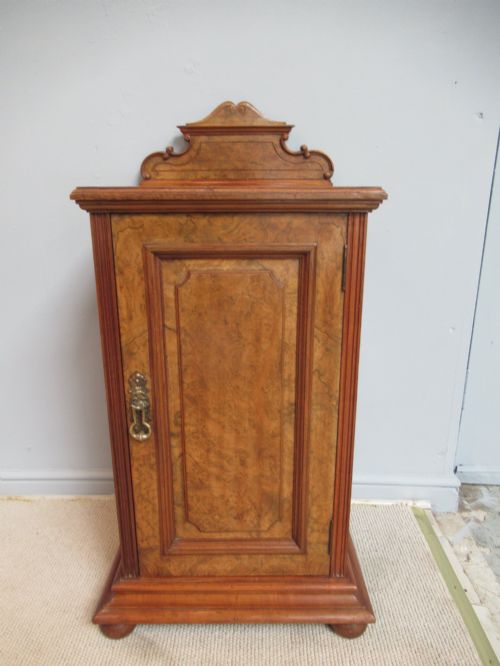
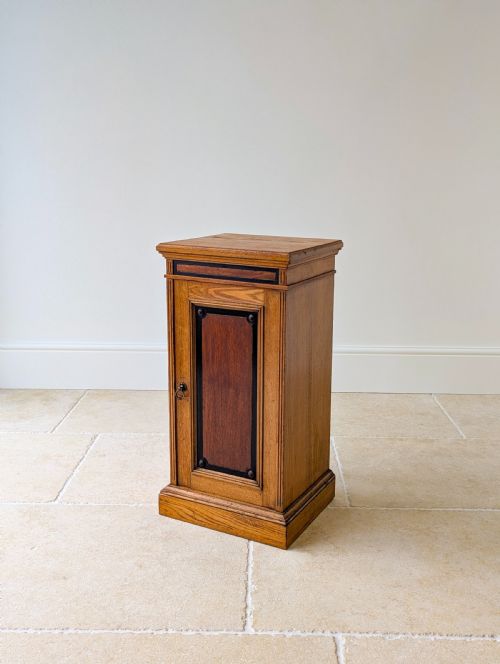
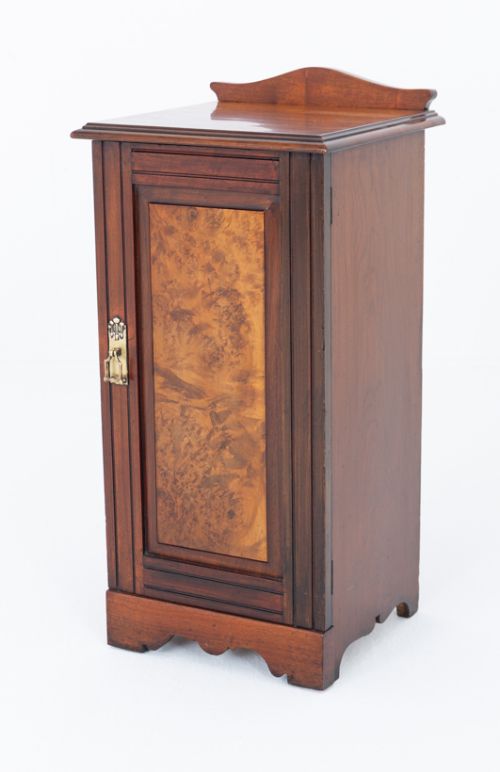

Single Door Pedestal Cupboard
A single door pedestal cupboard offers compact bedside or corner storage, combining practical utility with refined period timber work.
Single Door Pedestal Cupboard
When you search for a single door pedestal cupboard, you encounter compact standalone cabinets designed primarily for bedside or auxiliary storage. The listings here predominantly feature nineteenth-century and early twentieth-century examples, spanning the Victorian and Edwardian eras.
Forms include dedicated pot cupboards, bedside cabinets, and taller pedestal side cabinets. These pieces typically sit on a plinth or small feet, enclosing a single cupboard door that opens to reveal internal shelving.
Origins range across English country workshops and London cabinet makers, utilising timber constructions suited to domestic bedchambers and dressing rooms of the period.
How they were made
Cabinet makers constructed these pieces using solid timbers and decorative veneers such as mahogany, walnut, burr walnut, and oak. Carcasses were joined with traditional cabinetry methods to house the single door and internal compartments securely.
Surfaces were frequently finished with polished timber grains, whilst brass handles, hinges, and occasional glass elements provided functional hardware. Selected pieces incorporate inlaid details or painted pine finishes reflecting contemporary stylistic preferences.
Listings demonstrate that mahogany and walnut remain the predominant timbers for these pedestal cupboards across Victorian and Edwardian periods.
What varies in quality
The standard of a single door pedestal cupboard rests on the selection of timber figures, such as symmetrical burr walnut or rich flame mahogany veneers. Superior cabinet making shows in the precise fit of the door, tight joints, and original brass or metal hardware.
Execution of stylistic details, from Gothic Revival carvings to Sheraton Revival inlay work, distinguishes standard regional items from pieces produced by notable workshops and retailers.
Walter Carter Harrods·Howard And Sons·Holland And Sons·Simpson Halifax·Maple And Co
The Single Door Pedestal Cupboard Glossary
- Pedestal cupboard
- A standalone enclosed cabinet featuring a single vertical compartment raised on a plinth or small base. This form served traditionally as a bedside nightstand or pot cupboard.
- Pot cupboard
- A nineteenth-century bedside cabinet designed originally to house a chamber pot behind its single door. Many examples retain an internal shelf or partition for this purpose.
- Burr walnut
- A highly decorative timber veneer taken from the wart-like growth on a walnut tree. It yields intricate, swirling grain patterns prized by Victorian cabinet makers.
- Flame mahogany
- A distinctive veneer cut from the branch junction of a mahogany tree. The resulting grain resembles flickering flames of rich reddish-brown colour.
Single Door Pedestal Cupboard: Frequently Asked Questions
What is a single door pedestal cupboard?
A single door pedestal cupboard is a compact standalone cabinet designed to enclose storage behind one vertical door. They were traditionally used beside beds or in dressing rooms to keep personal items out of sight.
These pieces date largely from the nineteenth and early twentieth centuries, incorporating timbers like mahogany, walnut, and oak. Their vertical proportions make them suitable for tight spaces where floor area is limited.
How were these cupboards used historically?
In Victorian and Edwardian bedchambers, these cabinets served as nightstands or pot cupboards to hold chamber pots, water jugs, and nighttime essentials. The single door kept bedroom paraphernalia neatly concealed.
Over time, their domestic role evolved into general bedside storage for books and personal belongings. Today, they function equally well as small side tables in living rooms or hallways.
How do I identify a Victorian pedestal cupboard?
Victorian examples typically employ solid mahogany, walnut, or burr walnut with traditional hand-cut joinery. They often feature a plinth base, a single panelled or veneered door, and turned wooden knobs or brass pulls.
Stylistic cues such as heavy mouldings, Gothic Revival motifs, or Aesthetic Movement details help anchor the piece to the latter half of the nineteenth century.
How do I clean and maintain antique timber cabinets?
Maintain antique timber surfaces by dusting regularly with a soft, dry cloth. Avoid using modern silicone polishes, which can build up and soften historic finishes over time.
Feed dry wood occasionally with a traditional beeswax paste to nourish the grain and protect the polish. Keep the cabinet away from direct heat sources and strong sunlight to prevent timber shrinkage and veneer lifting.