
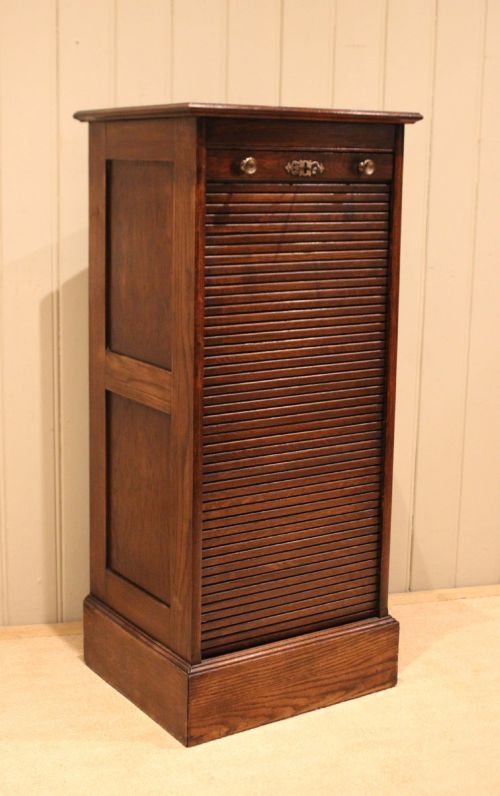
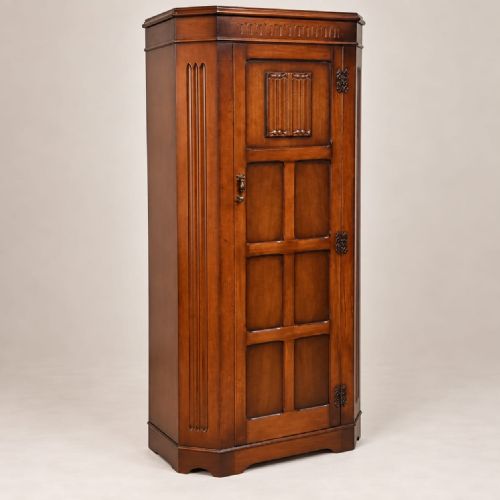
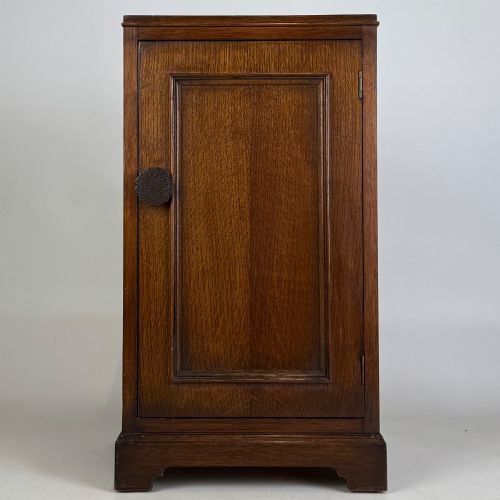
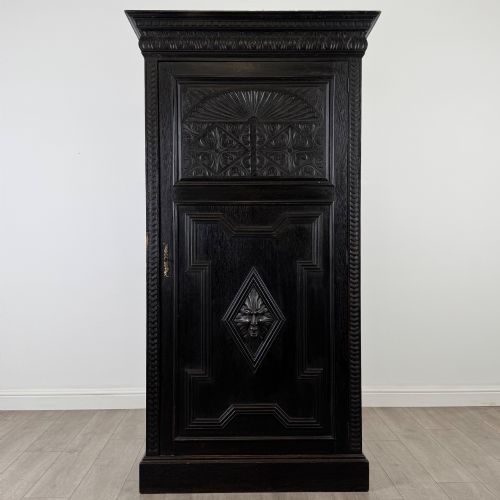
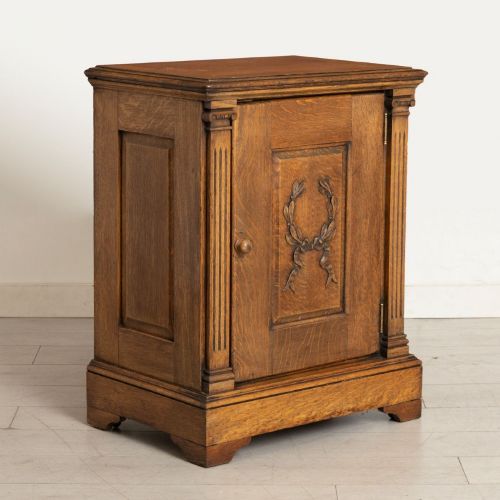
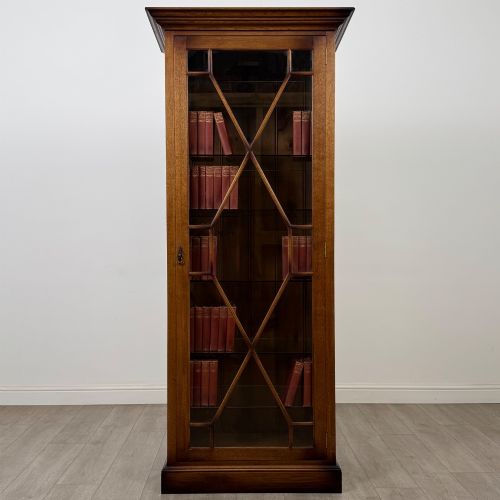
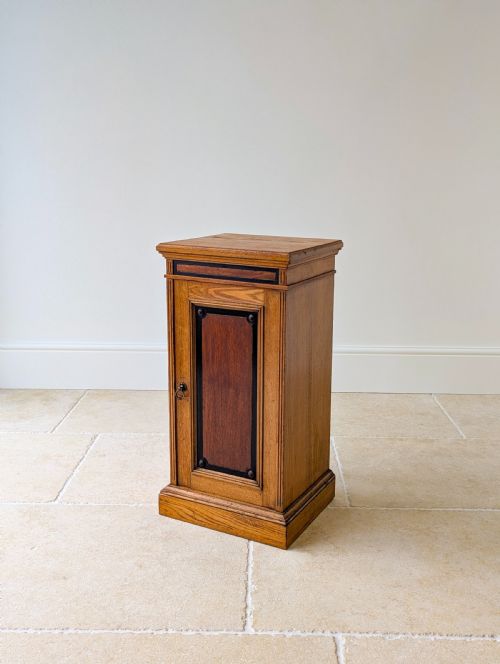


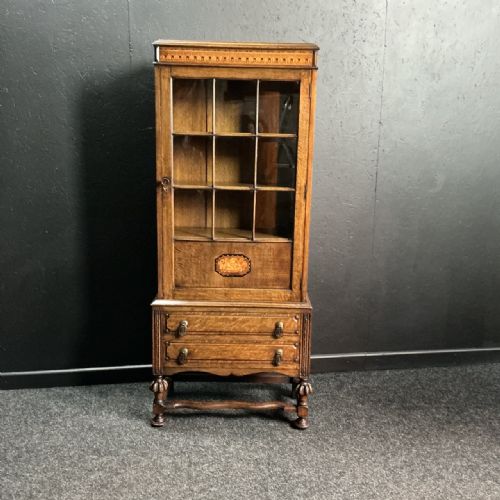

Single Door Oak Cabinet
These single door oak cabinet pieces are practical storage units offering lasting timber construction and compact utility for any room.
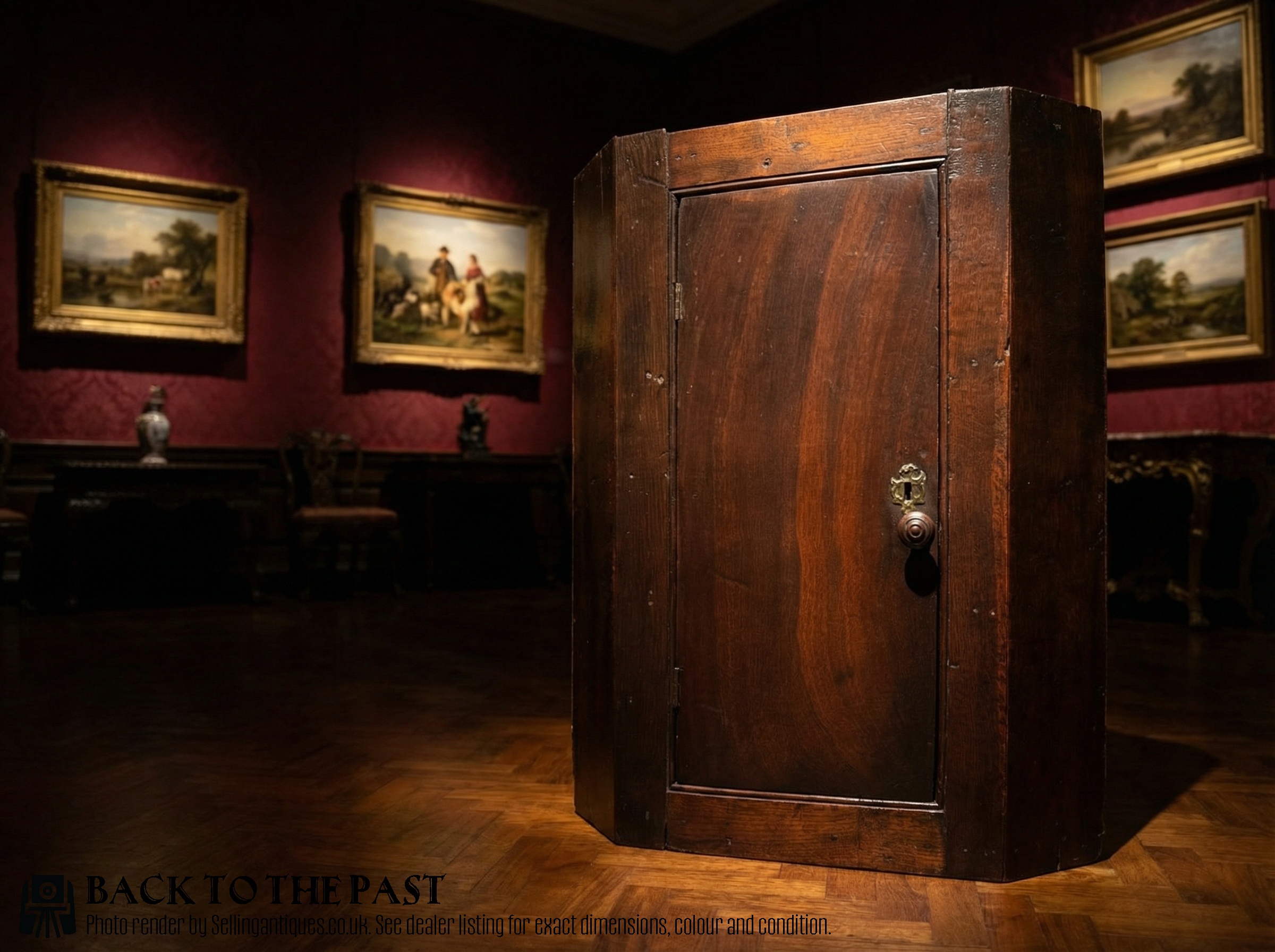
What They Are
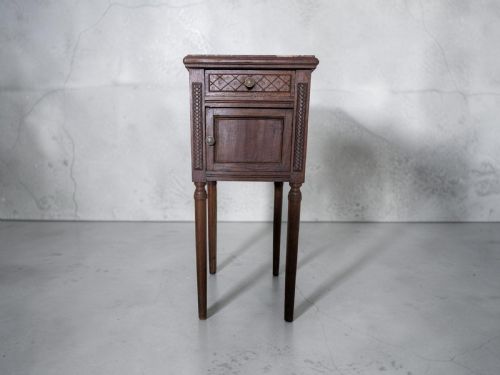
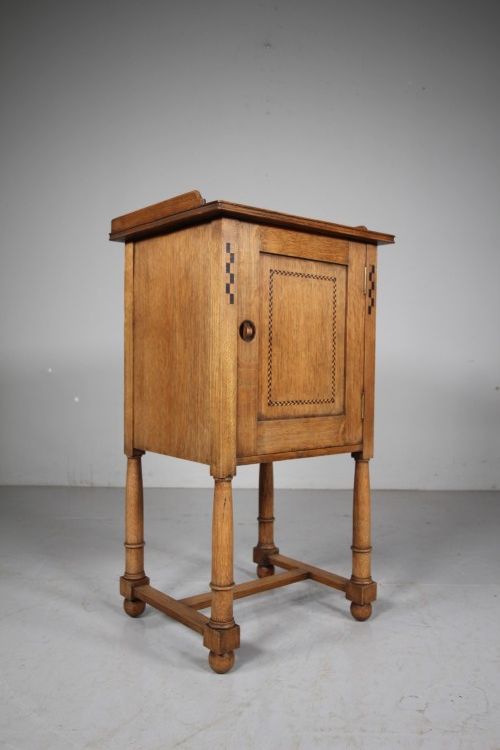
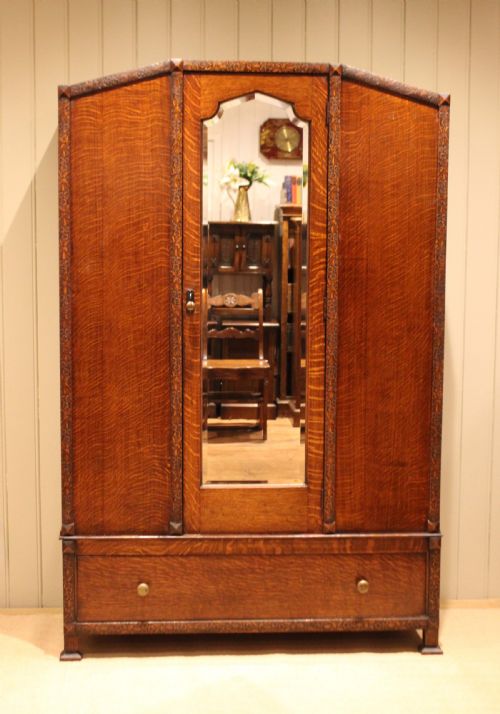
A single door oak cabinet provides compact storage through varied forms including bedside cabinets, side cabinets, wall cupboards, and pot cupboards. These pieces appear across the nineteenth century, the Edwardian era, and the nineteen-twenties.
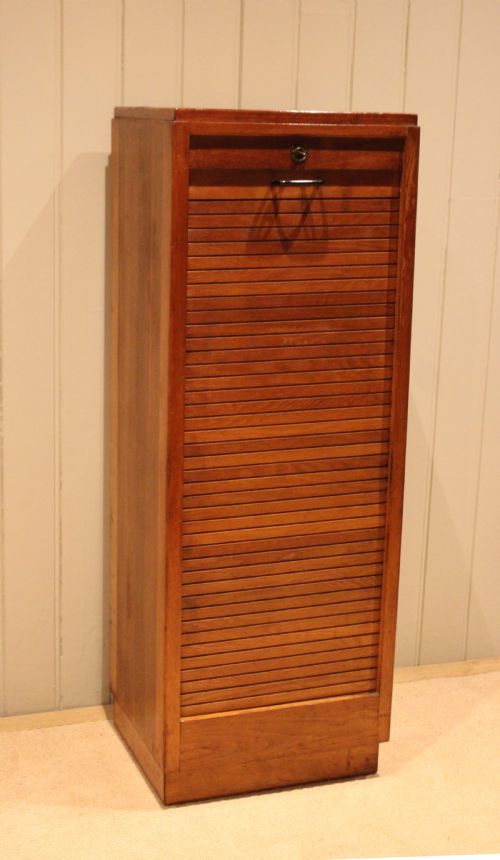
Buyers encounter configurations designed for specific domestic roles, from narrow bedside units to taller slim display formats. Solid timber construction unites these examples across their different regional and period origins.
How They Were Made
The primary material across these pieces is solid oak, supplemented by iron hardware and brass fittings. Workshops also incorporated decorative details using boxwood inlay, ebony inlay, and ebonised wood to accent the main timber structure.
Construction methods rely on traditional cabinet-making techniques suited to provincial workshops and larger commercial makers alike. Joinery secures the single door frames and internal shelving within the sturdy oak carcasses.
Retail Price Guide 2026
Typical UK retail prices for single door oak cabinet, calculated from the Sellingantiques database of over a million retail prices indexed since 2003. This retail price guide relies exclusively on Sellingantiques data; no external sources or auction records are used, so the figures do not describe the wider market.
Listings feature solid oak alongside contrasting details in brass, iron, boxwood inlay, ebony inlay, and ebonised wood.
What Varies in Quality
Quality differences lie in the refinement of the timber selection and the precision of decorative inlays like boxwood and ebony. Finer examples display deliberate stylistic ambition, aligning with specific movements such as the Aesthetic Movement or Arts and Crafts.
Workshop origin influences distinction, moving from utilitarian estate-made cupboards to branded pieces from notable makers like Heals. The sophistication of brass or iron hardware further distinguishes standard utility builds from superior artisan work.
Heals
The Single Door Oak Cabinet Glossary
- Pot cupboard
- A small bedside cabinet originally designed to house a chamber pot behind its single door. These compact pieces date frequently to the Victorian and Edwardian periods.
- Aesthetic Movement
- A late nineteenth-century design style focusing on visual beauty over narrative subject matter. Cabinets in this taste often utilise contrasting ebonised wood and inlay details.
- Arts and Crafts
- A design philosophy championing traditional craftsmanship and simple forms over mass production. Pieces from this movement display honest construction in solid oak.
- Jacobean Revival
- A nineteenth-century style emulating seventeenth-century English furniture through heavy proportions and carved detailing. Cabinets of this type reflect earlier architectural motifs.
- Estate made
- Furniture produced locally on a landed estate for domestic use rather than in a commercial workshop. These items often possess a provincial and singular character.
Frequently Asked Questions
What rooms suit a single door oak cabinet?
These compact cupboards fit well beside a bed as a bedside cabinet or wall-mounted in tight spaces.
Their narrow footprints also allow them to function as side cabinets in hallways or studies without dominating the floor space.
How do I identify an Arts and Crafts oak cabinet?
Arts and Crafts examples prioritise honest timber construction and plain surfaces over heavy historical ornamentation.
Look for solid oak construction and simple hardware that highlight the natural grain of the wood.
What is the difference between a pot cupboard and a bedside cabinet?
Historically, a pot cupboard was built specifically to house a chamber pot behind a single enclosed door. Over time, the form evolved into the general bedside cabinet used for modern storage.
Both share the same compact footprint suited for placement next to a bed.
How should I care for antique oak furniture?
Protect solid oak by keeping cabinets away from direct heat sources and sudden temperature fluctuations that cause timber to move. Regular dusting and occasional application of appropriate wax maintain the finish.
Avoid excessive moisture on the brass or iron hardware and the inlaid boxwood sections.