

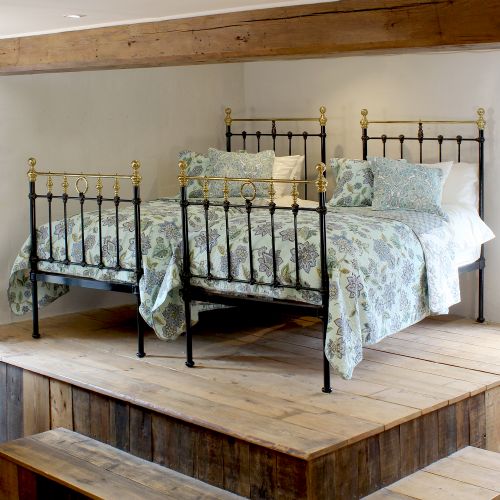
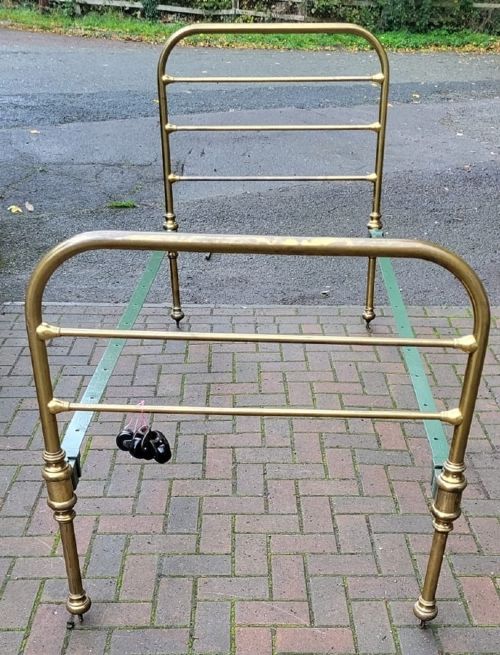
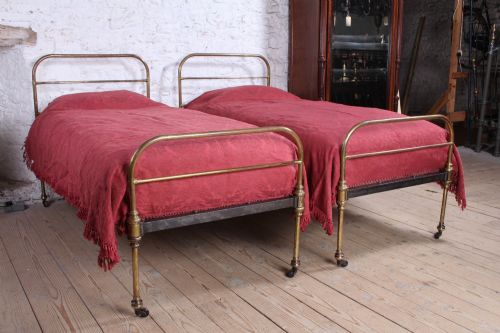
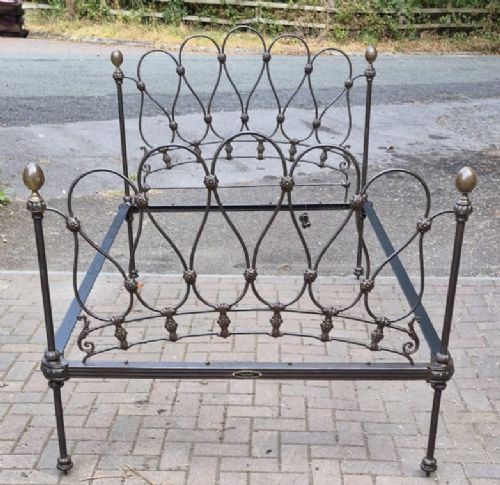
Single Brass Frame
A single brass frame offers a warm, gleaming focal point for a bedroom, bringing period character and solid metal construction to a smaller sleeping space.
Single Brass Frame
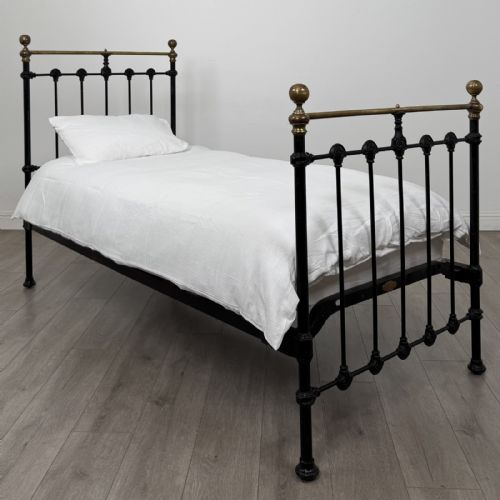
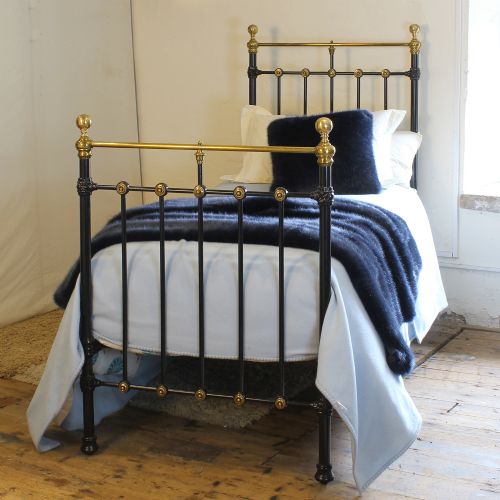
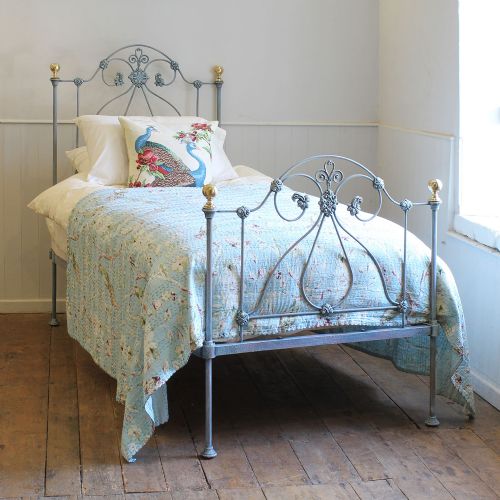
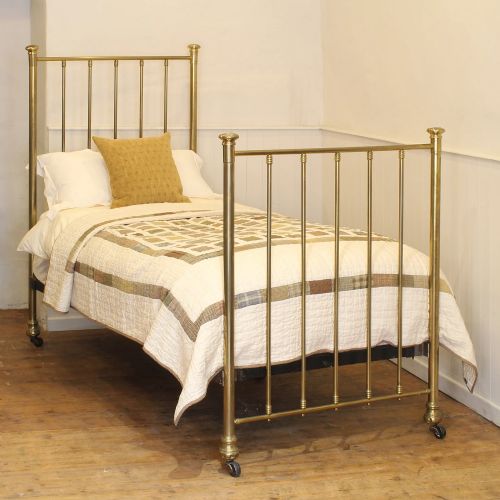
A single brass frame primarily takes the form of antique beds and bedsteads built to accommodate one sleeper. These pieces emerge predominantly from the Victorian and Edwardian eras, alongside late nineteenth-century workshops.
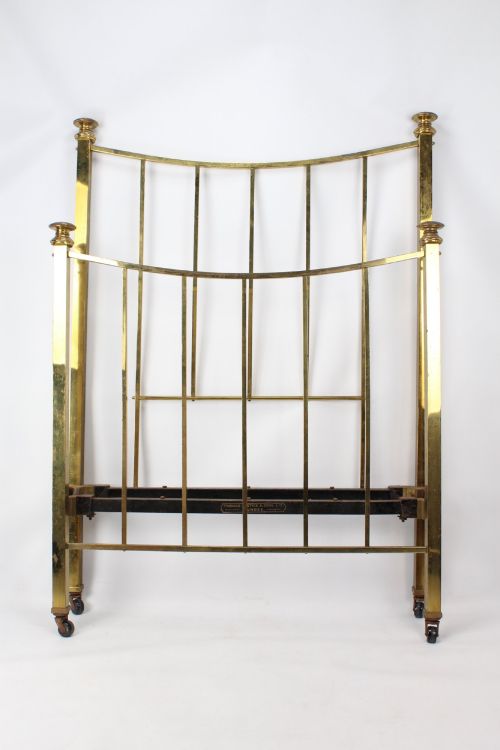
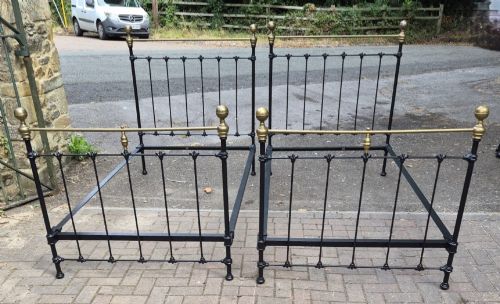
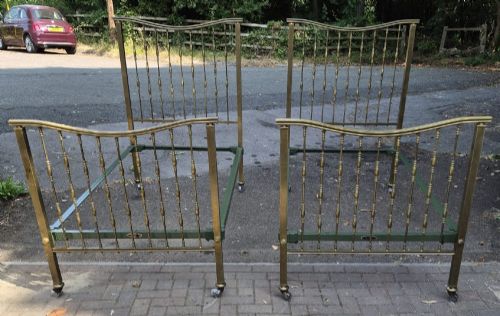
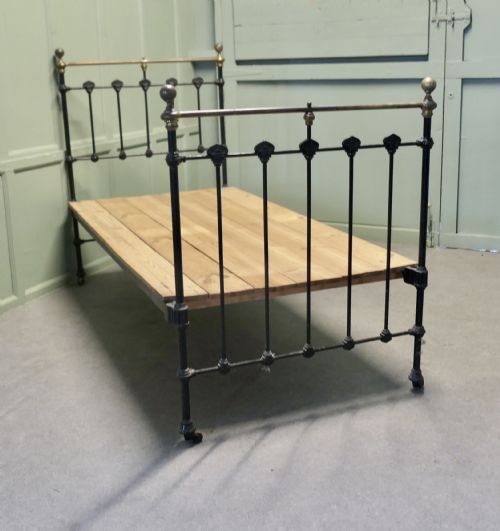
The inventory on this page shows single beds constructed wholly from brass or combined with iron frameworks. Makers often integrated elements such as hoops, rings, and decorative brass detailing upon cast iron foundations.
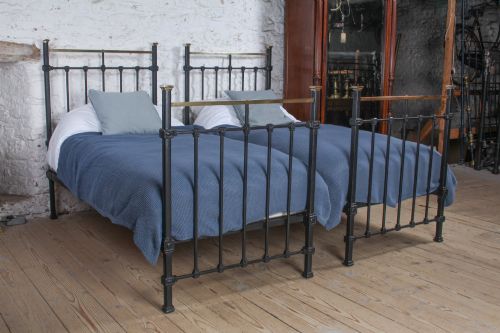
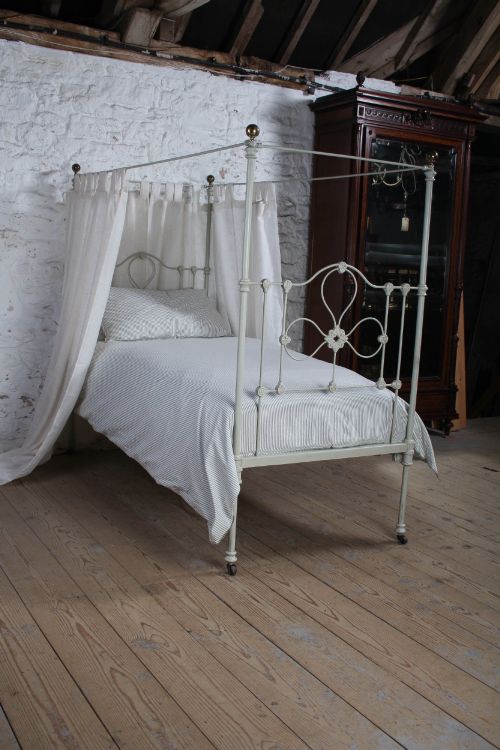
Buyers encounter single sizes measuring around three feet in width, spanning simple utilitarian designs to more opulent French-influenced revivals. These frames offer practical proportions for guest rooms and smaller chambers while retaining substantial period presence.
Factors influencing quality
Quality rests in the substance of the metalwork, the weight of the castings, and the crispness of any applied brass ornamentation. Heavier gauge brass tubing and substantial iron underframes denote superior construction that withstands decades of use.
The refinement of the finishing details, from the neatness of the joints to the depth of the polish, separates standard utility frames from pieces bearing recognised maker attributions.
Single Brass Frame Retail Price Guide 2026
Typical asking prices for single brass frame among the pieces listed under this phrase on Sellingantiques today, from the lower quarter to the upper quarter. They describe what is for sale here now, not the wider market.
Several pieces originate from the nineteenth century, utilising combinations of wrought iron, ceramic elements, and polished brass.
Hoskins & Sewell·R W Winfield·Shoolbred
The Single Brass Frame Glossary
- Bedstead
- The framework of a bed, comprising the headboard, footboard, and side rails. In these listings, the term usually refers to exposed metal structures from the Victorian and Edwardian periods.
- Toleware
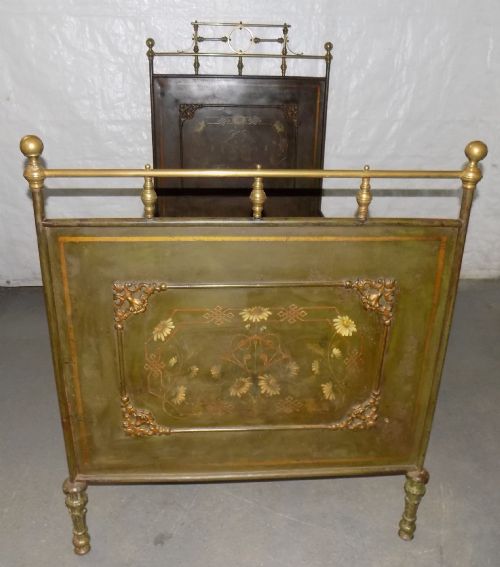
- Enamelled or japanned metalware, occasionally seen on nineteenth-century bed parts finished with painted decoration. This technique provided durable colour before modern industrial coatings.
- Verdigris
- A green patina formed naturally on copper, brass, or bronze through atmospheric oxidation. Some antique iron and brass beds display this weathered surface on their painted or metallic components.
- Cast Iron
- Molten iron poured into a mould to create rigid structural or decorative parts. It frequently forms the base frame supporting brass embellishments on nineteenth-century sleeping furniture.
Single Brass Frame: Frequently Asked Questions
What size is a single brass frame?
These beds typically measure three feet in width, designed to accommodate a standard single mattress while fitting comfortably into compact bedrooms.
Buyers should verify internal rail dimensions, as older frame lengths can sometimes differ slightly from modern mattress sizes.
How do I clean an antique brass frame?
Dust the metal regularly with a soft, dry cloth to prevent the accumulation of grime on the polished surfaces. Avoid harsh chemical cleaners that can strip historic patinas or damage any protective lacquers.
If polishing is necessary, use a mild, traditional metal polish applied sparingly with a soft cloth, taking care not to stain adjacent iron or painted sections.
Can antique brass beds be taken apart?
Most nineteenth-century metal beds utilise slot-in joints or side rail wedges that allow the headboard, footboard, and rails to separate completely. This modular construction made transport and room placement straightforward for original owners.
Care should be taken when dismantling older wedge joints, as painted or patinated metal surfaces can bind together over long periods.
How do I distinguish Victorian from Edwardian frames?
Victorian examples often display heavier cast iron components combined with ornate brass finials and robust proportions. They frequently lean towards decorative revival styles or simpler functional forms from the mid to late nineteenth century.
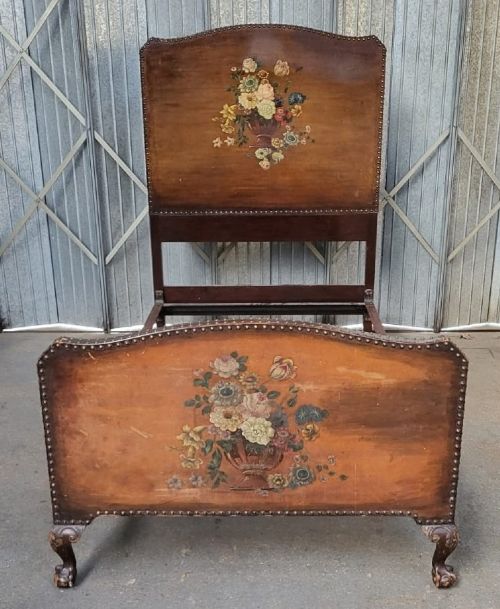
Edwardian pieces tend to show lighter visual weight, sometimes incorporating softer lines, simpler geometric brass work, or alternative materials like walnut alongside the metal.