
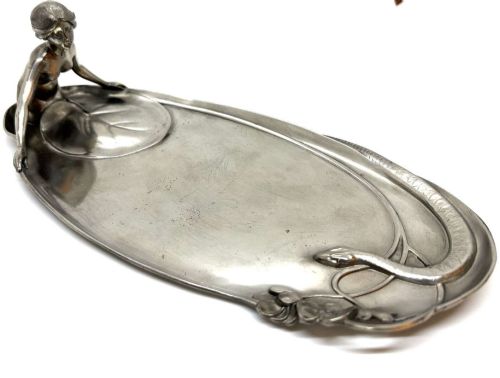
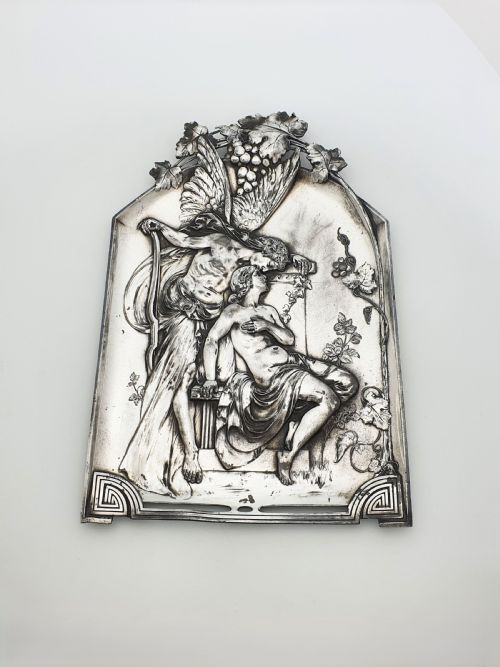


Silvered Pewter Tray
A silvered pewter tray brings tactile weight and organic curves to a room, offering the unmistakable sheen of early twentieth-century metalwork.
Silvered Pewter Tray
You are most likely to meet an Art Nouveau piece featuring stylized figures, floral motifs, or hammered surfaces produced by continental firms. The selection also ranges from simple Victorian dishes to earlier English chargers and wavy edge plates.
The forms span from small pen trays and card trays to large wall plaques and centrepieces, often combining metalwork with glass or marble inserts. Each item reflects the domestic utility and decorative tastes of its specific decade of production.
Materials and construction
These pieces utilise base metals such as standard pewter, Britannia metal, and copper alloys that receive a surface plating of silver. Manufacturers apply this silver layer to impart a brighter, more reflective finish that mimics solid silver while retaining the malleability of pewter.
Makers shape the metal through casting, hammering, and spinning techniques, leaving visible hand-beaten marks on Arts and Crafts examples. Cast figural elements, such as maidens or clover flowers, are soldered onto the body of dishes, card trays, and stands.
Selected designs incorporate contrasting materials like cut glass dishes or marble bases fitted directly into the metal framework. The combination creates multi-textural serving and display pieces typical of the turn of the twentieth century.
The listings show metalware ranging from eighteenth-century English chargers to early twentieth-century German desk accessories and British pewter dishes.
Assessing craftsmanship and condition
Quality rests upon the crispness of the cast ornamentation and the depth of the hand-hammered texture across the surface. Finer examples display sharply defined figural motifs and balanced proportions without distortion in the rim or bowl.
The integrity of the original silver plating dictates much of the visual success of a piece, as uneven wear reveals the duller grey metal underneath. Well-preserved plating maintains a soft, cohesive lustre that enhances the low-relief contours of floral and organic designs.
Maker marks stamped into the base provide a reliable indicator of workshop standards, distinguishing mass production from superior studio output. Pieces bearing recognised manufacturing stamps demonstrate heavier gauge metal and more deliberate finishing work.
WMF·Orivit·Liberty & Co.·Zimmermann·S Duncomb·Archibold Knox
The Silvered Pewter Tray Glossary
- Britannia metal
- A tin-based alloy composed of antimony and copper, utilised as a sturdy base for silver plating. This metal provides a rigid structure that resists denting better than soft leaded pewter.
- Art Nouveau
- A design style characterised by flowing, asymmetrical lines inspired by natural forms like plants and flowers. Objects from this movement frequently feature stylized maidens, winding stems, and organic borders.
- Arts and Crafts
- A movement emphasising hand-craftsmanship, visible tool marks, and simple, honest construction. Items in this style display beaten surfaces and motifs drawn from local flora.
- Tudric
- The trade name used by Liberty & Co. for their range of pewter ware produced during the early twentieth century. Many of these designs were created by notable Liberty designers such as Archibald Knox.
- Charger
- A large ornamental or serving plate intended for display on a sideboard or wall rather than everyday dining. These items often feature plain rims and substantial weight.
Silvered Pewter Tray: Frequently Asked Questions
What is the difference between pewter and Britannia metal?
Pewter is a traditional tin alloy containing varying amounts of lead, copper, or bismuth, known for a soft, matte grey appearance. Britannia metal is a specific, harder type of tin-antimony-copper alloy developed to take a brighter silver-like finish.
Objects made from Britannia metal often serve as the foundation for electroplated wares due to their rigidity. Both materials behave similarly over time but require careful handling to preserve surface treatments.
Are these trays safe for serving food?
Most antique silvered pewter trays are intended for decorative display, card holding, or desk organisation rather than culinary use. The silver plating and older alloy compositions may not meet modern standards for direct food contact.
Peculiarities in nineteenth and twentieth-century metal treatments mean it is best to use these items for dry goods, visiting cards, or stationary. Enjoy them as decorative accessories in living spaces and studies.
How can I identify an Art Nouveau piece?
Look for whiplash curves, undulating borders, and motifs derived from stems, seed pods, and stylized female figures. These design elements flow naturally across the handles, rims, and surfaces of the metalwork.
Continental manufacturers frequently combined these organic shapes with hammered textures to catch the light. Maker marks on the underside often confirm the period of production.