

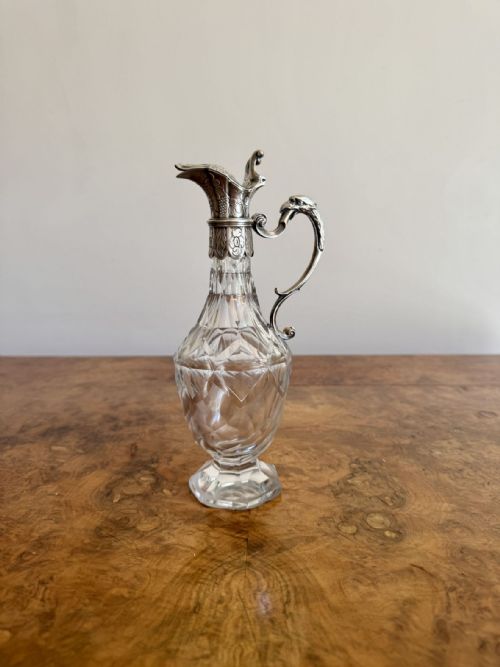
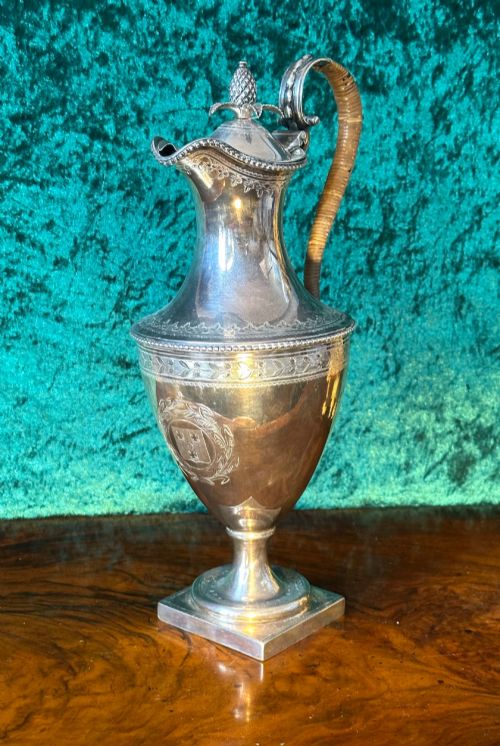


Silvered Metal Pitcher
A silvered metal pitcher offers a gleaming centrepiece for the table, uniting practical pouring with striking metallic artistry across the centuries.
Silvered Metal Pitcher
When you search for a silvered metal pitcher, you encounter vessels designed for serving beverages, mixing cocktails, or displaying decorative forms. These pieces span centuries of design, ranging from early Persian bronze ewers to sleek mid-century cocktail jugs.
The selections available here rely heavily on silver-plated surfaces, silvered pewter, and Old Sheffield plate rather than solid precious metal. You will find distinct stylistic shifts, including the fluid botanical lines of Art Nouveau, geometric Art Deco silhouettes, and robust Georgian utility.
Materials and construction
Base metals such as copper, bronze, and pewter provide the sturdy structural cores for these vessels, often shaped by hammering or casting. Pewter frequently receives a silvered finish to mimic brighter precious metals, while copper and bronze serve as rich foundations for inlaid details or heavy plating.
Manufacturers apply thin layers of silver onto base metals through early plating methods like Old Sheffield plating or later electroplating techniques. Artisans then refine the surfaces with hand-chiselled decoration, enamel inserts, or applied handles shaped like mermaids and organic tendrils.
Silvered Metal Pitcher Retail Price Guide 2026
Typical asking prices for silvered metal pitcher among the pieces listed under this phrase on Sellingantiques today, from the lower quarter to the upper quarter. They describe what is for sale here now, not the wider market.
Listings span from pre-sixteenth century Persian bronze ewers through Georgian ale jugs to mid-century modern cocktail pieces.
Judging quality and execution
Quality rests primarily on the integrity of the silver surface and the crispness of the underlying metalwork. Superior examples maintain their original plating thickness and display sharp, deliberate chasing rather than softened or worn details.
Design attribution and material harmony also divide the range, as pieces conceived by prominent makers integrate handles, spouts, and bodies into a cohesive artistic statement. The retention of original elements, such as enamel cabochons or fitted lids, further separates standard production items from masterworks.
Archibald Knox for Liberty and Co·Keith Murray·WMF·Sue et Mare for Orfèvrerie Gallia·Lino Sabattini For Christofle Gallia·Mappin and Webb
The Silvered Metal Pitcher Glossary
- Old Sheffield plate
- A composite material made by fusing a thin sheet of silver to a thicker copper base, common in eighteenth-century manufacture. This technique produces a warm tone as the copper gradually shows through high points.
- Tudric pewter
- A brand of pewter utilised by Liberty and Co during the early twentieth century, often incorporating enamel details. It frequently defines Arts and Crafts metalwork.
- Ewer
- A large jug with a wide spout and handled shape, traditionally used for carrying water or wine. Many historical examples double as decorative display pieces.
- Silvered pewter
- A base metal alloy of tin and lead treated with a silver finish to achieve a bright appearance without solid silver costs. This material suits the flowing contours of Art Nouveau design.
Silvered Metal Pitcher: Frequently Asked Questions
What is a silvered metal pitcher used for?
These vessels serve as functional containers for water, ale, wine, or mixed cocktails depending on their historical period. Many also function purely as decorative display items on sideboards or serving tables.
Heavier ale jugs and coffee pots handle daily hospitality, while delicate cocktail shakers and liqueur sets cater to formal entertaining.
How do I clean a silvered metal pitcher?
Maintenance requires gentle cleaning with a soft cloth and non-abrasive polishes formulated specifically for plated surfaces or pewter. Harsh chemical dips strip thin silver layers and ruin underlying patinas.
Storing pieces away from direct moisture prevents the base metal from reacting beneath worn plating.
How do I date an antique pitcher?
Dating relies on stylistic markers such as geometric Art Deco lines or flowing Art Nouveau motifs, alongside maker marks stamped into the base. Construction techniques, including the method of handle attachment and plating type, provide further chronological clues.
Comparing base metal choices, like early copper cores versus later white metals, narrows the era of production.
Are these pitchers made of solid silver?
Most items described as silvered metal utilise base alloys like pewter, copper, or bronze coated with a thin layer of silver or silver plate. This method achieves the brilliance of precious metal while utilising more accessible structural materials.
Old Sheffield plate and silvered pewter represent the dominant composition types across historical listings.