



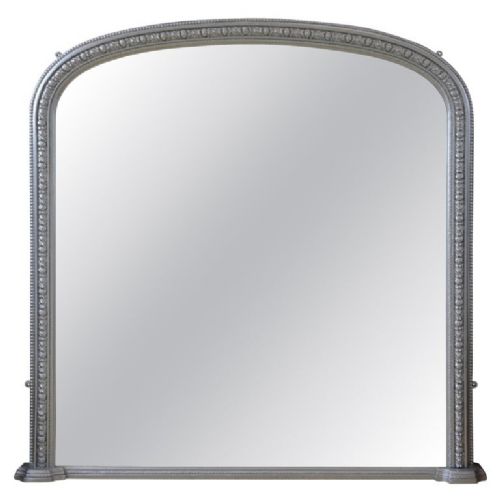


Silvered Leaf Mantel Mirror
These silvered leaf mantel mirror examples bring nineteenth-century French and English presence to a room, offering large arched and shaped glass framed in carved wood and gesso.
Silvered Leaf Mantel Mirror
A silvered leaf mantel mirror sits above a fireplace or acts as a principal wall piece, originating primarily from the nineteenth century in English Victorian and French Louis Philippe or Rococo Revival styles. These pieces combine substantial scale with reflective mirror glass to alter the light and proportion of an interior.
The most common formats on this page are large overmantel mirrors and wall mirrors, frequently shaped with arched or serpentine tops. Carved wooden frames coated in gesso provide the foundation for silver leaf, silver gilt, and mixed gold leaf finishes.
Makers from the nineteenth century built these objects to command attention in domestic reception rooms. The heavy wooden structures rely on traditional joinery to support large expanses of mirror glass without warping over time.
Materials and construction methods
Makers constructed the structural frames of these mirrors using solid wood, applying thick layers of gesso to build up intricate relief decoration before gilding. This plaster-like medium accepts deep carving and smoothing, allowing artisans to shape complex scrolls and borders.
Surfaces were then finished using silver leaf, silver gilt, or combinations of silver and gold leaf to achieve a metallic lustre. Traditional water gilding or oil gilding techniques bound the thin metal leaves to the prepared gesso ground.
Silvered Leaf Mantel Mirror Retail Price Guide 2026
Typical asking prices for silvered leaf mantel mirror among the pieces listed under this phrase on Sellingantiques today, from the lower quarter to the upper quarter. They describe what is for sale here now, not the wider market.
Nineteenth-century artisans occasionally concealed small joinery adjustments with extra gesso, meaning every carved scroll hides a minor workshop secret.
Distinctions in craftsmanship and design
Quality in a silvered leaf mantel mirror rests upon the crispness of the wood carving and the depth of the gesso relief beneath the metal leaf. Finer examples display sharp, hand-tooled details in the ornamentation rather than soft, moulded contours.
The integration of the frame corners and the preservation of the original silver leaf or silver gilt surface dictate the visual integrity of the piece. Superior construction ensures the heavy frame supports the glass securely while maintaining harmonious proportions.
The Silvered Leaf Mantel Mirror Glossary
- Gesso
- A mixture of plaster of Paris, chalk, and size used to coat wooden frames before gilding. It provides a smooth, absorbent ground for carving and metal leaf application.
- Silver Leaf
- Extremely thin sheets of beaten silver applied to a prepared surface to simulate solid metal. It develops a characteristic patina as it ages.
- Silver Gilt
- Silver leaf or silver plating that is lightly warmed with gold or transparent lacquer to temper the bright white metal tone. This finish combines silver and gold characteristics.
- Overmantel Mirror
- A large mirror designed specifically to hang on the wall directly above a fireplace mantel. These pieces often feature wide horizontal or vertical proportions to match fireplace dimensions.
Silvered Leaf Mantel Mirror: Frequently Asked Questions
How do I hang a heavy mantel mirror safely?
These large wooden and gesso frames require robust wall fixings anchored directly into masonry or substantial timber studs. Professional mirror hangers utilise heavy-duty brackets to distribute the considerable weight evenly.
Ensuring the hanging wire or integrated D-rings match the mass of the glass prevents structural strain on the antique frame.
What is the difference between silver gilt and silvered leaf?
Silvered leaf describes pure silver beaten into thin sheets and applied directly to the gesso frame. It tends to tarnish or darken towards a deep grey over time.
Silver gilt incorporates a wash or fine layer of gold over the silver base, producing a warmer tone that resists harsh tarnishing while retaining a silvery lustre.
How should I clean the antique glass and frame?
Dust the carved gesso and metal leaf frame gently with a dry, soft brush to protect the delicate surface layers. Avoid commercial solvents or water on the gilding.
Clean the mirror glass sparingly using a cloth dampened slightly with distilled water, taking care to prevent moisture from seeping behind the silvered backing.
Are these mirrors English or French origin?
Nineteenth-century pieces on this page divide into English Victorian designs and French styles such as Louis Philippe or Rococo Revival. French examples often feature dramatic arched tops and ornate carved wood scrolls.
English Victorian pieces frequently present simpler architectural lines or robust overmantel proportions suited to domestic hearths.