
Silvered Desk Lamp
A silvered desk lamp brings a distinct metallic sheen and steady task illumination to a workspace, drawing on decades of period craftsmanship.
Silvered Desk Lamp
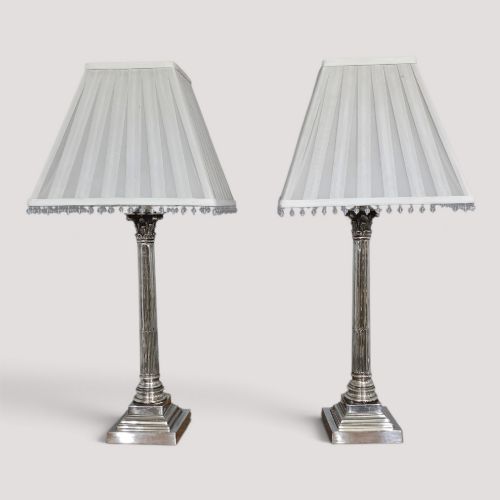
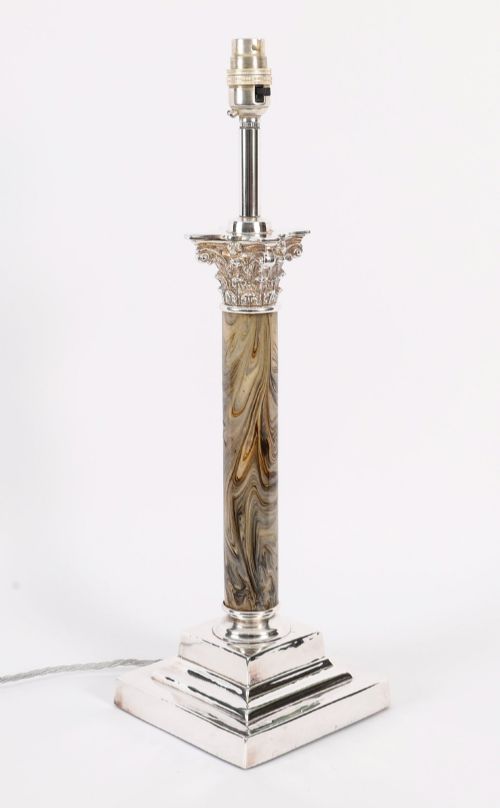
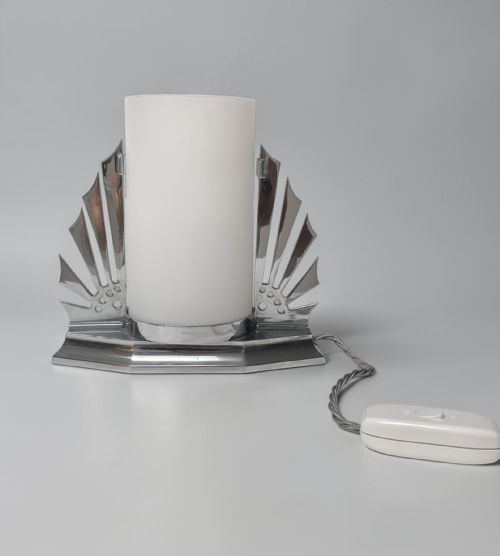
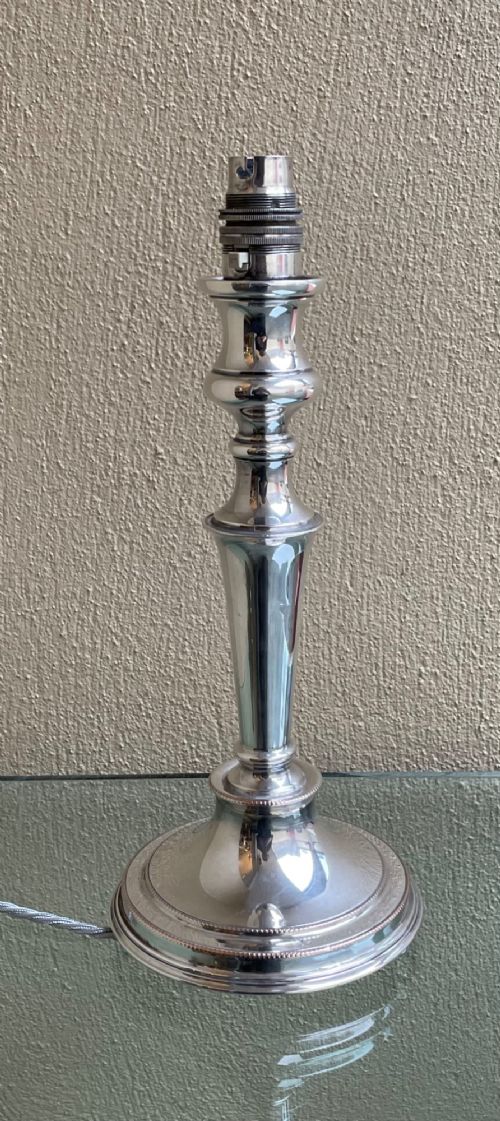
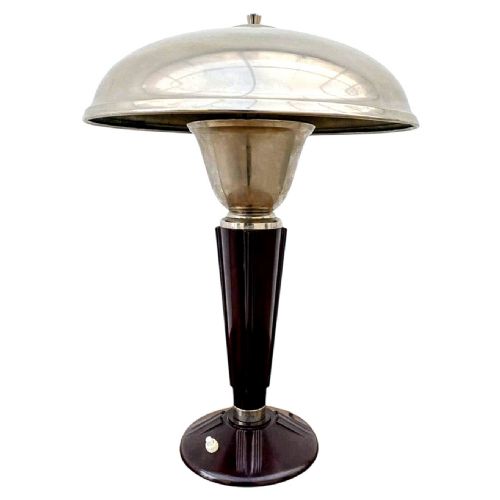
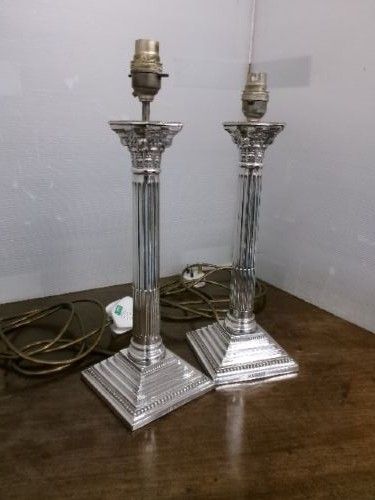
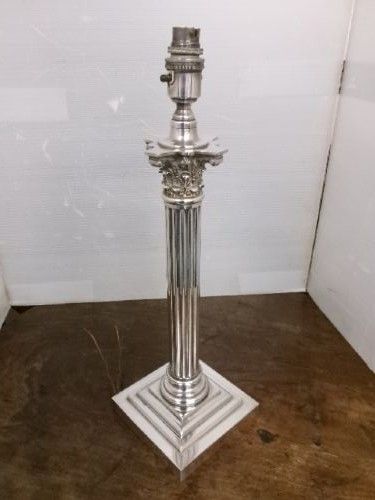
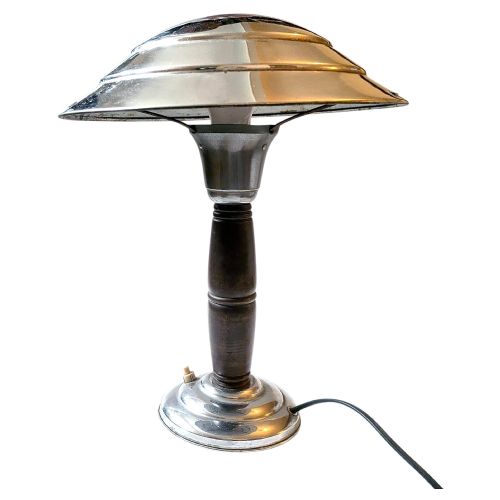
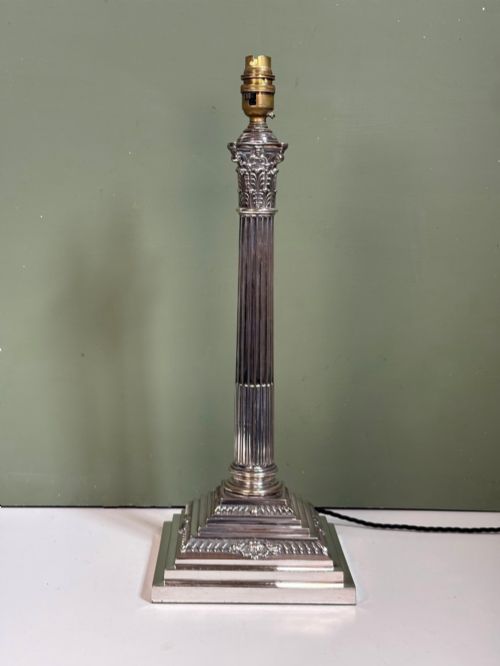
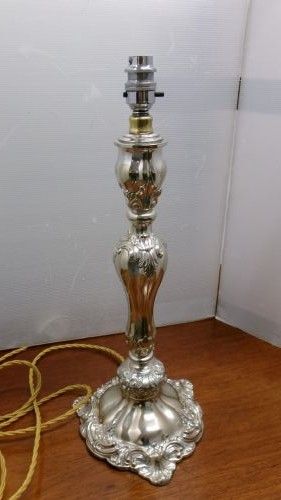
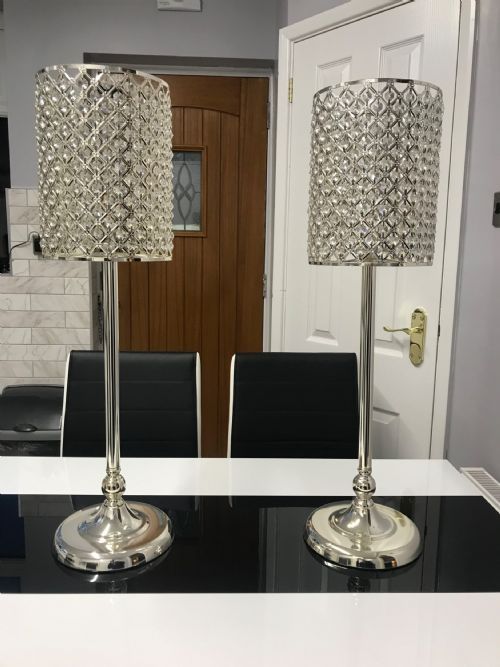
When you search for a silvered desk lamp, you encounter pieces spanning from the Victorian era through the Edwardian period and into the Art Deco 1930s. The most common examples take the form of silver plated table lamps, often shaped as classical Corinthian columns or streamlined chrome and nickel task lights.
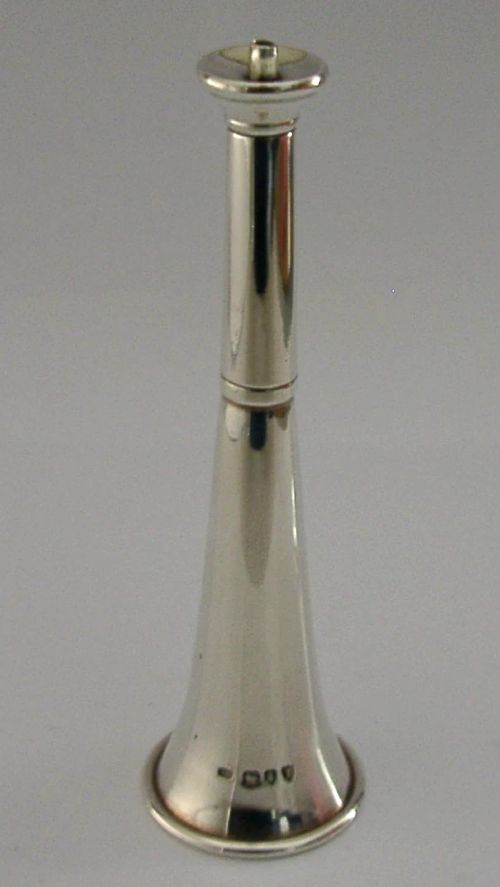
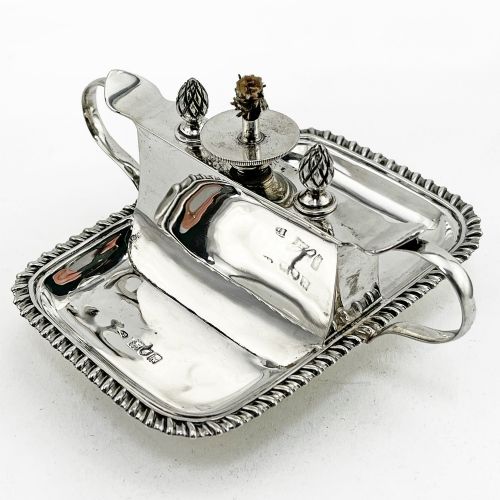
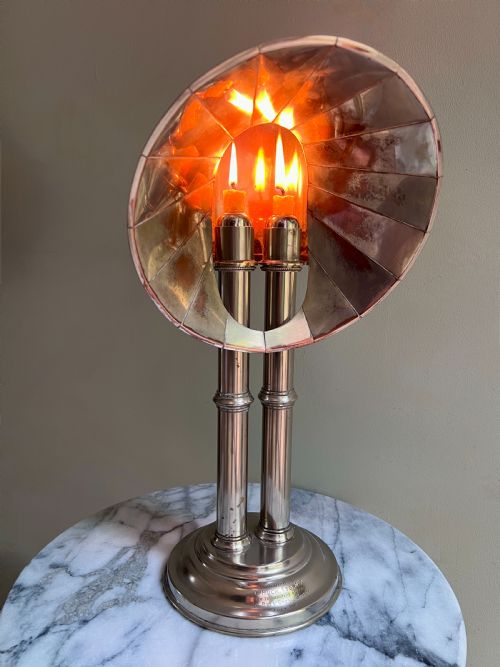
Makers utilised various metals including brass, sterling silver, and EPNS to achieve the desired reflective finish. Alongside traditional desk lamps, the selection includes related lighting objects such as reflector candle lamps, ship's gimbal lamps, and travelling reading lights.
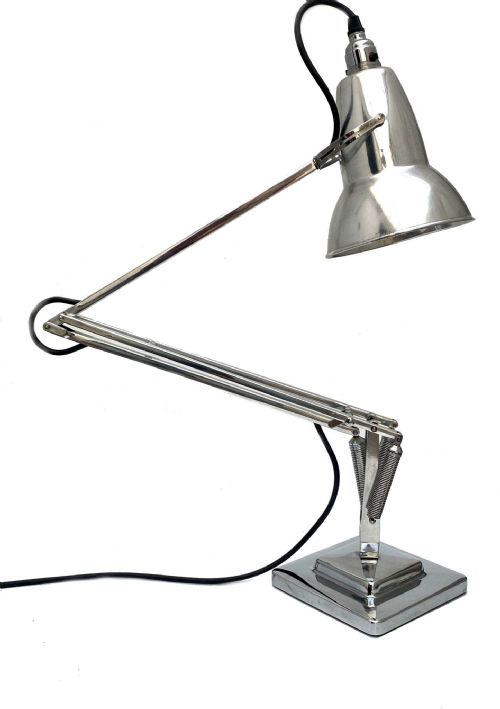
The aesthetic shifts noticeably across decades, moving from ornate nineteenth-century Revival styles with lion's paw feet toward geometric modernist designs. Whether examining a heavy column or a machine age adjustable arm, each piece reflects the prevailing illumination technology and interior taste of its origin.
Materials and construction methods
Makers built these lamps using foundational base metals like brass, iron, or copper, which were subsequently coated in silver plate, sterling silver, nickel, or chrome to create the signature metallic surface. Silver plating techniques involved depositing a thin layer of silver onto a base metal, while later twentieth-century pieces adopted chromium and nickel plating for durability.
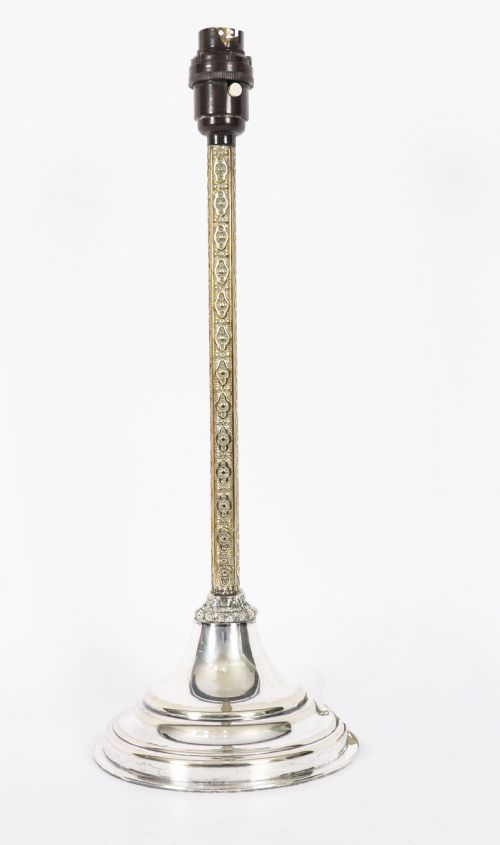
Casting methods shaped the heavy architectural columns and classical oil lamp forms popular in Victorian and Edwardian workshops, utilising moulds for detailed capitals and stepped bases. Meanwhile, Art Deco and modernist pieces employed spun metal components, tubular steel, and articulated joints to achieve industrial utility and clean geometric lines.
Listings feature silvered desk lamps from the Victorian, Edwardian, and Art Deco periods, utilising materials such as sterling silver, brass, chrome, and nickel.
Distinguishing quality in period lighting
The caliber of a silvered desk lamp rests on the weight of the metal and the integrity of the original plating rather than surface shine alone. Heavier gauge brass or substantial silver plate indicates a higher grade of manufacture, ensuring the base remains stable and resistant to tipping.
Execution of detail defines the upper tier of pieces, visible in the crispness of acanthus leaves on a Corinthian capital or the smooth mechanical action of an adjustable arm. Maker marks and stamps from established silversmiths or specialised lamp works provide further indication of careful workshop production.
Mappin & Webb's·Eileen Grey·Herbert Terry·Muller Bros·Veritas Lamp Works
The Silvered Desk Lamp Glossary
- Silver Plate
- A thin layer of silver bonded to a base metal such as brass or copper. This method allowed workshops to produce substantial decorative items at a lower cost than solid silver.
- Corinthian Column
- An architectural support column featuring an ornate capital decorated with acanthus leaves. Many Victorian and Edwardian desk lamps adopted this classical form for formal interiors.
- EPNS
- Electroplated Nickel Silver, a common base material composed of a copper-nickel-zinc alloy coated in silver via an electrolytic process. It offered durability and a bright metallic finish.
- Gimbal Lamp
- A lighting fixture mounted on pivoting rings that maintain equilibrium despite movement or inclination. These were frequently utilised on ships and desks to keep the flame or bulb level.
- Machine Age
- A design aesthetic from the 1920s and 1930s celebrating industrial efficiency, chrome surfaces, and functional simplicity. Lamps from this movement prioritise clean geometric forms.
Silvered Desk Lamp: Frequently Asked Questions
How do I date a silvered desk lamp?
Dating relies on stylistic clues, manufacturing techniques, and any accompanying hallmarks or stamps on the metal base. Victorian and Edwardian examples often display classical revival motifs, whereas 1930s pieces favour streamlined chrome and modernist articulation.
Examining the wiring, switches, and construction methods also helps narrow the decade of production. Maker stamps often provide a direct link to operational years and registry dates.
Are these lamps safe for daily use?
Many period lamps arrive with older electrical wiring that requires professional rewiring to meet contemporary safety standards. Checking the internal cord and bulb holder ensures safe operation in a modern home.
Consulting a qualified electrician allows you to preserve the original metal body while updating the functional components for everyday desk use.
How do I care for silver plated metal?
Maintaining the finish involves gentle dusting with a soft dry cloth to prevent the accumulation of grime. Harsh chemical polishes should be avoided, especially on plated surfaces, to prevent wearing away the silver layer.
Regular, minimal care preserves the patina and keeps the reflective quality intact without damaging the underlying base metal.
What is the difference between chrome and silver plate?
Silver plate employs actual silver deposited over a base metal, yielding a warm, lustrous finish that develops a soft tarnish over time. Chrome plating uses chromium over nickel and steel, producing a harder, brighter, and more blue-toned industrial shine.
Understanding this distinction clarifies the period of manufacture, as bright chrome surfaces became prevalent during the Art Deco and machine age eras.