

Silvered Jewellery Casket
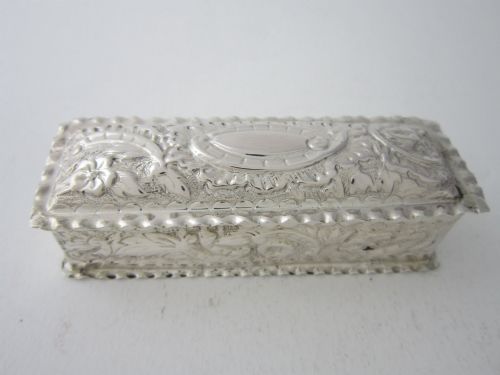
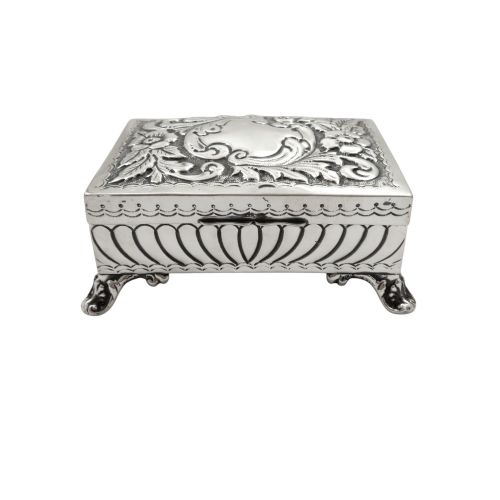
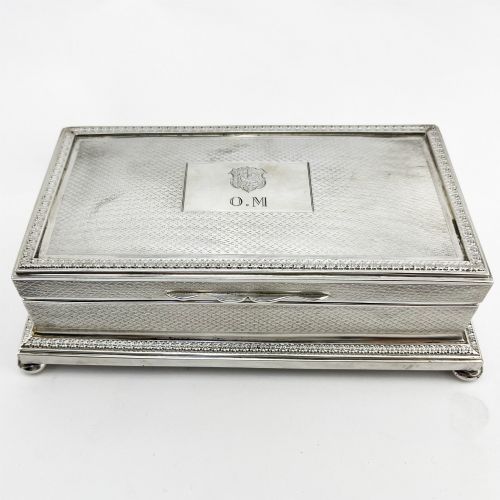
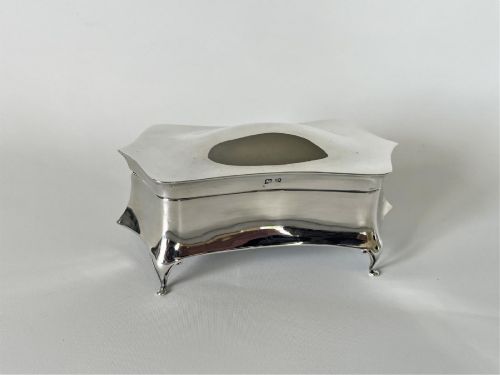
These pieces are silvered antique jewellery caskets, treasured for holding small personal items while adding period character to a dressing table.
Silvered Jewellery Casket
A silvered antique jewellery casket is typically a small, hinged container designed to store rings, brooches, and trinkets on a dressing table or desk. The selections here span the nineteenth and twentieth centuries, encompassing Victorian, Edwardian, George V, and Art Deco periods alongside Arts and Crafts and French nineteenth-century examples.
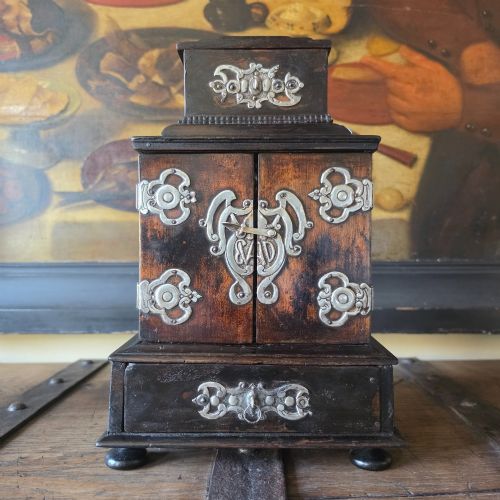
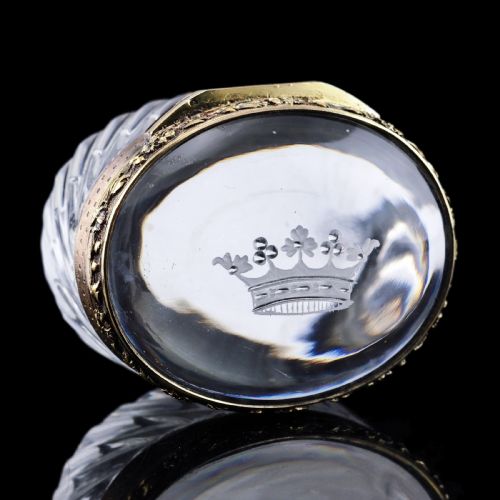
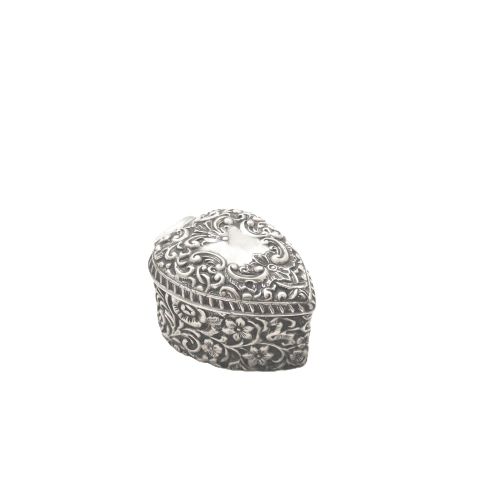
The forms vary widely across the inventory, ranging from straightforward rectangular trinket boxes and oval receptacles to heart-shaped containers, coffin shapes, and more substantial fitted cabinets. Most pieces employ sterling silver, silvered metal, or silver gilt, frequently paired with secondary materials such as tortoiseshell, enamel, crystal, and brass.
Originating from British workshops in cities like Birmingham, London, and Chester, alongside continental makers in Germany, Denmark, and France, these caskets demonstrate the diverse domestic crafts of past eras. Buyers most frequently encounter sterling silver and silvered metal boxes produced during the late Victorian and Edwardian decades.
Materials and methods of construction
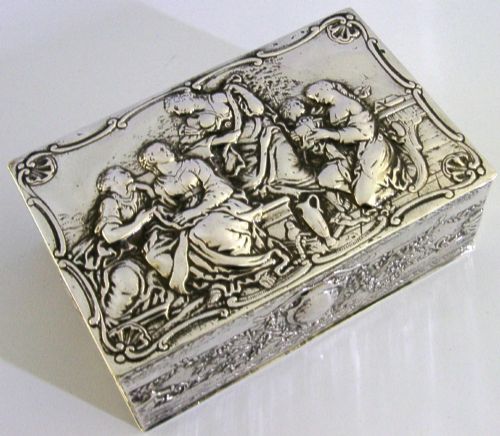
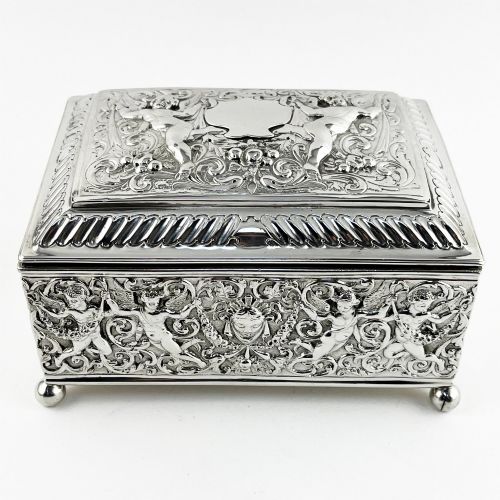
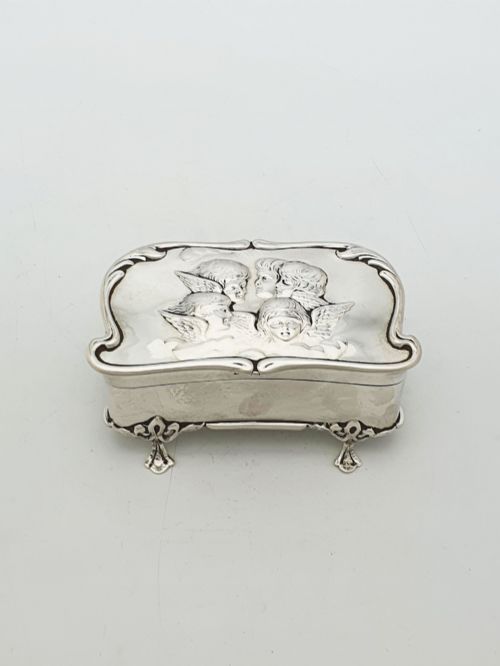
Makers shaped sterling silver, silver gilt, and silvered metal through pressing, casting, and beating, often incorporating hinged lids and fitted interior linings. Surface decoration includes embossed cherub relief, chased floral patterns, and repoussé work.
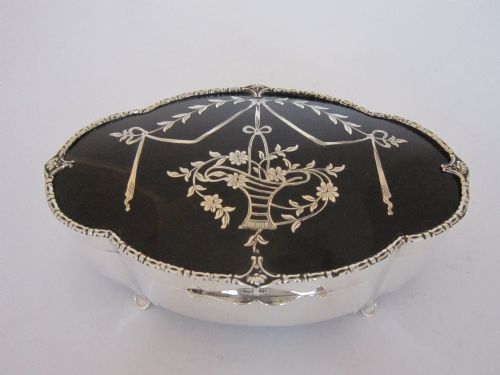
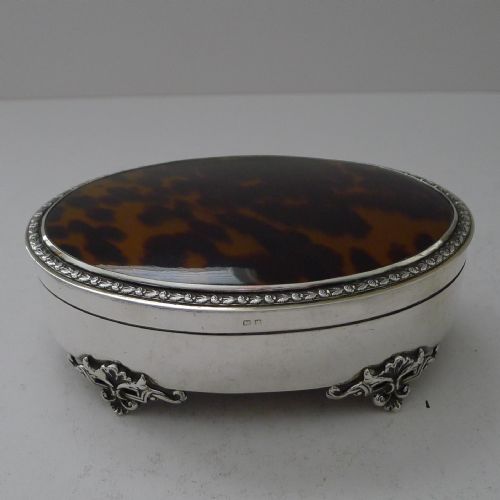
Many boxes integrate contrasting materials into the metal framework, such as polished tortoiseshell panels, hand-painted enamel, and cut glass or crystal bodies. Arts and Crafts examples utilise beaten and riveted steel or pewter paired with cloisonné enamel panels.
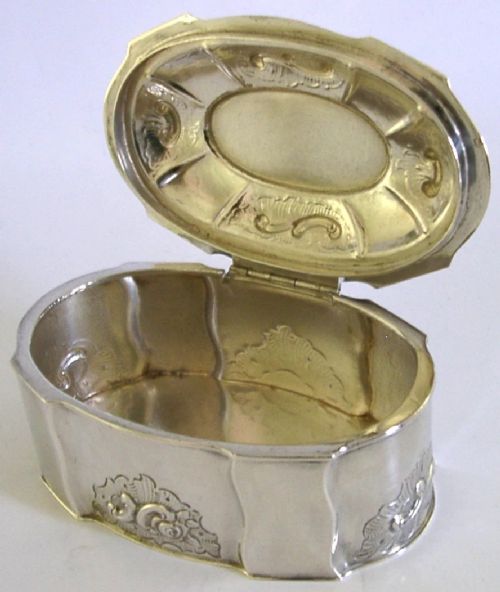
Makers applied gilding to interior surfaces to protect the silver from tarnishing through direct contact with jewellery and cosmetics. Secure closures typically rely on snug-fitting hinges and small clasp mechanisms embedded in the rim.
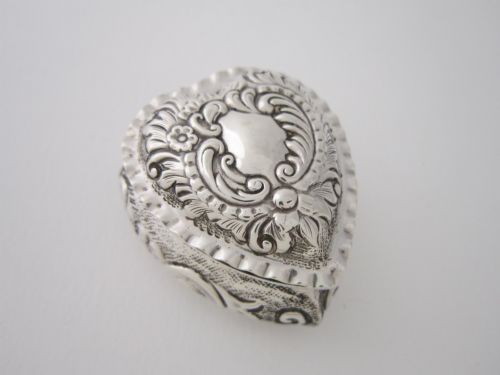
Several Victorian boxes feature charming heart shapes and cherub reliefs, designed expressly for romantic tokens and sentimental keepsakes.
Distinctions in quality and execution
The standard of a silvered antique jewellery casket depends heavily on the crispness of its surface relief and the weight of the metal utilised in its construction. Heavier gauge silver and deeply chased or embossed motifs indicate superior craftsmanship.
Interior fittings also differentiate pieces, with silk-lined or velvet-fitted compartments and gilt interiors representing higher production values than plain metal cavities. The integration of secondary materials like genuine tortoiseshell or hand-applied enamel elevates the complexity of the object.
A & J Zimmerman Ltd·William Comyns·Posen of Frankfurt and Berlin
The Silvered Jewellery Casket Glossary
- Silver gilt
- Silver that has been coated with a thin layer of gold on its surface. This technique was frequently applied to the interior of trinket boxes to prevent discoloration.
- Repoussé
- A metalworking technique where the artisan hammers the design from the reverse side to create a raised pattern in relief. It appears often on Victorian and Edwardian boxes.
- Tortoiseshell
- The mottled brown and amber shell of certain turtle species used as a decorative veneer on the lids of dressing table boxes. It provides a striking contrast against polished silver mounts.
- Hallmark
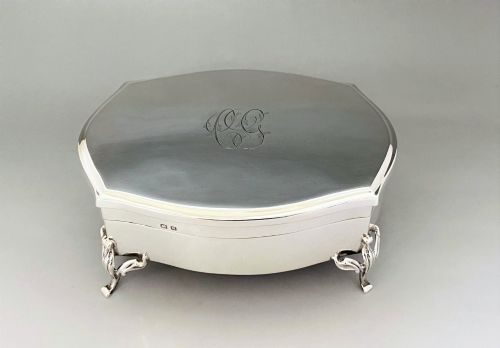
- A series of official marks stamped on precious metals indicating the standard of purity, the assay office, and the year of manufacture. These stamps help verify the origin of British silver pieces.
- Cloisonné
- An ancient technique for decorating metalwork objects with coloured enamel separated by strips of metal. It is commonly found on Arts and Crafts pieces in this category.
Silvered Jewellery Casket: Frequently Asked Questions
What were antique jewellery caskets used for?
These caskets served as secure, decorative receptacles for storing valuable rings, brooches, necklaces, and small personal accessories on dressing tables and desks.
Victorian and Edwardian owners relied on them to keep delicate items organised and protected from dust and handling when not being worn.
How do I date a silver trinket box?
Dating typically relies on examining the hallmarks stamped into the metal, which reveal the assay office and specific year of manufacture for British pieces.
Stylistic markers such as Art Deco geometric lines or Victorian rococo revival scrolls also offer clear indications of the period of production.
How should I clean a silver box?
Maintenance requires gentle dusting with a soft microfibre cloth and minimal use of chemical silver polishes to preserve the integrity of chased details and hallmarks.
If the piece incorporates tortoiseshell, enamel, or fabric linings, care must be taken to keep moisture away from vulnerable joints and adhesive surfaces.
What materials are common in these caskets?
The primary structure usually consists of sterling silver, silver gilt, or silvered metal, though pewter and steel appear in Arts and Crafts examples.
Decorative accents frequently include tortoiseshell panels, coloured enamel, cut glass, and velvet or silk interior linings.