
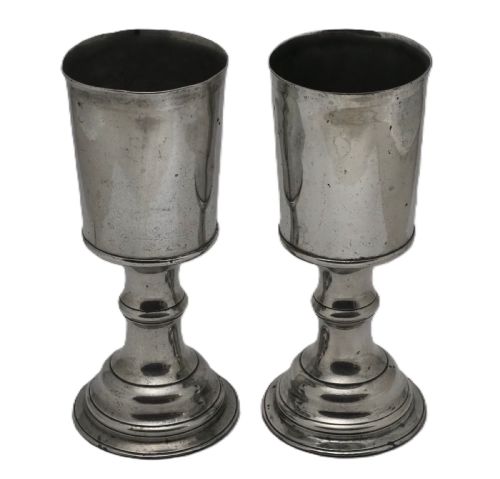


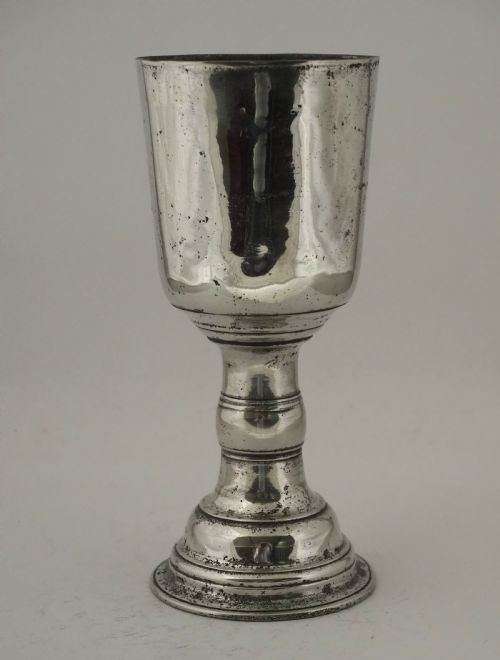
Silver Wine Chalice
A silver wine chalice brings tactile weight and centuries of drinking tradition straight to the modern table.
Silver Wine Chalice
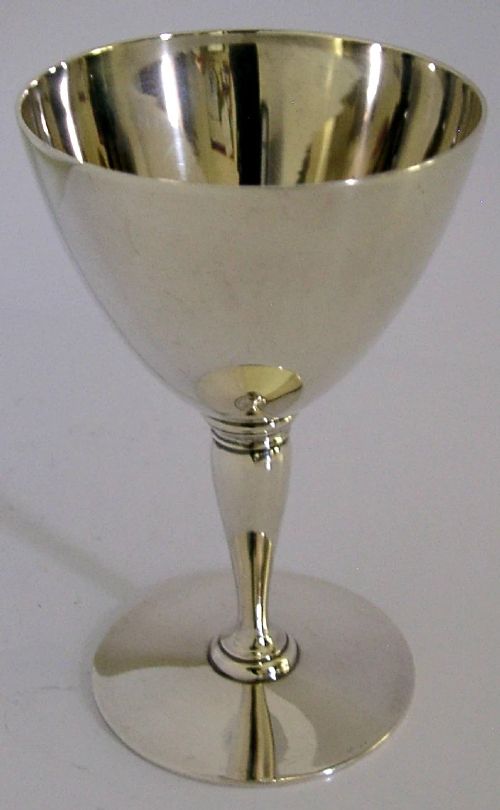
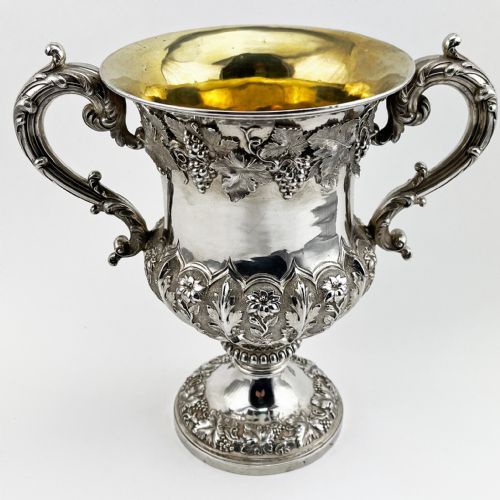
A silver wine chalice encompasses deep-bowled vessels designed for communal drinking, presentation, and ritual use. The forms range from plain Georgian vase-shaped bodies to ornate Victorian parcel-gilt creations and streamlined mid-century barware.
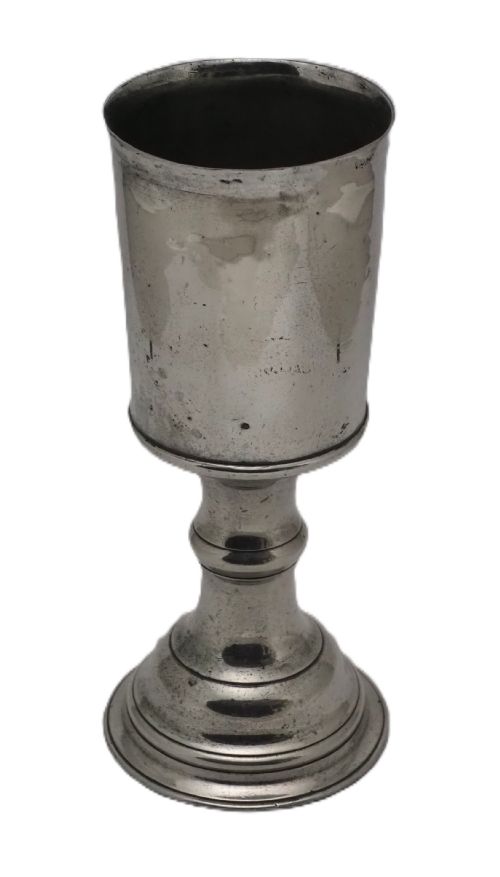
Most examples encountered here are sterling silver, silver plate, or pewter, originating from British, Irish, American, and Asian workshops. Collectors meet everything from ecclesiastical communion cups to presentation trophies and domestic barware.
The enduring appeal of a silver wine chalice lies in its blend of utilitarian function and sculptural presence. Whether dating from the eighteenth century or the Art Deco era, these drinking vessels retain a distinct ceremonial gravity.
How they were made
Metalsmiths formed these vessels predominantly through raising and spinning sterling silver, pewter, copper, and silver plate. Many pieces feature cast components such as domed feet, knopped stems, and applied wire borders.
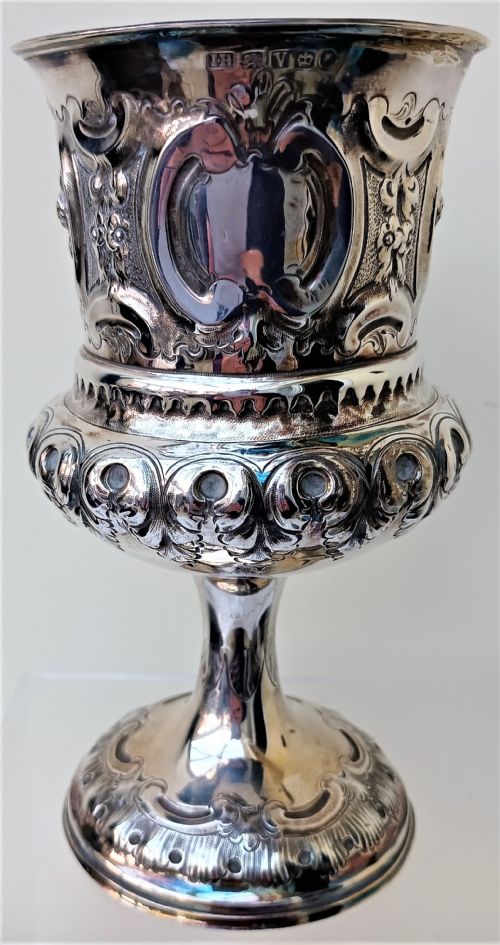
Surface ornamentation relied on traditional techniques including bright-cut engraving, parcel-gilding, and chasing to highlight botanical or heraldic motifs. Plated wares utilised fused Sheffield plate or electroplating over base metal foundations.
Several diminutive vessels are explicitly sized for birds.
What varies in quality
The distinction between ordinary and exceptional work rests on gauge thickness, structural balance, and the crispness of hand-engraving. Heavier gauge silver provides a reassuring heft in the hand and resists denting during daily use.
Design integrity also separates standard production from master craftsmanship. Well-proportioned stems, secure foot attachments, and finely detailed chasing elevate an ordinary cup into a notable collector piece.
George Unite·Wang Hing and Co·John Hunt and Robert Roskell·William Eaton·James Deakin and Sons
The Silver Wine Chalice Glossary
- Sterling silver
- An alloy consisting of 92.5 percent silver by mass, with the remainder composed of copper or other metals. This standard provides the primary material for the finest historic drinking vessels.
- Parcel-gilt
- An object made of silver where selected areas, usually the interior bowl, receive a thin coating of gold. This technique protects the metal from acidic liquids and creates a striking two-tone visual contrast.
- Bright-cut engraving
- A surface decoration technique utilising faceted angled cuts to create sparkling geometric or floral patterns. It was particularly popular on Georgian silver items.
- Old Sheffield plate
- An early composite material made by fusing a thin sheet of silver to a thicker copper core. Pieces produced this way display a warm undertone where the silver layer wears thin over centuries.
- Kiddush cup
- A ritual goblet used in Jewish households for sanctifying the Sabbath and festivals. These often feature distinctive ornamentation and regional stylistic markers.
Silver Wine Chalice: Frequently Asked Questions
How do I clean my silver wine chalice?
Wash the chalice gently in warm soapy water using a soft cloth, avoiding abrasive sponges that scratch the metal surface. Dry thoroughly with a lint-free towel to prevent water spots.
Use a reputable liquid or cream silver polish sparingly only when tarnish requires removal. Avoid submerging antique pieces with loaded handles or insulated stems in chemical dips.
Can I drink wine from a silver chalice?
Yes, sterling silver and solid pewter vessels are entirely suitable for drinking wine or other beverages. The metal quickly adopts the temperature of the liquid.
Acidic wines should not be left sitting in silver or pewter vessels for extended periods. Wash the vessel promptly after use to preserve the interior finish.
How do I date an antique silver chalice?
Examine the hallmarks stamped on the body or foot, which typically indicate the assay office, date letter, and maker's mark. British silver relies on standardised date cycles that pinpoint the exact year of manufacture.
Stylistic indicators such as the vase-shaped bodies of the Georgian period or geometric Deco motifs also help narrow down the production era when marks are absent.
What is the difference between a chalice and a goblet?
A chalice traditionally implies an ecclesiastical or ceremonial function, often featuring a deeper bowl and a prominent knop on the stem for ritual elevation. They are frequently associated with communion services.
A goblet generally refers to secular drinking vessels intended for banqueting or barware use. In practice, historical terminology often overlaps between the two forms.