
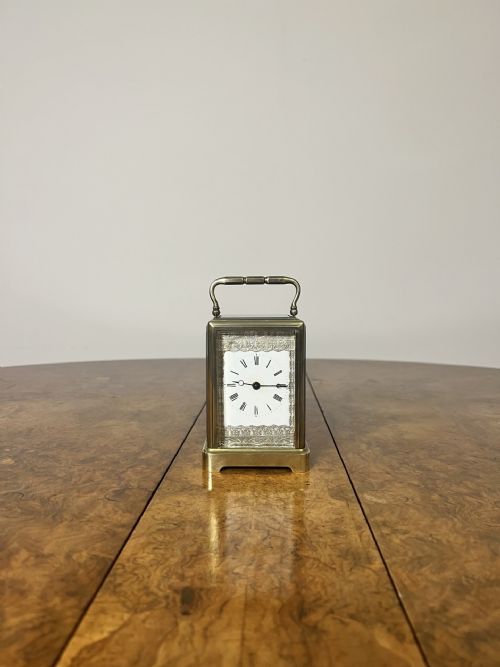


Silver Travelling Clock
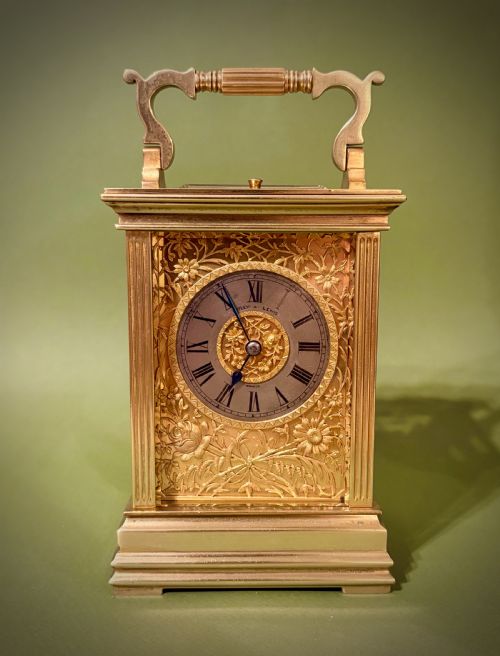
A silver travelling clock is a portable timepiece housed in a protective metal or leather case, designed for the journey and the bedside.
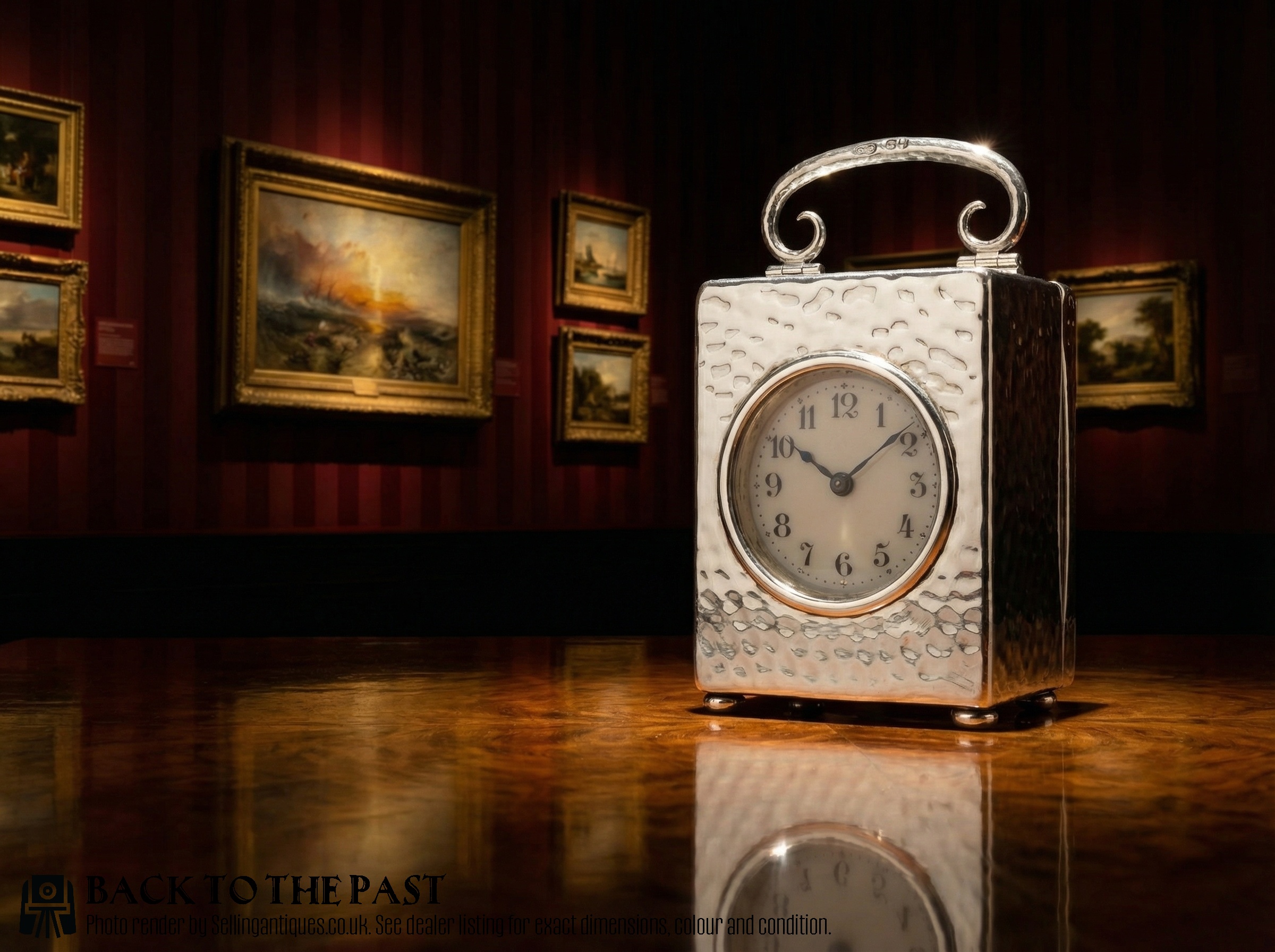
Silver Travelling Clock
A silver travelling clock combines the precision of a portable timepiece with the elegance of precious metal casing, spanning periods from the nineteenth century through the Art Deco era. Buyers look for these items to find compact, functional objects that bridge the gap between pocket watches and full-sized mantle clocks.
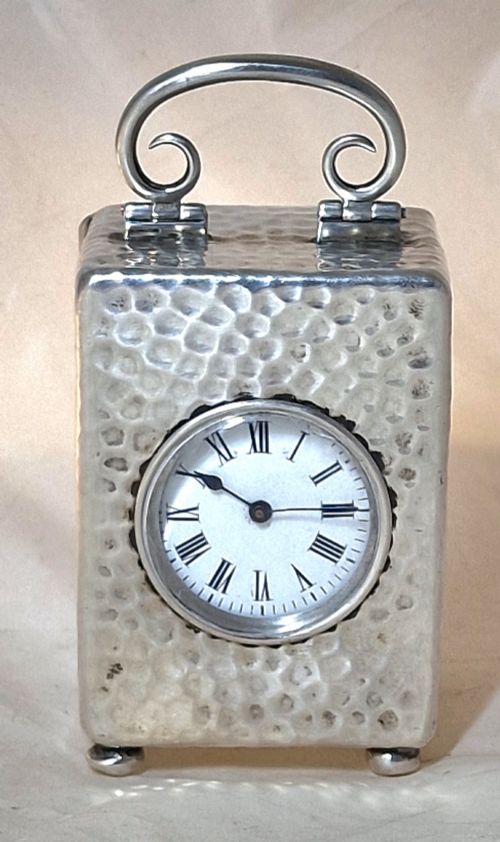
Originating largely from English workshops and French horological centres, these objects reflect diverse design influences such as Victorian formality, Arts and Crafts hammered textures, and French Belle Epoque refinement.
How they were made
Silversmiths constructed the outer housings using sterling silver, often hallmarked in major assay offices like London and Birmingham, alongside supporting elements in brass, steel, and gilt brass. Cases frequently received decorative treatments such as engine turning, hand chasing, or vibrant blue guilloche enamel work.
The interior movements rely on traditional mechanical engineering, incorporating glass crystals to protect the dial and delicate gear trains driven by mainsprings. Makers housed these mechanisms in heavy cast or fabricated metal frames designed to withstand movement during travel.
Silver Travelling Clock Retail Price Guide 2026
Typical asking prices for silver travelling clock among the pieces listed under this phrase on Sellingantiques today, from the lower quarter to the upper quarter. They describe what is for sale here now, not the wider market.
The selection includes pieces spanning the Victorian period, Edwardian era, and Art Deco design movements.
What varies in quality
The distinction between standard examples and top-tier pieces rests on the complexity of the movement and the finesse of the metalwork. Master horologists integrated repeating mechanisms, quarter-striking capabilities, or fusee movements, elevating a simple timepiece into an intricate piece of engineering.
Surface decoration and maker attribution further separate the range, where fine hand-chased silver, undamaged enamel panels, and signed dials by respected retailers or makers command greater attention from collectors.
Mappin and Webb·Henry Matthews·Thomas Cole·James Cole·Paul Garnier·Le Roy et Fils·Bayard·Harrods of London·J Batson and Son
The Silver Travelling Clock Glossary
- Carriage clock
- A small, spring-driven clock designed for travellers in the nineteenth century. These items typically feature a rectangular brass or silver frame with glass panels.
- Guilloche enamel
- A decorative technique where intricate geometric patterns are engraved beneath translucent enamel. This method was widely utilised on Edwardian and Art Deco timepieces.
- Goliath watch
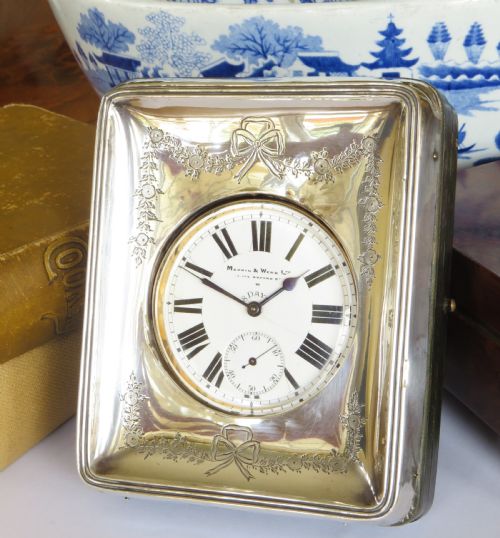
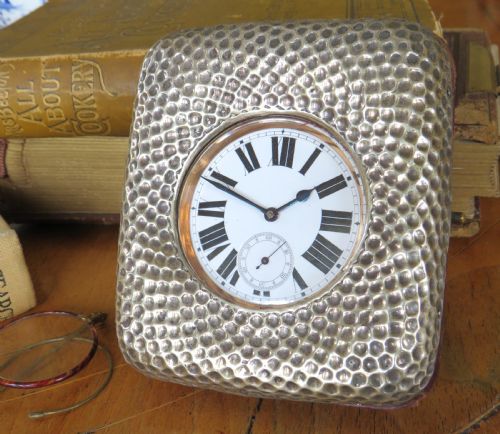
- An oversized pocket watch, often measuring significantly larger than standard pocket watches. They frequently served as travel clocks inside fitted leather or silver folding cases.
- Fusee
- A conical pulley used in mechanical clocks to maintain an even pull on the movement as the mainspring unwinds. This mechanism improves the timekeeping accuracy of the piece.
- Repeating movement
- A complication that sounds the hours and quarters on gongs or bells when a lever is pressed. This feature allowed owners to check the time in total darkness.
Silver Travelling Clock: Frequently Asked Questions
How do I wind a mechanical silver travelling clock?
Most mechanical travel clocks use a small attached key or a thumb-turn on the backplate to tension the mainspring. Care must be taken not to overwind the mechanism, stopping as soon as resistance is felt.
Older movements require gentle handling and benefit from professional servicing to ensure the gear trains operate smoothly over time.
Were these clocks meant for actual travel?
Yes, the sturdy silver cases, hinged doors, and protective travel outer shells were engineered to withstand the rigours of nineteenth and early twentieth-century journeys. Many included folding legs or stands to secure them on bedside tables.
While robust for their era, modern owners generally treat them as delicate antiques rather than daily travel companions.
How do I identify the date of a silver travel clock?
Hallmarks stamped on the silver case provide the most reliable dating evidence, indicating the assay office, standard of silver, and a specific date letter corresponding to the year of manufacture. Stylistic clues such as numerals, dial layout, and case shape also point toward periods like the Edwardian era or Art Deco.
Maker signatures on the dial or movement further help place the piece within a specific active workshop window.
What is the difference between a timepiece and a clock?
In horological terms, a timepiece is a clock that simply tells the time without any striking or chiming complications. A clock generally incorporates a mechanism to sound the hours or quarters.
Both forms appear frequently in silver travel formats, depending on the intended complexity desired by the original buyer.