
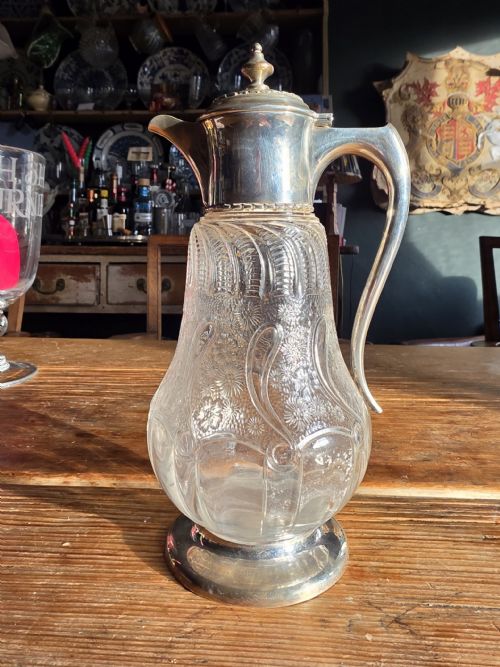

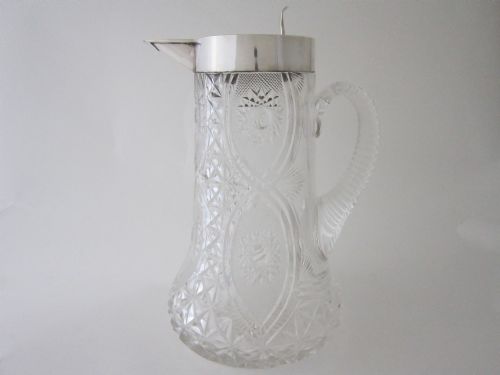
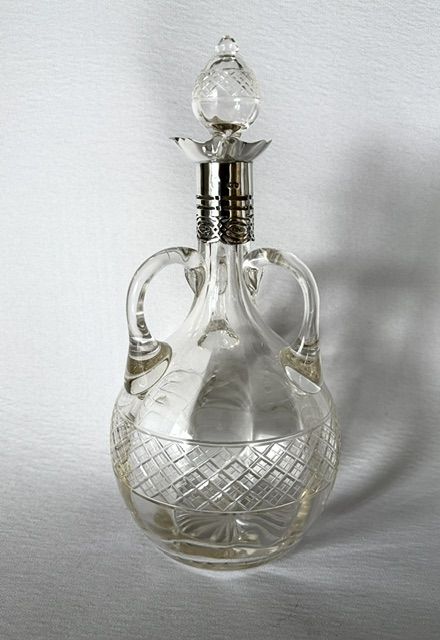
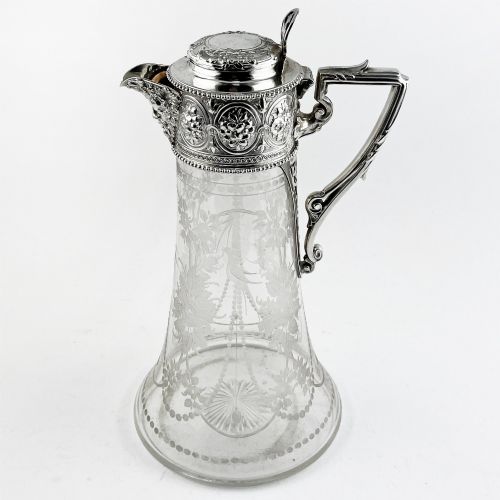
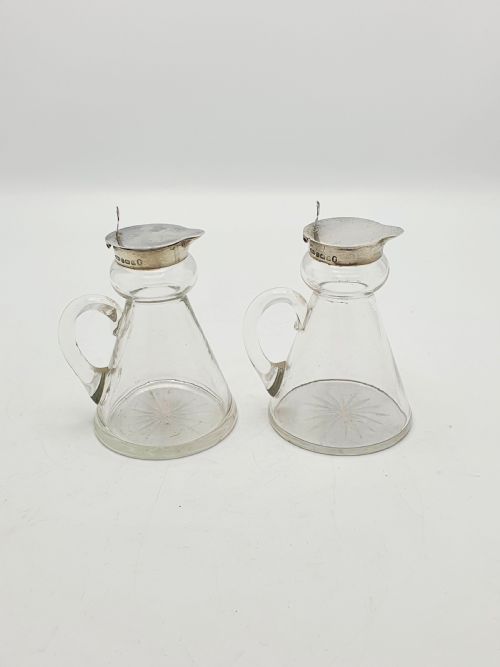


Silver Topped Jug
A silver topped jug combines clear glass and precious metal for formal dining, featuring claret jugs and whisky noggins from the Victorian era to the mid-century.
Silver Topped Jug
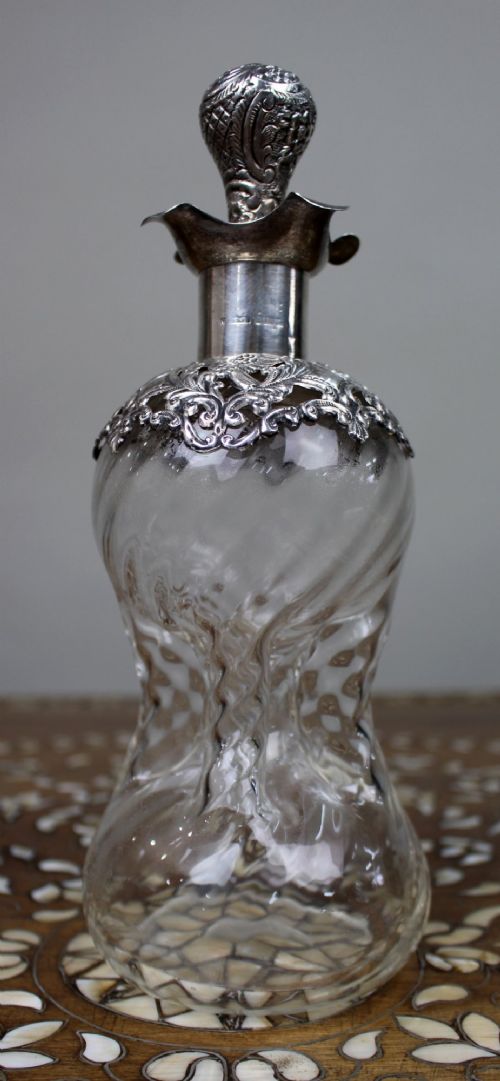
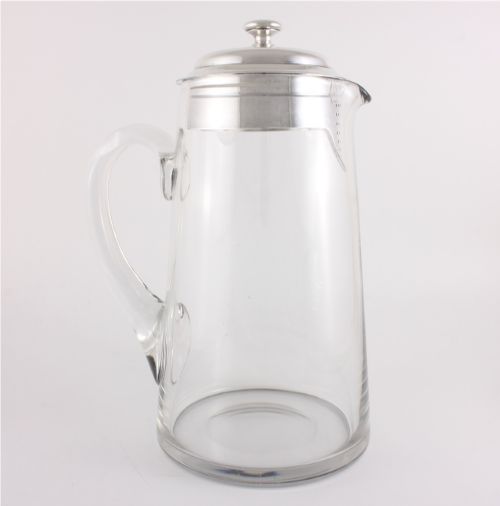
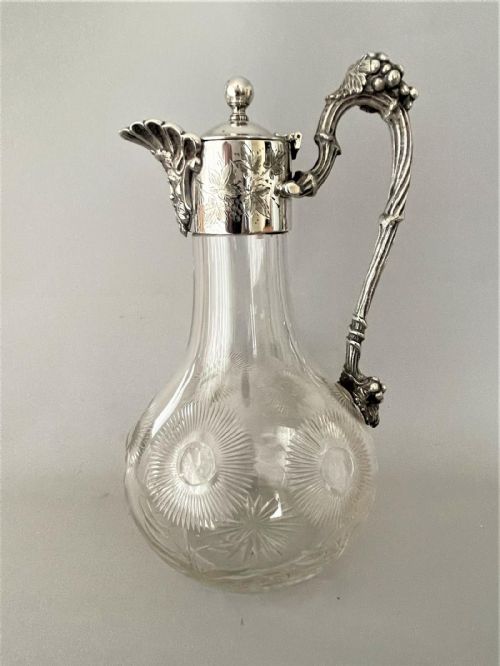
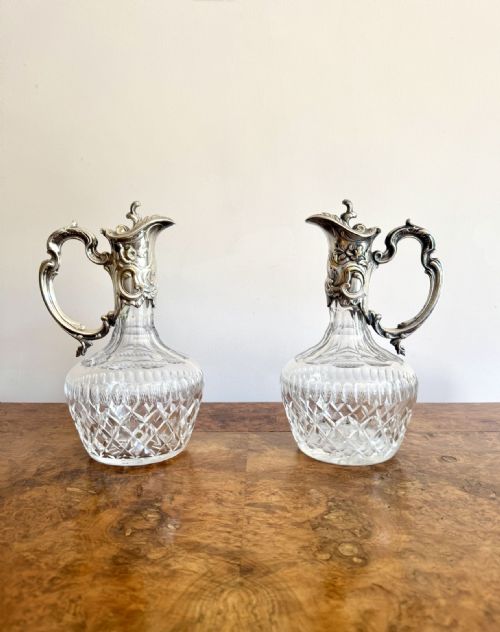
A silver topped jug bridges the dining table and the sideboard, serving wine, water, or spirits with functional elegance. These pieces appear most frequently as claret jugs, water pitchers, and small whisky noggins from the Victorian and Edwardian periods.
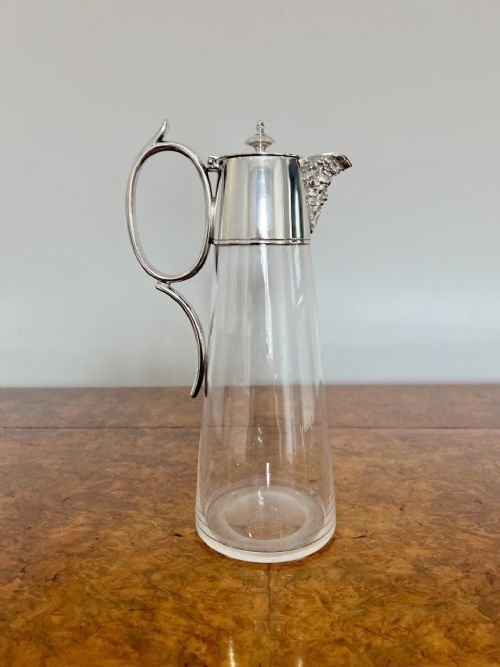
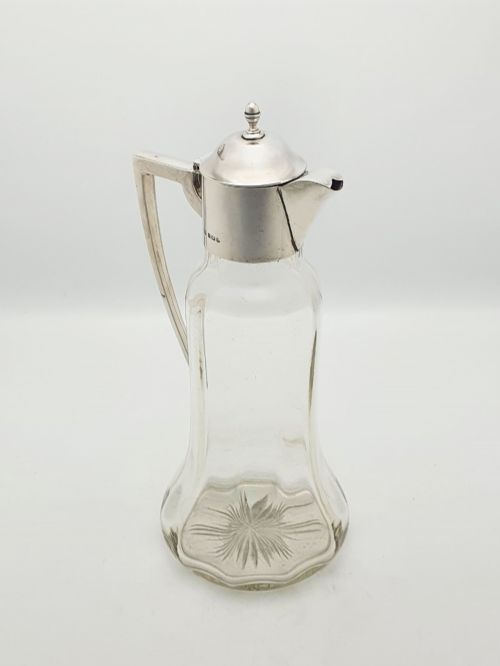
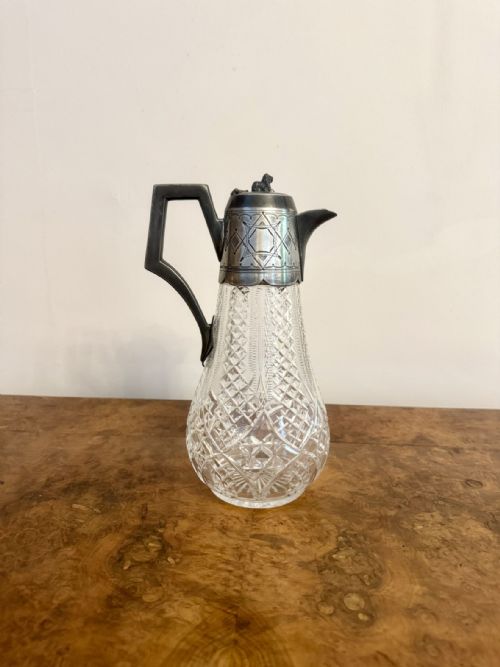
The body typically consists of clear blown glass, cut crystal, or etched glass, fitted with a hinged metal mount, handle, and pouring spout. Makers adapted these forms across decades, transitioning from ornate floral Victorian designs to geometric Art Deco lines and modernist French vessels.
Materials and construction
Glass bodies were blown into moulds or shaped by hand before receiving deep geometric cuts, flutes, or delicate etched decoration. This transparent vessel was then mounted with sterling silver or silver plate around the neck and rim, secured by collar bands.
Metal mounts incorporate hinged lids often operated by a small thumbpiece attached to the handle. Silversmiths cast decorative elements such as masks or floral motifs, soldering them onto the collar and handle assembly.
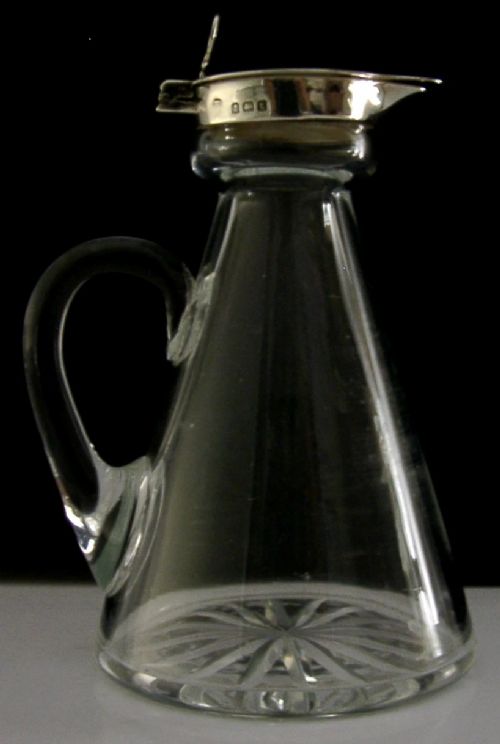
Some whisky noggins wear silver jubilee marks, proving that even miniature decanters enjoyed royal celebrations.
Assessing quality and execution
Quality rests in the harmony between the glass body and the metal mount, alongside the crispness of the glass cutting and the weight of the silver. Finer examples display thick crystal with deep, sharp facets that catch the light, paired with substantial sterling mounts rather than thin silver plate.
Maker reputation and hallmarking clarity also elevate a piece. Well-defined stamps for assay offices, dates, and silversmiths confirm origin, while balanced proportions and smooth hinges distinguish standard production items from workshop pieces.
Asprey and Co. Ltd·Christofle·Charles Boyton·Hukin & Heath·Tiffany
The Silver Topped Jug Glossary
- Claret jug
- A tall vessel designed specifically for serving red wine at the dining table. They frequently feature elaborate silver mounts and star-cut bases.
- Whisky noggin
- A small spirit jug or miniature decanter intended for individual use, usually holding enough for a single generous measure.
- Sterling silver
- An alloy consisting of pure silver and other metals, legally required to meet a specific fineness standard. It forms the primary metal mount on higher-tier pieces.
- Silver plate
- A base metal, such as copper or Britannia metal, coated with a thin layer of pure silver. It offers the appearance of solid silver at a different cost point.
- Bacchus mask
- A decorative cast metal motif depicting the face of the ancient god of wine, commonly found adorning the spout or front collar of claret jugs.
Silver Topped Jug: Frequently Asked Questions
What is a silver topped jug used for?
These vessels served drinks at the table, functioning as claret jugs for dinner parties or small noggins for dispensing whisky. Their design allowed hosts to pour wine or spirits directly from a decorative container.
Today, they are collected as decorative barware or utilised during formal gatherings to serve water, wine, or after-dinner drinks.
How can I date my silver topped jug?
British pieces generally bear silver hallmarks stamped on the mount, which indicate the assay office, the specific year letter, and the maker's mark. Consulting standard hallmarking reference tables reveals the exact year of manufacture.
Pieces without English hallmarks can often be dated through their overall style, glass cutting technique, and the shape of the handle and collar mount.
Are these jugs safe to use for drinks?
Most antique glass and silver vessels remain completely suitable for serving beverages, provided the interior is thoroughly cleaned and free of old residue. Sterling silver and glass are food-safe materials that do not affect the taste of the contents.
Check that the silver mount is firmly attached to the glass neck before filling, as old adhesives or loose collar bands can fail under the weight of liquid.