


Silver Top Vanity Pot
A silver top vanity pot brings dressing table elegance to a room, pairing metal lids with cut glass vessels.
Silver Top Vanity Pot
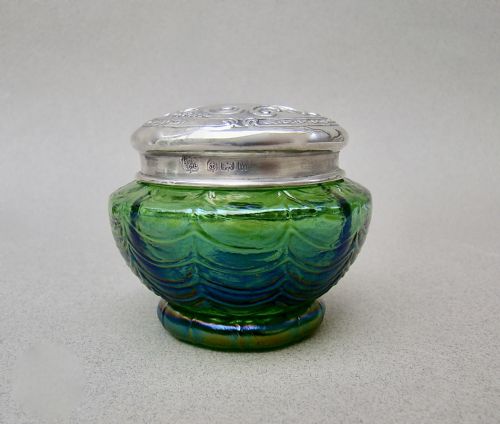
A silver top vanity pot is a dressing table accessory designed to hold powders, pins, or cosmetics, featuring a fitted metal lid above a glass container. Buyers seeking a silver top vanity pot encounter items spanning from the Georgian era through the Victorian period, Edwardian years, and into mid-century modern design.
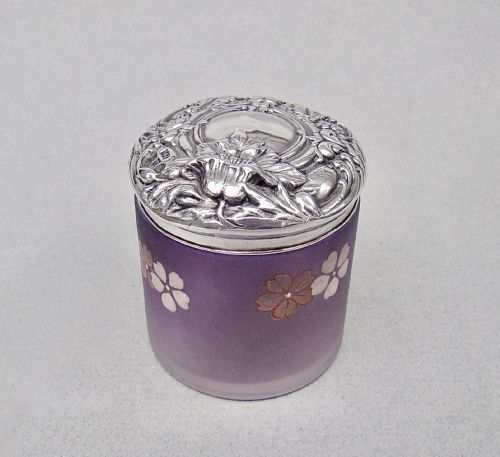
The objects take many forms on this page, including trinket boxes, lidded bowls, dressing table jars, and heart-shaped containers. Glass bodies range from clear cut crystal to frosted glass, cranberry glass, and Kralik glass.
Makers and assay offices across Birmingham, London, Chester, and Sheffield stamped these pieces during the nineteenth and twentieth centuries. Styles shift across the decades from ornate Victorian engraving to geometric Art Deco lines and flowing Art Nouveau curves.
Materials and construction
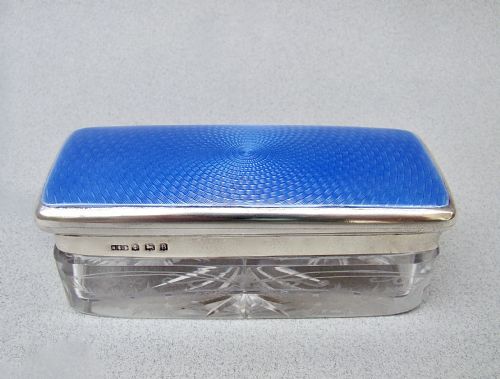
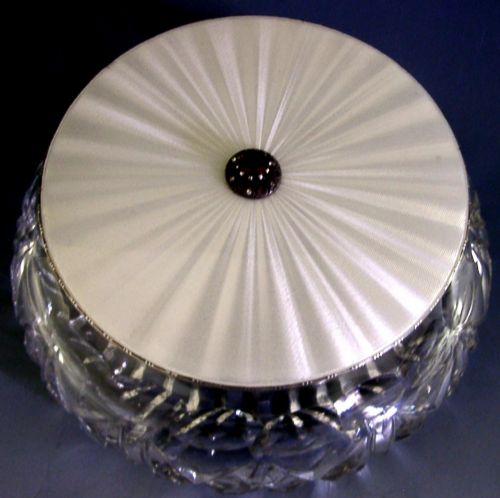
Craftsmen shaped sterling silver and solid silver for the lids, often applying Birmingham, London, Chester, or Sheffield hallmarks to record the assay year and maker. Lids frequently feature guilloché enamel, blue enamel, or tortoiseshell insets set into the silver mount.
The containers utilise heavy cut glass, cut crystal, frosted glass, or coloured glass such as cranberry and Clichy varieties. Artisans faceted or etched the glass bodies to catch the light on the dressing table.
Materials recorded on this page include sterling silver, cut crystal, guilloche enamel, tortoiseshell, frosted glass, and cranberry glass.
Assessing quality in silver top vanity pots
Quality rests in the weight of the silver lid and the depth of the hand-cut facets on the crystal or glass body. Thicker sterling silver resists denting better than thin metal pressings.
Enamel work introduces another measure of distinction, where smooth guilloché patterns display superior craftsmanship compared to plain surfaces. The clarity of the glass and the precision of the lid's fit determine the standing of each piece.
A J Pepper And Co·Henry Clifford Davis·Jonathan Douglas·Asprey
The Silver Top Vanity Pot Glossary
- Guilloche enamel
- Enamel applied over engine-turned metalwork to create repeating geometric patterns beneath a translucent coloured glaze. This technique appears frequently on Art Deco vanity pieces.
- Sterling silver
- An alloy consisting of silver and other metals, standardised for purity in British silver manufacture. Items bearing this designation carry official assay office marks.
- Cut crystal
- High-clarity glass containing lead oxide, cut and polished with geometric facets. It provides greater brilliance than standard moulded glass.
- Hallmark
- A series of official marks stamped on precious metals indicating the maker, assay office, and year of testing. These stamps date British and colonial silver accurately.
- Kralik glass
- Bohemian art glass produced by the Kralik factory, known for iridescent and distinctive coloured finishes. Pieces occasionally appear mounted with British silver lids.
Silver Top Vanity Pot: Frequently Asked Questions
What were silver top vanity pots used for?
These jars held powders, creams, hairpins, and small trinkets on dressing tables during the nineteenth and twentieth centuries.
Ladies utilised them daily as part of their dressing routines before packing cosmetics away neatly.
How do I date my silver top vanity pot?
Check the silver lid for hallmarks, which include a date letter indicating the exact year of assay.
Stylistic markers like Art Deco geometry or Victorian ornamentation also help narrow down the period of manufacture.
Are the glass bases always crystal?
The containers vary between heavy cut crystal, standard cut glass, frosted glass, and coloured types like cranberry.
Heavier vessels often utilise lead crystal to achieve deeper facets and greater brilliance under light.
How should I clean silver and glass vanity pots?
Polish the silver lid gently with a specialised cloth while avoiding contact with any enamel or tortoiseshell insets.
Wash the glass base in warm soapy water, ensuring moisture does not damage fitted liners or glued collars.