

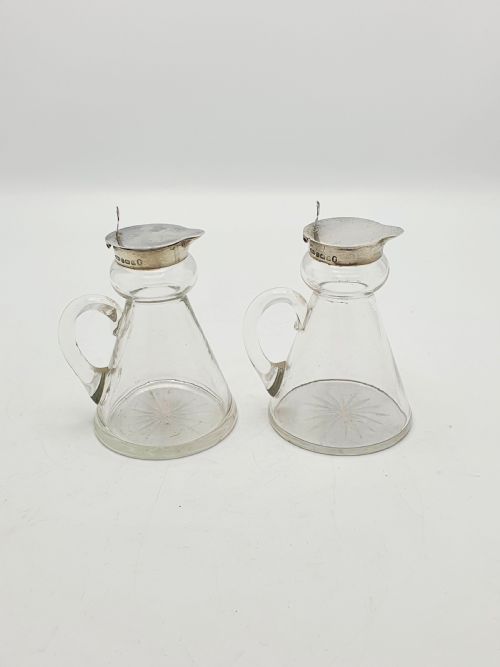


Silver Top Pitcher
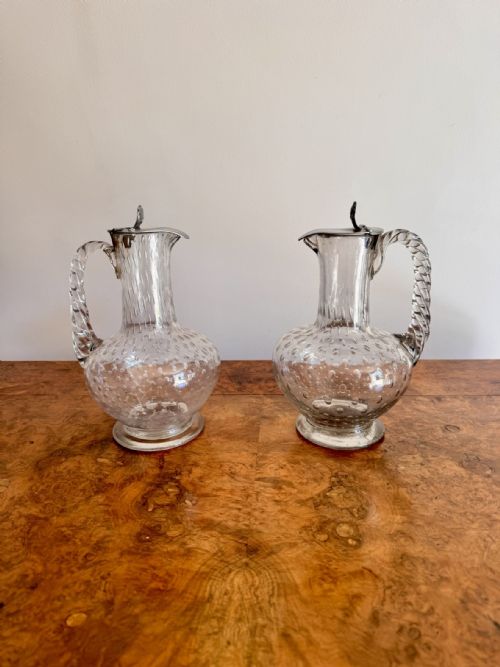
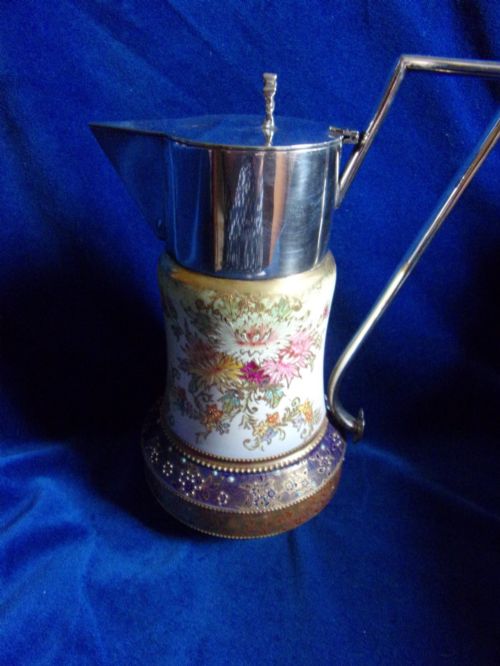
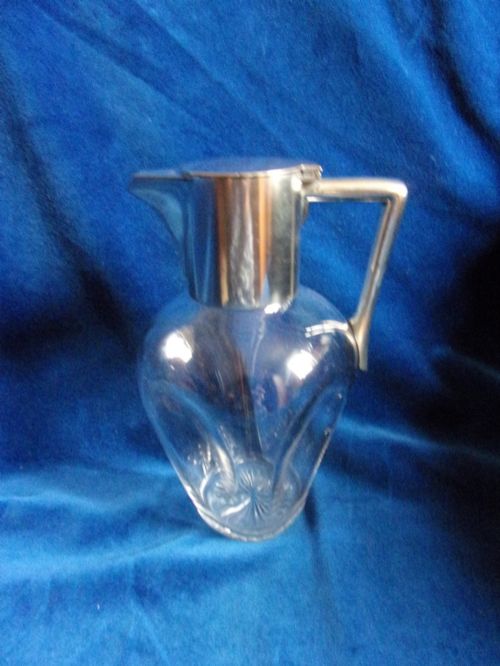
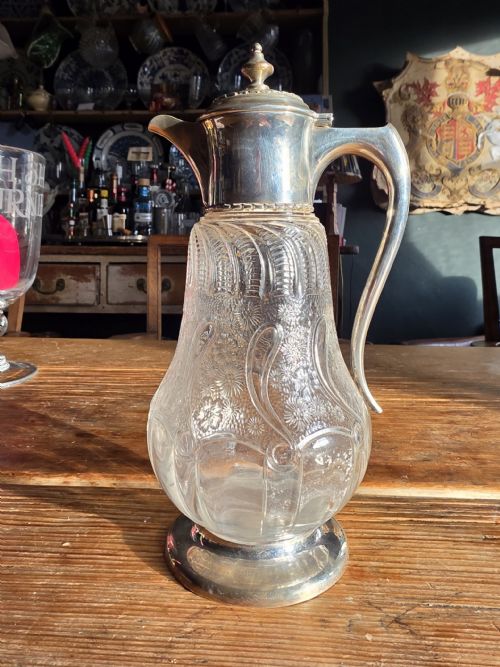
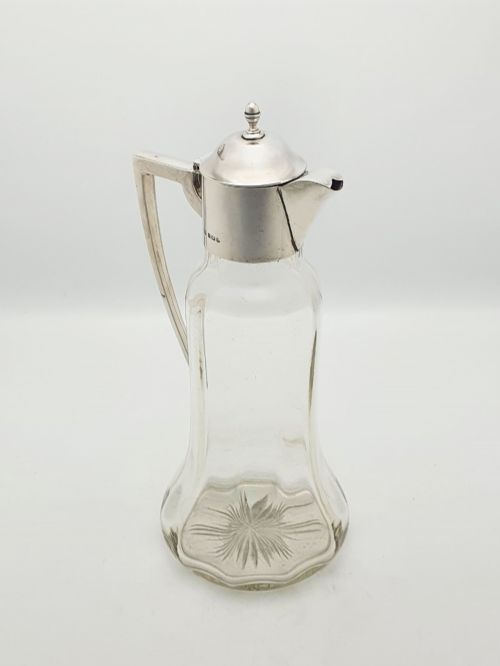
These silver top pitcher pieces combine cut glass and precious metal mounts for serving wine and water.
Silver Top Pitcher
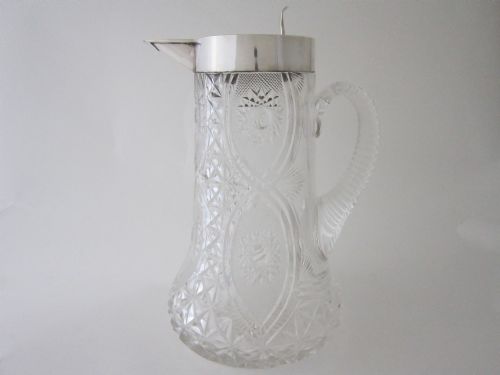
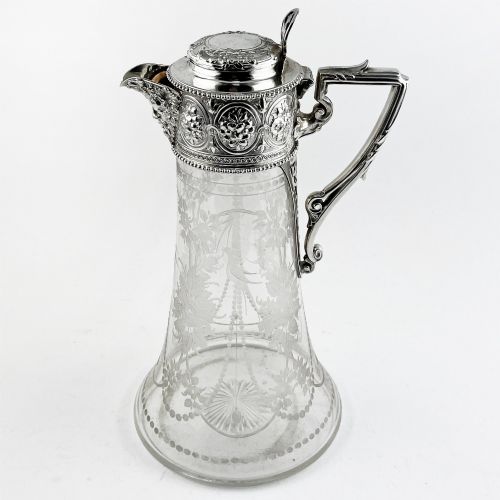
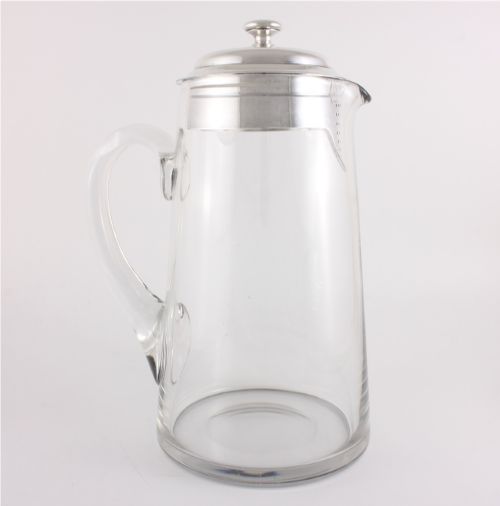
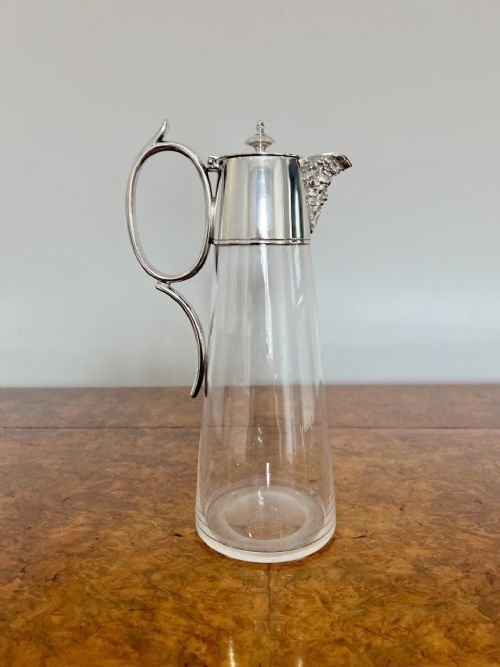
A silver top pitcher typically takes the form of a claret jug, decanter, or water jug designed for formal dining and entertaining. Buyers searching for a silver top pitcher encounter vessels intended for wine, whisky, and water, spanning the Victorian, Edwardian, and George V periods.
The most common versions on this page pair a clear glass body with a metal mount, often referred to in listings as claret jugs. These objects range from large table ewers down to smaller whisky noggins and tots meant for individual service.
How they were made
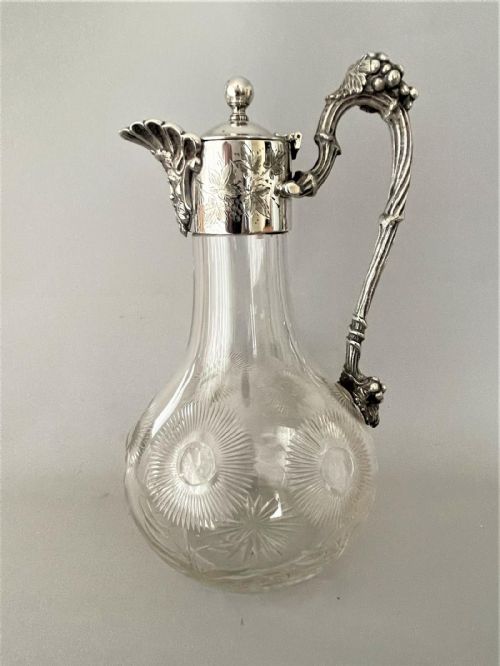
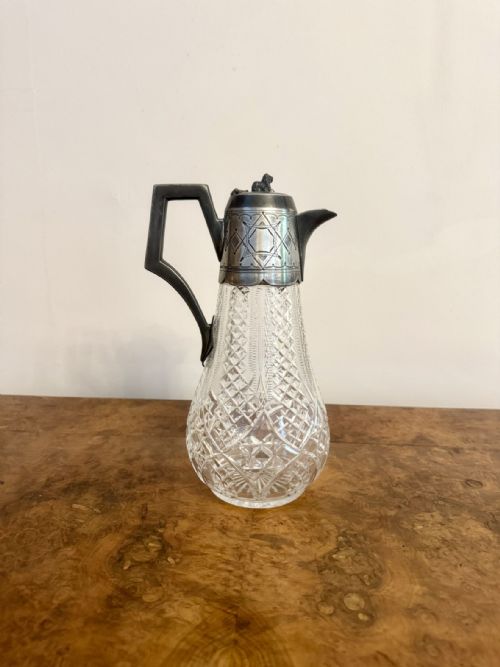
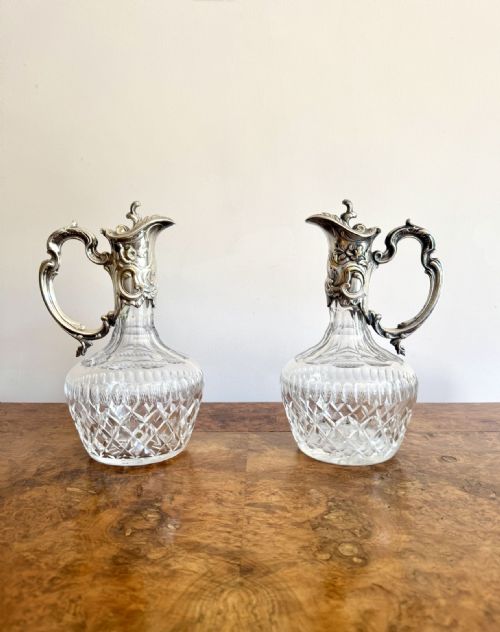
The vessels combine glass bodies with metal mounts, utilising cut glass, etched glass, or crystal alongside sterling silver and silver plate. Makers shaped the glass through blowing and heavy cutting, then applied hinged metal lids and mounts secured to the necks.
Metal components often display cast or chased decoration, such as masks and floral engraving, while mounts are securely fitted to the glass rims with collars and handles.
Several pitchers incorporate roaring Bacchus masks into their silver mounts, keeping a watchful eye over the claret.
What varies in quality
Quality rests upon the depth and crispness of the glass cutting and the weight of the silver or silver plate used for the mounts. Pieces with heavier metal mounts and intricate hand-cut crystal bodies stand apart from lighter, simpler iterations.
The integration between the glass body and the metal collar determines the structural integrity of the vessel. Superior examples show careful alignment and robust, functional hinges on the covers.
Asprey and Co. Ltd·Christofle·Tiffany
The Silver Top Pitcher Glossary
- Claret jug
- A vessel specifically designed for serving red wine at the table. These pieces often feature a glass body with a hinged silver or plated cover.
- Noggin
- A small vessel used for serving spirits such as whisky. They frequently appear with a single handle and a silver mount.
- Ewer
- A large pitcher with a wide spout and handle, used historically for water or wine. They tend to be larger than standard table jugs.
- Silver plate
- A base metal coated with a layer of silver. This technique provided the appearance of solid silver at a lower cost for many Victorian and Edwardian items.
- Cut crystal
- Glass that has been deeply incised with geometric or floral patterns using a wheel. This material adds significant weight and brilliance to the body of the jug.
Silver Top Pitcher: Frequently Asked Questions
What is a silver top pitcher used for?
These vessels were traditionally employed for serving wine, particularly claret, as well as water and spirits at the dining table. The metal cover protected the contents while pouring.
Today, they function both as decorative dining accessories and as functional decanters for contemporary entertaining.
How do I date a silver top pitcher?
Dating relies heavily on hallmarks stamped onto the silver mounts, which indicate the assay office and year of production. Stylistic markers such as Victorian floral engraving or Edwardian proportions also help place the piece.
Unmarked silver plated versions are usually dated through the overall style of the glass cutting and the manufacturing techniques visible on the handle and collar.
Are these pitchers made of solid silver?
The metal components vary between sterling silver and silver plate over a base metal. Hallmarks on the mount confirm if the metal is solid sterling silver.
Glass bodies dominate the construction of nearly all examples, paired with metal necks, handles, and hinged lids.