


Silver Collar Jug
These silver collar jugs combine brilliant glass bodies with precious metal mounts, offering both elegance and practical service for your table.
Silver Collar Jug
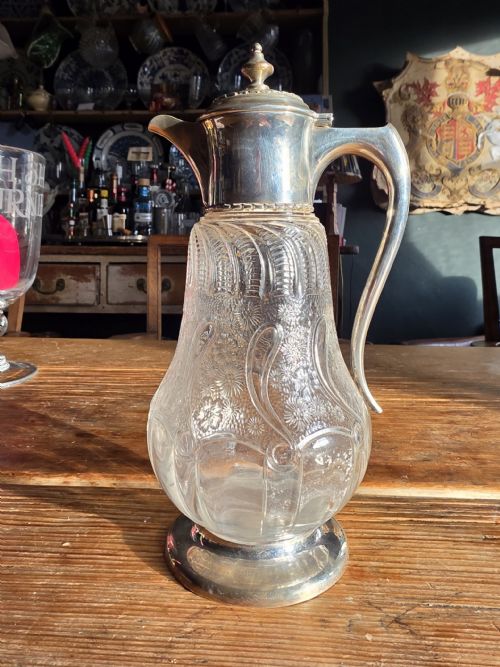
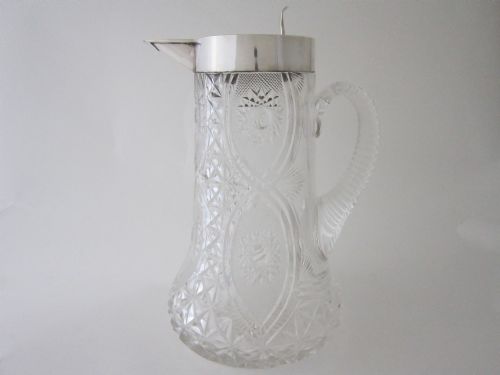
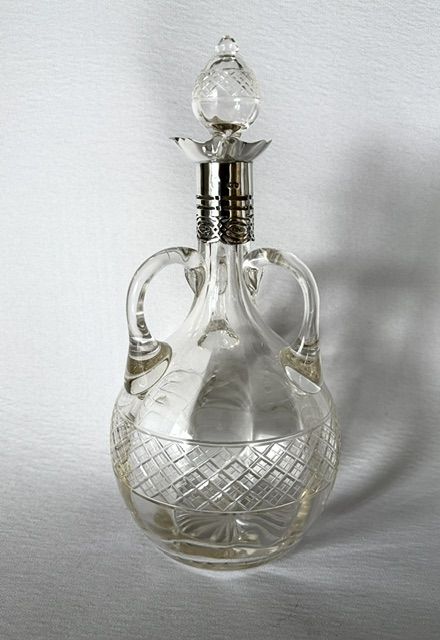
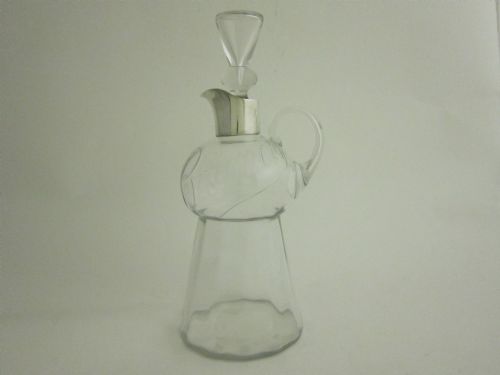
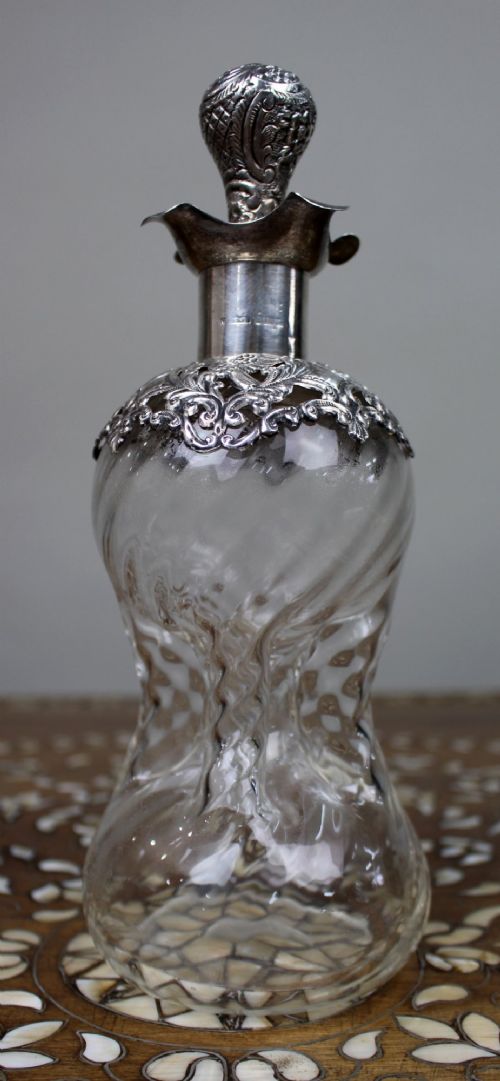
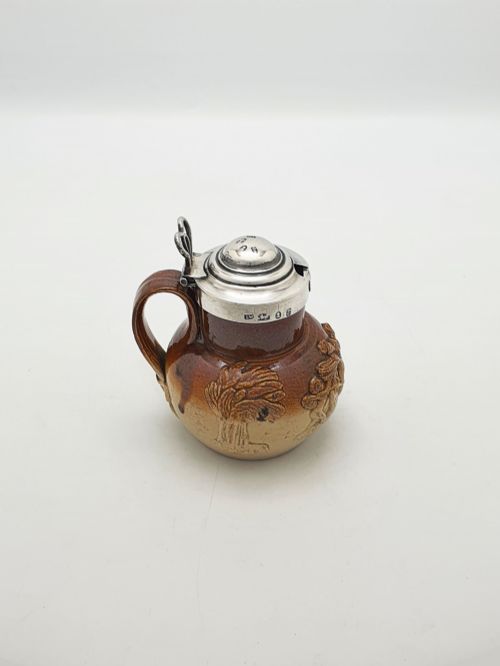
A silver collar jug brings together a transparent or stoneware body with fitted metal mounts around the neck and rim. You will encounter various forms here, ranging from tall claret jugs and whisky noggins to water jugs and wine decanters.
The pieces on this page span the nineteenth and early twentieth centuries, covering Victorian, Edwardian, and George V periods. Makers utilised styles including Aesthetic Movement, Art Nouveau, and Victorian Rococo Revival to shape these vessels.
Most examples pair sterling silver or silver plate with cut glass, cut crystal, or stoneware. Certain designs also incorporate materials such as mother of pearl to add texture and visual contrast to the handle or body.
How they were made
Makers formed the glass bodies through heavy cutting, engraving, or moulding to create light-catching facets on claret jugs and decanters. Stoneware vessels were shaped in clay before receiving their fired finishes and metal fittings.
Silversmiths constructed the collars, hinged lids, and mounts separately from sheet silver or plated metal. These collars were then securely fitted around the necks of the glass and stoneware bodies, often accompanied by matching labels.
Listings span the nineteenth and twentieth centuries, featuring Victorian, Edwardian, and George V periods.
What varies in quality
Quality rests upon the depth and crispness of the glass cutting, alongside the weight and finish of the silver mount. Pieces with deeply engraved floral patterns or precise geometric facets display a higher level of craftsmanship.
The distinction also lies in the balance of the vessel and the engineering of the hinged lid. Maker attribution, such as work by William Comyns, William Davenport, or designs by Dr Christopher Dresser for Hukin & Heath, elevates the standing of an individual piece.
William Comyns·William Davenport·Hukin and Heath·Dr Christopher Dresser
The Silver Collar Jug Glossary
- Collar
- The metal band fitted around the neck of a jug or decanter. It often supports the hinged lid and handle attachment.
- Noggin
- A small vessel used for serving spirits such as whisky. These miniature jugs frequently feature fitted silver mounts.
- Claret jug
- A specialised pouring vessel designed for red wine. They commonly combine cut glass bodies with ornate silver collars and handles.
- Finial
- The decorative knob attached to the top of a lid. Pineapple finials appear on specific Victorian silver plated examples.
- Sterling silver
- An alloy containing a high proportion of pure silver, widely used for the collars and mounts on nineteenth-century vessels.
Silver Collar Jug: Frequently Asked Questions
What are silver collar jugs?
These pieces are serving vessels that combine glass or stoneware bodies with fitted metal rims and handles. They were produced in various forms including claret jugs, water pitchers, and whisky noggins.
Most surviving examples date from the Victorian and Edwardian eras. They served both functional and decorative roles on dining tables and sideboards.
How do I date a silver collar jug?
Dating relies primarily on the hallmarks stamped into the metal mounts. These assay marks indicate the year of manufacture, the town, and the silversmith.
Stylistic indicators such as Aesthetic Movement or Art Nouveau designs also help place a piece within the nineteenth or early twentieth century.
How were these jugs used originally?
They were used to hold and pour beverages like wine, claret, water, and whisky during meals and social gatherings. The hinged lid kept the contents covered while allowing easy pouring.
Matching labels were often hung around the neck to identify specific spirits or wines.
How do I care for silver collar jugs?
Gentle hand washing in warm soapy water preserves both the glass body and the metal mount. Avoid abrasive cleaners that might scratch the silver or dull the cut crystal.
Polish the silver collar carefully with a dedicated cloth while avoiding direct contact with the glass surface.