


Silver Top Perfume Jar
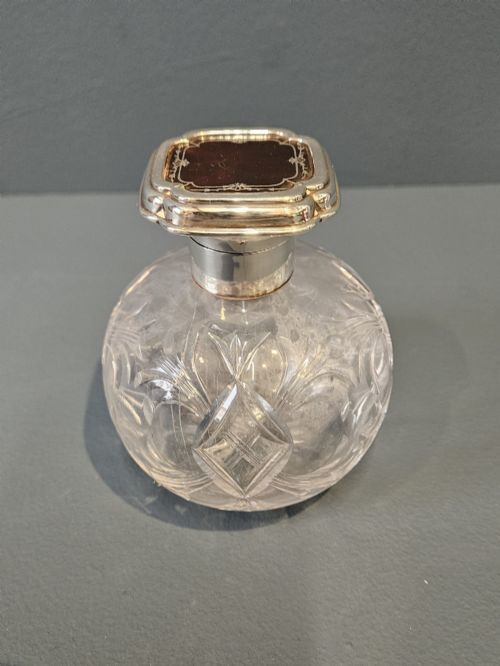
A silver top perfume jar combines the utility of a dressing table accessory with the weight of sterling silver and cut crystal or glass.
Silver Top Perfume Jar
A silver top perfume jar is a vanity accessory designed to hold scents and colognes upon a dressing table. When you search for this phrase, you encounter vessels produced across multiple decades, spanning the Victorian, Edwardian, and Art Deco periods.
The most common form on this page pairs a cut glass, crystal, or coloured glass body with a sterling silver lid. These containers appear as globular bottles, tall jars, and matched pairs intended for a dressing table set.
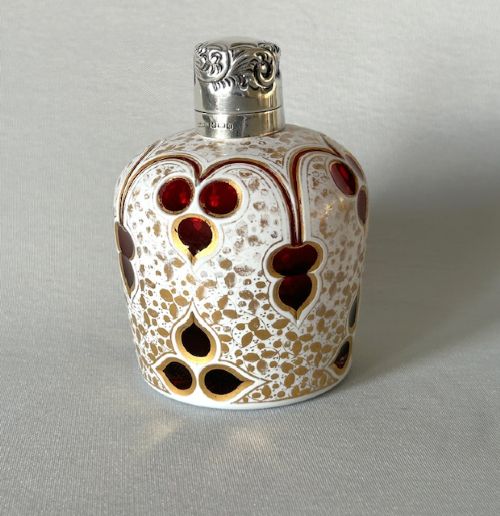
Originating largely from English workshops, these pieces incorporate materials such as tortoiseshell, enamel, and amethyst or cranberry glass. They serve as functional containers that double as decorative dressing table objects.
Materials and Construction
The body of a silver top perfume jar typically begins with blown glass that undergoes heavy cutting or moulding to create facets. Artisans shape crystal and coloured glass into globular or tall profiles to catch the light on a vanity.
Lids and mounts utilise sterling silver, frequently shaped to cap the glass neck securely. Many examples incorporate decorative elements like inlaid tortoiseshell or engine-turned guilloche enamel set directly into the silver top.
Silversmiths stamp these metal mounts with hallmarks indicating the assay office, city, and year of production. This combination of glassblowing and silversmithing produces a sturdy, functional closure for volatile scents.
Gentlemen required lockable cologne bottles to prevent travelling valets from sampling their favourite scents on long Victorian railway journeys.
Assessing Quality and Execution
Quality in a silver top perfume jar rests upon the clarity of the glass and the crispness of the cutting. Heavy, deeply cut crystal bodies and substantial gauge silver lids distinguish finer pieces from lighter, mass-produced alternatives.
The inclusion of specialist materials elevates an object's execution. Examples featuring pique-work tortoiseshell, multi-coloured enamel work, or unusual glass hues like cranberry and amethyst demonstrate superior manufacturing ambition.
Maker attribution and legible assay hallmarks add a layer of distinction to the metalwork. Pieces bearing the marks of established silversmith firms reflect higher standards of design and finishing.
Barnsley & Co·Adie Brothers Ltd·Goldsmith's and Silversmith's Co
The Silver Top Perfume Jar Glossary
- Guilloche enamel
- A decorative technique involving precise mechanical patterns engraved beneath translucent enamel. This finish often appears on the silver lids of later vanity jars.
- Sterling silver
- An alloy of silver containing ninety-two point five percent pure silver and seven point five percent other metals. This standard material forms the caps and collars of these bottles.
- Cut crystal
- Glass containing lead oxide that increases its weight, brilliance, and refractive index. Cut crystal forms the sparkling body of many Victorian and Edwardian scent bottles.
- Tortoiseshell
- The shell of certain turtle species used historically for inlay work on vanity items. It appears combined with sterling silver on Edwardian and Art Deco lids.
Silver Top Perfume Jar: Frequently Asked Questions
How do I date a silver top perfume jar?
Dating relies heavily upon the assay office hallmarks stamped directly onto the sterling silver lid or mount. These small marks indicate the specific year of production and the city where the silver was tested.
Stylistic cues also help narrow the period. For instance, geometric enamel designs point towards the Art Deco era, while heavy cut crystal paired with ornate repousse silver typically indicates Victorian manufacture.
Were these jars meant for travel?
Some iterations, such as gentleman's cologne bottles featuring lockable mechanisms, were specifically engineered for transport within luggage. They kept secure closures to prevent leaks during transit.
However, the majority of tall jars and globular dressing table accessories stayed stationary on a vanity. Their heavy glass bodies and delicate enamel work made them unsuited for rough travel.
How do I clean the silver and glass?
Cleaning requires separating the materials to protect vulnerable components like tortoiseshell or enamel. Use a soft cloth and a dedicated silver polish on the metal top while avoiding harsh chemicals near inlaid sections.
The glass body can be washed with warm soapy water and a bottle brush to remove old residue. Ensure the interior dries completely before replacing the lid.
What caused the disappearance of scent on old bottles?
Perfume naturally evaporates over decades through microscopic gaps in cork or ground glass stoppers. Even with a tight silver cap, volatile oils break down and vanish entirely across a century.
Residual scents often remain trapped within the porous nature of old glass or crystal. Gentle cleaning can sometimes release faint traces of historical colognes.