



Silver Top Crystal Jar
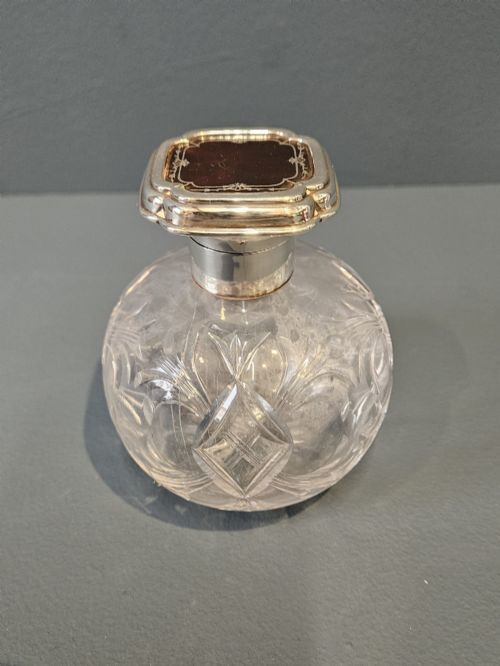
A silver top crystal jar brings table or dressing table use into focus with cut glass and precious metal.
Silver Top Crystal Jar
A silver top crystal jar spans vanity jars, scent bottles, trinket boxes, and biscuit barrels intended for daily dressing table and dining use. The versions met most often on this page date from the Georgian, Victorian, Edwardian, and Art Deco periods, created in forms ranging from small perfume flasks to large preserve pots and lidded bowls.
The objects serve varied functions, holding cosmetics, perfumes, spices, or confections while displaying heavy glass bases alongside metal covers. Makers shaped them for intimate dressing rooms, grand dining tables, and gentleman's travel kits alike.
Origins stretch from English workshops to Dutch silversmiths, capturing stylistic shifts from Georgian restraint through Victorian elaboration to Art Deco geometry. Each piece combines a faceted or polished glass vessel with a securely fitted metal closure.
How they were made
Craftsmen produced the bodies using cut glass, cut crystal, or plain glass, forming heavy vessels designed to refract light and withstand daily handling. Silversmiths then fashioned the lids and mounts from sterling silver, silver plate, or Dutch silver, frequently incorporating hinges, collars, or internal stoppers.
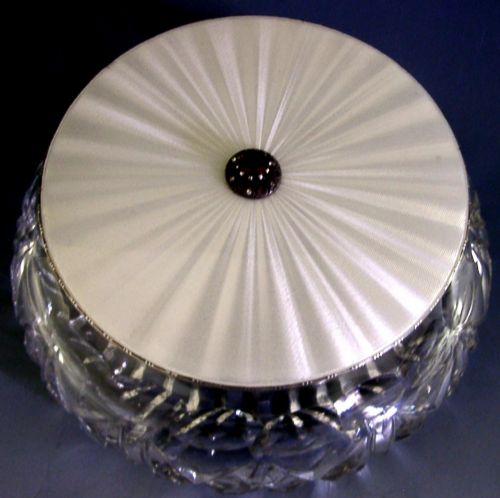
Specialised workshops added decorative elements such as tortoiseshell inlays, polychrome enamel panels, and guilloche engraving across the metal surfaces. Hallmarks stamped into the silver provide official records of assay offices, purity standards, and production years.
Listings feature items spanning the Georgian, Victorian, Edwardian, and Art Deco eras, constructed from cut crystal, sterling silver, and tortoiseshell.
What varies in quality
The distinction between standard containers and exceptional examples rests on the depth and crispness of the glass cutting, the weight of the silver mounts, and the integration of decorative panels like enamel or tortoiseshell. Thicker crystal bases with complex geometric facets require greater skill to produce than simple moulded or blown glass.
Makers known for high-standard production employ heavier gauge sterling silver and precise hinges that close with solid alignment, whereas lower tiers rely on thin silver plate over base metals. The presence of undamaged enamel work, intact tortoiseshell without shrinkage cracks, and clear maker's marks elevate an object's overall standing.
Walker and Hall·Jonathan Douglas·Barnsley and Co·William Comyns·Asprey·James Dixon and Sons
The Silver Top Crystal Jar Glossary
- Cut crystal
- High-clarity glass containing lead oxide, shaped by grinding and polishing geometric or floral patterns into the surface.
- Sterling silver
- An alloy of silver containing 92.5 percent pure silver and 7.5 percent other metals, usually copper, marked to guarantee standard.
- Guilloche enamel
- Decorative metalwork covered in translucent enamel over an engine-turned or machine-engraved geometric pattern.
- Hallmark
- A series of official marks stamped on precious metal items indicating the maker, purity, assay office, and year of testing.
- Biscuit barrel
- A covered ceramic or glass jar with a metal lid and handle, used for serving dry biscuits or cakes at the dining table.
Silver Top Crystal Jar: Frequently Asked Questions
What is a silver top crystal jar used for?
These vessels held items such as perfume, cosmetics, bath salts, and preserved foods upon dressing tables and dining sideboards. Their fitted metal lids kept contents secure and fresh.
Larger versions functioned as biscuit barrels or preserve pots, while smaller flasks served personal grooming needs in bedrooms and travel luggage.
How do I clean the silver and glass?
Clean the glass base using warm soapy water and a soft cloth, avoiding harsh abrasives that might scratch the surface. Polish the metal lid separately with a dedicated silver cloth.
Keep silver polish away from inset materials like enamel or tortoiseshell to prevent staining or chemical damage to those delicate surfaces.
How can I date a piece?
Examine the metal mounts for stamped hallmarks, which indicate the exact assay office year letter and silver standard. Stylistic clues such as Art Deco geometric forms or heavy Edwardian chasing also point to specific eras.
Consult the registry marks or stamped maker names on the base or rim to narrow down the decade of manufacture.
Are tortoiseshell lids fragile?
Tortoiseshell requires careful handling because extreme changes in humidity and temperature can cause the material to warp or crack. Keep these pieces away from direct sunlight and radiators.
Gentle dusting and stable indoor conditions help preserve the organic shell inset within the silver mount.