



Silver Toast Holder Stand
A silver toast holder stand sits on the breakfast table to keep crisp slices separate and dry, offering practical charm for daily mornings.
Silver Toast Holder Stand
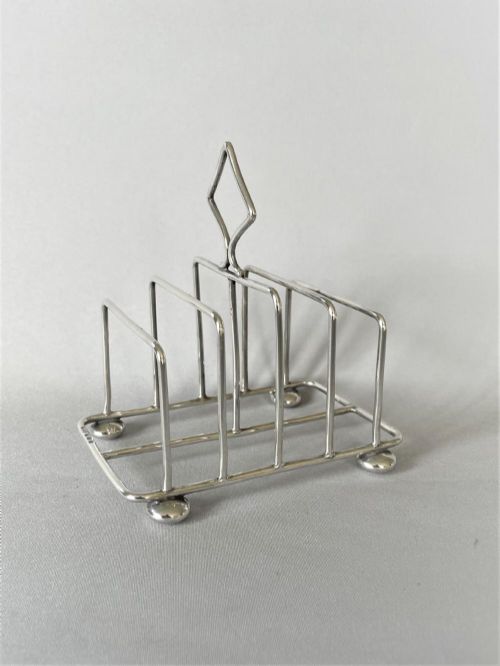
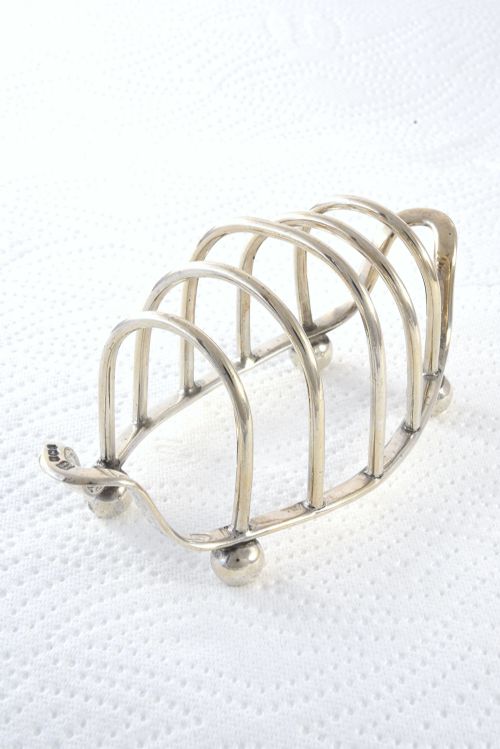
A silver toast holder stand is designed to hold warm toast upright during breakfast, preventing the slices from becoming soggy. Buyers seeking a silver toast holder stand will find variations ranging from simple four-slice wire frames to elaborate novelties.
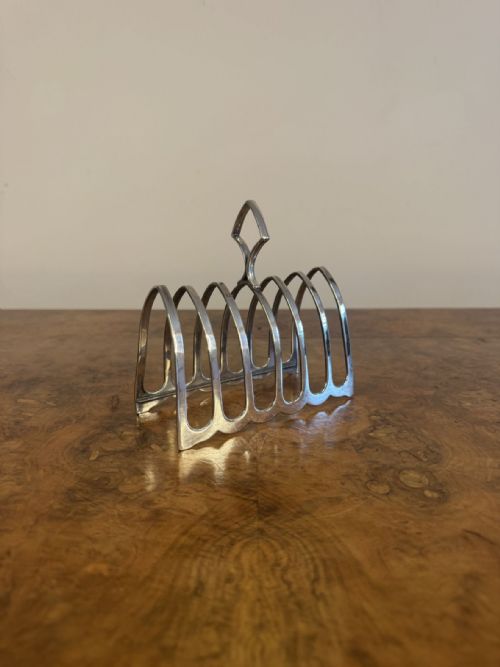
The pieces on this page span the nineteenth century through to the twentieth century, encompassing Victorian, Edwardian, and Art Deco styles. Most examples encountered here are silver plated or sterling silver, often featuring architectural arched dividers or decorative loop handles.
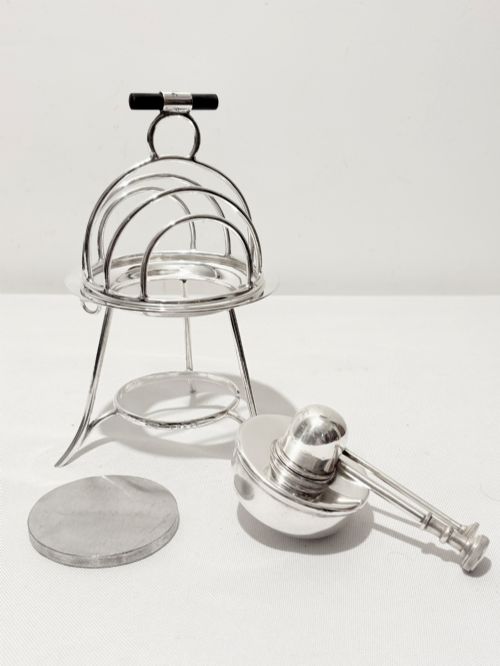
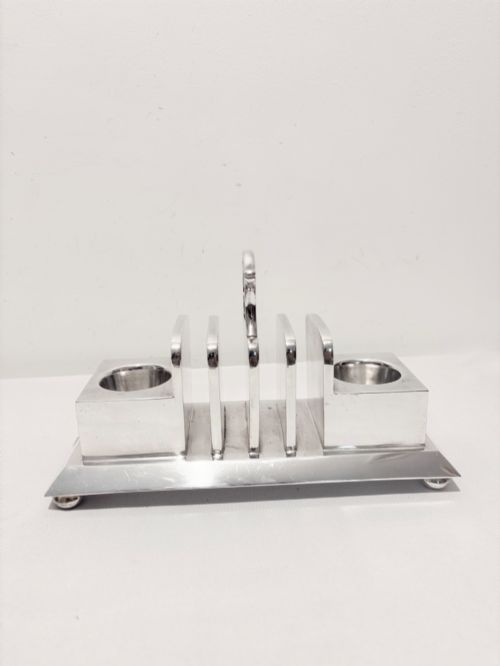
Forms include straightforward toast racks alongside inventive combinations such as the radiator toast and egg holder, or an equestrian motif piece. These items reflect the domestic rituals of past dining tables, combining utility with fine metalwork.
Materials and construction methods
Silversmiths constructed these pieces using sterling silver or through electroplating silver onto base metals like nickel silver. Metal rods and wire were shaped into arched partitions, soldered to a base plate, and supported by small feet.
Certain designs incorporate contrasting materials, such as ebony details, while novelty forms required specialised casting and soldering techniques. Elkington and other makers utilised robust plating methods to ensure durability on the breakfast table.
Silver Toast Holder Stand Retail Price Guide 2026
Typical asking prices for silver toast holder stand among the pieces listed under this phrase on Sellingantiques today, from the lower quarter to the upper quarter. They describe what is for sale here now, not the wider market.
Listings span from mid nineteenth century pieces up through Edwardian designs and the 1930s Art Deco period, utilising silver plate, sterling silver, and metal.
Assessing quality and craftsmanship
Quality in these items is visible in the crispness of the wirework and the weight of the metal base. Finer pieces demonstrate precise soldering joints that remain hidden or neatly finished, whereas simpler items rely on basic plated frames.
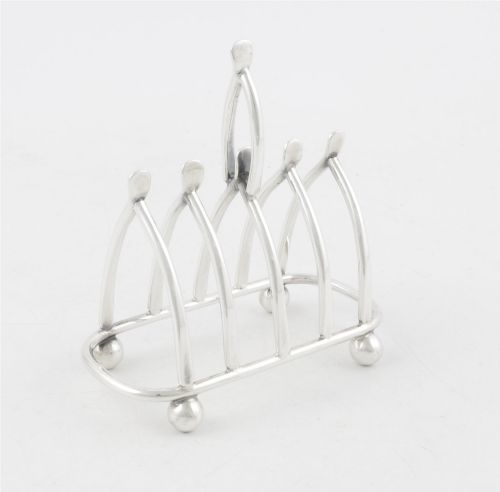
Design ambition also dictates distinction, separating standard four-slice utilitarian racks from novelty Wishbone or radiator configurations. Maker attribution, such as work by Asprey or Elkington, further elevates an example above unmarked workshop production.
Asprey·E Leclere·Elkington
The Silver Toast Holder Stand Glossary
- Silver Plate
- A layer of silver bonded to a base metal core such as nickel silver. This technique allowed makers to produce durable tableware at a lower cost than solid sterling silver.
- Electroplated Nickel Silver
- A specific type of silver plating over a nickel, copper, and zinc alloy. It provided a bright finish commonly used for nineteenth and twentieth-century tableware.
- Toast Rack
- A table accessory formed of multiple vertical loops or bars. It holds slices of toast upright to prevent condensation from softening the crusts.
- Sterling Silver
- An alloy consisting of pure silver and other metals, usually copper, to add strength. Items made from this material carry official hallmarks denoting purity and origin.
Silver Toast Holder Stand: Frequently Asked Questions
What is a silver toast holder stand used for?
These stands were placed on the breakfast table to hold freshly made toast upright. The individual partitions allowed air to circulate around each slice, keeping the crusts crisp.
Today, they function both as table accessories for serving breakfast and as decorative display items in a dining room.
How do I care for silver plated toast racks?
Cleaning requires a soft cloth and a gentle silver polish designed to protect plated surfaces from abrasive wear. Regular dusting helps prevent tarnish from settling into the wire joints.
Store the pieces in a dry environment away from direct sunlight to maintain the bright finish of the metal.
How can I tell Victorian pieces from later styles?
Victorian examples often feature heavier sterling silver construction or ornate detailing such as equestrian motifs. They reflect the elaborate dining customs of the nineteenth century.
Later Edwardian and Art Deco pieces tend to lean towards lighter wirework, geometric lines, or simpler silver plated frames.