



Silver Plated Breakfast Server
A silver plated breakfast server brings morning dining to life with revolving lidded dishes, egg cruets, and toast racks designed for the table.
Silver Plated Breakfast Server
When you search for a silver plated breakfast server, you encounter practical serveware designed to keep morning meals warm and organised. These pieces span the Georgian, Victorian, and Edwardian eras, showcasing the ingenuity of nineteenth and early twentieth-century dining habits.
The most common forms you meet on this page are revolving lidded butter or preserve dishes, double rollover dishes, and egg cruet sets. Makers also produced entree dishes and toast racks in nickel silver and electroplated metal to serve households of various sizes.
Originating primarily from English workshops, these items reflect the domestic rituals of the period, from elaborate morning gatherings to smaller household meals. Each object serves a distinct culinary function, combining metalwork with fitted glass inserts or oak bases where appropriate.
How they were made
Silversmiths utilised electroplated nickel silver, known as EPNS, as the primary base metal for these breakfast vessels. This technique applied a thin layer of pure silver over a durable nickel silver alloy, offering the lustre of solid silver at a lower cost.
Makers combined metalwork with other materials such as oak and glass to create functional serving pieces. Structural components involved casting, hammering, and embossing, while revolving mechanisms required precise engineering to ensure smooth rotation of the lids.
Victorian breakfast tables required complex mechanical dishes simply to stop butter from melting near the morning toast.
What varies in quality
The distinction between standard domestic serveware and finer pieces lies in the crispness of the chasing and the complexity of the mechanism. Superior examples feature robust hinges and smooth revolving action that operates without catching.
Maker reputation and design ambition elevate certain breakfast pieces above routine table service. Pieces bearing marks from prominent silversmiths display superior plating thickness and more refined proportions in their handles and feet.
Mappin and Webb·Elkington·Hukin and Heath·Christopher Dresser
The Silver Plated Breakfast Server Glossary
- Electroplated Nickel Silver
- A base metal alloy of copper, nickel, and zinc coated with a layer of silver through an electrolytic process. This material became standard for British tableware during the nineteenth century.
- Toast rack
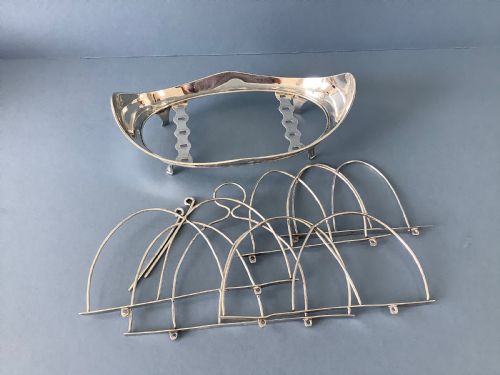
- A small metal frame with vertical dividers designed to hold slices of toast upright to prevent them from becoming soggy. These items often feature a central loop handle for transport.
- Cruet set
- A matched collection of small containers designed to hold condiments, eggs, or seasonings for the dining table. Victorian examples often incorporate fitted frames to secure individual cups.
- Entree dish
- A shallow covered serving vessel used for presenting side dishes or breakfast meats. The lids frequently detach to double as secondary serving platters.
- Revolving dish
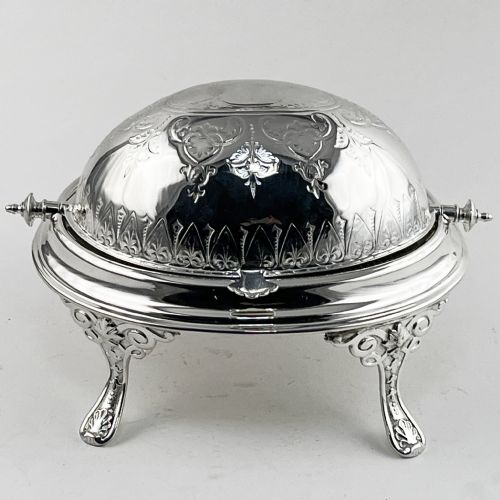
- A serving vessel featuring a semi-cylindrical roll-over lid that retracts beneath the body when opened. This mechanism allows diners to access butter or preserves without removing the cover entirely.
Silver Plated Breakfast Server: Frequently Asked Questions
How do revolving breakfast dishes work?
Revolving breakfast dishes use a curved metal lid that rotates on a horizontal axis, sliding smoothly into the lower body of the vessel when opened. This clever mechanical design keeps food warm while allowing easy access from either side of the table.
Craftsmen engineered these hinges with exact tolerances to ensure the dome glides without scraping the inner lining. The movement remains a defining characteristic of Victorian and Edwardian dining innovation.
What is an egg cruet set?
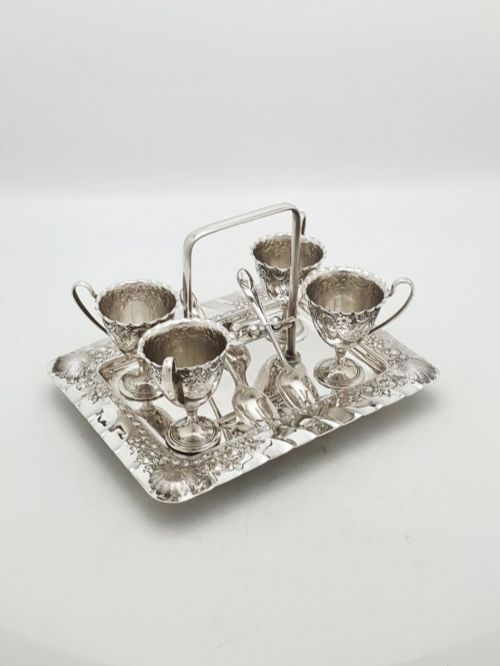
An egg cruet set is a specialised dining accessory designed to hold boiled eggs alongside spoons, salt cellars, and toast racks. These coordinated sets provided everything needed for a traditional morning meal in a single portable frame.
Victorian households utilised these pieces to serve individual portions directly at the breakfast table. They often feature fitted metal cups resting in a secure wirework or cast base with a central carrying handle.
How do I care for silver plate?
Silver plate requires gentle cleaning with a soft cloth and specialised polish formulated for plated items. Avoid abrasive materials that can wear away the thin silver layer over decades of use.
Store these serving pieces in dry environments and use them regularly to prevent tarnish accumulation. Natural oils from handling can actually protect the metal if maintained with routine wiping.
How can I date a piece?
Dating silver plated items involves examining the registry marks, maker stamps, and stylistic cues present on the base or handle. Victorian and Edwardian designs often incorporate specific aesthetic movements or registration numbers that narrow down the year of production.
Technological shifts, such as the adoption of electroplating after the mid-nineteenth century, provide a reliable starting point for chronology. Comparing the construction methods with documented maker timelines helps confirm the era.