

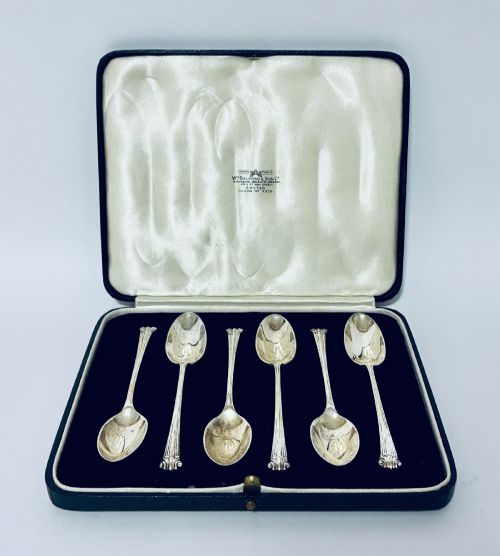
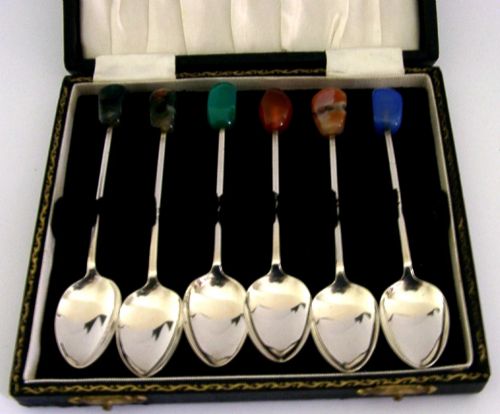
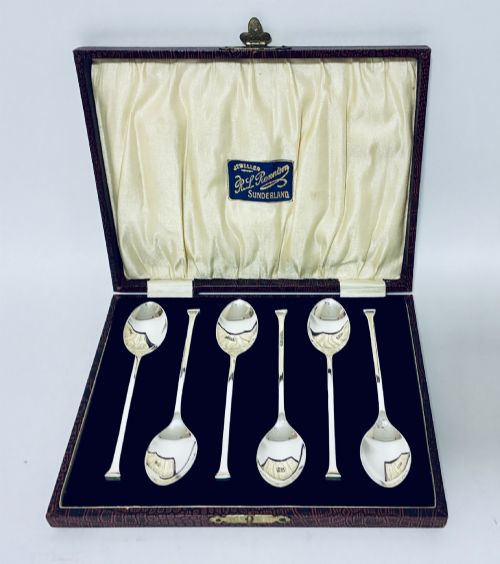
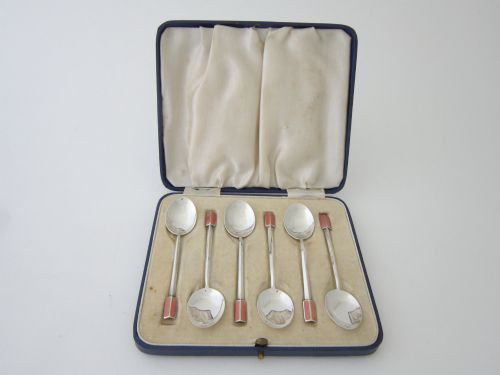


Silver Teaspoons in Case
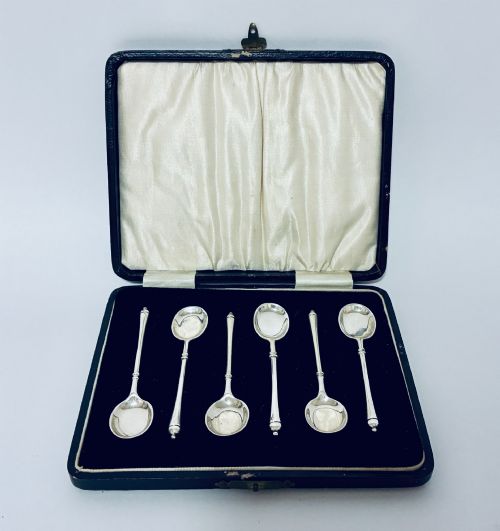
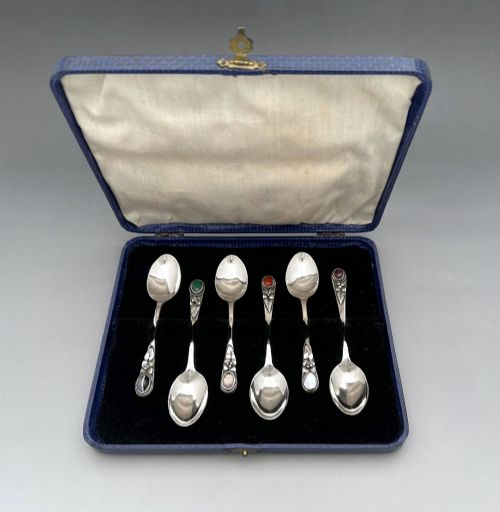
Silver teaspoons in case are matched sets of flatware housed in fitted containers, offering a glimpse into formal dining habits of past decades.
Silver Teaspoons in Case
Silver teaspoons in case comprise matched sets of flatware accompanied by custom storage boxes, ranging from small individual portions to large dozen-piece assortments. These sets frequently include sugar tongs or butter knives alongside the spoons, designed for afternoon tea or coffee service.
The versions most commonly met on this page date from the Victorian, Edwardian, and Art Deco periods, encompassing British provincial and London hallmarks as well as continental European origins. Forms stretch from plain apostle spoons to colourful enamelled coffee sets and specialised sports-themed designs.
Buyers select these boxed items for their preserved condition, as the protective enclosure shields the silver from tarnish and handling wear. Complete sets with matching tongs remain practical for domestic hosting and display.
Materials and construction
Items are formed from sterling silver, silver gilt, or occasionally silverplate, worked into solid gauges or delicate handles. Workshops applied decorative techniques including guilloche enamel, semi-precious stone settings, and intricate gilt washes to the bowl interiors.
The protective cases utilise structural wooden or card bases lined internally with fitted velvet, satin, or silk to cradle each spoon individually. Exteriors are finished in leatherette or textured paper, secured with small brass hinges and clasps.
Silver Teaspoons in Case Retail Price Guide 2026
Typical asking prices for silver teaspoons in case among the pieces listed under this phrase on Sellingantiques today, from the lower quarter to the upper quarter. They describe what is for sale here now, not the wider market.
Listings include items manufactured across several decades, spanning the Victorian era through the mid-twentieth century using sterling silver and silver gilt.
Distinctions in quality
Quality rests on the integrity of the fitted case matching the spoons, the weight and gauge of the silver, and the preservation of any applied enamel. Thicker metal gauge ensures spoons resist bending during use, while intact interior fabrics maintain the protective function of the original presentation box.
Artistic execution sets individual sets apart, where hand-applied guilloche enamel, complex cast finials, or matched maker marks across every spoon and tong elevate standard tableware into notable decorative art.
P A W Bateman·David Andersen·Walker and Hall·Robert Stebbings·Cooper Brothers and Sons·Robert Pringle and Sons·Mappin and Webb
The Silver Teaspoons in Case Glossary
- Sterling silver
- A silver alloy containing 92.5 percent pure silver and 7.5 percent other metals, usually copper, to increase durability. This standard is indicated by specific town and date hallmarks on British items.
- Silver gilt
- Sterling silver that has been coated with a thin layer of gold on its surface. This technique produces a rich two-tone or fully golden finish inside spoon bowls.
- Guilloche enamel
- A decorative technique where transparent enamel is layered over precisely engraved metalwork. It creates repeating geometric patterns visible beneath the coloured glass surface.
- Apostle spoon
- A spoon featuring the figure of an apostle or saint cast on the end of the handle. These traditional designs appeared frequently in Victorian and Edwardian revival sets.
- Demi-tasse
- A small cup used for serving espresso or strong coffee. The matching spoons designed for these cups possess noticeably smaller bowls and shorter handles than standard teaspoons.
Silver Teaspoons in Case: Frequently Asked Questions
What is the difference between teaspoons and coffee spoons?
Coffee spoons are noticeably smaller in both bowl size and handle length compared to standard teaspoons. They are proportioned for use with small demitasse cups rather than full tea cups.
In cased sets, coffee spoons frequently feature more decorative enamel or parcel-gilt work, reflecting their use in formal after-dinner service.
Are sugar tongs always included in these sets?
Sugar tongs appear in many cased sets alongside the spoons, though not in every single configuration. Sets intended for formal tea service often provided matching tongs for lump sugar.
When present, the tongs share the stylistic motifs and hallmarks of the accompanying spoons, completing the fitted presentation.
How should cased silver be stored?
The original fitted case provides the best daily protection by limiting exposure to atmospheric sulfur and household humidity. Keeping the box closed prevents unnecessary tarnish on the silver surfaces.
Avoid storing cases in areas subject to extreme temperature fluctuations or direct sunlight, which can fade internal silk and velvet linings.
How do I identify the date of a cased silver set?
British pieces carry hallmarks stamped directly into the metal, including a date letter that corresponds to the specific assay office and year of testing. Reference charts match these small stamped letters to exact operating years.
Continental or unhallmarked sets rely on the style of the case construction, typography, and decorative movements such as Art Deco or Art Nouveau for dating.