


Silver Tea Service Set
A silver tea service set brings traditional elegance to the table, offering matched pots, creamers, and sugar bowls for hosting.
Silver Tea Service Set
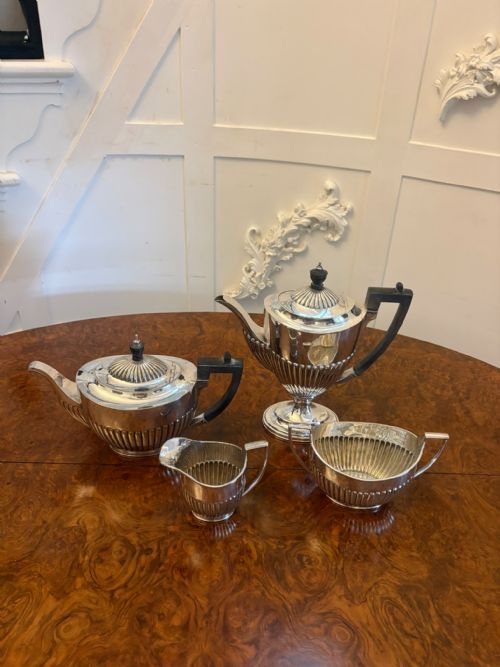
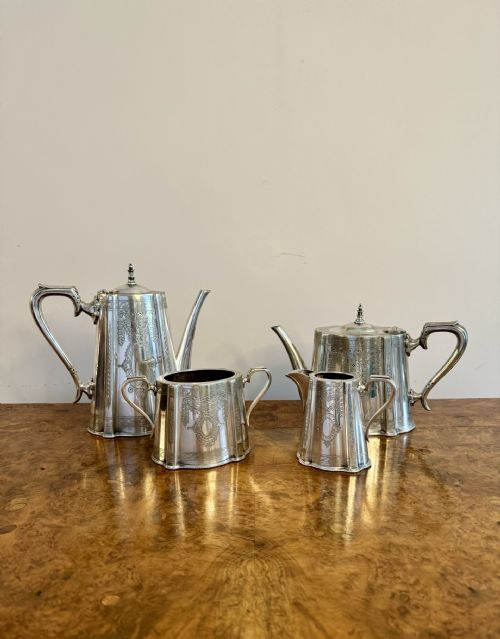
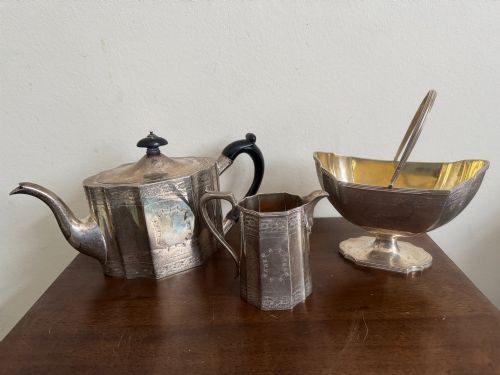
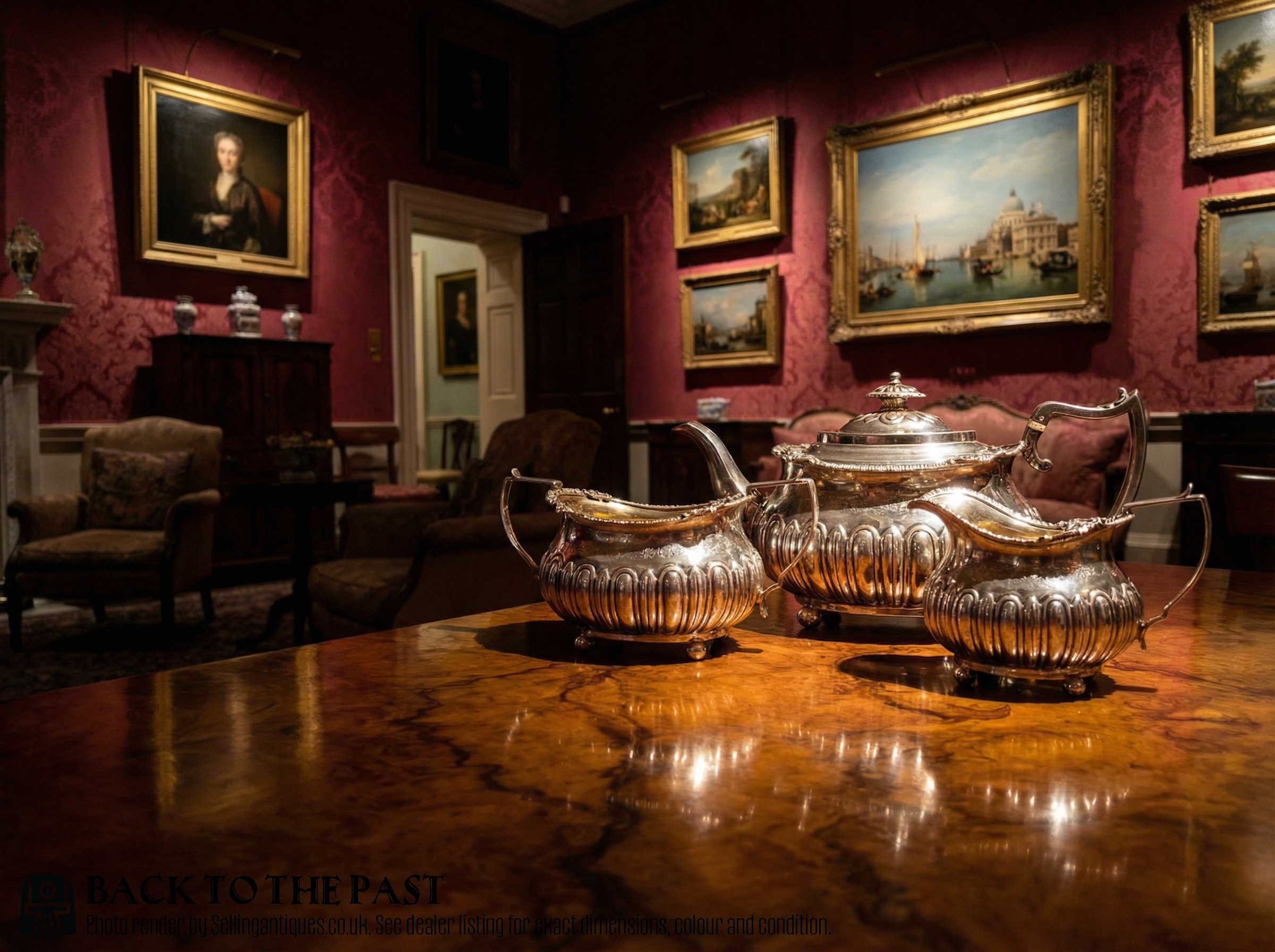
A silver tea service set comprises coordinated vessels designed for serving hot beverages, commonly including teapots, coffee pots, sugar bowls, and cream jugs. These groupings range from modest three-piece arrangements to expansive six-piece suites.
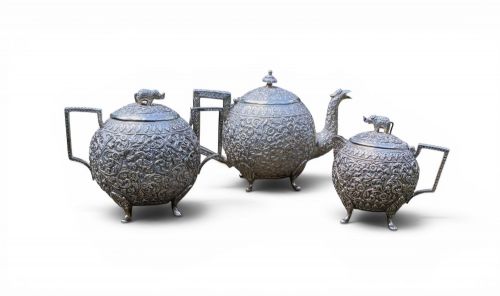
The selections available here heavily lean towards Edwardian silver plate and Victorian sterling silver productions. Pieces frequently span from the Georgian era through to the Art Deco period, incorporating diverse regional styles such as Anglo-Indian Kutch work.
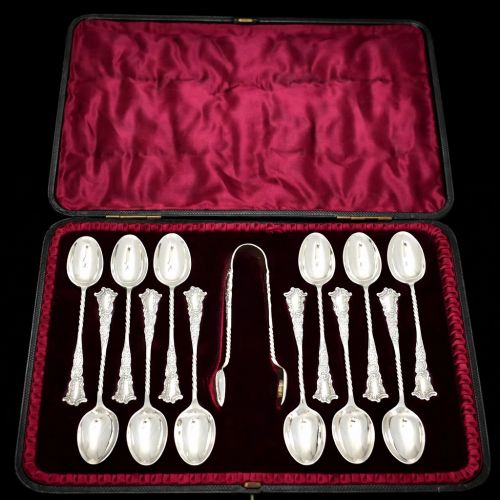
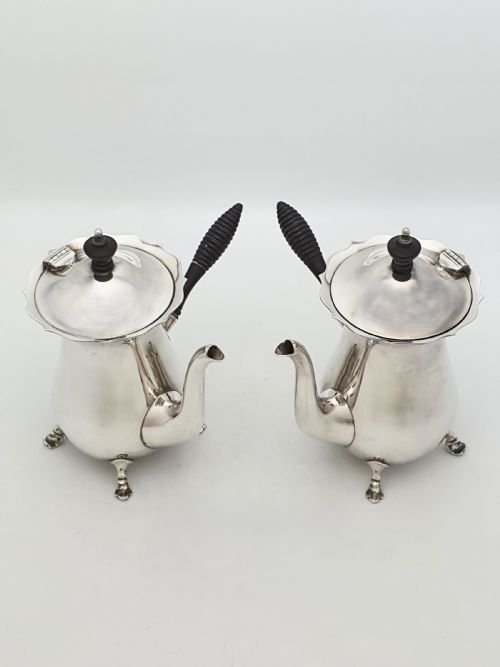
Forms vary from standard domestic sets to miniature chocolate pot sets and bachelor sets intended for smaller households. Buyers encounter comprehensive tea and coffee services alongside specialised groupings like sugar bowls paired with sifter spoons.
How they were made
Silversmiths constructed solid sterling silver vessels through hammering, casting, and soldering, while plated alternatives utilised silver plate and electroplated nickel silver over base metals like Sheffield plate. Manufacturers also integrated organic materials, applying ebony or ebonised wood for thermal insulation on handles and finials.
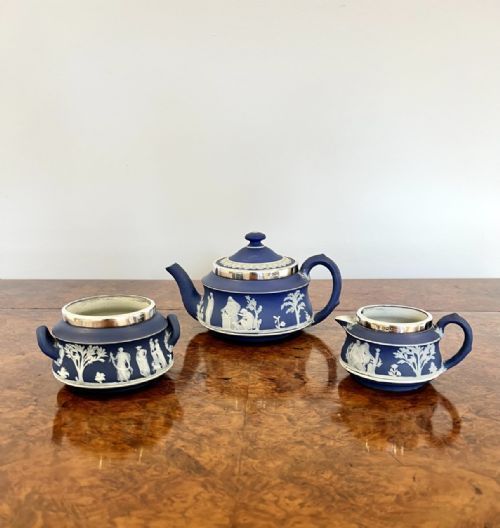
Decorative techniques recorded on these pieces include ornate grapevine detailing, repoussé chasing, and figural masks. Certain sets incorporate ceramic components, such as silver-mounted Wedgwood Jasperware, alongside velvet linings fitted within presentation cases.
The inventory spans multiple historical periods including the Georgian era, Victorian era, Edwardian period, and Art Deco years.
What varies in quality
Quality differentiates through the weight of the metal and the integrity of the construction, moving from standard commercial plating to heavy-gauge sterling silver. Maker attribution significantly influences standing, with renowned firms and workshops achieving superior execution in chasing and form.
The completeness and preservation of matched suites dictate value, particularly when original components like matching coffee pots, sugar tongs, or fitted presentation cases remain intact. The crispness of embossed motifs, such as grapevine detailing or figural masks, further separates standard production from masterwork output.
Walker and Hall·Goldsmiths and Silversmiths Co·Mappin and Webb·Benjamin Smith·Joseph Craddock
The Silver Tea Service Set Glossary
- Sterling silver
- An alloy comprising 92.5 percent silver and 7.5 percent other metals, traditionally copper, used for high-end hollowware.
- Silver plate
- A manufacturing method where a thin layer of silver is bonded to a base metal substrate, such as copper or nickel silver.
- Electroplated nickel silver
- A base metal alloy of copper, nickel, and zinc coated with a layer of silver through an electrolytic process.
- Chasing
- A metalsmithing technique where designs are hammered into the front surface of the metal to push it outward or create texture.
- Sheffield plate
- An early fusing technique where a sheet of silver is fused to a copper ingot before being rolled into sheets for fabrication.
Silver Tea Service Set: Frequently Asked Questions
What is included in a set?
A standard grouping typically comprises a teapot, a cream jug, and a open or lidded sugar bowl. Larger configurations often expand to include a matching coffee pot and sometimes a dedicated hot water kettle.
Additional components can feature matching trays, caddy spoons, or sugar tongs housed within velvet-lined presentation cases. The exact composition depends on the original commissioning purpose and the intended scale of the service.
How do I clean silver plate?
Maintenance requires specialised silver polish and a soft cloth to remove tarnish without abrading the underlying metallic layer. Excessive scrubbing on silver-plated items risks wearing through the thin outer coating down to the base metal.
Applying non-abrasive cleaning agents periodically preserves the reflective surface and protects decorative chased details. Storing pieces in dry environments helps slow the natural oxidation process.
Were these used daily?
Domestic tea sets served central roles in daily upper and middle-class household routines throughout the Victorian and Edwardian periods. They functioned as permanent fixtures in formal drawing rooms for afternoon hospitality and entertaining guests.
Smaller bachelors sets catered to single occupants or intimate gatherings, reflecting specific social customs of the era. Over time, many services transitioned from active culinary implements to decorative display items.
How do I date a set?
Dating relies primarily upon stamped hallmarks on sterling silver pieces, which indicate the assay office, standard, and specific year of manufacture. Stylistic indicators, such as Neoclassical symmetry or Art Deco geometric lines, provide secondary chronological markers.
Makers' marks stamped into the base or rim further contextualize the production period. Comparing form, handle materials, and decorative motifs against documented maker timelines narrows the window of origin.