
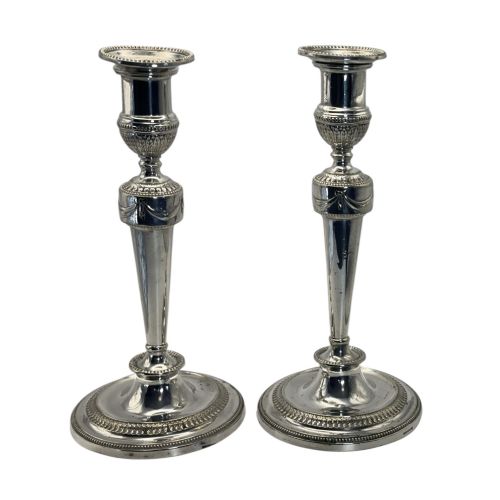
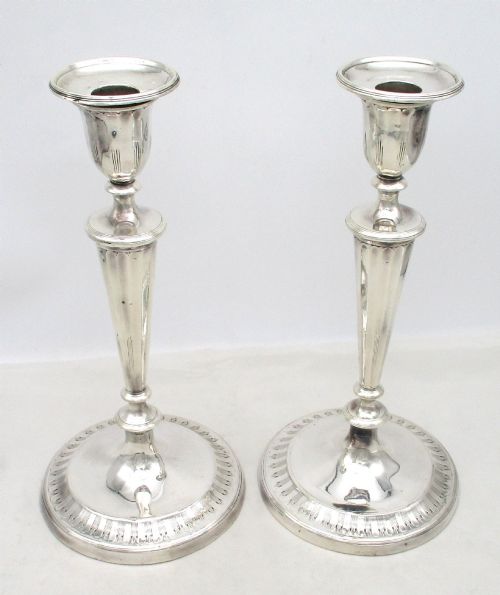
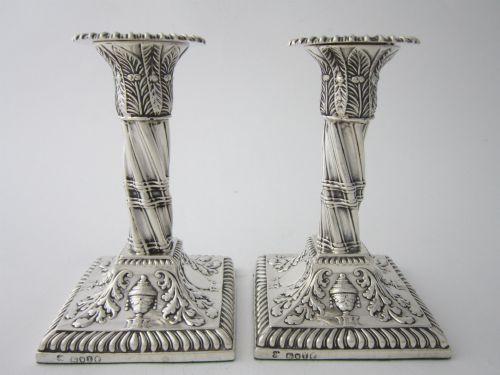
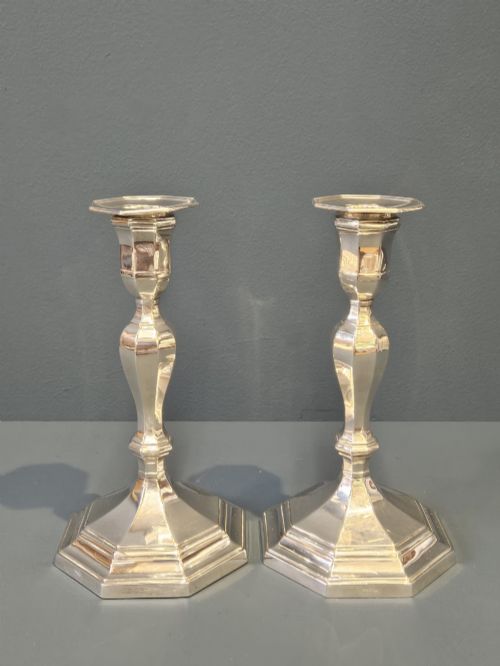

Silver Tapered Candle Holders
Silver tapered candle holders bring a polished glow to a dining table, combining practical lighting with period form.
Silver Tapered Candle Holders
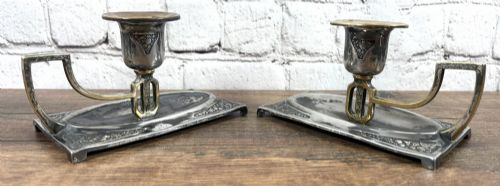
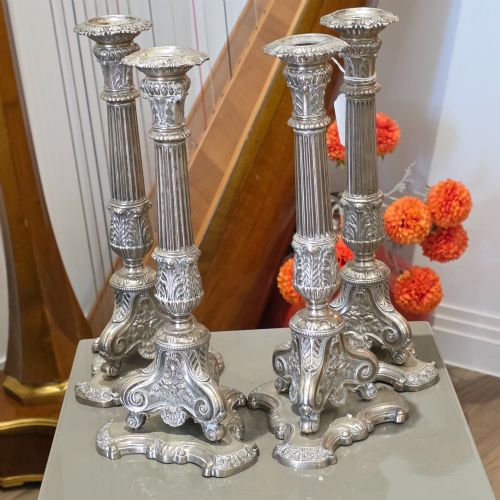
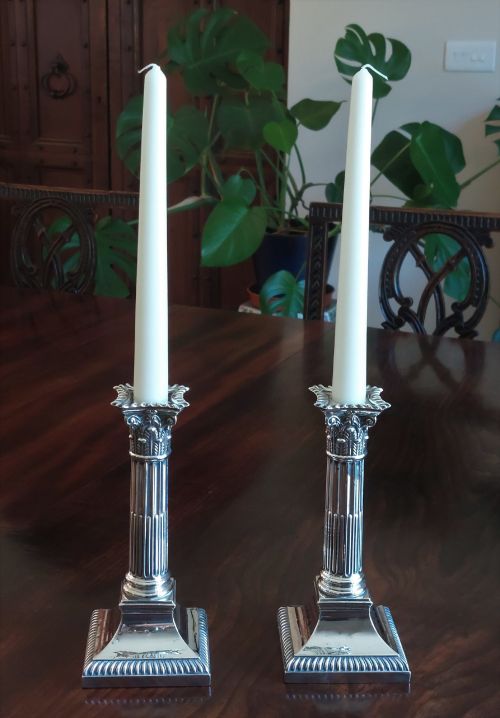
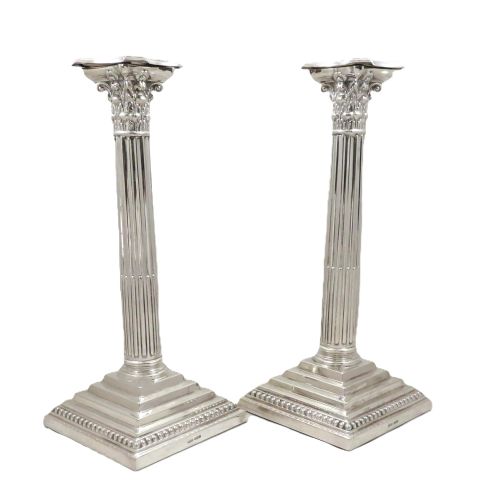
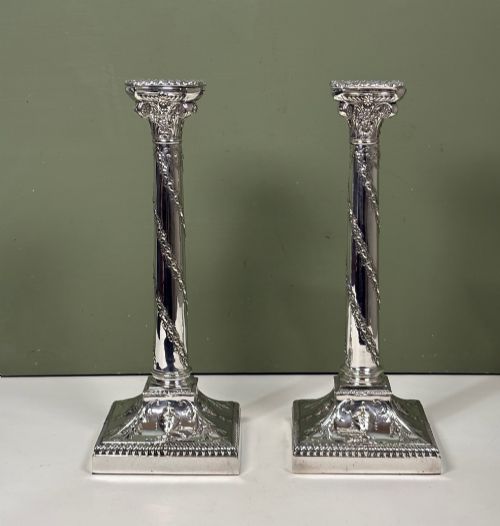
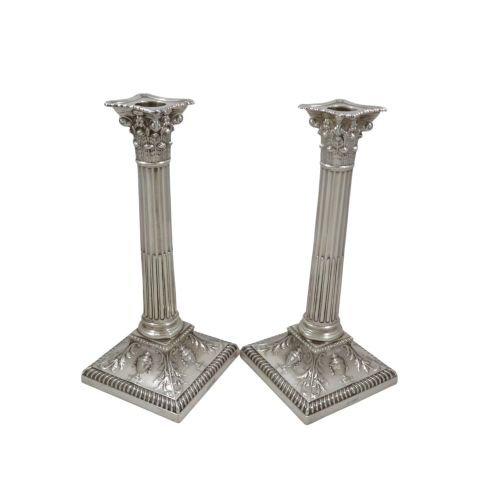
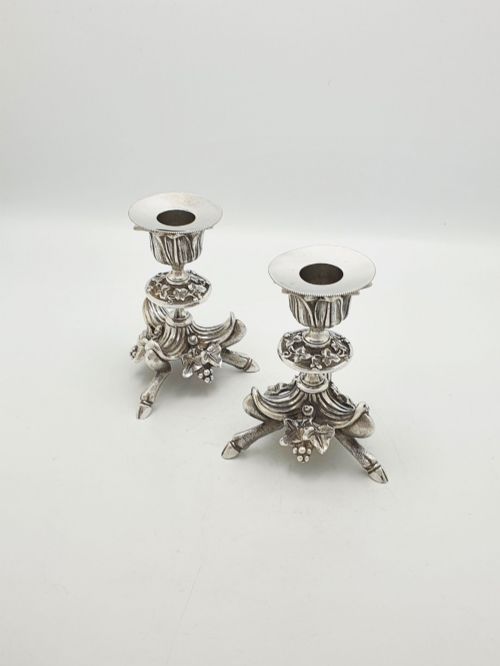
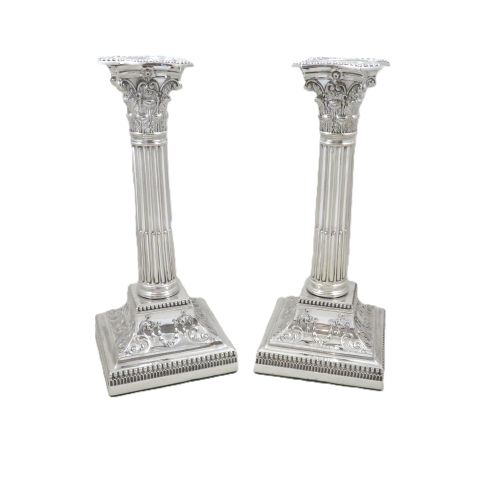
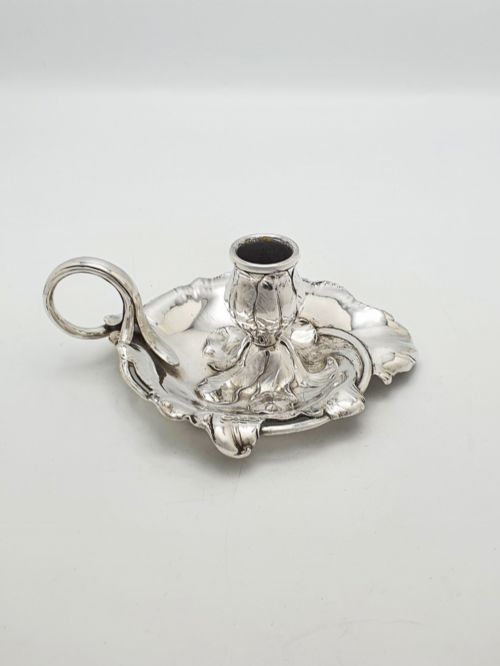
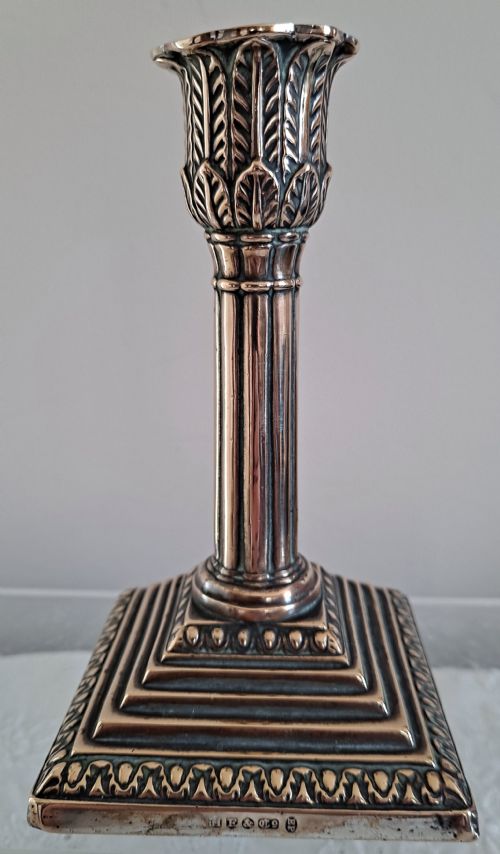
Silver tapered candle holders encompass a range of lighting forms, from sturdy candlesticks and chambersticks to smaller desk examples. When searching for silver tapered candle holders, buyers encounter pieces primarily shaped in Victorian, Edwardian, and Georgian periods alongside later twentieth-century interpretations.
The selection frequently includes matched pairs or complete sets designed for formal dining or intimate desk illumination. Styles span from restrained neoclassical columns to decorative art nouveau and rococo revivals, reflecting the shifting tastes of each decade.
Materials and construction
Makers utilised solid sterling silver alongside various plated techniques, including old Sheffield plate and electroplated nickel silver, bonded to base metals. Pewter and copper also appear, often paired with enamel or tortoiseshell inserts for contrast.
Casting and column construction allowed manufacturers to produce weightier shafts, frequently reinforced internally to provide stability for the tapered nozzle and drip pan above.
Listings feature pieces spanning the eighteenth to the mid-twentieth century, utilising both solid sterling silver and various plated compositions.
Assessing quality
The distinction between standard production and superior examples lies in the crispness of the chased or cast detail along the capital and base. Heavier gauge metal and clear hallmarks or maker stamps indicate higher workshop standards.
Proportion and structural integrity separate fine examples from ordinary utility items, particularly in multi-component forms like telescopic shafts or multi-branch candelabra.
Garrard & Co·Mappin & Webb·Conrad Eduard Mappe·John Pound & Co·Liberty & Co·Archibald Knox
The Silver Tapered Candle Holders Glossary
- Chamberstick
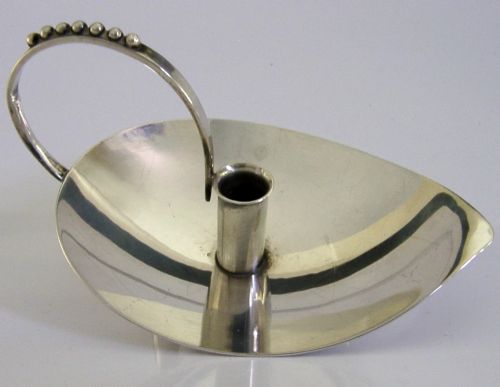
- A low candlestick fitted with a handle and a pan to catch dripping wax, historically used for lighting bedrooms and corridors.
- Corinthian column
- A classical architectural shaft design utilised for candlesticks, featuring ornate acanthus leaf capitals.
- Electroplated nickel silver
- A base metal alloy coated with a layer of pure silver through an electrolytic process, common from the mid-nineteenth century onward.
- Old Sheffield plate
- A method of fusing a thin sheet of silver to a thicker copper core before shaping, creating a durable dual-metal material.
- Hallmark
- An official stamp applied to precious metals indicating the standard of purity, assay office, and year of manufacture.
Silver Tapered Candle Holders: Frequently Asked Questions
How do I clean antique silver candle holders?
Use a soft cloth and a specialised silver cream designed to lift tarnish without removing the underlying plating or metal. Avoid harsh chemical dips that strip the character from recessed ornamental details.
Store pieces away from direct sunlight and damp environments to maintain a steady, gentle sheen over the surface.
What is the difference between sterling and plated holders?
Sterling silver contains a regulated high purity of the precious metal throughout the entire structure, often bearing official assay office hallmarks. Silver plate applies a thin layer of precious metal over a base metal such as copper or nickel.
Both materials share similar decorative styles across different periods, though solid silver examples carry intrinsic metal value.
How were chambersticks used historically?
Chambersticks served as portable lighting devices carried by individuals through dark hallways and up staircases before the widespread installation of electric household lighting. The attached saucer caught stray wax while the ring handle provided a secure grip.
Many included a small conical snuffer resting in the tray to extinguish the flame safely.
Are these candle holders weighted at the base?
Many taller candlesticks incorporate internal weighting materials to ensure stability when supporting tapered candles. This filling provides balance against the height of the shaft and prevents tipping.
Solid silver or metal examples without internal weighting rely entirely on the thickness of the cast metal.