

Silver Taper Candlestick Holder
A silver taper candlestick holder brings precise, small-scale illumination to a desk or dressing table.
Silver Taper Candlestick Holder
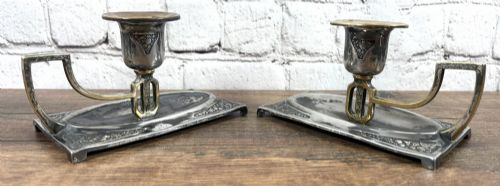
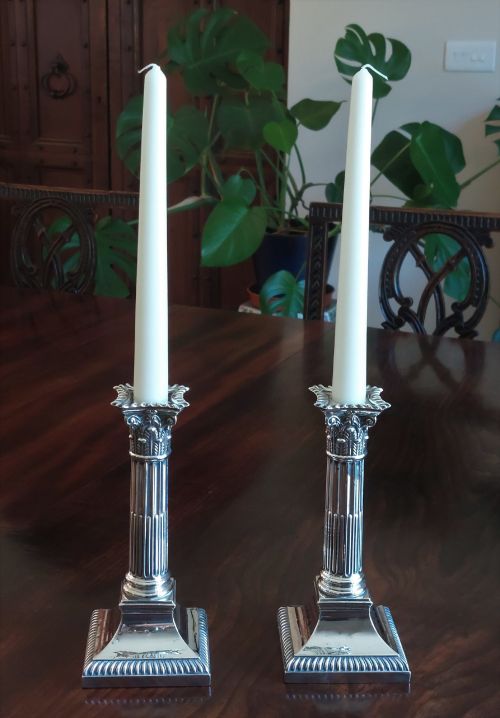
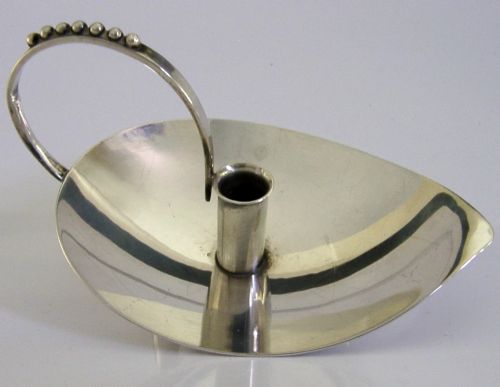
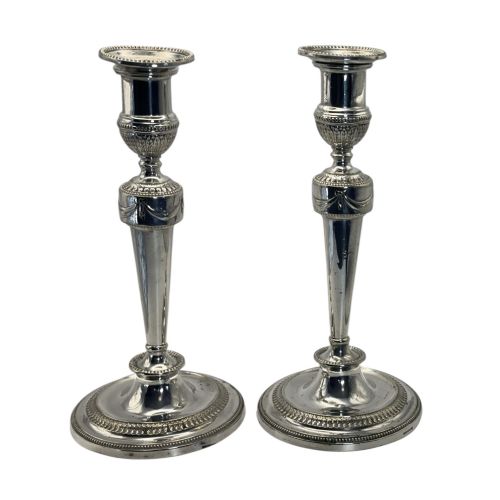
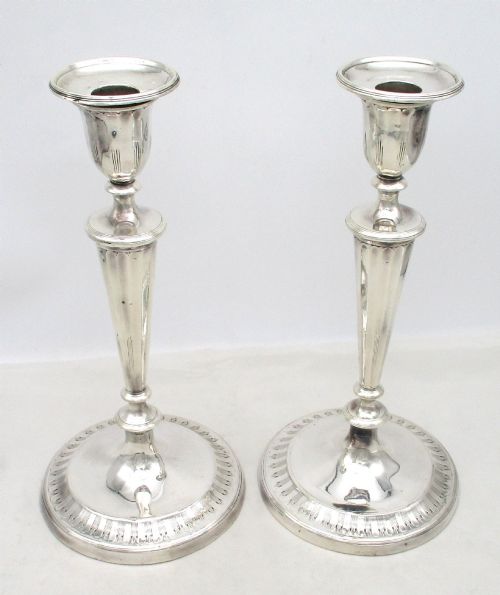
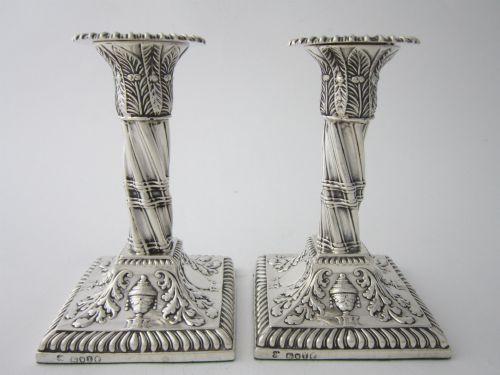
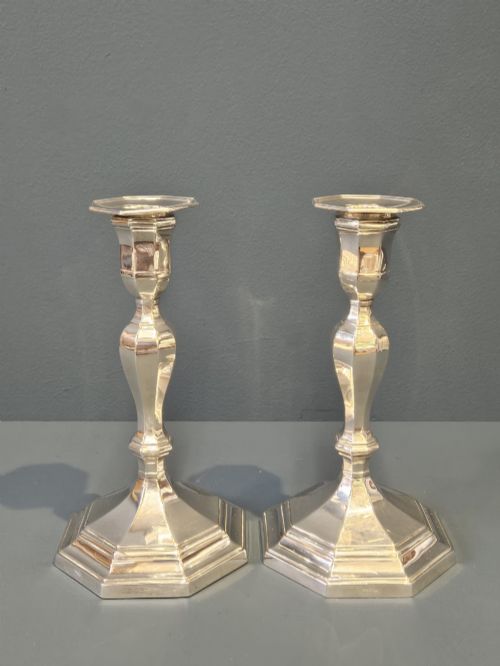
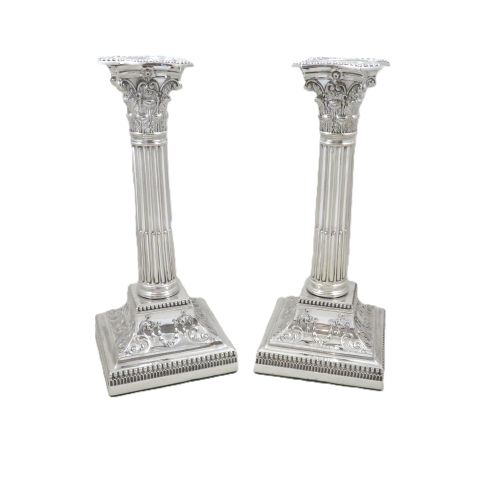
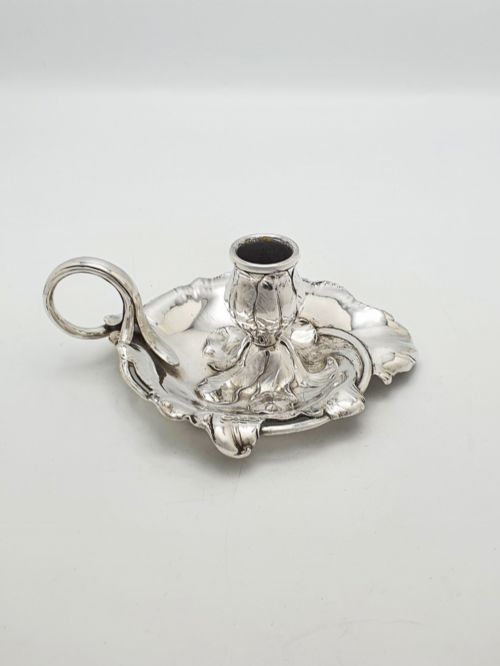
A silver taper candlestick holder is designed specifically for thin taper candles rather than standard household wax lights, often appearing as compact chambersticks with side handles or as slender column candlesticks. These pieces surface frequently in Victorian and Edwardian iterations, spanning sterling silver and silver-plated copper.
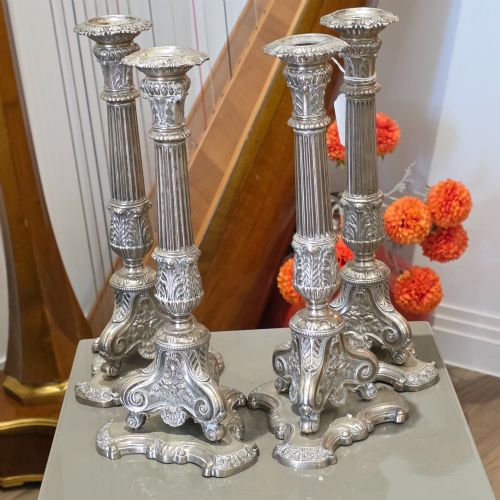
Makers produced these items for domestic desk use and bedroom illumination, adapting forms from Georgian styles through to Art Nouveau and Art Deco designs. Buyers encounter both single chambersticks and matched pairs of taller candlesticks across the nineteenth and twentieth centuries.
Materials and construction methods
Silversmiths constructed solid sterling silver examples using traditional hammering, spinning, and casting techniques, frequently weighted internally with resin or plaster to ensure stability. Silver plate and Old Sheffield Plate pieces utilise a thin layer of silver fused or electroplated over a base metal such as copper, brass, or nickel silver.
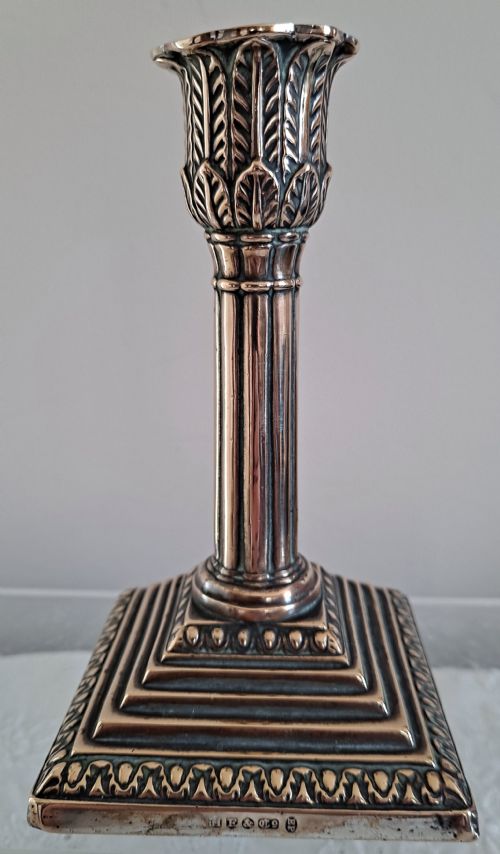
Pewter and mixed media constructions also appear, occasionally incorporating enamel, tortoiseshell, or glass components. Makers stamped hallmarks onto sterling silver pieces to indicate the assay office, standard, and date of manufacture.
Tortoiseshell and enamel accents occasionally join pewter and silver in the collection, proving that Victorians loved a decorative flourish.
Distinctions in craftsmanship and condition
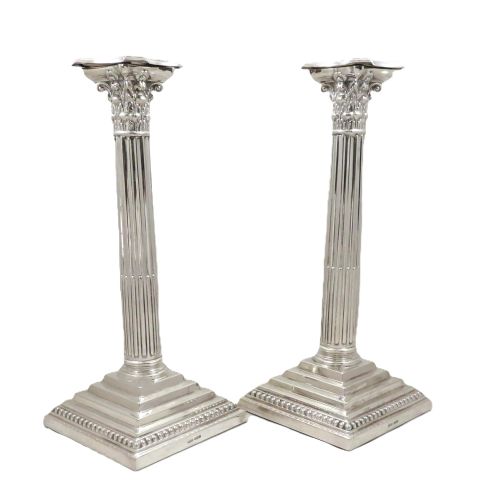
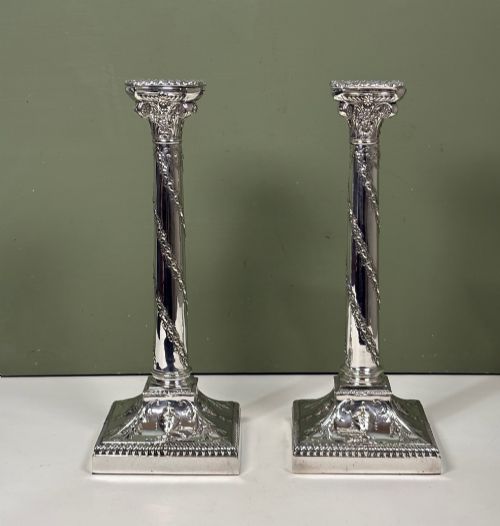
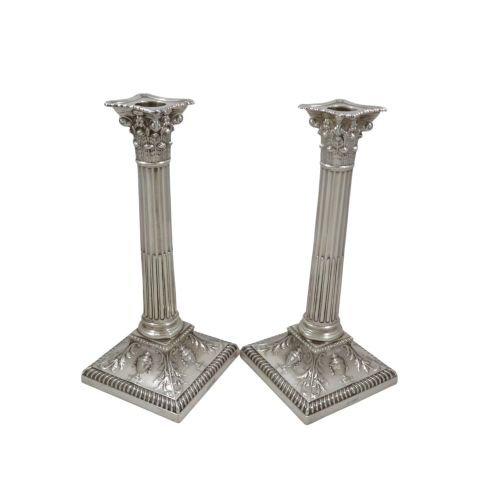
Quality rests upon the crispness of chased or cast ornamentation, such as Corinthian column fluting, figural details, and structural integrity at joints and sockets. Heavy gauge silver plate resists base metal bleed-through from polishing better than thinner electroplated layers.
Makers marked pieces with identifiable maker's marks or firm stamps, which elevates the standing of an item. Original detachable nozzles, snuffers, and matching hallmarks across pairs indicate superior preservation.
Garrard & Co·Mappin & Webb·WMF·Liberty & Co·John Pound & Co·John Lias
The Silver Taper Candlestick Holder Glossary
- Chamberstick
- A low candlestick fitted with a saucer base and a loop handle for carrying from room to room.
- Taper
- A slender wax candle used primarily for sealing letters or lighting larger fires and lamps.
- Corinthian column
- An architectural shaft style featuring ornate acanthus leaf capitals, frequently emulated in candlestick design.
- Old Sheffield plate
- An early fused plate technique where a sheet of silver is fused to a copper core.
- Nozzle
- The removable drip pan or socket insert fitted into the top of the candlestick to catch melting wax.
Silver Taper Candlestick Holder: Frequently Asked Questions
What is a taper candlestick?
A taper candlestick holds a thin, lightweight candle rather than a thick household taper. They were traditionally kept on writing desks or carried to bed.
These pieces measure smaller than standard dining table candlesticks and often include matching snuffers or finger rings.
How do I clean antique silver plate?
Clean antique silver plate gently with a specialised non-abrasive silver polish and a soft microfiber cloth. Avoid harsh scrubbing that can wear through thin plating to the base metal underneath.
Preserve the darkened patina in recessed decorative areas by limiting polish application to raised surfaces.
Are chambersticks and candlesticks different?
Chambersticks feature a wide saucer base and a loop handle, designed to be carried safely by hand in domestic hallways. Candlesticks have a stable weighted base meant to remain stationary on a surface.
Both forms accommodate taper candles depending on the diameter of the bobeche.
How do I date an unmarked piece?
Dating unmarked items relies on stylistic clues, construction methods, and material choices associated with periods like the Victorian era or Art Nouveau. Stylistic revivals often emulate Georgian or Neoclassical forms.
Assay office marks and maker stamps on sterling silver provide exact manufacturing years, whereas plated items require stylistic comparison.