



Silver Tableware Gifts
Silver tableware gifts offer enduring utility and elegance, bringing lasting charm to dining tables through sterling silver napkin rings, mugs, and menu holders.
Silver Tableware Gifts
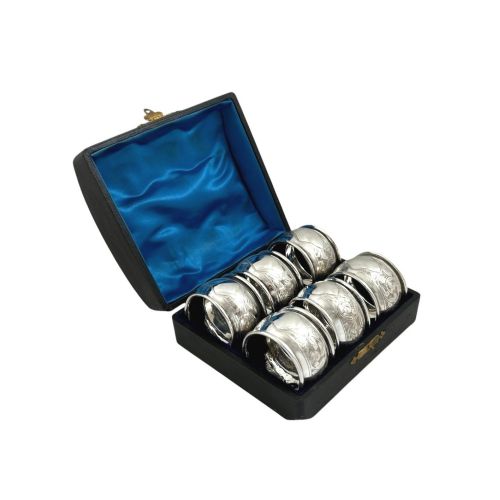
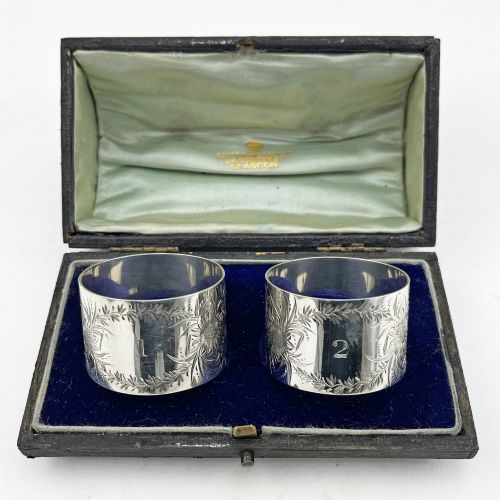
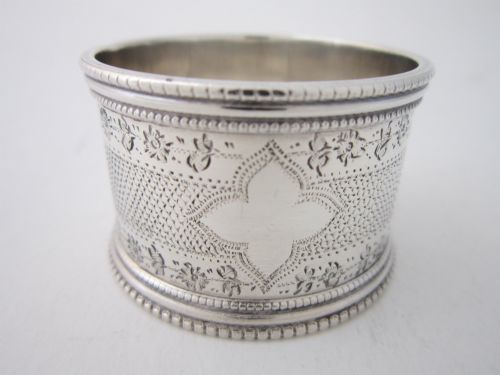
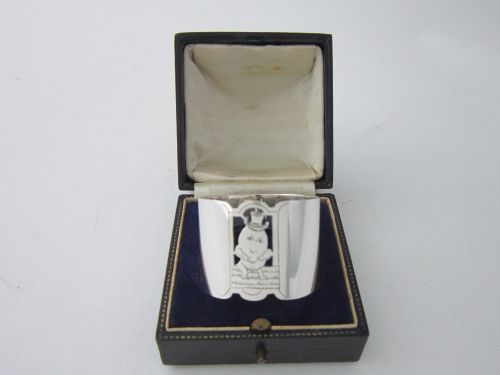
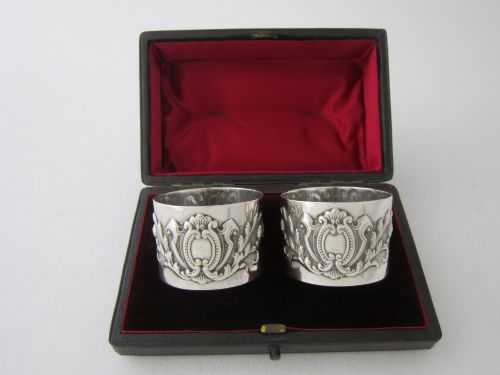
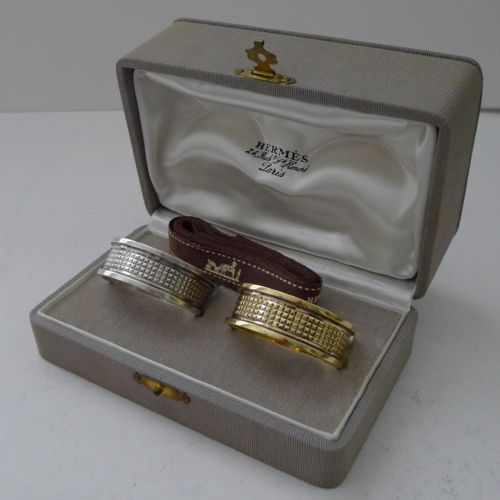
The versions most frequently met on this page are sterling silver napkin rings, often housed in fitted boxes lined with silk, velvet, or satin. They span periods from the Victorian and Edwardian eras through to Art Deco and Mid-Century British designs.
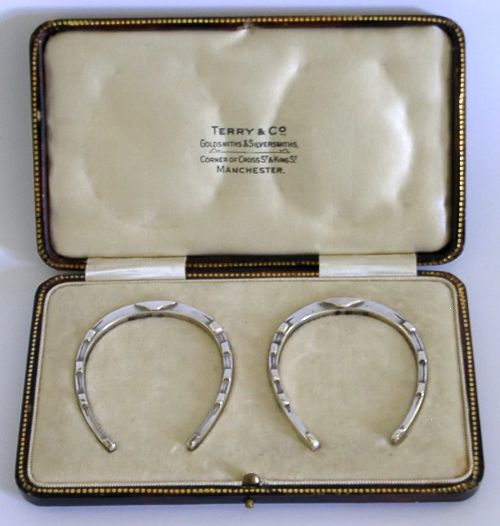
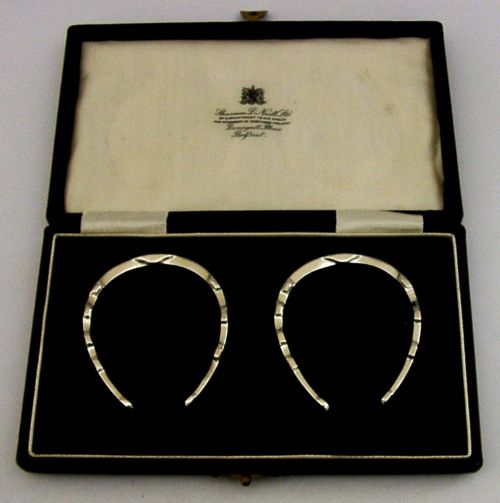
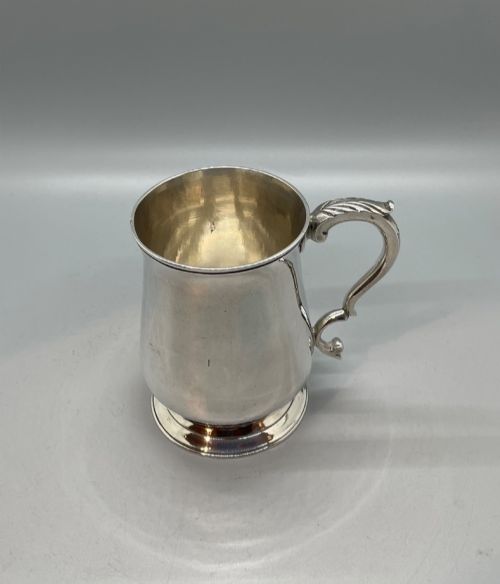
Equestrian novelty forms also appear, featuring horseshoe and stirrup motifs that reflect specific collecting tastes. Alongside these, Georgian christening mugs and menu holders represent the broader scope of antique dining silver.
Materials and construction
These pieces are principally formed from solid sterling silver, occasionally accented with silver gilt for contrasting interior finishes. The metal is shaped, pierced, or engraved to create both plain bands and elaborate sculptural novelty designs.
Presentation and storage rely on fitted cases constructed from leather or leatherette, lined with soft fabrics such as satin, velvet, or silk. Such cases protect the silver while enhancing the presentation intended for gifting.
Silver Tableware Gifts Retail Price Guide 2026
Typical asking prices for silver tableware gifts among the pieces listed under this phrase on Sellingantiques today, from the lower quarter to the upper quarter. They describe what is for sale here now, not the wider market.
Horseshoe and stirrup napkin rings ensure that table settings remain perpetually ready for a canter.
Defining quality in silver table pieces
Quality in these items rests upon the crispness of the maker's marks, the weight of the silver, and the preservation of any hand-engraved decoration. Substantial gauge metal ensures durability, while clean execution of novelty forms distinguishes finer workshops.
The condition and completeness of original fitted presentation cases significantly influence desirability. Interiors retaining their original silk or velvet linings add substantially to the character and preservation of the set.
Hermes Paris·C.T. Burrows & Sons
The Silver Tableware Gifts Glossary
- Sterling silver
- An alloy containing 92.5 percent pure silver and 7.5 percent other metals, typically copper, chosen to provide durability for functional items. This standard is indicated by specific hallmarks on the metal.
- Silver gilt
- Sterling silver that has been coated with a thin layer of gold on its surface, often used to line the interior of mugs or napkin rings. This technique prevents tarnishing from acidic foods and provides a rich two-tone appearance.
- Novelty napkin ring
- A napkin ring shaped to resemble an object, animal, or theme, such as a horseshoe or stirrup. These whimsical items became particularly popular during the late nineteenth and early twentieth centuries.
- Menu holder
- A small desk or table accessory designed to display a card detailing the courses of a meal. They share materials and stylistic traits with matching table silver.
Silver Tableware Gifts: Frequently Asked Questions
What are silver tableware gifts used for?
These pieces serve both decorative and functional roles during formal dining and family meals. Items such as napkin rings keep individual linens organised, while menu holders designate seating arrangements.
Historically and presently, many of these objects are given to mark significant life milestones, including weddings, birthdays, and christenings.
How do I care for antique silver?
Regular, gentle cleaning with a specialised silver cloth prevents tarnish accumulation without wearing away delicate engravings or hallmarks. Avoiding harsh abrasive pastes preserves the polished finish.
When not in use, storing silver inside original fitted cases lined with fabric helps protect the metal from airborne pollutants and moisture.
Are cased sets original?
Many period items retain their fitted presentation boxes, which were originally supplied by retailers to house specific sets of napkin rings. These cases often feature interior linings of satin, velvet, or silk.
Matching the case lining and maker's details helps confirm the association between the silver pieces and their fitted box.
How can I date my silver piece?
British silver typically bears a series of hallmarks that indicate the assay office, the maker, and a specific date letter corresponding to the year of manufacture. Examining these tiny stamped marks provides precise chronological information. Nomenclature, style, and box construction also offer reliable clues to whether an item originates from the Victorian, Edwardian, or Art Deco period.