



Silver Table Salt Set
A silver table salt set brings proper dining weight to the table, pairing cast or spun metal with cut glass and coloured liners.
Silver Table Salt Set
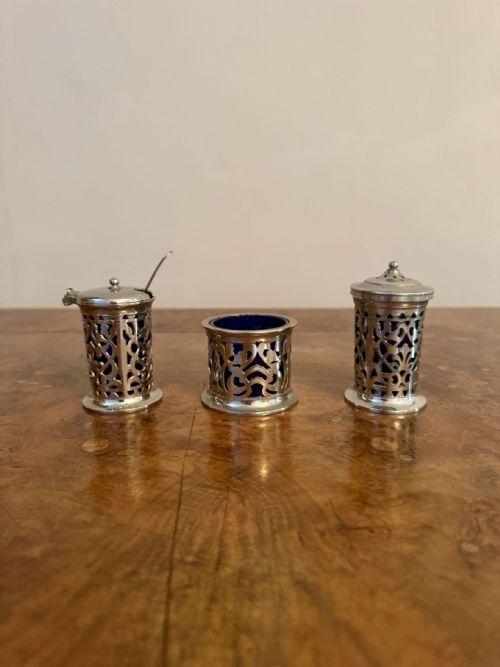
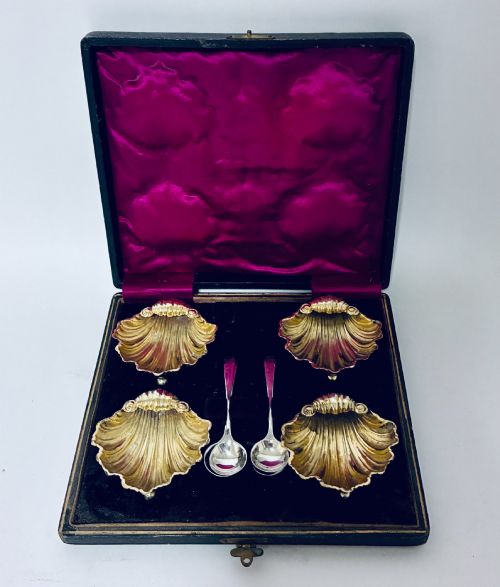
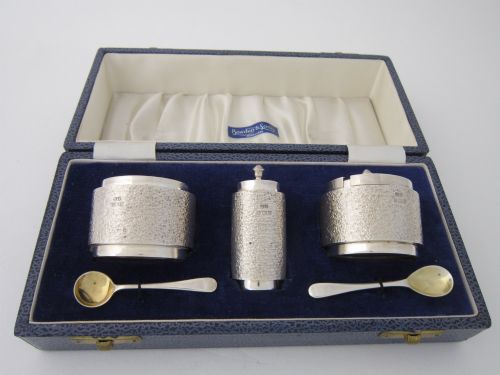
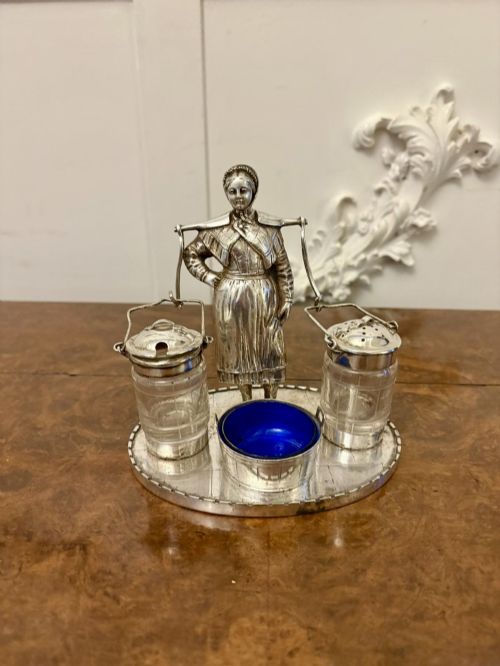
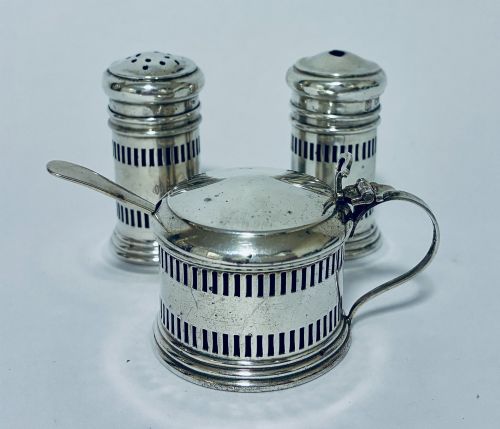
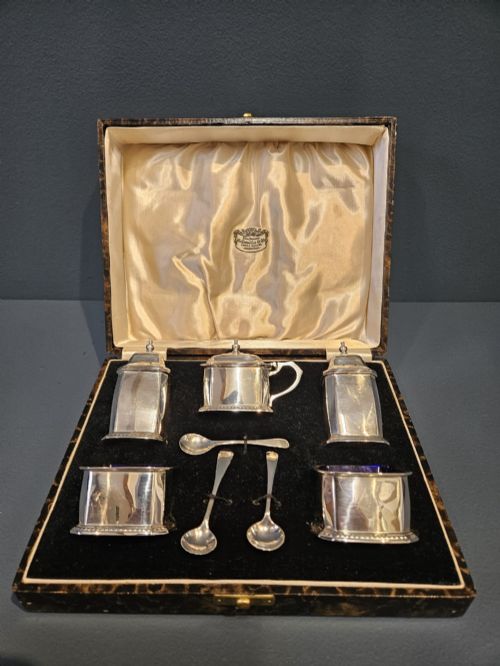
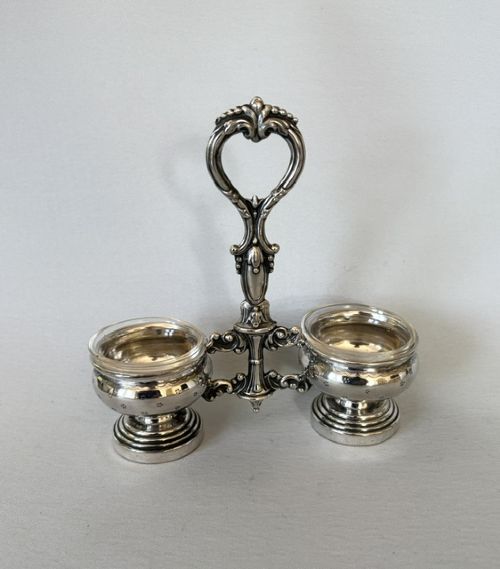
A silver table salt set covers individual open salt cellars, covered mustard pots, and pepperettes, often gathered together in fitted cruet frames or matched pairs. When you search for a silver table salt set, you encounter Victorian and Edwardian iterations alongside Georgian pairs and twentieth-century condiment groupings.
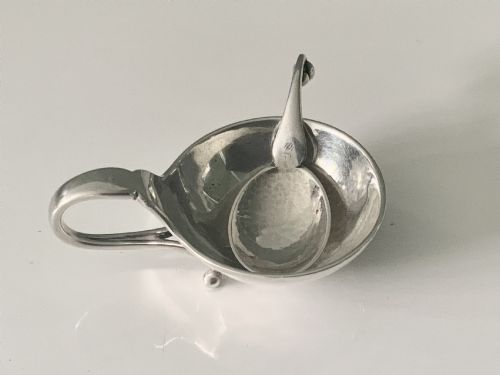
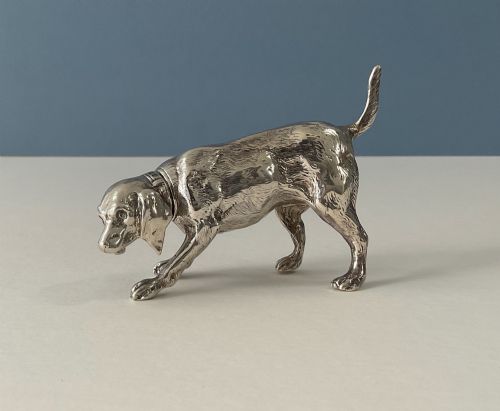
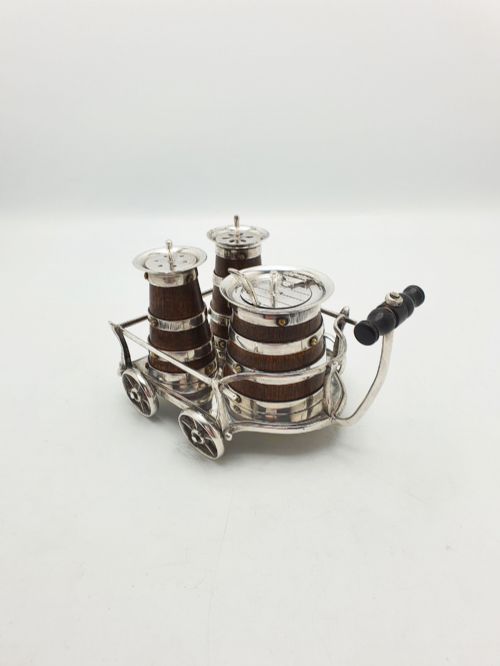
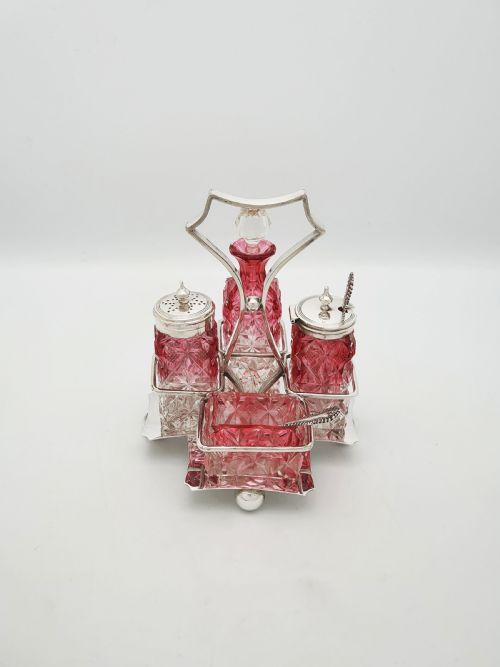
The forms range from traditional cauldron salts on three tiny feet and boat-shaped dishes to novelty birds, animals, oak barrels, and carriages. Most examples on this page utilise sterling silver or silver plate, frequently paired with glass liners in cobalt blue or cranberry flash.
How they were made
Silversmiths formed these vessels through hammering, casting, and stamping sterling silver or by plating base metals over copper and nickel alloys. Glass components were mouth-blown, wheel-cut, and flashed with colour before being fitted precisely to the metal mounts.
Interior liners, whether in cobalt glass, cranberry glass, or carved horn, required exact hand-fitting to rest securely within silver frames or salt cellars without rattling.
Silver Table Salt Set Retail Price Guide 2026
Typical asking prices for silver table salt set among the pieces listed under this phrase on Sellingantiques today, from the lower quarter to the upper quarter. They describe what is for sale here now, not the wider market.
Listings span the Georgian, Victorian, Edwardian, and Art Deco periods, encompassing sterling silver, silver plate, and cut glass.
What varies in quality
Quality rests on the crispness of the chased or cast ornament, the weight of the silver sheet, and the proportion of the vessel. Superior sets retain matched original glass liners and carry sharp hallmarks that record the maker and assay office.
Lighter silver plate wears down to the base metal over decades of cleaning, whereas solid sterling silver maintains its structural integrity and detail through generations of use.
Georg Jensen·Bateman·Paul Storr·Bricks & Sons·Thomas Smily·Sampson Mordan
The Silver Table Salt Set Glossary
- Cruet set
- A matched collection of bottles, castors, or salt cellars held within a metal stand for table condiments.
- Salt cellar
- A small open vessel designed to hold dry table salt for individual diners.
- Pepperette
- A small shaker or pierced container used specifically for dispensing ground pepper.
- Cobalt glass
- Deep blue glass frequently utilised for removable salt cellars and liner inserts.
- Hallmark
- Official stamped marks indicating metal purity, assay office, and the year of manufacture.
Silver Table Salt Set: Frequently Asked Questions
How were salt cellars used?
Diners used small spoons or pinched salt directly from open cellars onto the edge of their plates during meals before modern salt shakers became standard.
These open vessels sat individually at each place setting or were shared between diners along the length of the dining table.
What are glass liners for?
Removable glass liners protected the sterling silver or silver plate from the corrosive chemical action of salt over extended periods of time.
They also allowed diners to lift out the glass vessel easily for washing and refilling without damaging the metal frame.
How do I clean silver salt cellars?
Wash silver components gently in warm soapy water using a soft cloth, avoiding abrasive dips that strip away patination and fine detail.
Take care to remove glass liners beforehand so moisture does not become trapped between the glass and the metal mount.
Are novelty salt and pepper sets functional?
Many novelty pieces modelled as birds, animals, or carriages were fully working condiments with threaded or slip-fit bases for refilling.
While some owners display them as decorative silver sculptures, others continue to utilise them for everyday dining.