
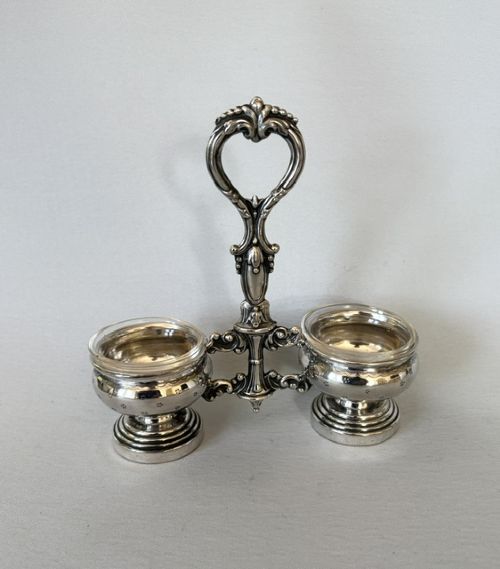
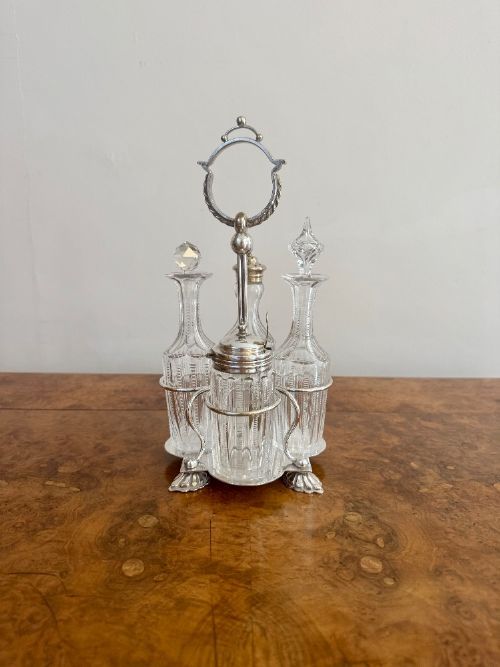
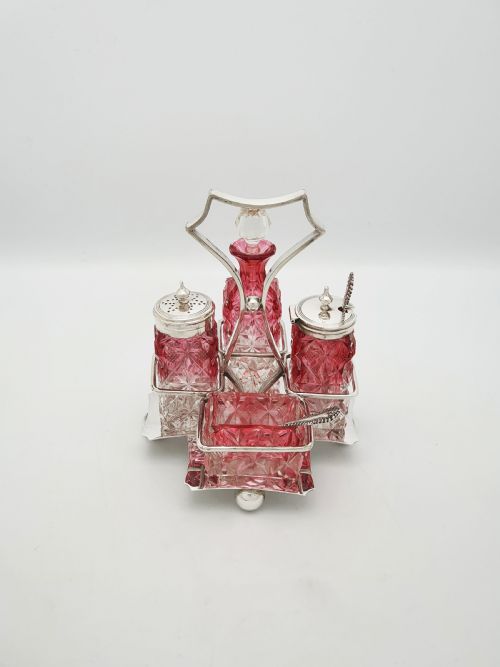


Silver Table Cruet Caddy
These silver table cruet caddy pieces hold condiments on the dining table with style and grace.
Silver Table Cruet Caddy
A silver table cruet caddy organises table condiments such as oil, vinegar, salt and pepper in a single portable frame. These pieces appear primarily as sets of bottles or stands, and the Edwardian silver plated cruet set is the most frequent form seen here.
The selection spans several distinct historical periods, reaching from Georgian examples through Victorian and Edwardian iterations up to the Art Deco era. Makers utilised silver plate, sterling silver and nickel silver to form frames that hold cut glass or cranberry glass bottles.
Beyond standard condiment sets, the forms include bottle holders, double condiment stands and novelty carriage designs. These variations provide different capacities, ranging from small bachelor sets to large eight piece table arrangements.
What Varies in Quality
Quality rests in the weight and substance of the metal framework, alongside the crispness of any cast ornamentation. Heavier silver plate and substantial sterling silver frames indicate higher initial manufacture.
The condition and matching nature of the glass bottles influence the overall integrity of the set. Original cut glass or cranberry glass vessels that match the period and frame elevate the piece.
Materials recorded across the inventory include sterling silver, silver plate, nickel silver, cranberry glass and cut glass.
Mappin Brothers·Wade Wingfield Wilkins
The Silver Table Cruet Caddy Glossary
- Cruet Set
- A matched collection of bottles or jars for holding table condiments, held within a dedicated metal stand. These assemblies often include compartments for mustard pots, oil cruets and pepper casters.
- Silver Plate
- A base metal, such as nickel silver, coated with a thin layer of pure silver. This technique allowed makers to produce elaborate tablewares at a lower cost than solid sterling silver.
- Cranberry Glass
- A rich pink or red transparent glass created by adding gold chloride to the molten glass batch. It appears frequently in Edwardian cruet bottles.
- Bachelor Cruet Set
- A smaller cruet stand designed for individual use or intimate dining rather than large gatherings. These compact pieces typically hold a reduced number of bottles.
Silver Table Cruet Caddy: Frequently Asked Questions
How do I clean my silver table cruet caddy?
Use a gentle silver cloth on the metal frame to preserve the plating or solid silver surface. Wash the glass bottles separately in warm soapy water.
Avoid harsh abrasive dips that might strip antique finishes or damage fitted glass components.
Can I use modern bottles in an antique caddy?
Finding exact replacements for missing bottles can prove challenging due to unique frame dimensions. Most collectors prefer sets with their original cut glass or cranberry glass vessels intact.
Using mismatched glass alters the visual balance and historical consistency of the piece.
How do I tell Georgian cruets from Victorian ones?
Georgian pieces, particularly those from the 18th Century, often feature heavier solid silver construction and simpler, neoclassical lines. Victorian examples tend towards greater ornamentation, employing ornate silver plate and novelty forms like carriages.
Examining the weight, hallmarks and decorative style helps determine the manufacturing period.
How were these sets used on the dining table?
Servants placed the cruet stand at the centre of the table or on a sideboard during meals. Diners reached for the bottles to season their food with vinegar, oil, pepper and salt as desired.
The central ring handle allowed the entire caddy to pass easily from guest to guest.