

Silver Table Candelabrum
A silver table candelabrum brings unmistakable presence to a dining room, combining functional illumination with sculptural elegance.
Silver Table Candelabrum
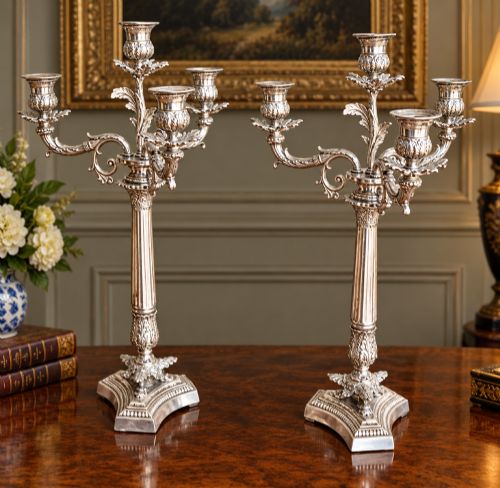
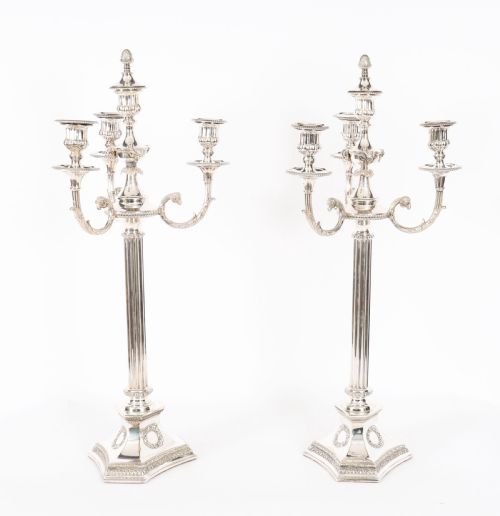
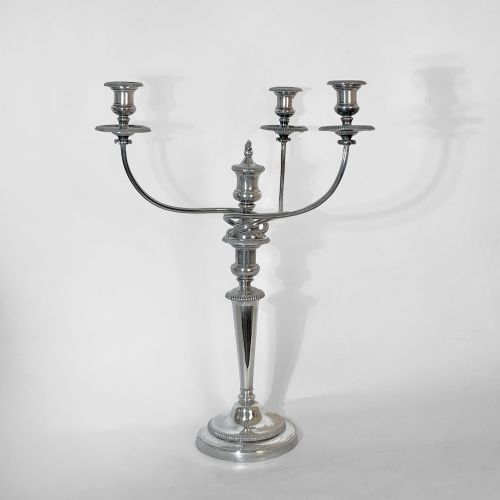
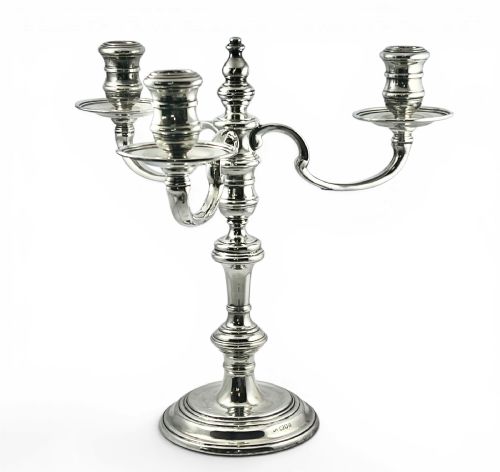
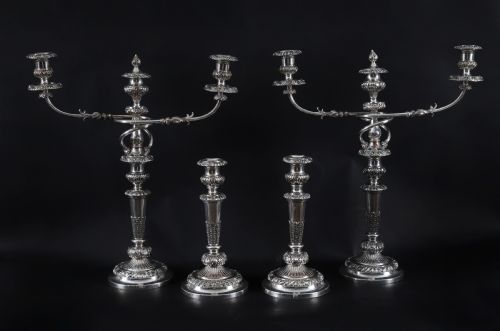
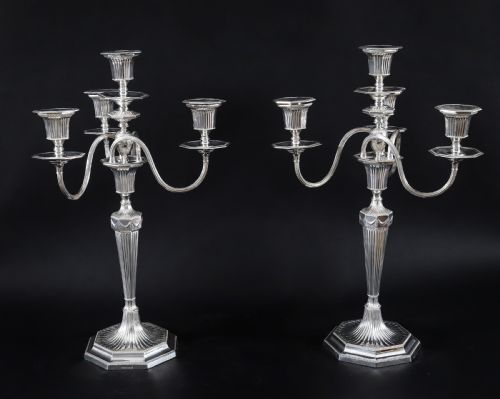
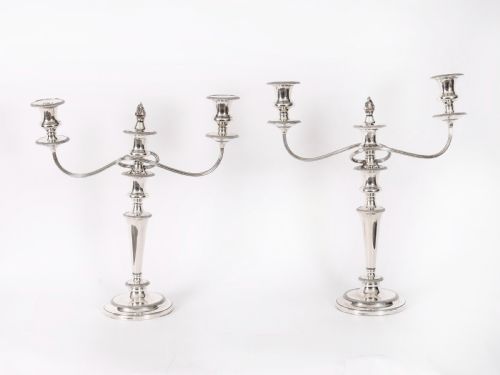
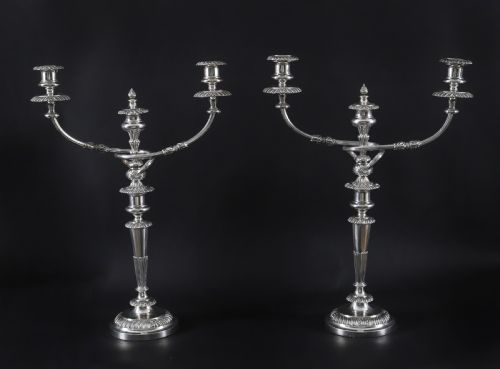
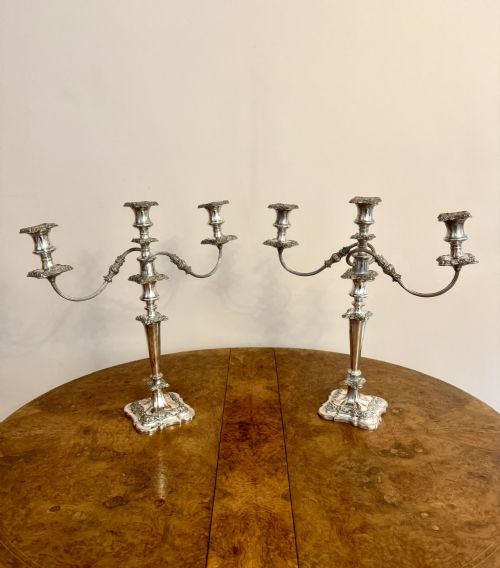
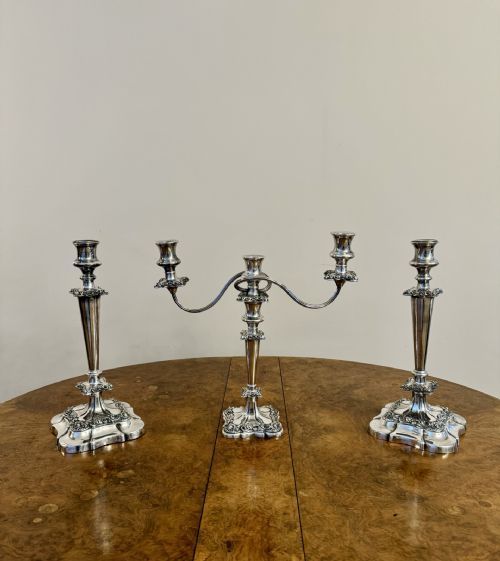
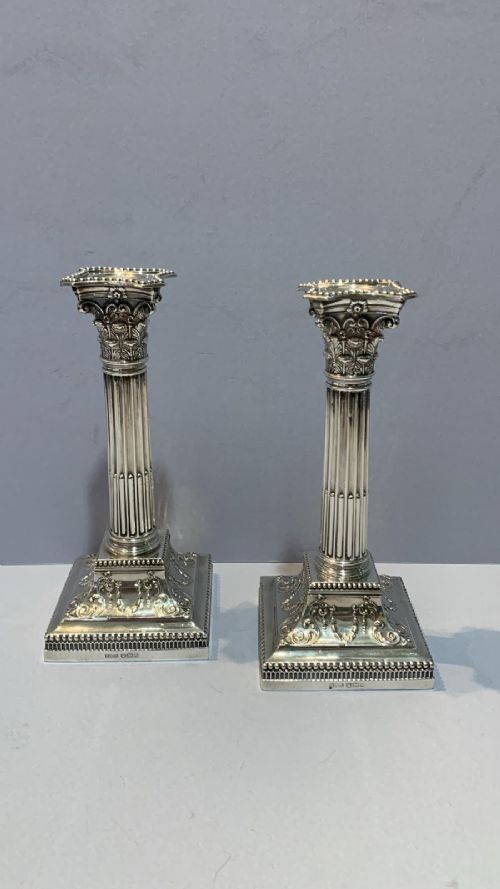
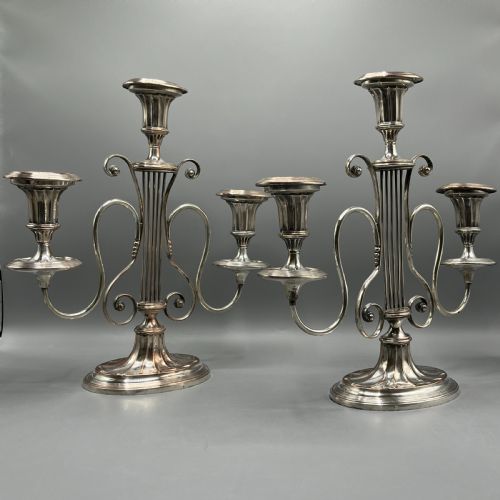
A silver table candelabrum serves as a striking dining table centrepiece, designed to hold multiple candles upon branching arms. These pieces appear most frequently in pairs or matched suites across this collection, designed to command attention on large dining surfaces.
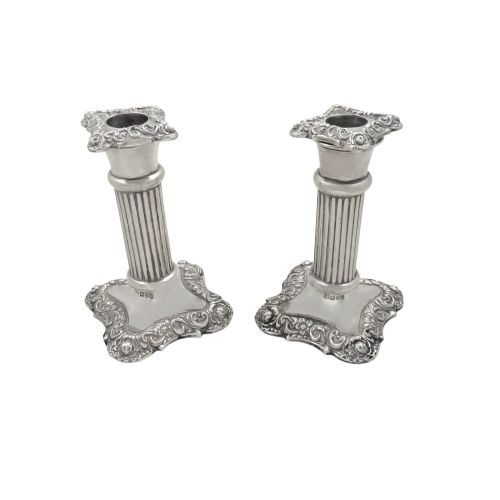
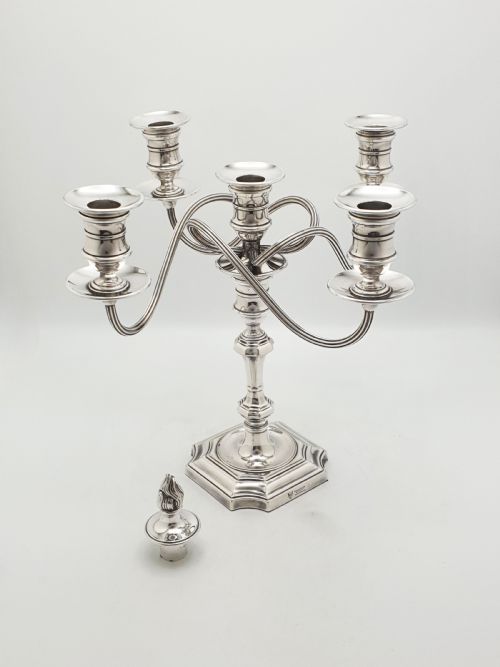
The pieces on this page span several centuries, with a strong representation of Victorian and Edwardian examples alongside earlier George III designs. Makers configured these lights to carry two, three, four or five branches, often featuring detachable sconces for ease of cleaning.
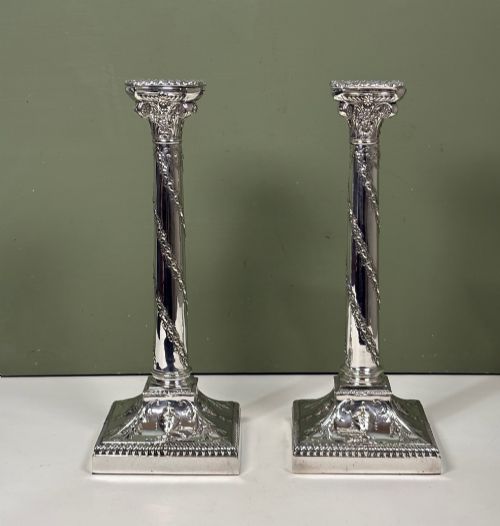
Stylistic influences range from restrained Neoclassical and Regency forms to ornate Victorian Rococo Revival interpretations. Buyers will also encounter continental and American iterations reflecting Arts and Crafts or Jugendstil design movements.
Materials and Construction
Silversmiths utilised sterling silver alongside various plated techniques, notably Old Sheffield Plate and silver plate over copper or nickel. The heavy base metals provided essential stability to support the extended weight of the branching arms and burning candles.
Craftsmen joined multiple components through soldering, casting and spinning methods, creating secure joints beneath decorative sconces and drip pans. Removable branches allowed versatile use, transforming a multi-light candelabrum into a simple pair of standalone candlesticks.
Some Victorian dining tables once hosted ingenious cricket-light candelabras designed to keep evening conversations brightly lit without blocking the view of the dessert.
Evaluating Craftsmanship
Quality rests upon the crispness of cast ornamentation and the balance of the overall structure. Superior examples maintain stability without listing to one side, even when fully laden with branches.
The gauge of the metal and the retention of original plating indicate the standard of production. Finer pieces preserve intricate relief work and crisp chasing along the bases and drip pans without excessive wear from polishing.
Hawksworth Eyre·Garrard and Co·Matthew Boulton·Smith and Sissons·Barker Ellis·Elkington
The Silver Table Candelabrum Glossary
- Candelabrum
- A large decorative candlestick with multiple branches for holding several candles. This form stands centrally on dining tables or sideboards.
- Old Sheffield Plate
- A method of fusing a thin sheet of silver to a thicker copper core by heat and pressure. This technique creates a durable layered material characteristic of Georgian pieces.
- Sconce
- The socket at the top of a candelabrum or candlestick that holds the candle in place. Many antique examples feature detachable versions for cleaning wax residue.
- Rococo Revival
- A design style drawing on 18th-century motifs, featuring asymmetrical scrolling, shell work and floral ornamentation. This aesthetic dominates many Victorian dining accessories.
Silver Table Candelabrum: Frequently Asked Questions
Can I convert a candelabrum back into candlesticks?
Many multi-branch examples feature a central removable section that allows the upper arms to lift away entirely. This reveals a finished top on the main column, turning the piece into a standard candlestick.
Check the base components for threaded screws or drop-in fittings that indicate a modular design intended for versatile table arrangements.
How do I tell Old Sheffield Plate from later silver plate?
Old Sheffield Plate often reveals a faint hint of copper showing through along high points where the outer silver layer has worn thin over generations. The edges of the base may also display a visible seam or sandwich effect.
Later electroplated wares generally present a uniform silver layer across the entire surface without copper undertones, unless heavy wear has occurred.
What size of table suits a large candelabrum?
A substantial five-branch dining table centrepiece requires a generous surface area to ensure it does not crowd guests or obstruct conversation. Large mahogany or walnut extension tables provide the ideal proportion for these taller pieces.
Smaller two-arm or three-arm versions sit comfortably on side tables, smaller dining settings, or sideboards without dominating the room.