




Triple Branch Candelabra
When you search for triple branch candelabra, you want a pair of multi-light candleholders that brings symmetry and height to a table.
Triple Branch Candelabra
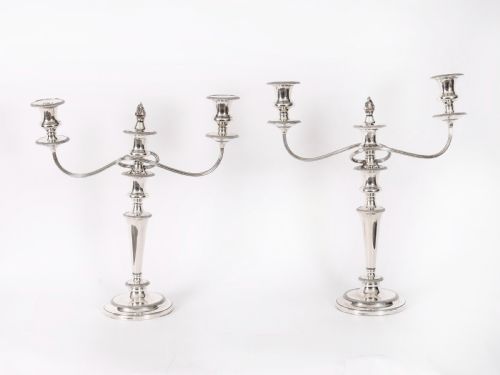
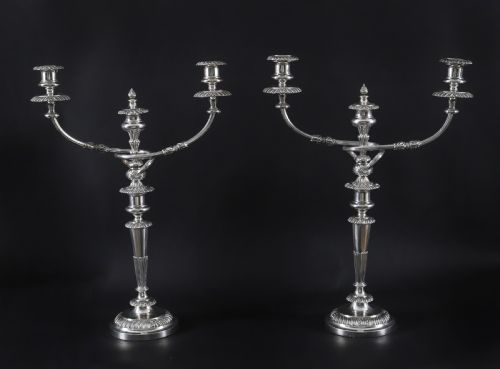
A triple branch candelabra is a branched light fitting designed to hold multiple candles, most frequently found as matched pairs in the listings here. These items appear across the Georgian, Victorian, and Edwardian eras, spanning the eighteenth, nineteenth, and early twentieth centuries.
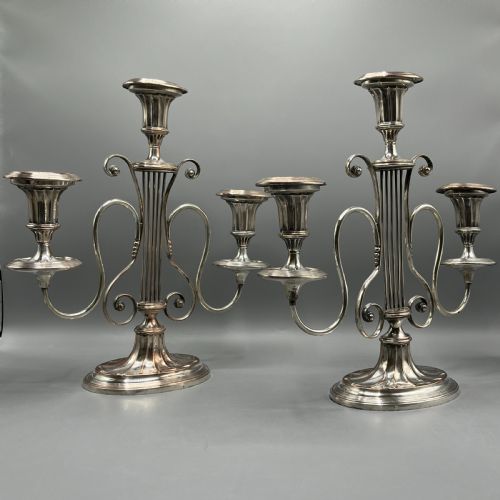
The forms range from classical lyre-shaped designs in Old Sheffield plate to figural pieces featuring cherubs in silver plate, alongside polished brass examples. Stylistic influences across these periods include Rococo Revival, Gothic Revival, and nineteenth-century neoclassical aesthetics.
Makers and manufacturers represented in this category include notable firms such as Matthew Boulton, Garrard and Co, and William Tonks and Sons. Buyers encounter these branched candelabras in materials from solid silver and brass down to various plated compositions.
Materials and methods of construction
Makers constructed these pieces using metals such as brass, copper, and solid silver, alongside plated methods including Old Sheffield plate and electroplated nickel silver. Plated items utilised techniques to fuse or deposit thin layers of precious metal over base metal foundations.
Casting and assembly formed the structural branches and sockets, allowing makers to create complex curves like the lyre shapes and figural cherubs seen in the evidence. Polished finishes enhanced the natural lustre of brass and the reflective surfaces of silver plate.
Listings span the eighteenth, nineteenth, and early twentieth centuries, featuring materials from solid silver to polished brass and various plated metals.
Assessing quality in manufacture and design
Quality in these pieces rests upon the crispness of the cast ornamentation, whether in the scrolls of a Rococo Revival base or the detail of figural work. Heavier gauge metals and substantial plate layers distinguish superior productions from lighter, simpler items.
The distinction between standard commercial wares and top-tier workshop output lies in the integration of the branches and the refinement of the chased or engraved surface details.
Garrard and Co·Matthew Boulton·Wm Tonks & Sons
The Triple Branch Candelabra Glossary
- Old Sheffield Plate
- A method of fusing a thin sheet of silver to a thicker copper ingot before rolling and shaping. This technique creates durable tableware and lighting from the Georgian period.
- Electroplated Nickel Silver
- Abbreviated as EPNS, this material involves depositing a layer of silver onto a nickel silver base using electrical current. It became common in the nineteenth century.
- Rococo Revival
- A nineteenth-century design style characterised by asymmetrical scrollwork, naturalistic floral motifs, and C-scrolls. It draws inspiration from earlier French decorative arts.
- Gothic Revival
- An architectural and decorative style mimicking medieval pointed arches, trefoils, and structural tracery. Pieces in this style appeared frequently during the Victorian era.
- Lyre-Shaped
- A symmetrical frame design modelled on the ancient stringed musical instrument. It appears centrally within the arms of specific Georgian candelabra.
Triple Branch Candelabra: Frequently Asked Questions
What is a triple branch candelabra?
A triple branch candelabra is a branched lighting fixture designed to hold three candles simultaneously. They are commonly collected and displayed as matched pairs.
These pieces use multiple arms extending from a central stem to distribute light across a dining table or sideboard.
How were they used historically?
Historically, these candelabras provided domestic illumination in large rooms before the widespread adoption of electric lighting. Servants would tend to the wicks and extinguish the flames after use.
They served as functional dining room centerpieces and decorative ornaments for drawing room mantelpieces.
How do I clean silver plated candelabras?
Cleaning requires a soft microfibre cloth and a mild silver polish formulated to protect thin metal platings. Aggressive scrubbing can wear away the silver layer on plated items.
Gentle maintenance preserves the underlying copper or base metal from showing through prematurely.
How can I tell Georgian pieces apart from Victorian ones?
Georgian examples often display cleaner neoclassical lines or early Sheffield plating techniques. Victorian pieces frequently embrace heavier ornamentation, such as the Rococo Revival and Gothic Revival styles.
Examining the weight, construction joints, and decorative motifs helps identify the period of manufacture.