


Silver Salt Pots Set
These silver salt pots set options bring together nineteenth and twentieth-century dining wares, offering matching cruets, novelty birds, and glass-lined cellars for the table.
Silver Salt Pots Set
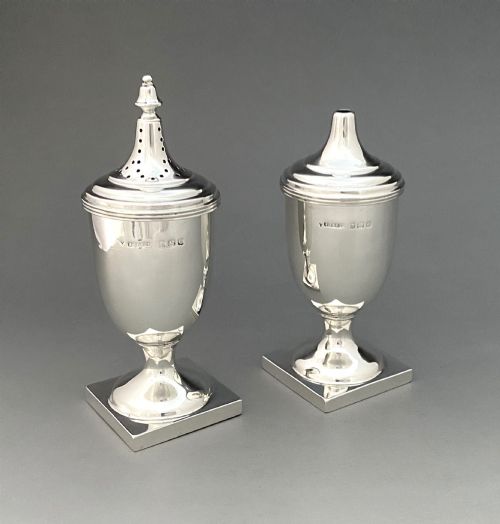
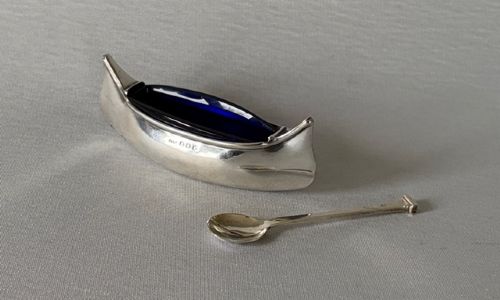
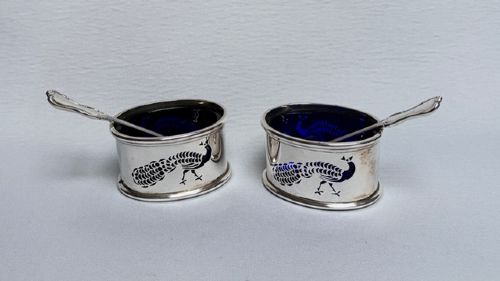
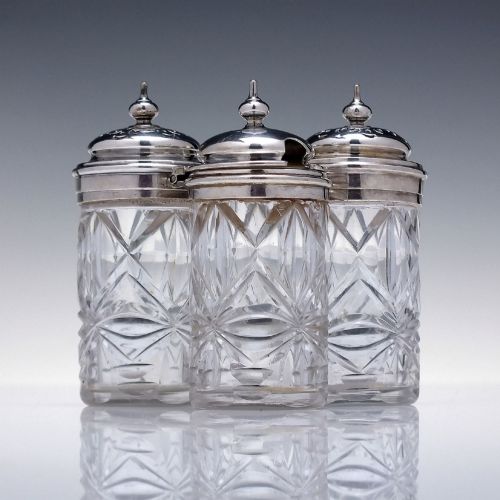
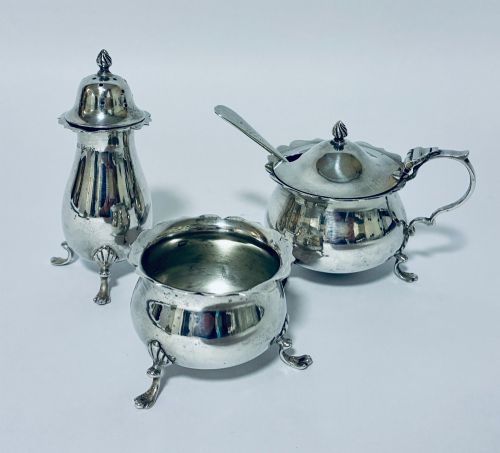
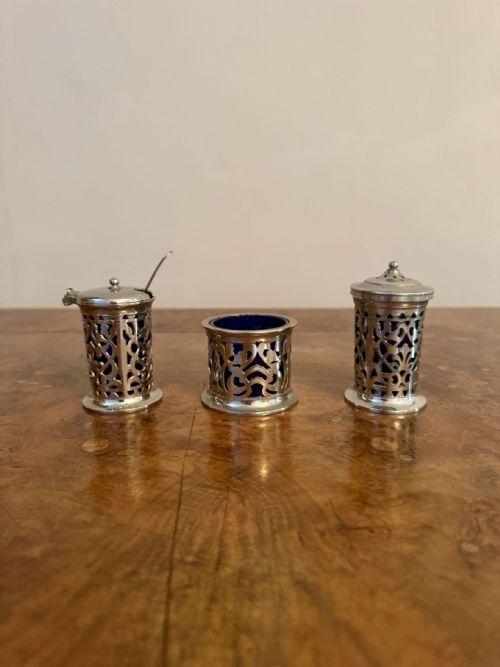
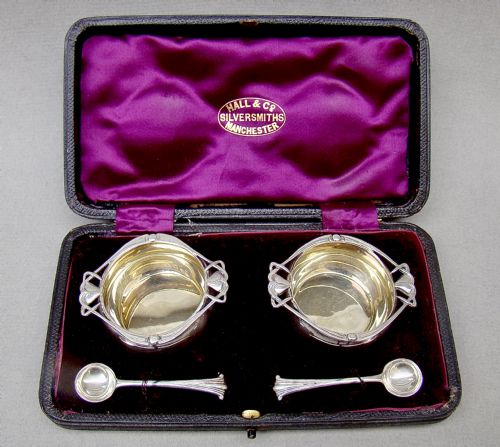
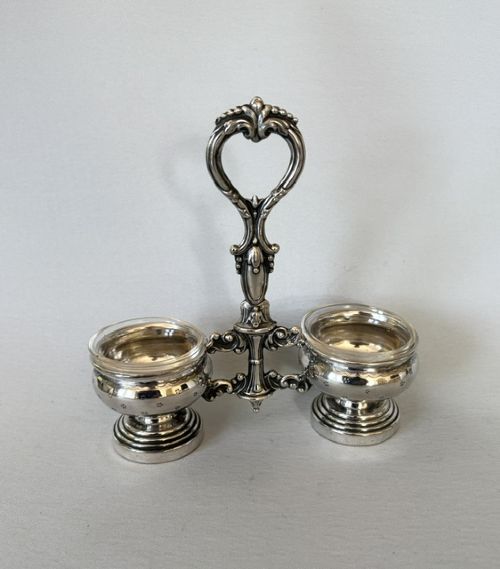
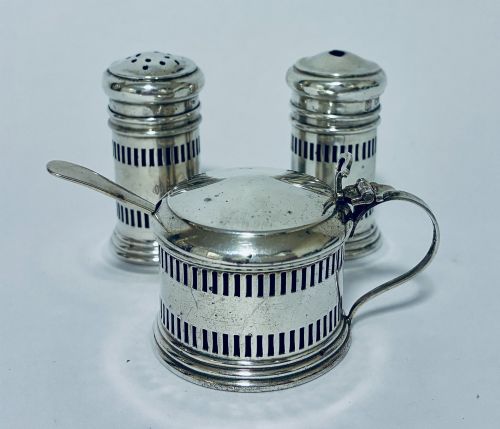
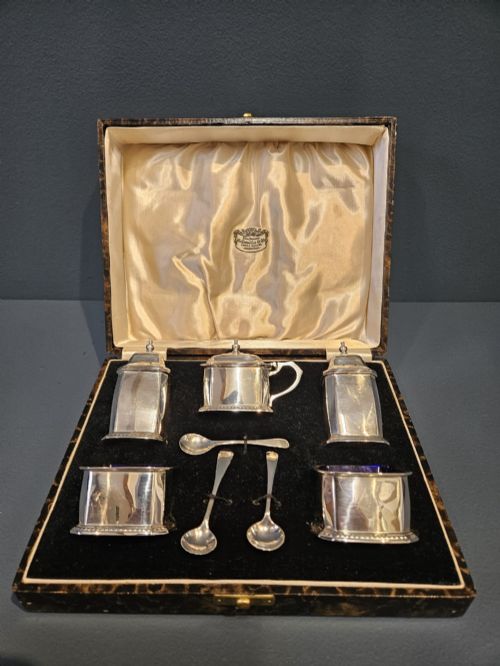
A silver salt pots set typically comprises matched or coordinated table vessels designed for salt, pepper, and mustard, often gathered on stands or housed in presentation boxes. The pieces encountered here span multi-piece cruet sets, open salt cellars with spoons, and pepperettes, originating across the Victorian, Edwardian, and Art Deco periods.
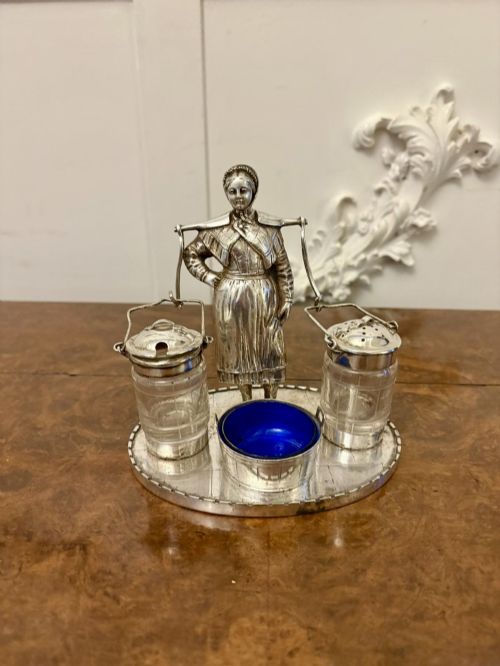
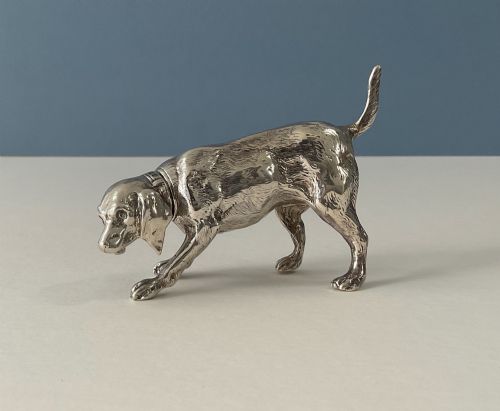
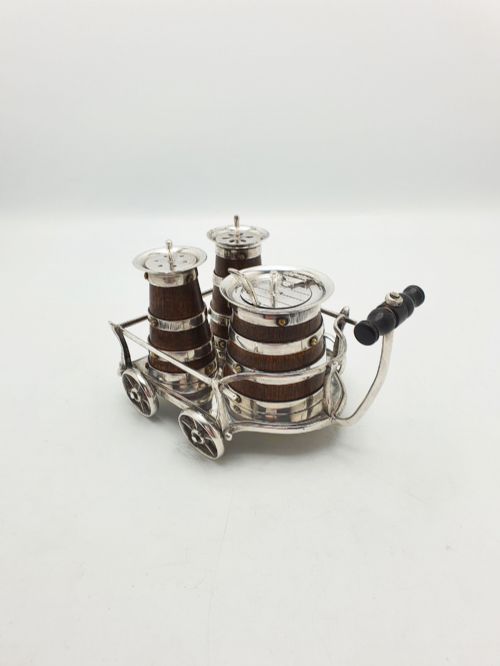
Novelty forms hold a prominent place among these listings, taking the shape of owls, chicks, dogs, farmyard animals, carriages, and oak barrels. Alongside these whimsical designs, formal George V and Mid-Century Modern silver sets provide the structured symmetry typical of traditional dining arrangements.
Materials and construction methods
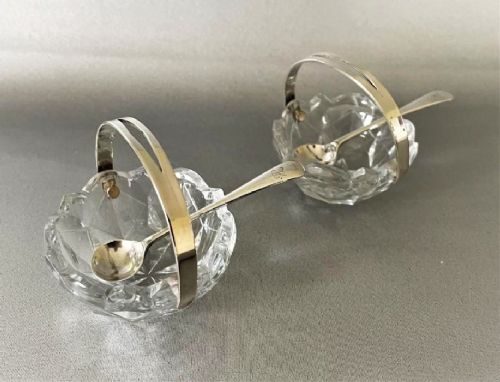
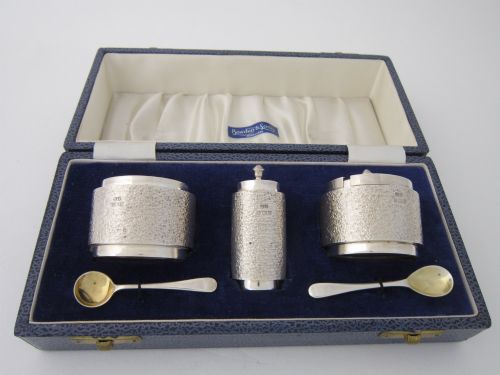
The physical evidence demonstrates a reliance on sterling silver and silver plate, frequently combined with transparent materials such as cut glass and cranberry flashed glass. Interior linings often utilise silk, satin, or velvet to cushion the components within fitted presentation boxes.
Manufacturing techniques documented in the pieces range from standard cast silver and hallmarked stamping to detailed hand-modelling seen in animal novelty peppers. Glass components rely on period cutting and moulding processes, paired with fitted metal mounts or silver-plated frames.
Silver Salt Pots Set Retail Price Guide 2026
Typical asking prices for silver salt pots set among the pieces listed under this phrase on Sellingantiques today, from the lower quarter to the upper quarter. They describe what is for sale here now, not the wider market.
Listings span from nineteenth-century Victorian pieces up to Mid-Century Modern designs, incorporating sterling silver, silver plate, and cut glass.
Distinctions in craftsmanship and survival
Quality rests upon the crispness of detail in cast and modelled forms, particularly evident in the feather work of bird novelties and the definition of engraved ornamentation. Maker marks, clear hallmarks, and complete matching spoons or original glass inserts elevate the standing of a set.
The integrity of fitted presentation cases and the condition of delicate interior silk or velvet linings influence the overall standard. Pieces retaining their original matched configurations demonstrate superior preservation compared to assembled or incomplete groupings.
William Neale·Bricks & Sons·Sampson Mordan·Wilmot Manufacturing Co·Berthold Muller·Viners
The Silver Salt Pots Set Glossary
- Cruet set
- A collection of condiment containers, such as salt cellars, pepper pots, and mustard pots, typically held together on a stand or tray.
- Pepperette
- A small shaker designed specifically for dispensing ground pepper at the dining table. They frequently match open salt cellars in period dining services.
- Cranberry glass
- A rich red-pink transparent glass created by adding gold chloride to the molten batch. It appears frequently in Edwardian table wares.
- Sterling silver
- An alloy consisting of silver and other metals, usually copper, standardised at a purity proportion of ninety-two point five percent. British pieces typically bear standard assay office hallmarks to confirm this standard.
- Silver plate
- A base metal substrate, commonly copper or nickel brass, coated with a thin layer of pure silver through electroplating or older fusion methods.
Silver Salt Pots Set: Frequently Asked Questions
What is included in a typical cruet set?
A standard grouping combines receptacles for salt, pepper, and mustard, occasionally accompanied by vinegar and oil cruets on a shared stand.
Many examples on this page consist of three or five matching pieces housed in a fitted box.
How do I identify a novelty salt or pepper?
Novelty condiments are cast or modelled into specific figurative shapes, such as birds, animals, or objects like carriages and barrels.
These pieces often feature removable heads or hidden filling plugs to function as shakers.
What are open salt cellars used for?
Open salt cellars are small bowls meant to hold dry salt, from which diners take pinches using small salt spoons or fingers.
They frequently feature glass liners to protect the silver from corrosion caused by salt.
How can I date a silver condiment set?
Dating relies upon stylistic indicators such as Edwardian proportions, Victorian ornamentation, or clean Art Deco geometric lines.
Official hallmarks stamped on the silver provide specific assay office symbols and date letters for precise identification.