



Silver Rimmed Stoneware
Silver rimmed stoneware pieces combine robust pottery with precious metal mounts, offering both practical utility and distinct decorative appeal for the home.
Silver Rimmed Stoneware
When you search for silver rimmed stoneware, you encounter a range of heavy ceramic vessels fitted with metal rims, collars, and hinged lids. These items bridge utilitarian kitchenware and refined display pieces, drawing interest from collectors of both pottery and metalwork.
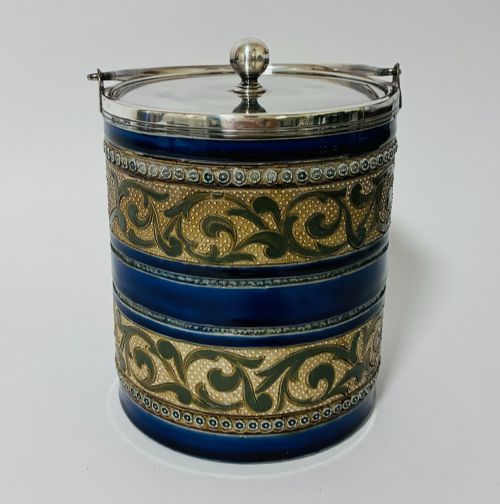
The pieces on this page span the nineteenth century, encompassing Victorian and Georgian eras as well as Arts and Crafts aesthetics. You will most frequently meet jugs, biscuit barrels, beakers, and harvest vessels originating from notable workshops of the period.
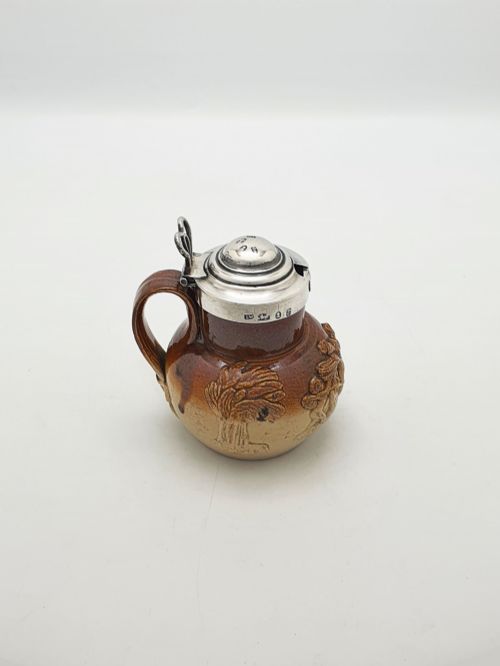
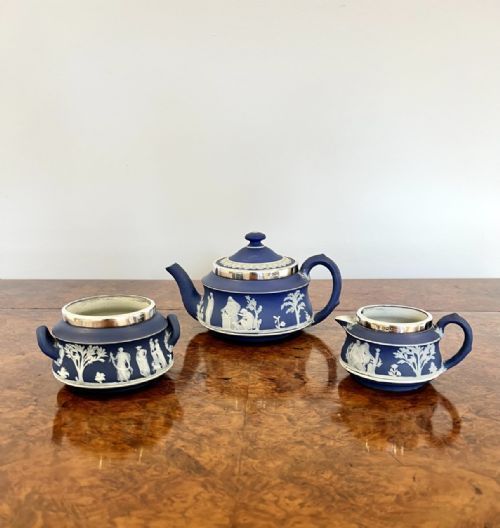
Forms vary from large harvest jugs with salt glaze finishes to delicate Wedgwood tea sets in jasperware. Each object demonstrates a deliberate pairing of durable ceramic bodies with precious or plated silver mounts designed to reinforce and ornament the rim.
How they were made
Potters shaped the heavy ceramic bodies using stoneware, salt glaze, lead glaze, and jasperware techniques. These dense clays provided a sturdy foundation capable of holding liquids or dry goods securely.
Silversmiths then fitted sterling silver, silver, or silver-plated collars and rims to the fired pottery. These metal mounts were often secured with hinged lids and detailed chasing to complement the texture of the ceramic beneath.
Listings feature nineteenth-century items utilising stoneware, sterling silver, jasperware, and salt glaze across Georgian and Victorian styles.
What varies in quality
The standard of the pottery decoration heavily influences the caliber of each piece, particularly where skilled artists applied specialised glazing or hand-carved detailing. Finer examples display crisp relief work and balanced proportions that elevate them above standard utility wares.
The weight and finish of the metal mounts also distinguish finer items. Substantial sterling silver collars with secure hinges and crisp hallmarks represent a higher grade of craftsmanship than simpler plated rims.
Doulton Lambeth·Wedgwood·Florence E. Barlow·Frank Butler
The Silver Rimmed Stoneware Glossary
- Stoneware
- A heavy, dense type of pottery fired at high temperatures until vitrified, making it impermeable to liquids even without glaze. It forms the durable body of most vessels on this page.
- Salt glaze
- A glassy, slightly textured finish achieved by throwing common salt into the kiln during high-temperature firing. This creates an orange-peel surface texture unique to traditional stoneware.
- Jasperware
- A fine-grained, unglazed stoneware developed with distinct coloured backgrounds and contrasting white relief ornaments. It is most commonly associated with Wedgwood productions.
- Tyg
- A large drinking vessel featuring multiple handles designed to be passed around a table among several drinkers. These pieces often feature decorative silver rims and detailed ceramic ornament.
- Collar
- The metal band fitted securely around the rim or neck of a ceramic vessel. It frequently includes mounts for hinged lids on jugs and biscuit barrels.
Silver Rimmed Stoneware: Frequently Asked Questions
How were these vessels used?
Many of these pieces served practical dining and entertaining functions, holding liquids like ale or water, or storing dry goods like biscuits.
Over time, their decorative qualities became more prominent, leading to their use as display vessels in Victorian and Georgian homes.
How do I care for silver rimmed stoneware?
Clean the ceramic body gently with warm water and a soft cloth to protect any delicate glazes or applied relief work.
Polish the silver mounts separately using a suitable cloth, taking care not to let harsh cleaning pastes touch the porous ceramic surfaces.
How can I tell the period?
Examine the style of the pottery, the manufacturing techniques, and any hallmarks present on the metal collars to determine age.
Victorian and Georgian pieces often display specific decorative motifs, such as neoclassical reliefs or naturalistic harvest scenes characteristic of nineteenth-century production.