


Silver Portrait Pendant
A silver portrait pendant holds a miniature likeness inside a frame of silver, bringing historical faces and sentimental keepsakes close.
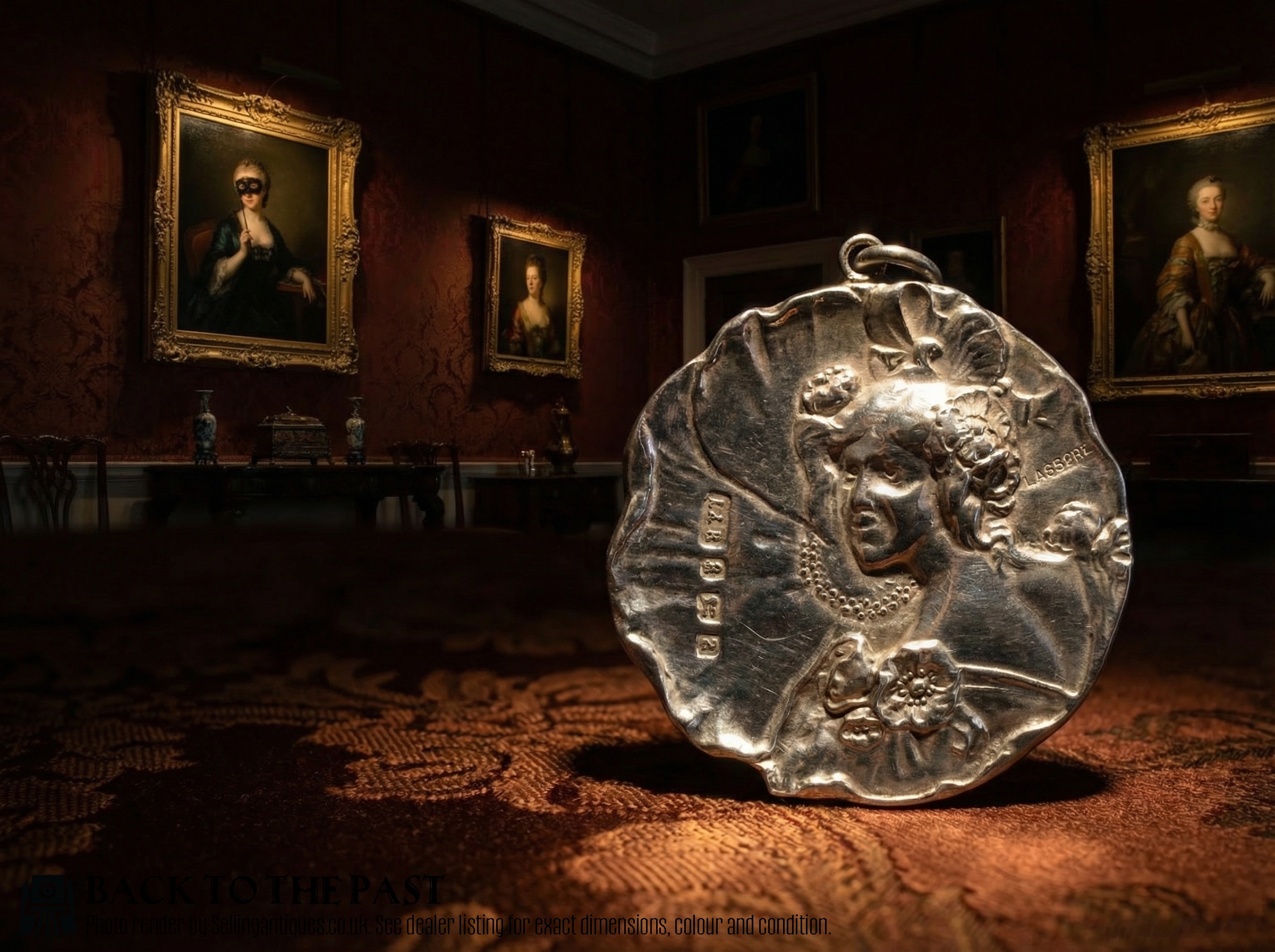
Silver Portrait Pendant
A silver portrait pendant combines wearable silver work with painted or carved likenesses, spanning periods from the eighteenth century through to the twentieth century. These pieces appear in forms such as lockets, brooches, and double-sided pendants that secure miniatures behind glass.
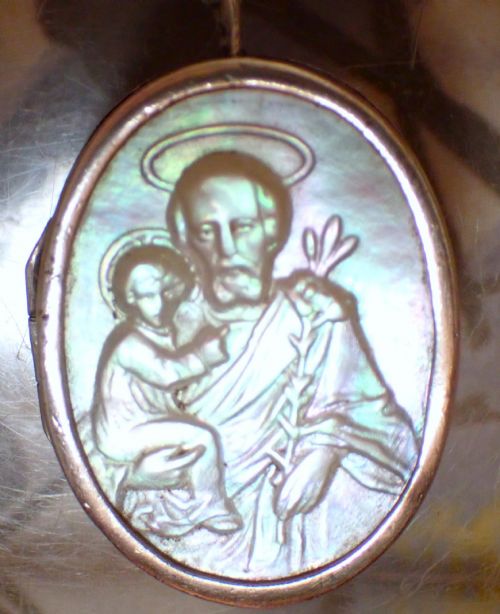
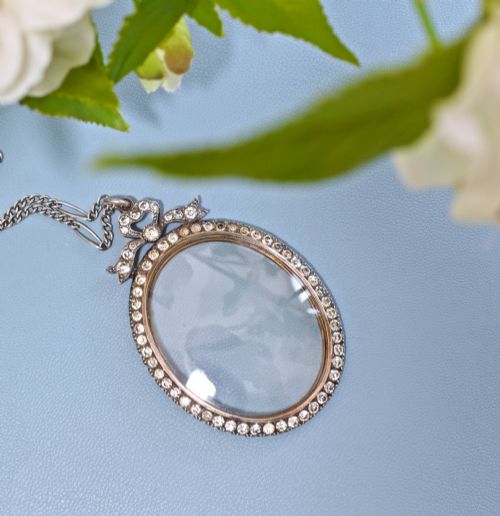
The selections on this page range from Georgian watercolours and Victorian solid silver pieces to Edwardian paste-set bows and Art Nouveau enamel work. Collectors encounter both simple frames mounted with shell cameos and complex double-sided Viennese pieces.
Makers and workshops utilised various formats, adapting lockets and pendants to house hand-painted miniatures on ivory, china, or paper. The resulting objects function simultaneously as personal memorials and decorative silver jewellery.
Materials and construction
Silversmiths constructed these frames using sterling silver, silver gilt, and gold on silver, frequently mounting glass fronts to protect delicate interior works. Techniques included hand carving mother of pearl, setting paste stones, and applying vibrant enamel.
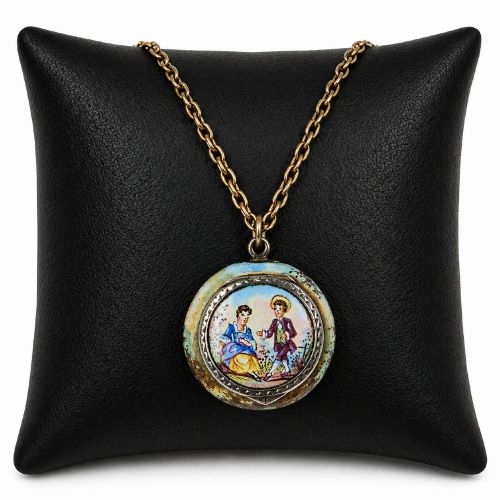
Portraits within these pendants were executed in watercolour, enamelling, or carved shell cameo, requiring careful fitting into hinged or screw-top silver mounts. Makers such as Meyle and Mayer applied specialised goldsmithing and enamelling methods to achieve decorative Art Nouveau results.
Listings feature silver portrait pendants incorporating watercolour, enamel, mother of pearl, and paste across Georgian, Victorian, Edwardian, and Art Deco periods.
Distinctions in quality
Quality rests upon the execution of the portrait miniature and the sophistication of the silver mounting, where fine hand-painting or detailed mother of pearl carving elevates the piece. Superior examples display crisp chasing on the silver frame and secure bezels protecting the glass.
The integration of secondary materials like paste stones, gold accents, and enamel work distinguishes standard mass-produced mounts from individual artisan creations. Preservation of the original miniature and the structural integrity of the locket mechanism further define the standing of each pendant.
Meyle & Mayer·John Barry
The Silver Portrait Pendant Glossary
- Silver gilt
- Silver that has been coated with a thin layer of gold, giving it a warm golden appearance while retaining a silver base. This technique appears on Art Nouveau pieces.
- Paste
- Faceted glass or lead crystal cut to imitate gemstones, frequently used in Edwardian settings to add sparkle around a portrait. It is mounted securely in silver bezels.
- Cameo
- A method of carving where a relief image is raised above a contrasting background, commonly seen here in mother of pearl or shell mounted in silver.
- Locket
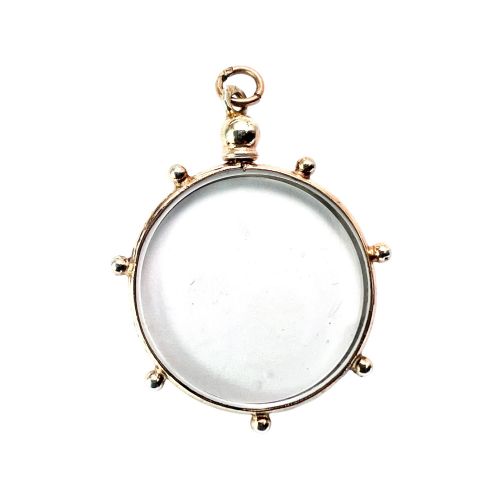
- A hinged or screw-top pendant designed to open and conceal a portrait, hair, or miniature memento. These objects often feature double-sided viewing windows.
- Enamel
- Vitreous material fused to metal through firing, utilised by workshops to create colourful, durable decorative surfaces on pendant frames.
Silver Portrait Pendant: Frequently Asked Questions
What periods do these pendants cover?
The pieces span multiple centuries, including Georgian, Victorian, Edwardian, and Art Nouveau eras. Each period brings distinct artistic styles and metalworking techniques to the silver mountings.
Items range from eighteenth-century watercolour miniatures to 1930s china and silver combinations, reflecting changing tastes in portrait jewellery over time.
How are miniatures protected inside?
Portraits are typically shielded behind glass panels held securely within silver bezels or screw-top frames. This prevents dust and moisture from damaging the delicate watercolour, enamel, or carved surfaces.
Many designs incorporate hinged locket backs or double-sided glass compartments, allowing the wearer to view the artwork from both sides safely.
Can these pendants also be worn as brooches?
Several examples on this page are manufactured with dual fittings, featuring both a suspension loop and a pin mechanism on the reverse. This allowed Victorian and Edwardian owners to pin the piece to clothing or suspend it from a neck chain.
Converters and hybrid mounts are common among antique silver portrait pieces, offering versatility in how they are displayed and worn.
What materials are used alongside silver?
Silversmiths combined sterling silver with gold, silver gilt, mother of pearl, and glass. Decorative enhancements often included paste stones and coloured enamel.
Miniatures themselves were painted in watercolour on paper or china, or carved directly into shell and pearl, providing varied textures within the silver frames.