




Silver Pocket Spirit Flask
A silver pocket spirit flask is a portable vessel for carrying liquor, combining utility with craftsmanship across Victorian, Edwardian, and Art Deco designs.
Silver Pocket Spirit Flask
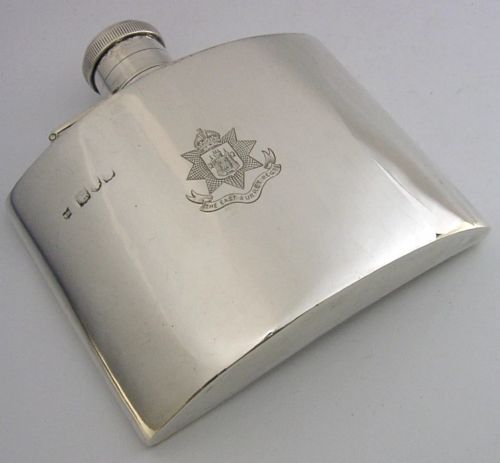
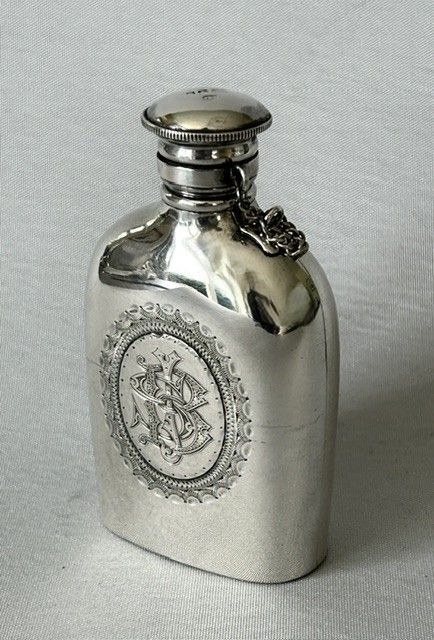
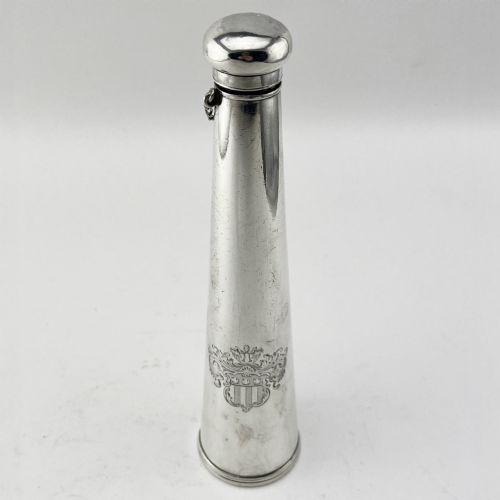
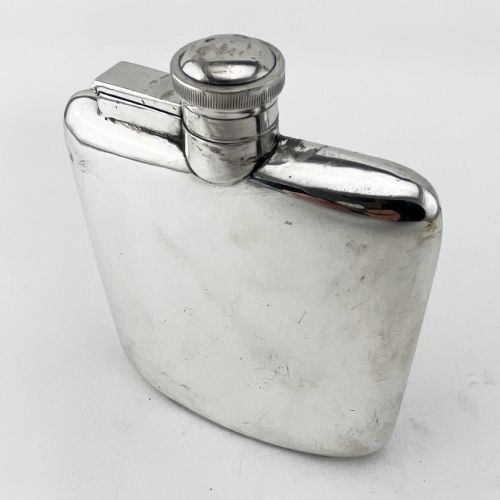
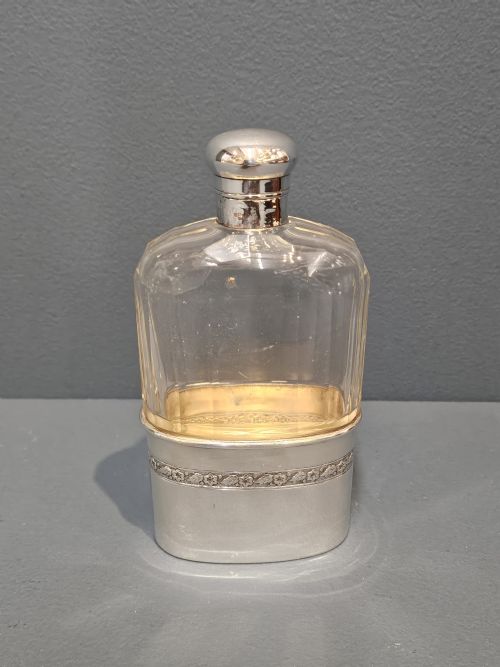
A silver pocket spirit flask is typically curved to fit comfortably against the body, designed for field sports, travel, and outdoor social occasions. When exploring this selection, buyers frequently encounter sterling silver and silver-plated forms alongside glass bodies mounted with silver mounts and removable cups.
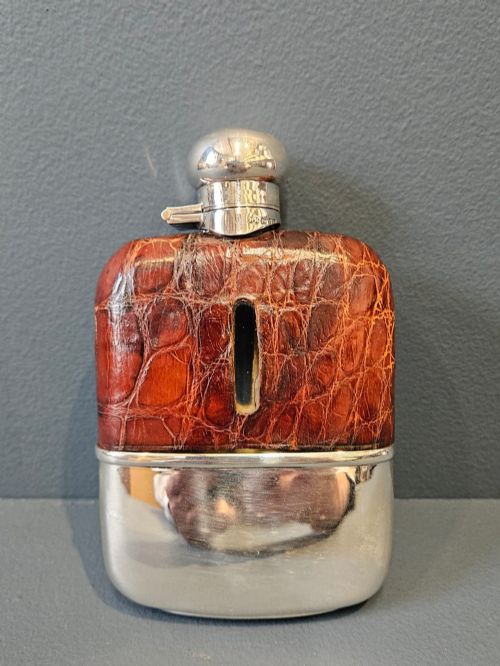
The objects span from the late nineteenth century through the 1940s, encompassing styles such as Victorian, Edwardian, and Art Deco. Common variations include plain polished surfaces, hammered finishes, and leather or crocodile skin coverings wrapped around the central body.
How they were made
Silversmiths constructed these pieces using sterling silver or silver plate, frequently combining metal with cut glass or crystal reservoirs. Leather and crocodile skin additions required precise stitching and mounting to fit the curved contours of the metal frames.
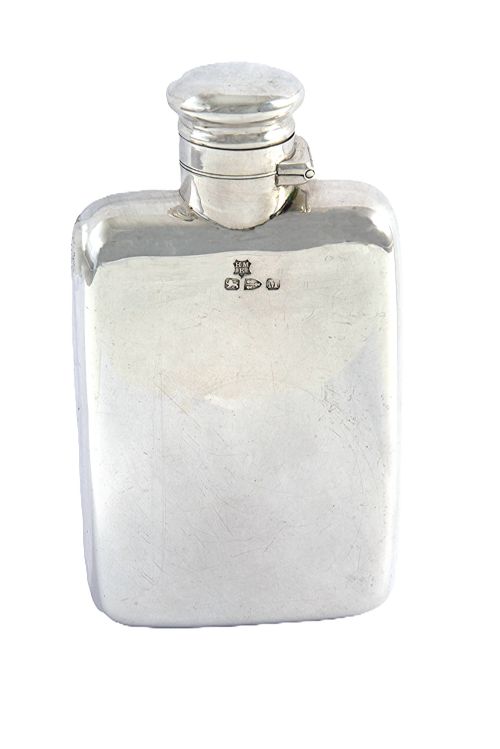
Makers incorporated functional elements such as hinged flip tops, screw caps, and detachable lower cups designed for drinking spirits on the go. Hallmarks stamped into the metal indicate assay offices in cities like Birmingham, Sheffield, London, Chester, and Glasgow.
What varies in quality
The distinction between standard examples and superior pieces rests on the weight of the metal, the crispness of the chasing or hammered texture, and the precision of the fit between removable cups and glass bodies. Maker attribution also plays a role, with established firms producing sturdier hinges and more secure locking mechanisms.
Material combinations elevate certain items, particularly those pairing silver with genuine crocodile skin, gold accents, or complex cut-glass patterns. The presence of complete original components, such as matching cups and functional screw caps, separates well-preserved specimens from incomplete ones.
Hukin and Heath·J Dixon·Asprey London·William Neale·JB Chatterley and Sons·Mappin and Webb·James Dixon and Sons·WA Ellwick Ltd
The Silver Pocket Spirit Flask Glossary
- Sterling silver
- A silver alloy containing 92.5 percent pure silver by mass and 7.5 percent other metals, usually copper. This standard composition provides the durability required for portable pocket items.
- Silver plate
- A layer of silver applied to a base metal core, such as copper or brass. This technique offered an accessible alternative to solid silver while maintaining a bright metallic appearance.
- Hallmark
- A series of official marks stamped on precious metal items in the United Kingdom. These marks certify the purity of the metal, the assay office, and the date of manufacture.
- Removable cup
- A detachable metal beaker fitted to the base of a flask. It slides off to allow the user to pour and drink spirits while outdoors.
- Cut glass
- Glass decorated by cutting facets or patterns into the surface using a wheel. It adds weight and decorative brilliance to the body of a flask.
Silver Pocket Spirit Flask: Frequently Asked Questions
What are these flasks made of?
These flasks are constructed primarily from sterling silver or silver plate, often paired with glass or crystal bodies. Many examples feature outer coverings made from leather or crocodile skin.
Metal components are frequently hallmarked to indicate the specific British assay office and year of creation.
How were they used historically?
Historically, gentlemen and travellers carried these vessels in pockets or hunting coats to hold spirits like whisky during outdoor pursuits. The integrated removable cup allowed the owner to pour a drink while away from home.
Their curved shapes were specifically designed to conform comfortably to the contour of the user's hip.
How do I identify the date?
Dating relies on the British hallmarks stamped onto the silver components, which include specific letters corresponding to the year of assay. Stylistic cues such as the geometric lines of Art Deco or the heavy ornamentation of Victorian pieces also indicate the era.
Makers' marks provide further context by linking the piece to active operating years of particular silversmiths.
How should I care for one?
Care involves gentle cleaning of the silver using appropriate non-abrasive polishes to maintain the surface without removing fine details or hallmarks. Leather and crocodile sections require specialised conditioning to prevent drying and cracking.
When displaying or storing the flask, keep it in a stable environment away from excessive moisture to protect both the metal and any internal cork seals.