


Silver Plated Wine Holder
A silver plated wine holder keeps bottles steady on the dining table while protecting surfaces from condensation and drips.
Silver Plated Wine Holder
A silver plated wine holder encompasses a variety of dining table accessories designed to hold bottles securely during meals.
The selections span the Georgian, Victorian, Edwardian and later periods, capturing changes in dining customs over two centuries.
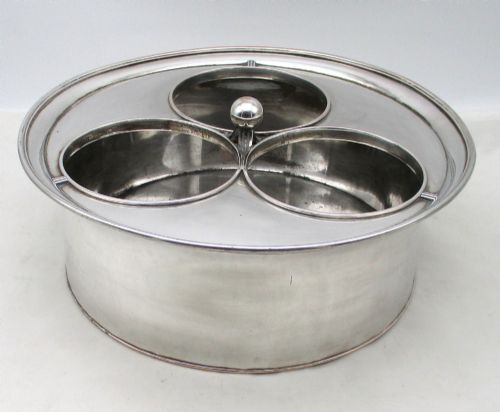
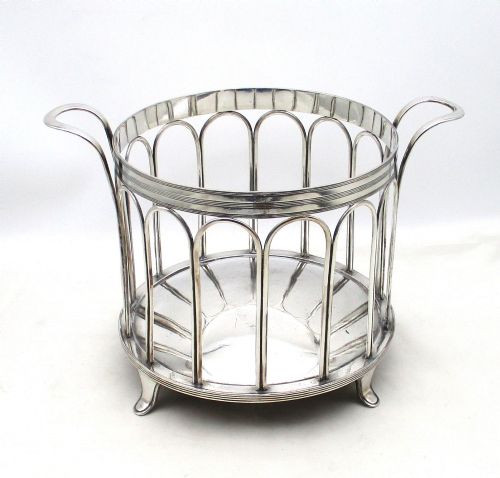
Forms range from single bottle coasters and sleeves to large triple stands, coolers for champagne magnums and multi-bottle carriers.
Materials and construction
The primary material is silver plate, often applied over a copper base through early Old Sheffield plating techniques or later electroplating methods.
Wooden elements such as turned mahogany or oak frequently form the bases of coasters, sometimes lined with felt to protect furniture.
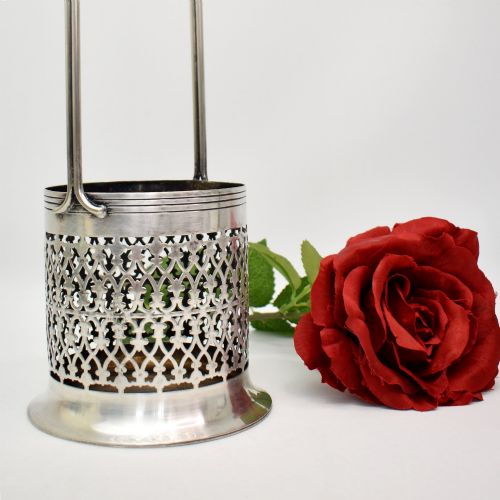
Additional metals like brass appear in construction, whilst structural details include pierced galleries, embossed motifs and detachable collars.
Some nineteenth-century models doubled as pen holders when the dining table was cleared for writing letters.
Assessing quality
Quality rests upon the crispness of pierced or embossed decorative work and the weight of the metal used in the body.
The integrity of the underlying copper showing through worn silver plate indicates the extent of past use and handling.
Maker execution separates standard production items from pieces bearing the marks of prominent silversmiths and workshops.
Brook & Son·Christofle·Rupert Favell & Co·Matthew Boulton·James Dixon & Sons·Martin Hall & Co·George Bowen & Sons·Asprey & Co·Mappin & Webb·Collis & Co·William Hutton·The Alexander Clark Co. Ltd.
The Silver Plated Wine Holder Glossary
- Old Sheffield Plate
- A composite material made by fusing a thin sheet of silver to a thicker copper base before shaping. This early technique often reveals a thin reddish copper line at the cut edges.
- Coaster
- A small, flat-bottomed tray or basket designed to hold a wine bottle. These items typically feature raised sides and protect polished dining tables from moisture.
- Magnum
- A larger bottle format holding twice the volume of standard wine bottles. Holders made for these vessels require wider dimensions and sturdier construction.
- Pierced
- A decorative technique involving cut-out patterns in the metal wall. This method reduces weight while creating intricate openwork designs.
- Syphon Stand
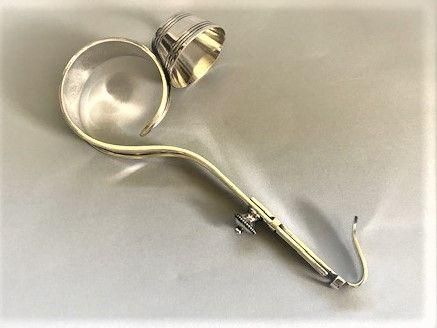
- A related frame designed to hold soda siphons alongside wine bottles. These stands share construction methods and plating styles with bottle holders.
Silver Plated Wine Holder: Frequently Asked Questions
What is a silver plated wine holder used for?
These pieces hold wine and champagne bottles upright on the dining table during meals. They serve to keep the bottle stable and catch condensation.
Historically, they were passed along the table after the meal was cleared to allow guests to pour their own wine. Today, they function as both practical tableware and decorative centrepieces.
How do I clean a silver plated wine holder?
Cleaning requires a soft cloth and a specialised silver polish formulated for plated items. Vigorous scrubbing should be avoided to prevent wearing away the thin silver layer.
Wooden bases require separate care, keeping moisture away from the turned mahogany or oak components. Regular gentle dusting preserves the finish without harming the metal.
How can I tell Old Sheffield Plate from later silver plate?
Old Sheffield Plate was made by fusing silver and copper together before rolling them into sheets. Close inspection of the edges often reveals a subtle copper seam.
Electroplating, introduced later in the nineteenth century, deposits silver evenly over a base metal using electrical current. This method leaves no visible copper lines at the cut edges.
Can I use these holders for modern wine bottles?
Most standard wine and champagne bottles fit comfortably within Victorian and Edwardian holders. Magnum sizes require specific larger coolers designed for wider circumferences.
Checking the internal diameter of the holder ensures compatibility with contemporary bottle shapes. Variations in bottle design mean taller or wider modern bottles may sit differently than nineteenth-century counterparts.